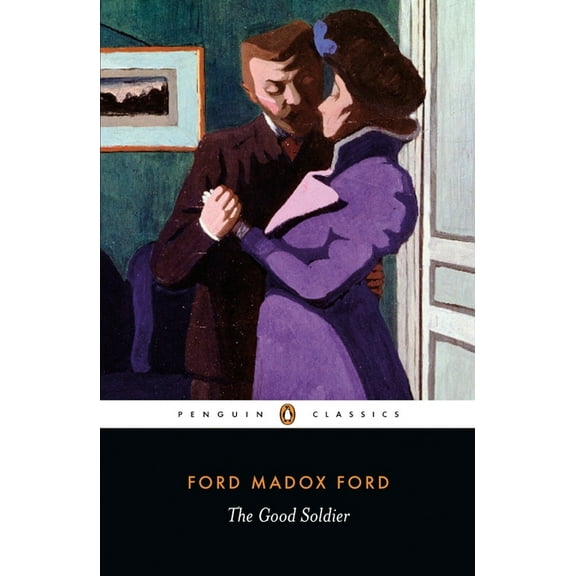
A controlled and unsettling novel of deception, memory, and moral ambiguity, presented through an unreliable and fragmentary narrative. In The Good Soldier, Ford Madox Ford constructs a story of intertwined relationships among two couples whose lives, at first glance ordered and respectable, gradually reveal hidden fractures and concealed truths. The narrative unfolds through retrospective recollection, where chronology is disrupted and certainty remains elusive.
Ford's method is central to the work's effect. The narrator's shifting perspective and incomplete understanding create a structure in which events are revisited, reinterpreted, and questioned, drawing attention to the instability of memory and the difficulty of arriving at objective truth. Beneath the surface of social propriety, the novel examines emotional repression, private transgression, and the quiet collapse of moral frameworks.
Regarded as a significant work of early twentieth-century fiction, The Good Soldier exemplifies the transition toward modernist narrative techniques, combining psychological depth with formal innovation. It remains essential reading for those interested in narrative structure, literary modernism, and the exploration of perception and truth in fiction.