

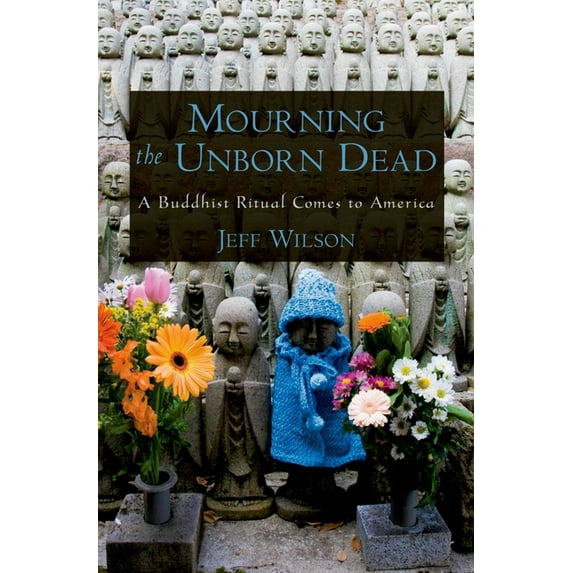
Mourning the Unborn Dead: A Buddhist Ritual Comes to America (Hardcover) by Jeff Wilson
(No ratings yet)
Key item features
- ISBN: 9780195371932
- Condition: New
- Hard cover
- Language: English
- Pages: 272
- Sewn binding. Cloth over boards. 272 p. Contains: Illustrations.
- Many Western visitors to Japan have been struck by the numerous cemeteries for aborted fetuses, which are characterized by throngs of images of the Bodhisattva Jizo, usually dressed in red baby aprons or other baby garments, and each dedicated to an individual fetus. Abortion is common in Japan and as a consequence one of the frequently performed rituals in Japanese Buddhism is mizuko-kuyo, a ceremony for aborted and miscarried fetuses. Over the past forty years, mizuko-kuyo has gradually come to America, where it has been appropriated by non-Buddhists as well as Buddhist practitioners. In this book, Jeff Wilson examines how and why Americans of different backgrounds have brought knowledge and performance of this Japanese ceremony to the United States. Drawing on his own extensive fieldwork in Japan and the U.S., as well as the literature in both Japanese and English, Wilson shows that the meaning and purpose of the ritual have changed greatly in the American context. In Japan, mizuko-kuyo is performed to placate the potentially dangerous spirit of the angry fetus. In America, however, it has come to be seen as a way for the mother to mourn and receive solace for her loss. Many American women who learn about mizuko-kuyo are struck by the lack of such a ceremony and see it as filling a very important need. Ceremonies are now performed even for losses that took place many years ago. Wilson's well-written study not only contributes to the growing literature on American Buddhism, but sheds light on a range of significant issues in Buddhist studies, interreligious contact, women's studies, and even bioethics.
Specs
- Book formatHardcover
- Fiction/nonfictionNon-Fiction
- GenreReligion
- Pages272
- Reading levelProfessional and Scholarly
- Number in series1
Current price is USD$98.17
Price when purchased online
Out of stock
How do you want your item?
Out of stock
About this item
Product details
9780195371932. New condition. Hard cover. Language: English. Pages: 272. Sewn binding. Cloth over boards. 272 p. Contains: Illustrations. Many Western visitors to Japan have been struck by the numerous cemeteries for aborted fetuses, which are characterized by throngs of images of the Bodhisattva Jizo, usually dressed in red baby aprons or other baby garments, and each dedicated to an individual fetus. Abortion is common in Japan and as a consequence one of the frequently performed rituals in Japanese Buddhism is mizuko-kuyo, a ceremony for aborted and miscarried fetuses. Over the past forty years, mizuko-kuyo has gradually come to America, where it has been appropriated by non-Buddhists as well as Buddhist practitioners. In this book, Jeff Wilson examines how and why Americans of different backgrounds have brought knowledge and performance of this Japanese ceremony to the United States. Drawing on his own extensive fieldwork in Japan and the U.S., as well as the literature in both Japanese and English, Wilson shows that the meaning and purpose of the ritual have changed greatly in the American context. In Japan, mizuko-kuyo is performed to placate the potentially dangerous spirit of the angry fetus. In America, however, it has come to be seen as a way for the mother to mourn and receive solace for her loss. Many American women who learn about mizuko-kuyo are struck by the lack of such a ceremony and see it as filling a very important need. Ceremonies are now performed even for losses that took place many years ago. Wilson's well-written study not only contributes to the growing literature on American Buddhism, but sheds light on a range of significant issues in Buddhist studies, interreligious contact, women's studies, and even bioethics.
- ISBN: 9780195371932
- Condition: New
- Hard cover
- Language: English
- Pages: 272
- Sewn binding. Cloth over boards. 272 p. Contains: Illustrations.
- Many Western visitors to Japan have been struck by the numerous cemeteries for aborted fetuses, which are characterized by throngs of images of the Bodhisattva Jizo, usually dressed in red baby aprons or other baby garments, and each dedicated to an individual fetus. Abortion is common in Japan and as a consequence one of the frequently performed rituals in Japanese Buddhism is mizuko-kuyo, a ceremony for aborted and miscarried fetuses. Over the past forty years, mizuko-kuyo has gradually come to America, where it has been appropriated by non-Buddhists as well as Buddhist practitioners. In this book, Jeff Wilson examines how and why Americans of different backgrounds have brought knowledge and performance of this Japanese ceremony to the United States. Drawing on his own extensive fieldwork in Japan and the U.S., as well as the literature in both Japanese and English, Wilson shows that the meaning and purpose of the ritual have changed greatly in the American context. In Japan, mizuko-kuyo is performed to placate the potentially dangerous spirit of the angry fetus. In America, however, it has come to be seen as a way for the mother to mourn and receive solace for her loss. Many American women who learn about mizuko-kuyo are struck by the lack of such a ceremony and see it as filling a very important need. Ceremonies are now performed even for losses that took place many years ago. Wilson's well-written study not only contributes to the growing literature on American Buddhism, but sheds light on a range of significant issues in Buddhist studies, interreligious contact, women's studies, and even bioethics.
info:
We aim to show you accurate product information. Manufacturers, suppliers and others provide what you see here, and we have not verified it.
Specifications
Book format
Hardcover
Fiction/nonfiction
Non-Fiction
Genre
Religion
Pages
272
Warranty
Warranty information
Please be aware that the warranty terms on items offered for sale by third party Marketplace sellers may differ from those displayed in this section (if any). To confirm warranty terms on an item offered for sale by a third party Marketplace seller, please use the 'Contact seller' feature on the third party Marketplace seller's information page and request the item's warranty terms prior to purchase.
Customer ratings & reviews
0 ratings|0 reviews
This item does not have any reviews yet
