


Find auto parts that fit
Let’s search for parts that fit your vehicle.RV Electrical in RV Parts & Accessories




















About RV Electrical in RV Parts & Accessories - Walmart.com
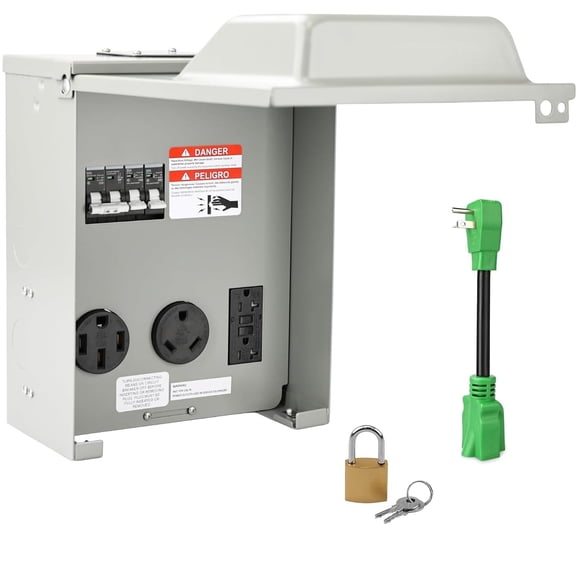
Your RV electrical setup works more smoothly when you match amps, plugs, and cord reach to your camper and campsite connection. Here, you can compare adapters, surge protectors, inlets, and cords for 30 Amp, 50 Amp, 15 Amp, and 20 Amp needs.
How to choose RV electrical parts by amperage
Start with amperage because your RV inlet and the campground pedestal must work together. Most shoppers can narrow choices by checking whether their rig uses 30 Amp or 50 Amp service.
If your campsite offers a household-style outlet, you may need a 15 Amp or 20 Amp adapter. That option gives you light power access when your setup matches the connection type.
When you compare RV electrical parts, look for clear amp labeling on plugs, connectors, and adapters. That step helps you avoid guesswork by matching the listed service to your trailer or motorhome inlet.
- You can match 30 Amp service for many travel trailers and compact motorhomes.
- You can choose 50 Amp service when your larger RV needs higher power capacity.
- You can keep a 15 Amp or 20 Amp adapter for household outlet compatibility.
- You can check inlet labels before choosing any RV power adapter or cord.
Choosing the right RV power adapter and plug configuration
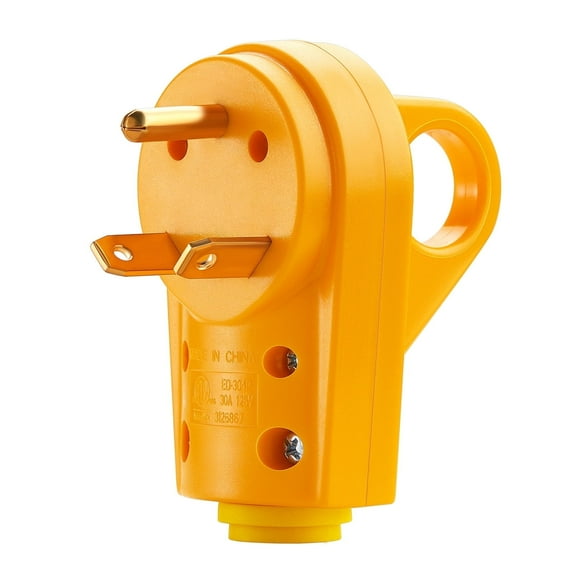
Next, compare connection type because plug shape matters as much as amperage. You can look for common configurations like TT-30P and 14-50P when you need campground compatibility.
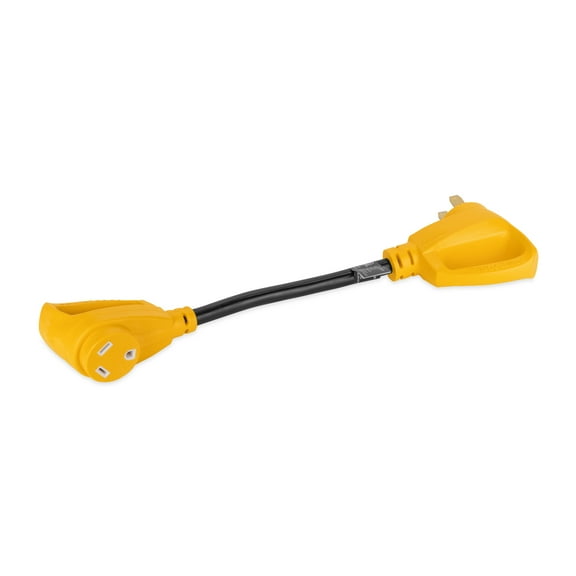
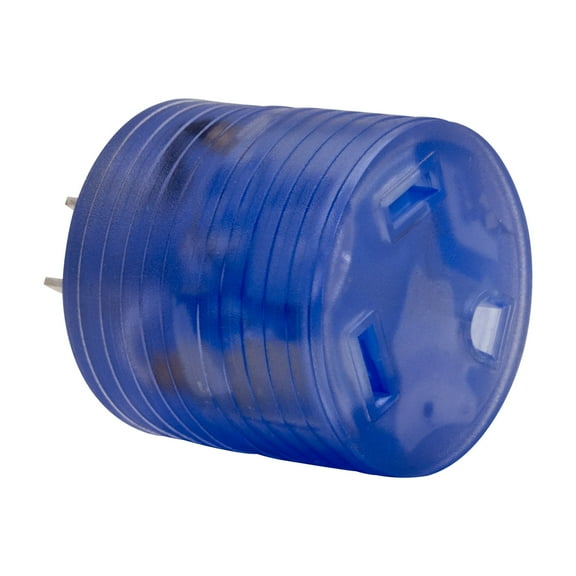
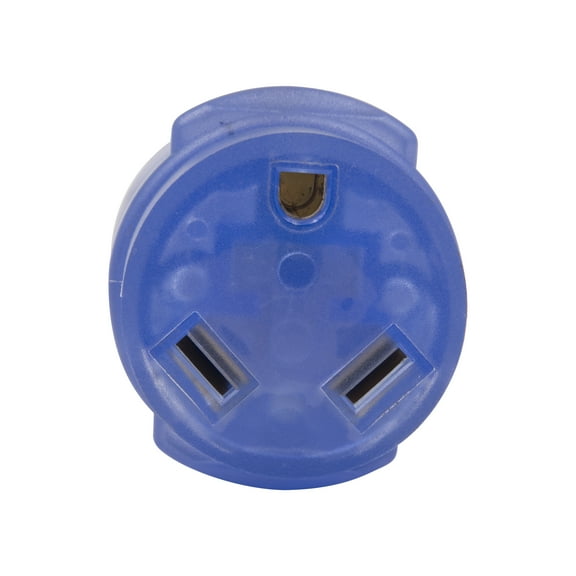
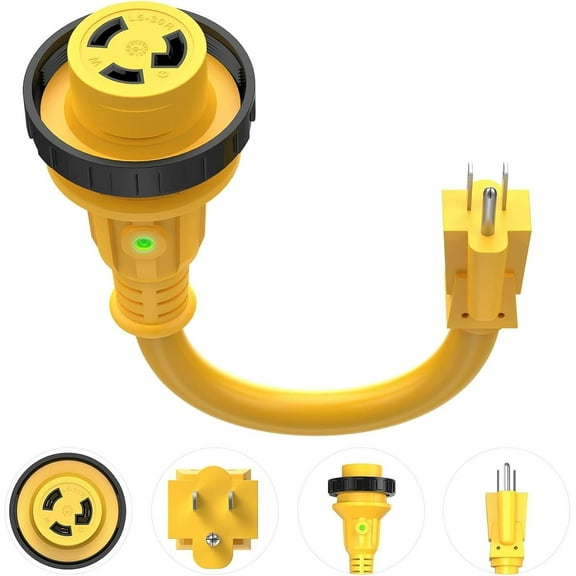
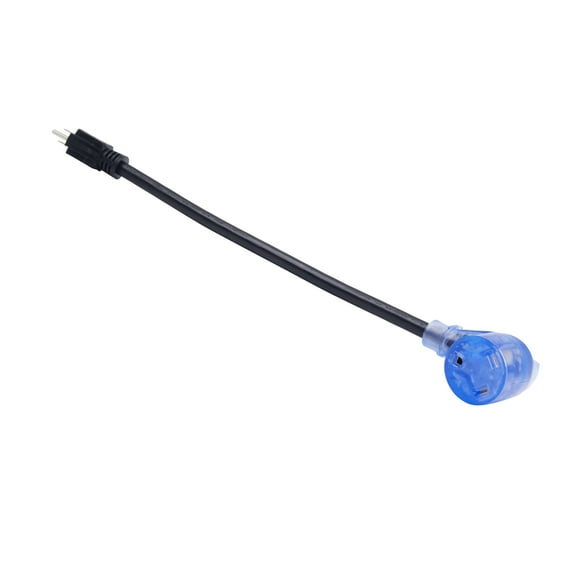
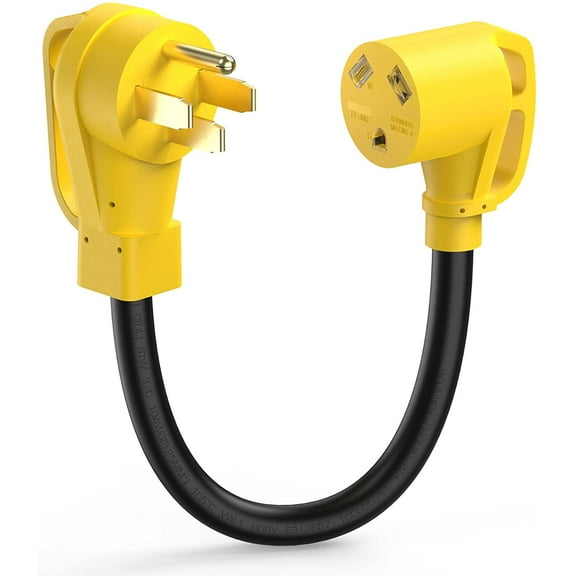
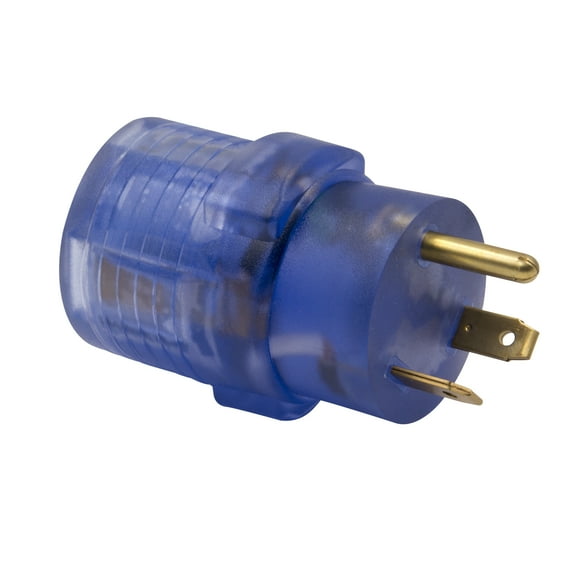
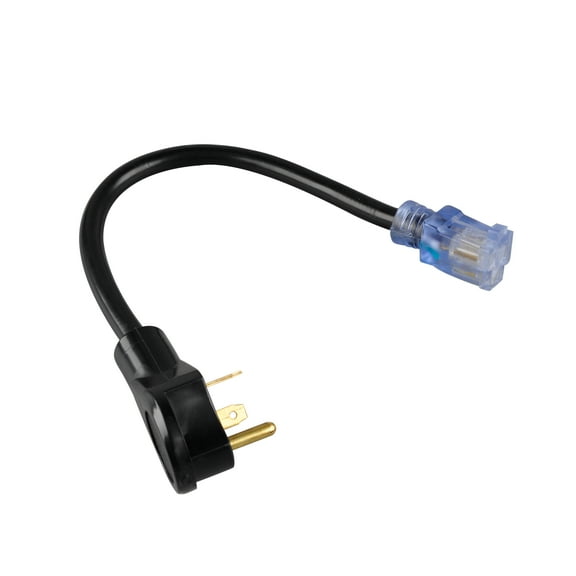
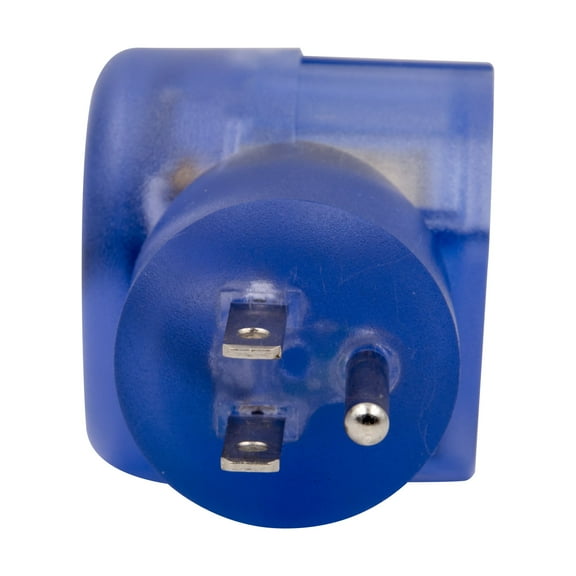
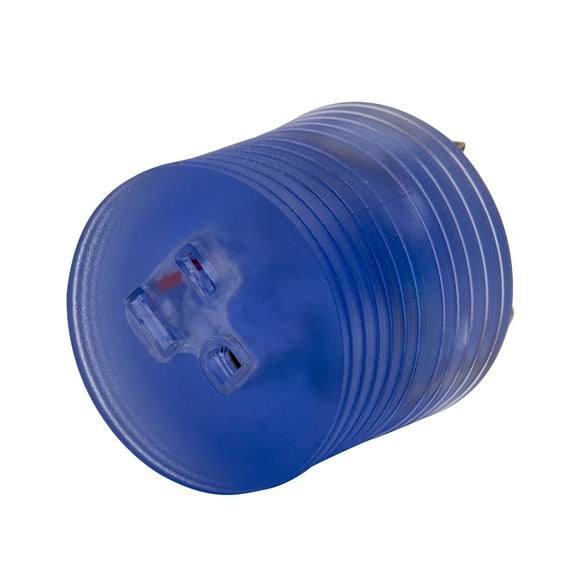
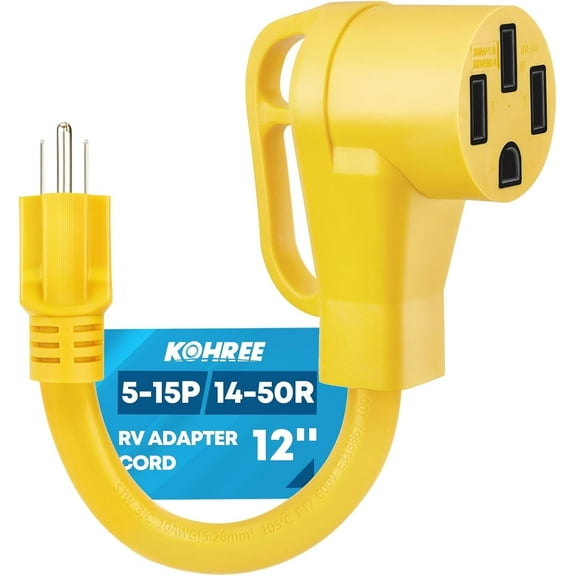
An RV power adapter lets you connect your RV plug to a different pedestal outlet style. That flexibility helps when your campsite offers a connection that doesn’t match your rig.
Before you choose, check whether you need a dogbone-style adapter, replacement plug, or inlet. You can narrow the field by comparing male and female ends side by side.
You may also want molded grips and easy-turn handles for simpler hookups. Those details help when your pedestal sits low, tight, or in an inconvenient spot.
What to look for in RV surge protector options
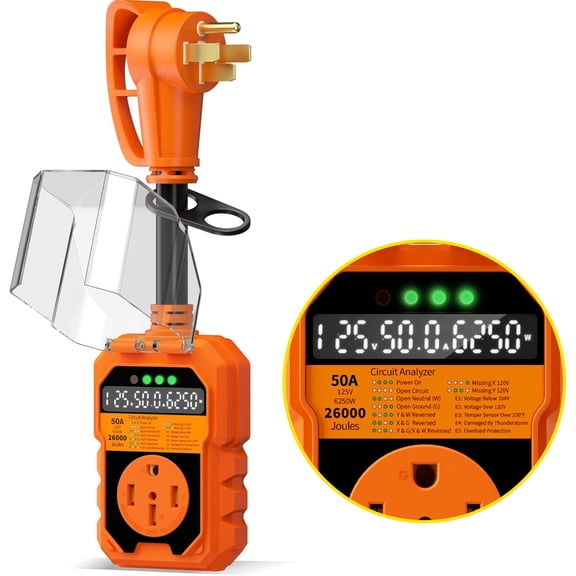
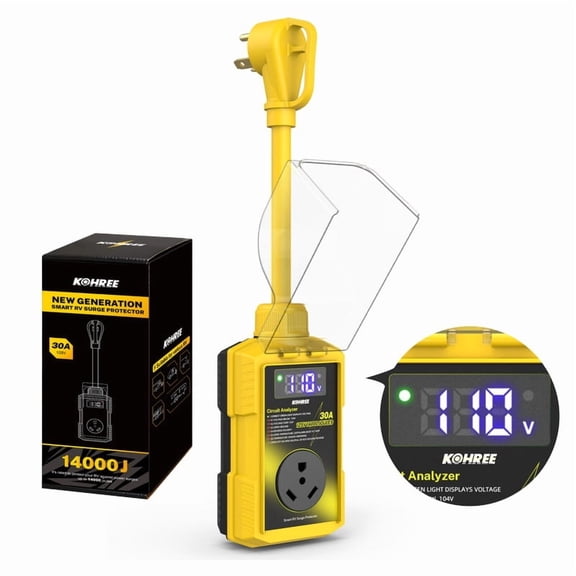
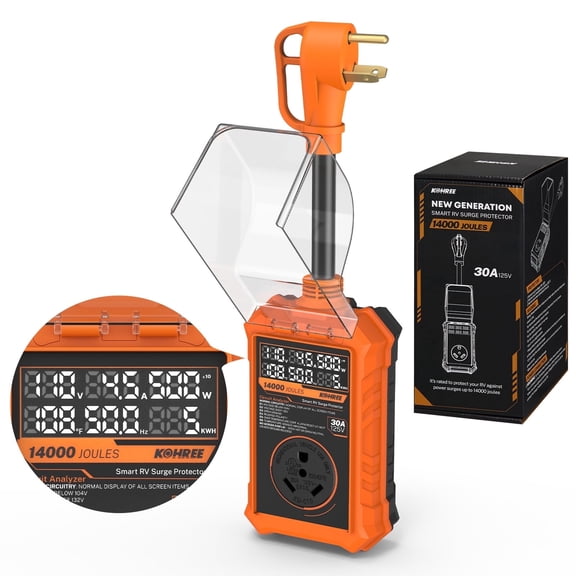
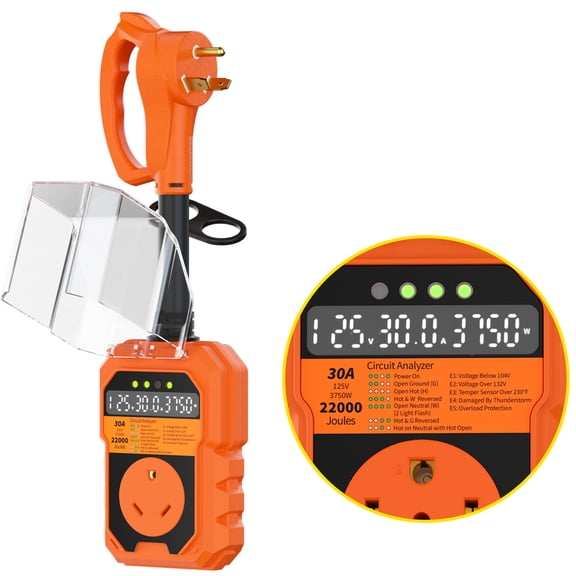
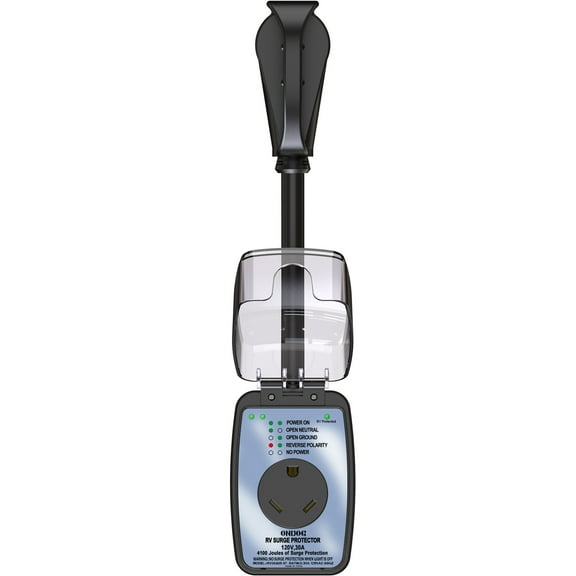
You may want an RV surge protector when you need another checkpoint between the pedestal and your RV. Diagnostic LEDs can show power status at a glance during setup.
Joule rating matters because it shows how much surge energy a protector handles. You can use that spec as one way to compare options in this category.
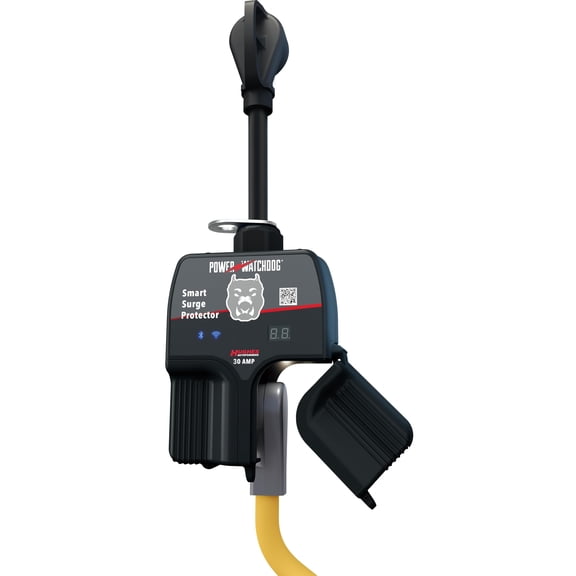
Look for weather-ready housings, locking rings, and clear indicator lights when you compare models. Those features support rainy hookups, overnight stays, and frequent campground moves.
Some designs combine monitoring and connection support in one unit for a simpler setup. You can keep your hookup routine more organized when indicator lights stay easy to read.
Comparing RV extension cord and RV power cord options
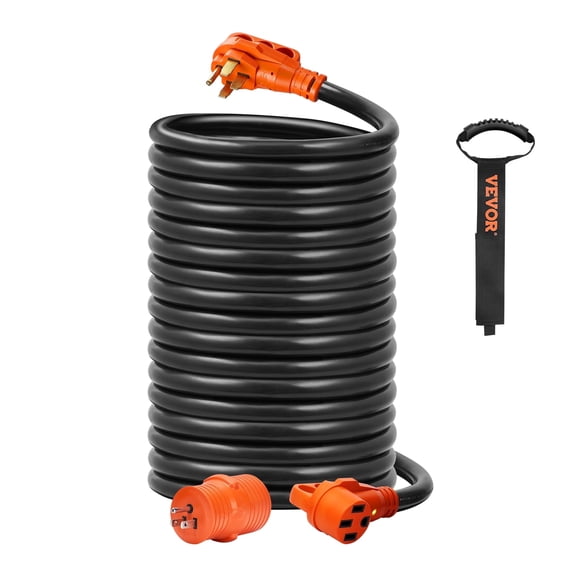
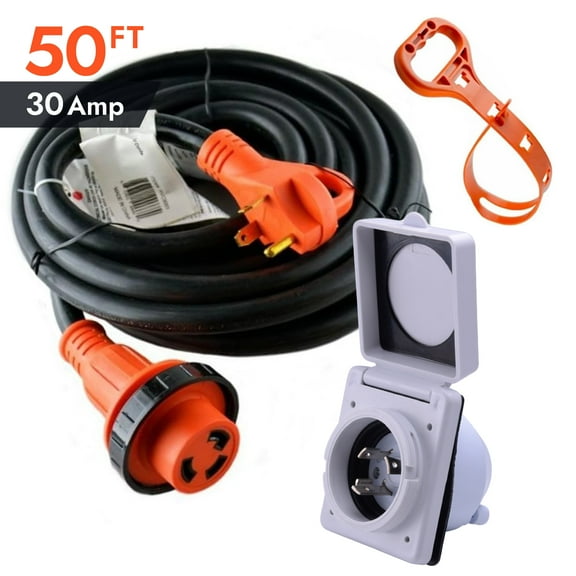
Measure the distance from your RV inlet to the campground pedestal before you choose cord length. Many shoppers decide between 10 ft, 25 ft, and 50 ft based on their usual parking setup.
An RV extension cord gives you extra reach when the pedestal sits farther from your parking spot. The right length helps you keep your setup cleaner without excess slack.
Your RV power cord choice should also include jacket flexibility and connector grip. You’ll notice simpler coiling and handling when a cord stays manageable in cooler weather.
You may prefer heavier-duty insulation and molded ends for repeated outdoor use. Those details matter if your RV sees frequent weekend trips or longer seasonal stays.
Understanding 12V DC and 120V AC RV electrical needs
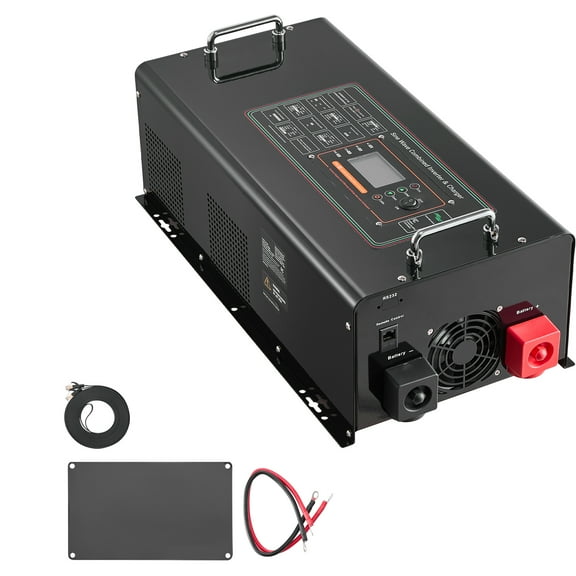
You can simplify shopping by separating 12V DC parts from 120V AC hookup gear. Your battery-connected accessories usually differ from your shore power cords, adapters, and surge devices.
When you review RV electrical choices, check whether the part supports onboard DC power or campground AC service. That step helps you avoid mismatches before you compare fit and length.
You may see inlets, plugs, and connection accessories made for one power system or the other. You can make a clear decision when you treat voltage as a basic compatibility filter.
Matching RV electrical to real camping setups
You might keep a 30 Amp adapter, a surge protector, and a 25 ft cord for routine campground travel. That combination covers many standard hookups when your trailer uses 30 Amp service.
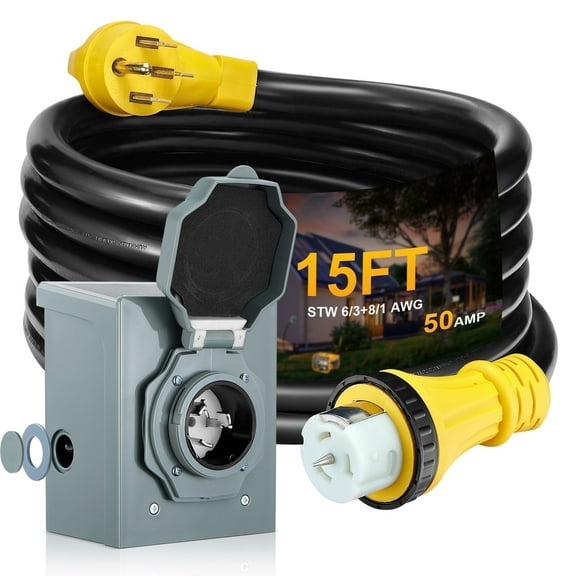
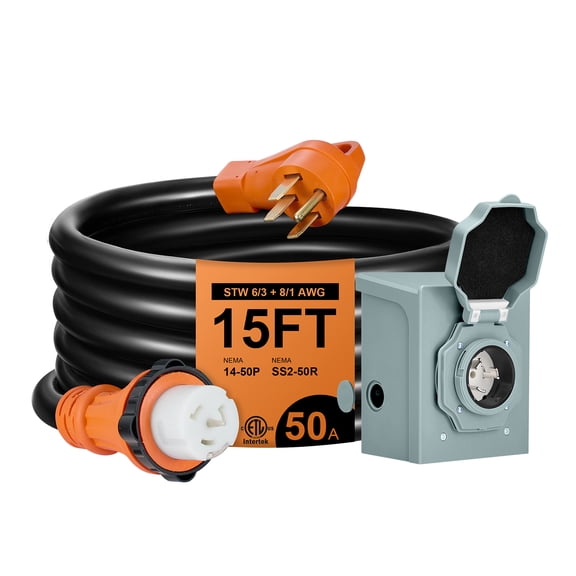
If your motorhome uses 50 Amp service, you may focus on higher-capacity cords and matching connectors. You can also compare pedestal adapters for trips where site power varies by campground.
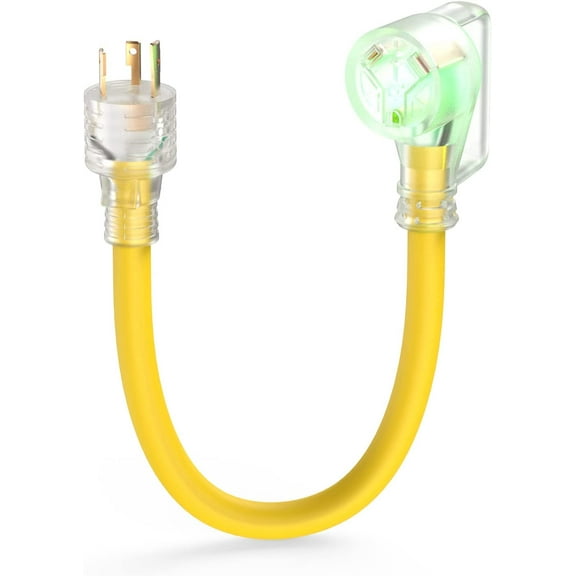
For driveway prep or light household connection, you may use a 15 Amp or 20 Amp adapter. That setup powers select functions when your connection type matches your rig’s requirements.
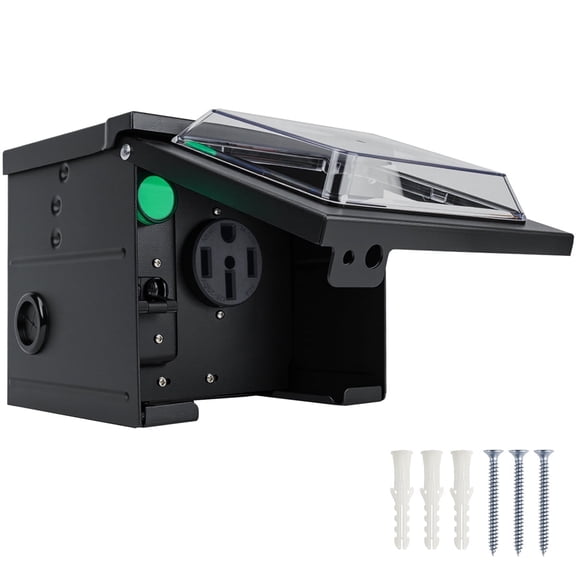
You can also choose replacement inlets and plugs when you want to refresh worn connection points. Your setup stays simpler to manage when every cord, end, and adapter matches your usual routine.
You can shop RV electrical with more confidence when you understand amps, voltage, plug style, and cord reach. Your hookup process becomes more predictable with parts matched to your RV.