



Hyper Tough Clean Up in Hyper Tough Tools














About Hyper Tough Clean Up in Hyper Tough Tools - Walmart.com
Thin wire brush options help you handle rust, paint, and detail cleanup with more control. You can compare Hyper Tough clean up tools by material, grip, and bristle style for the job ahead.
How to choose a thin wire brush
Start with brush material because it changes how aggressively you clean. You should compare brass, stainless steel, nylon, and carbon steel before you pick a brush.
Brass works well when you want lighter abrasion on metal parts and small fittings. You can use it for detail work where your surface needs a gentler touch.
Stainless steel suits jobs where you want strong scrubbing and resistance to moisture. You may choose it for grills, tools, or hardware that needs frequent cleanup.
Nylon gives you a nonmetal option for lighter residue and dust in tight spaces. You can use it when you want less scratching on delicate finishes.
Carbon steel gives you firm brushing for rust removal, paint stripping, and welding prep. You should consider it when stubborn buildup calls for a more aggressive pass.
What you gain from a utility cleaning brush
A utility cleaning brush helps you reach seams, corners, and narrow edges that larger tools miss. You can clean bolts, weld joints, and grooves with more precision.
The right brush also helps you match scrubbing strength to the surface in front of you. You avoid guesswork when you compare wire hardness and bristle stiffness before starting.
- You can target rust on metal parts without using a bulky scraper.
- You can strip loose paint from edges, frames, and hardware with controlled strokes.
- You can prep weld areas by clearing residue from tight lines and corners.
- You can handle detail cleaning on tools, grills, and shop equipment.
Handle design matters too because your grip affects control during repeated strokes. You may prefer ergonomic plastic, wood handle, or contoured grip styles based on your task.
Ergonomic plastic handles can feel secure when your hands are moving through longer cleanup sessions. Wood handle options may feel familiar when you want a classic, simple hold.
Contoured grip designs help you keep steady pressure along edges and small parts. You can compare handle shapes if you need reach into tight spots.
Key differences in bristles and handle styles
Bristle type changes how a brush contacts the surface and how focused the scrubbing feels. You should compare crimped wire, knotted wire, and straight wire before choosing.
Crimped wire spreads contact across the work area for lighter, more flexible brushing. You may choose it when you want more control on uneven surfaces.
Knotted wire feels firmer and more concentrated during tougher cleanup. You can use it for heavier rust or thicker paint on hard surfaces.
Straight wire gives you direct contact for precise work in narrow channels and edges. You should look for it when detail access matters more than broad coverage.
Bristle density also shapes your experience, even if packaging uses simple wording. You can expect stiffer, denser bristles to feel stronger on stubborn residue.
Softer or more flexible bristles can help when your project includes lighter buildup or smaller components. You should check product details if you need a brush for repeated fine cleaning.
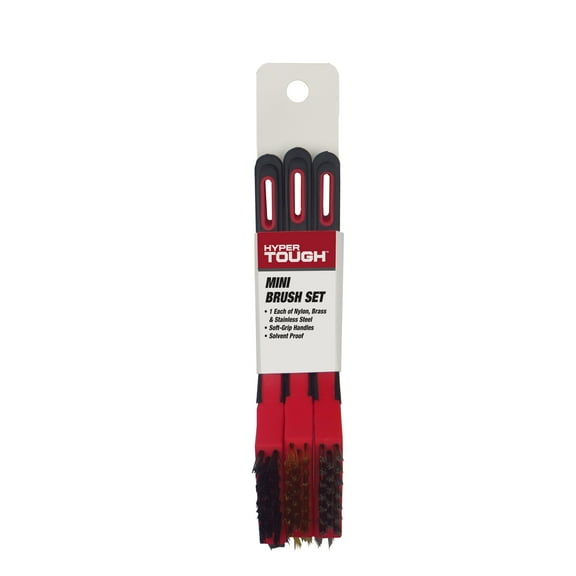
Hyper Tough options may include hand brushes, detail formats, and sets for varied tasks. You can compare brush counts and shapes when one project needs several cleaning approaches.
Matching a detail wire brush to your project
A detail wire brush works well when you need accuracy around threads, corners, and small hardware. You can use it for bicycle parts, clamps, hinges, and tool edges.
For rust removal, you should consider carbon steel or stainless steel with a firmer bristle style. You can clear flaky buildup from metal surfaces before repainting or reassembly.
For paint stripping, you may want a brush that reaches trim edges and hardware contours. You can use a thin wire brush where wide sanding tools feel awkward.
For welding prep, you should look for bristles that can clean seams and contact points. You can pair a firm brush with a comfortable handle for repeated passes.
For detail cleaning, brass or nylon can make sense when surfaces need a lighter touch. You may choose these materials for fittings, small tools, or finish-sensitive parts.
If you want one setup for mixed jobs, compare sets with several material types. You can keep separate brushes for rust, paint, and delicate cleanup to stay organized.
When you compare Hyper Tough clean up tools this way, your choice becomes clearer. You can select a thin wire brush that matches your surface, your grip, and your cleanup task.