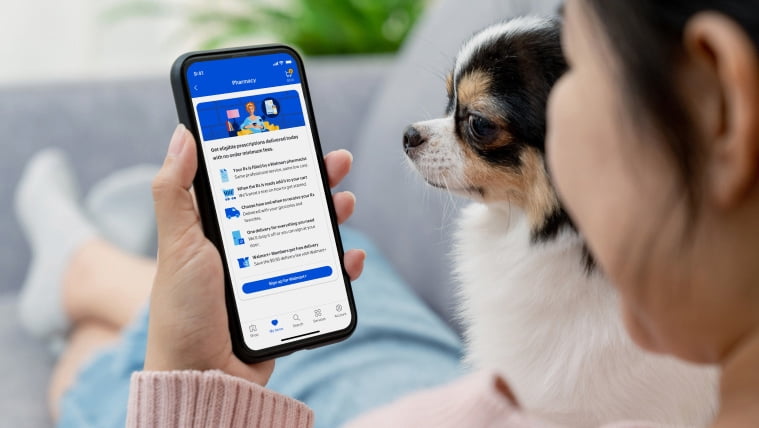
Walmart Pet Pharmacy

Pet care you can count on

Manage their health & medications with ease.

Stay on top of their needs

Find pet meds.

Find pet meds

Get Rx & treatment from the brands your vet recommends.

Find pet meds.
View pet profile.

View pet profile

Create, update or lookup their information.

View pet profile.
Request refill.

Request refill

Easily restock the meds they use the most.

Request refill.

Medications for every pet

Flea & tick protection

Solutions to help keep the pests away.

View all

Worm care & prevention

Keep your furry fam parasite-free.

View all
BLUE Natural Veterinary Diet
Prescription food for your pet.Learn more
Health & wellness for pets
Everything they need to thrive.Learn more

FAQ

How do I order prescription pet meds on Walmart.com?

To order prescription pet meds on Walmart.com, add your pet’s medication to your cart, enter your vet’s information at checkout, and Walmart verifies the prescription with your vet before it ships or is prepared for pickup.

Do I need a prescription for pet meds on Walmart.com?

If the item is labeled “Prescription required,” you will need a prescription to purchase your pet’s medication on Walmart.com. Non-prescription pet health products don’t require vet approval.

Can I set up Autoship or a subscription for pet prescriptions from Walmart?

Many prescriptions can be purchased as a one-time order, and subscriptions are available for eligible prescriptions when refills are allowed.

How do refills work for pet prescriptions from Walmart?

Refills depend on what your vet authorized. If you’re out of refills, you’ll need your vet to renew the prescription before you can pick up from your local Walmart pharmacy.

Can I use Express Delivery or same-day pickup for prescription pet meds?

Express Delivery and same-day pickup typically apply to non-prescription items. Prescription fulfillment and delivery options vary by medication and Walmart store location.

About Walmart Pet Pharmacy

Sewing supplies help you start repairs, alterations, and creative projects with the right tools from the first stitch. You can compare sewing machines, thread, needles, and cutting tools in one place, so your setup matches your fabric and skill level.

If you're hemming pants, piecing quilts, or building a sewing kit, you need category guidance that reflects real sewing decisions. You'll find practical details here, including machine types, stitch controls, and tools that matter for denim, knits, and delicate cotton.

How to choose sewing supplies for your projects

You should start with product type, because each item plays a different role at your table. You may need sewing thread for construction, sewing needles for fabric match, and fabric shears for clean, accurate cuts.

When you compare sewing kits, you should check whether they cover your daily basics or only emergency mending. You can look for measuring tape, dressmaker pins, hand needles, and small tools that support quick fixes and detailed work.

  • You can keep seams neat with thread weights that match your fabric and project.
  • You can cut patterns more accurately when your fabric shears stay dedicated to cloth.
  • You can mark and measure with more confidence when your measuring tape bends around curves and hems.
  • You can move from basic mending to custom projects when your sewing kit includes essential hand tools.

You also need to match your supplies to the work you actually do most often. If you sew garments, you may prioritize dressmaker pins, measuring tape, and hand-finishing tools over machine add-ons.

Choosing sewing machines by skill level and operation type

You can narrow sewing machines by how much guidance and control you want during setup and stitching. If you're a beginner, you may prefer simple controls, a clear threading path, and an automatic needle threader.

If you have intermediate experience, you might compare stitch count and adjustable settings for hems, decorative edges, and garment construction. If you're advanced, you may want finer control over motor speed, feed handling, and specialty stitch options.

You should also compare operation type before you commit to a machine. Mechanical models give you direct dial-based control, while computerized models help you manage stitch selection with more precision.

If you focus on decorative details, you may prefer embroidery-focused options for monograms and motif work. If you finish seams often, you might choose a serger for trimmed edges and a cleaner inside finish.

You can also review included accessories before choosing a machine for your sewing supplies setup. You may want bobbins, presser feet, foot pedals, or starter needles included, so you can begin projects without extra sourcing.

What to look for in sewing thread, sewing needles, and sewing tools

You should match sewing thread to both fabric weight and project purpose. Lightweight fabrics often pair well with finer thread, while thicker materials may call for sturdier options that hold seams neatly.

When you compare sewing needles, you need to consider fabric type before anything else. You may use one needle style for woven cotton and another for elastic knits, denim, or leather.

You can prevent skipped stitches and uneven results when your needle size suits your material. You should check whether your project involves stretch, thick layers, or topstitching, because each task changes your needle choice.

Your sewing tools matter just as much as your machine, especially when accuracy shapes the final result. You can measure hems, trim seam allowances, and prepare pattern pieces more cleanly with dedicated tools.

Look for fabric shears that feel balanced in your hand and stay reserved for fabric only. You can keep cuts straighter and edges cleaner when your blades aren't shared with paper or packaging.

You may also want dressmaker pins that hold layers in place without slowing you down during assembly. Your measuring tape should bend easily around curves, waistlines, sleeves, and home décor projects.

Matching sewing supplies to fabric compatibility

You should think about fabric compatibility before you choose a machine or refill your tool kit. Lightweight fabrics often need smooth feeding and finer needles, so your seams stay controlled and your material stays manageable.

When you sew heavy-duty denim, you may look for stronger needle options and a machine built for thicker layers. You can compare motor speed and feeding performance to understand how the machine handles repeated passes.

If your projects include leather, you need compatible needles and a machine designed for tougher material movement. You should also check whether specialty feet or accessories support straighter seams on firm surfaces.

For elastic fabrics and knits, you may need stretch-friendly needles and stitch options that move with the fabric. You can get more reliable results when your setup matches jerseys, leggings, or other flexible materials.

You should treat fabric compatibility as a practical filter, not a small detail. When your sewing supplies suit the material, you can spend less time adjusting and more time finishing clean, usable pieces.

How to match sewing supplies to real projects

If you're learning to sew, you may start with a beginner-friendly machine and a basic set of sewing supplies. You can handle hems, patches, pillow covers, and simple repairs with thread, needles, pins, and measuring tools.

When you sew clothing regularly, you may need sewing thread in multiple colors and needles for different fabric weights. You can switch between woven shirts, denim hems, and knit basics more easily with a well-planned tool set.

If quilting is part of your routine, you might focus on precise cutting and consistent piecing. You can use fabric shears, measuring tape, pins, and machine settings that support straight seams and repeatable blocks.

For home décor work, you may need supplies that handle curtains, cushion covers, and table linens. You can compare material thickness, stitch options, and cutting tools before starting larger fabric lengths.

If you take on detailed finishing or frequent seam cleanup, you may add a serger to your setup. You can pair it with core sewing tools and sewing kits to support both construction and final edge work.

With the right sewing supplies, you can build a setup that fits your projects, fabrics, and experience instead of forcing one tool to do everything. You gain cleaner cuts, smoother stitching, and a more dependable start on every project.