

Reclining Sectionals in Sectional Sofas & Couches
































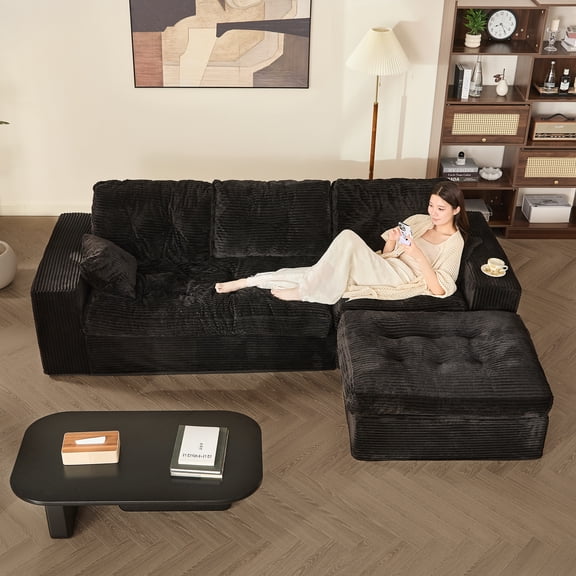


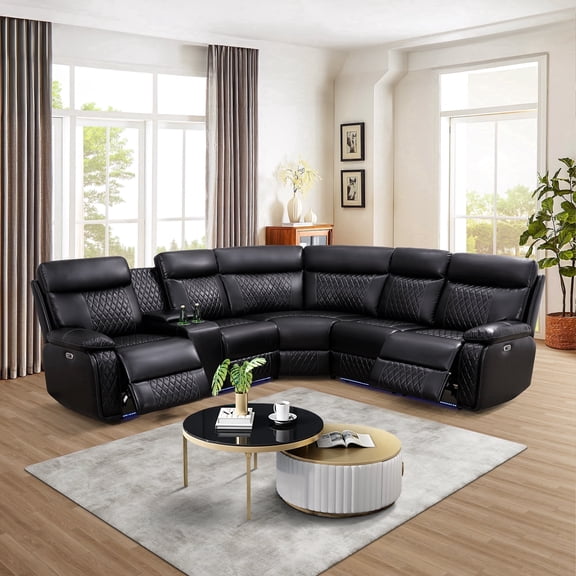


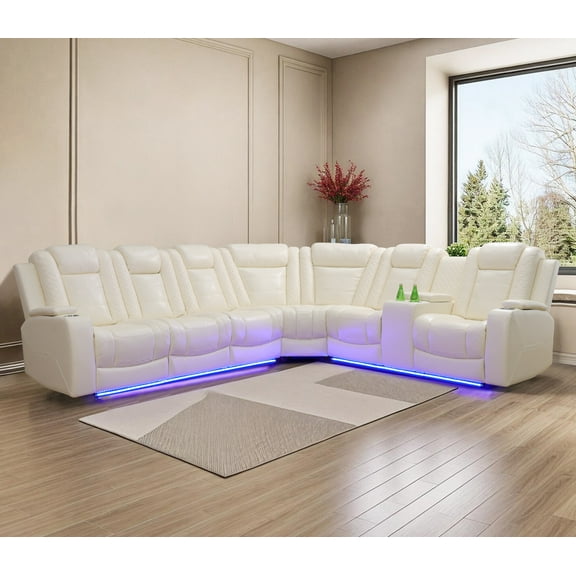


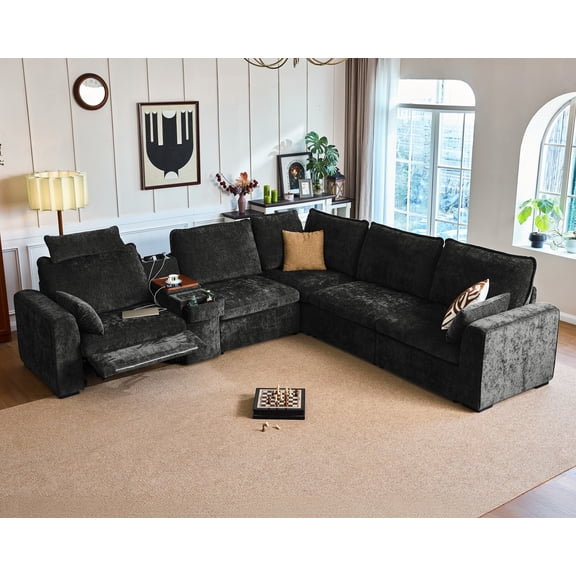


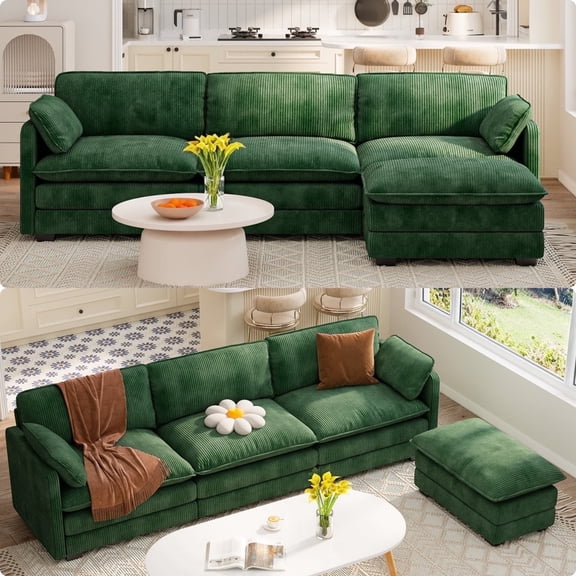


About Reclining Sectionals in Sectional Sofas & Couches - Walmart.com
Reclining sectionals give you stretch-out comfort, flexible seating, and built-in lounging for movie nights, guests, and everyday living room routines. You can compare power controls, wall-hugger designs, and roomy layouts that fit the way your household relaxes.
How to choose reclining sectionals for your space
Start by measuring your room, your walkways, and your distance from the wall. You’ll want enough space for footrests to extend and seats to recline smoothly.
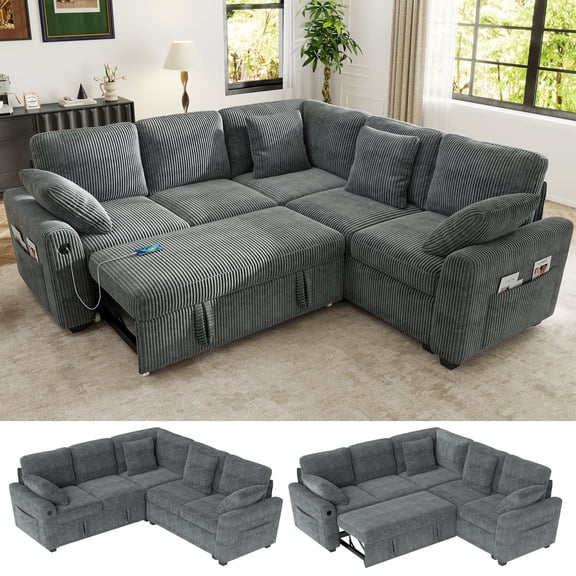
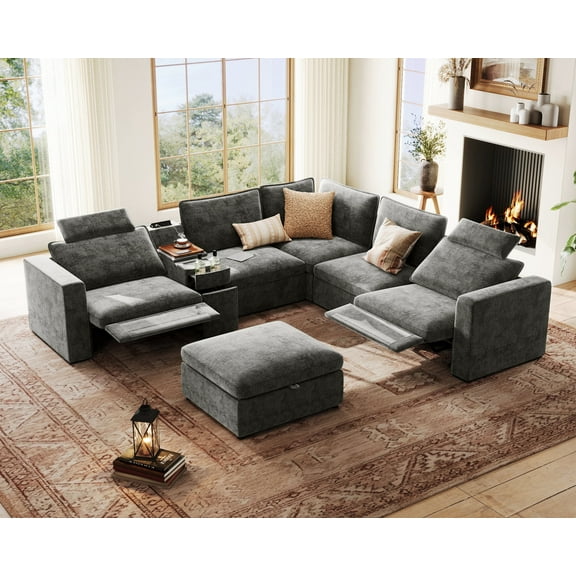
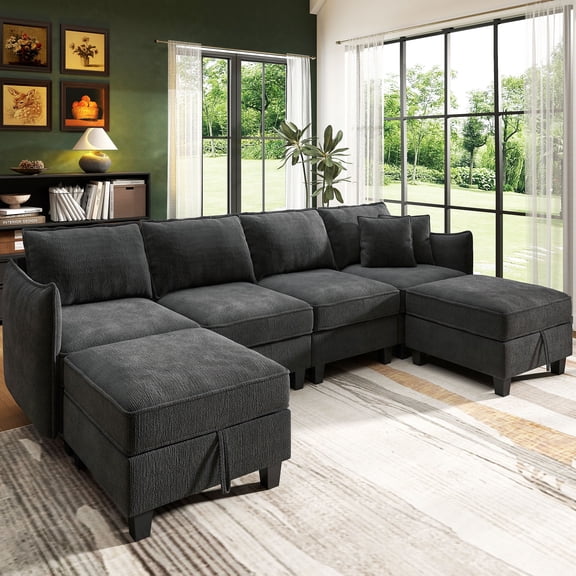
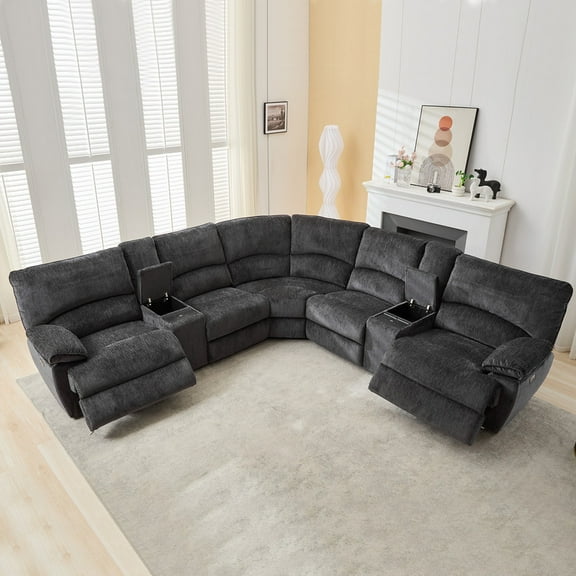
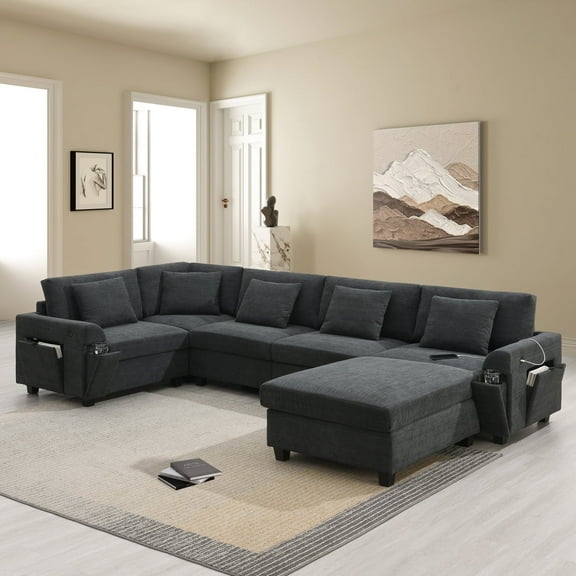
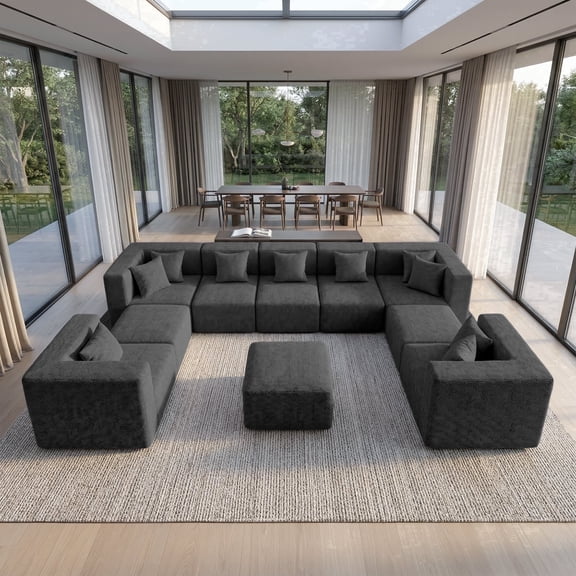
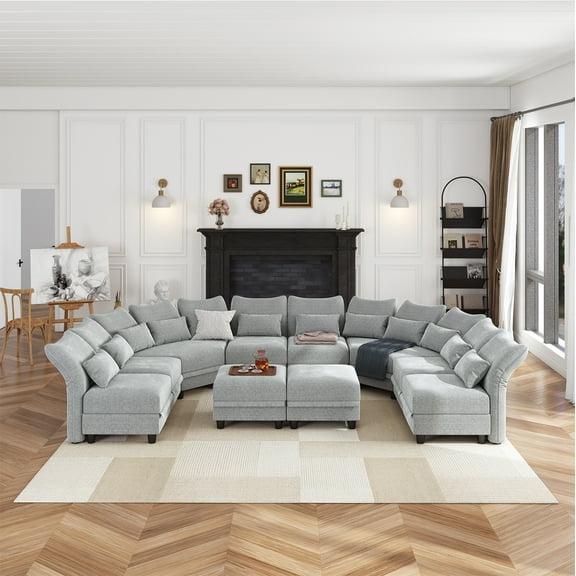
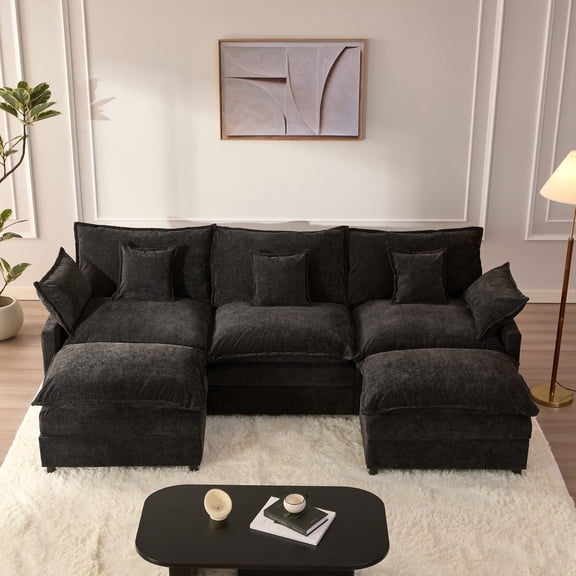
Configuration matters just as much as size when you’re planning your layout. You can compare l-shaped reclining sectionals, u-shaped setups, symmetrical arrangements, and modular pieces for different floor plans.
Orientation also affects how your room functions once you bring seating home. You should check whether a left-arm facing or right-arm facing layout matches your television wall, windows, and traffic flow.
- You can use l-shaped layouts to define an open living area.
- You can choose modular designs when your room may change later.
- You can select wall-hugger seating when you need tighter placement.
- You can compare seating counts for daily family use and guest overflow.
Seating capacity helps you narrow choices without guessing. You may prefer a three-piece design for compact rooms, while a seven-plus seater suits larger gathering spaces.
Choosing power reclining sectionals or manual recline
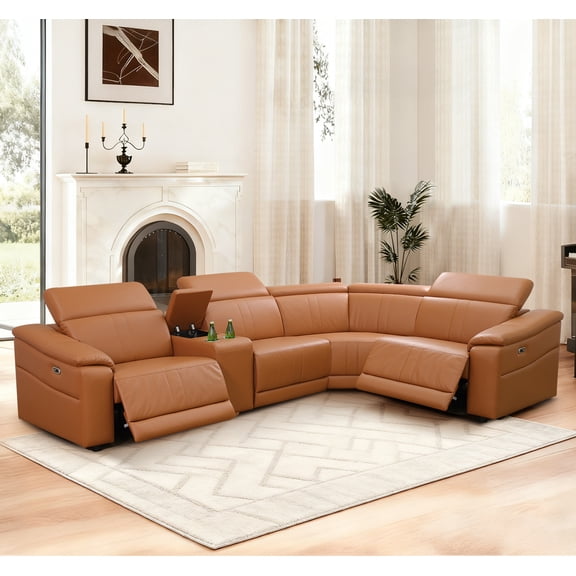
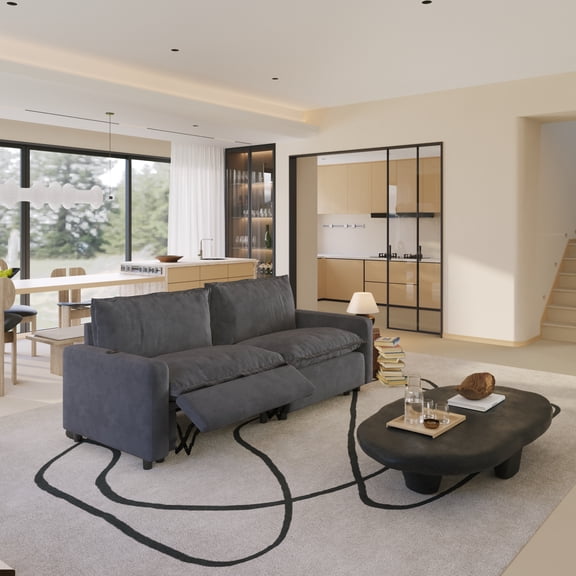
Recline mechanism is one of your biggest buying decisions. You can choose power reclining sectionals for push-button control or manual options for simple pull-and-release operation.
Power seats can feel easier to adjust when you want small position changes. You should check outlet access first, because your placement needs to work with nearby power sources.
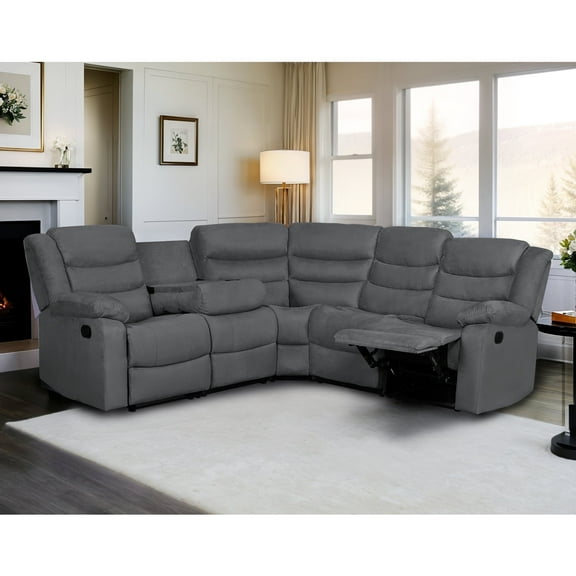
Manual recline can suit rooms where you want fewer cords in view. You may like that setup when you want straightforward lounging without planning around outlet locations.
Dual-power designs add more control to your daily routine. You can move the headrest and footrest separately, which helps you fine-tune your angle for reading or watching shows.
Wall-hugger or zero-wall clearance construction can make a large sofa fit more efficiently. You should look for that feature when your sectional needs to sit closer to the wall.
Comparing materials in reclining sectional sofas
Material affects how your seating looks, feels, and fits your household habits. You can compare leather reclining sectionals, faux leather surfaces, microfiber textures, and polyester blends with your routine in mind.
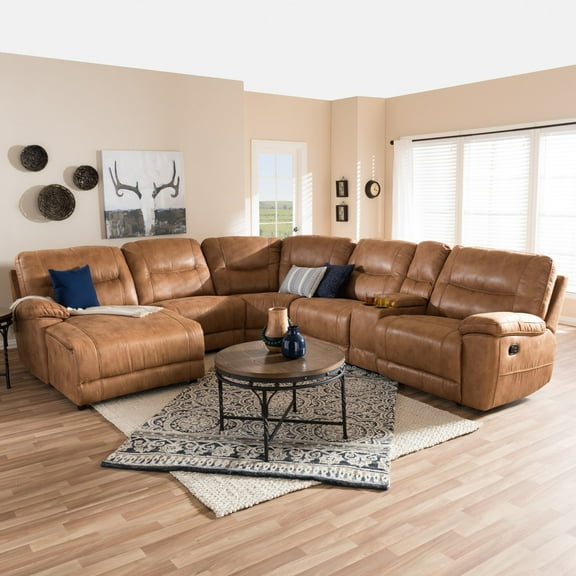
Leather can give your room a polished look and a smooth hand feel. You may prefer it when you want easy wipe-clean maintenance and a classic living room style.
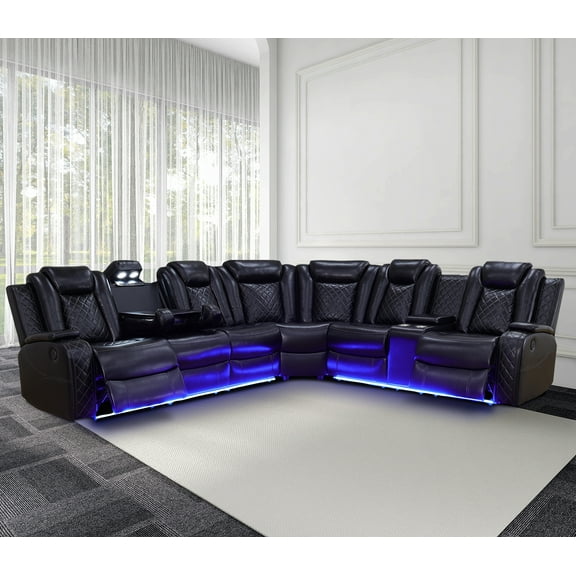
Faux leather offers a similar visual direction with a different surface feel. You can consider it when you want a sleek finish that coordinates with modern or transitional rooms.
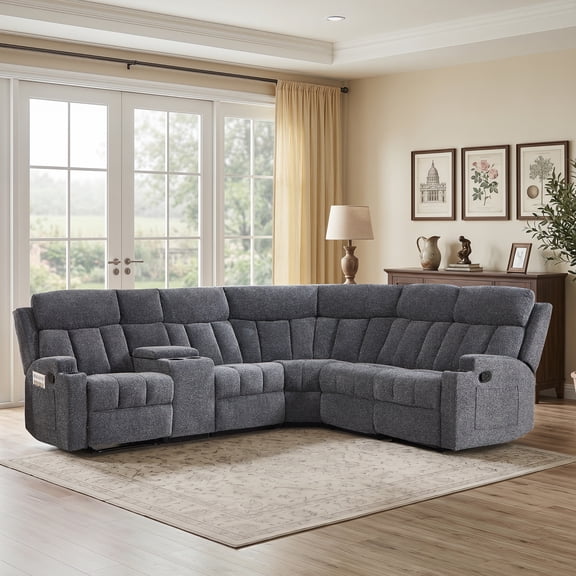
Microfiber works well when your household uses the sofa every day. You may appreciate its soft touch and pet-friendly texture that can help hide light wear.
Polyester blend upholstery can balance texture, color variety, and everyday practicality. You should compare weave feel, cushion firmness, and cleanability before choosing fabric reclining sectional couches.
Matching configuration and features to your routine
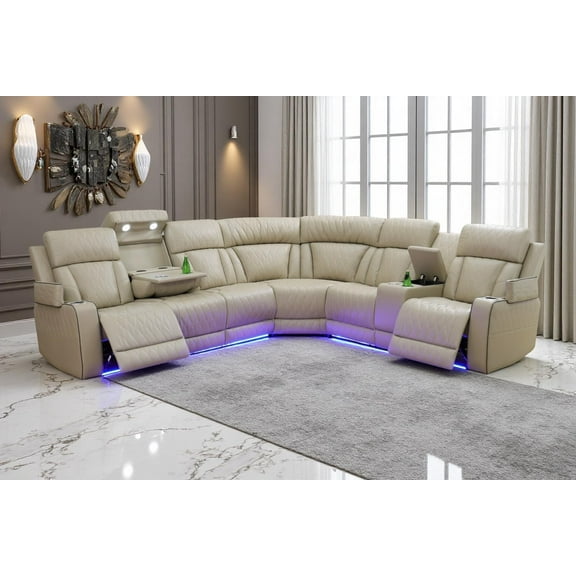
Special features can change how your sectional functions from morning to night. You can look for consoles with cupholders, USB ports, storage chaises, and arm designs that support your habits.
A center console can keep remotes, drinks, and small items within easy reach. You may want that layout when your sectional doubles as your main movie-night seating zone.
USB ports can make charging more convenient from your usual seat. You should check port placement if you often use your phone, tablet, or e-reader while relaxing.
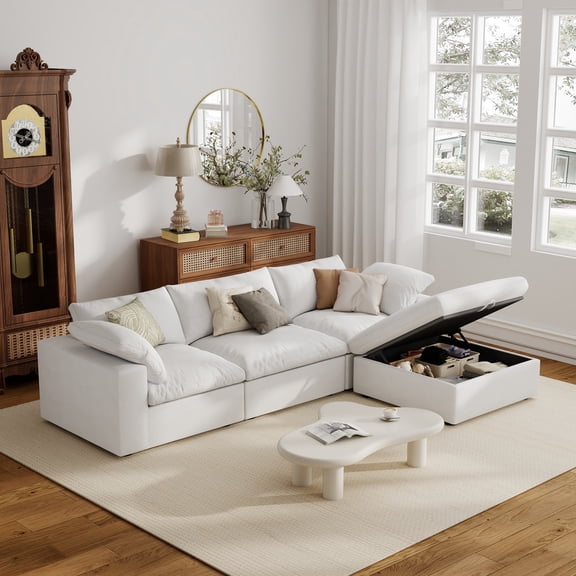
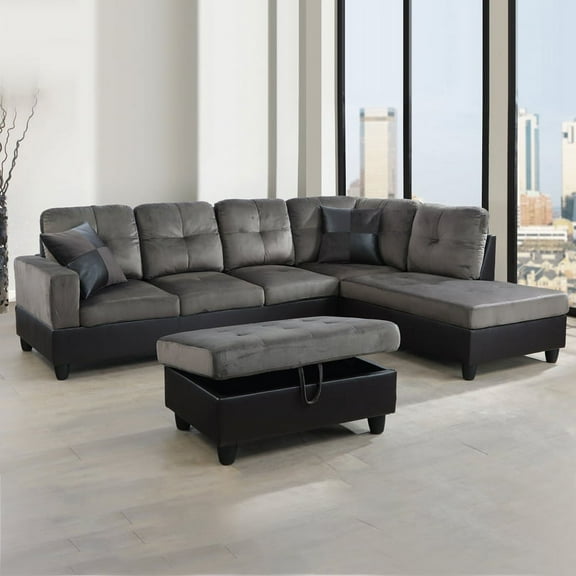
A storage chaise gives you an extra place for throws, pillows, or game controllers. You can use that feature to keep your living room tidier without adding another storage piece.
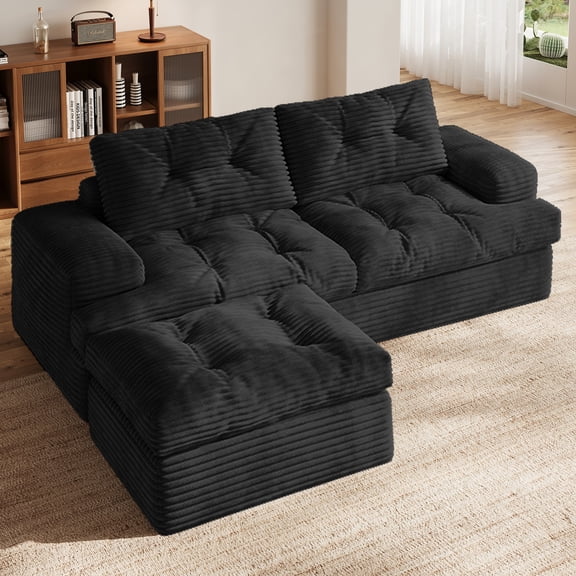
Small reclining sectionals can still include comfort-focused details when your room has limited square footage. You can prioritize a compact footprint, wall-hugger motion, and smart arm placement for easier movement.
Using reclining sectional sofas in real homes
You can build a family room around a sectional that reclines at both ends and seats several people comfortably. You’ll notice that larger configurations support shared viewing, conversation, and everyday lounging.
If your apartment or townhouse has a tighter footprint, you can focus on a smaller configuration. You should measure entryways, corners, and stair turns along with your final room dimensions.
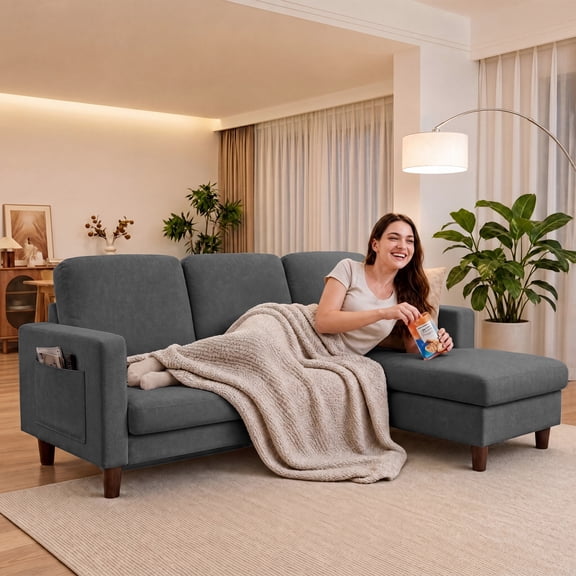
For open layouts, you can use reclining sectionals to separate the living area from dining or kitchen space. You may find that an l-shaped silhouette creates structure without adding extra furniture.
If your room hosts guests often, you can choose a symmetrical or u-shaped design with broad seating coverage. You’ll have more places for everyone to settle in during long visits.
When your household includes pets or active daily use, you can compare microfiber and polyester blend upholstery closely. You should pair your material choice with the texture and cleanup routine you prefer.
With the right measurements, mechanism, and material, you can choose reclining sectionals that fit your room and your routine with less guesswork. You’ll end up with seating that supports comfortable lounging, organized entertaining, and smoother everyday use.