

Hot ShotOrthoEcoVengerShubugEcoLogicHarrisAdamsHygea NaturalBOTAGUARDRaidBest Bee BrothersPF HarrisTotal ToolsRIDQARUNAlvantorBayerHygeabugmdBONIDEEcoClear ProductsMGKEcoPestNature's DomeUnbrandedQonioiEradicatorJT EatonNature's MACENOBRANDPREMO GUARDBedlamBUGGSLAYEREcoSmartUnited IndustriesAllersearch LaboratoriesANMUYUMBagmrtehoCatcher LabsClaireDekoToyzDoktor DoomEco Living FriendlyEcoPCOEcoRaiderEcoSeemEDHITNREnvuelbeeEWXYGreen Bean BuddyHarris Famous Roach TabletsHawthorne GardeningHNLLCHomvireJiayuKumdkdMaggie's FarmMinty TeesMORESECNisus CorpPest Control Products DepotReefer-GallerRentokillRieatalloSkimskloSterifabSulaicaiTopukaibaTSUNHVaidhaiWJSPXWSHYWyotijayZep
Sort by|
Bed Bug Spray for Effective Bed Bug Treatment Solutions(161)
Uses item details. Price when purchased online
EcoVenger (Formerly EcoRaider) 16 oz Plant-Based Bed Bug Killer RTU Spray, Price $19.95

Sponsored
$1995
EcoVenger (Formerly EcoRaider) 16 oz Plant-Based Bed Bug Killer RTU Spray
4.6 out of 5 stars
Free shipping, arrives in 3+ days
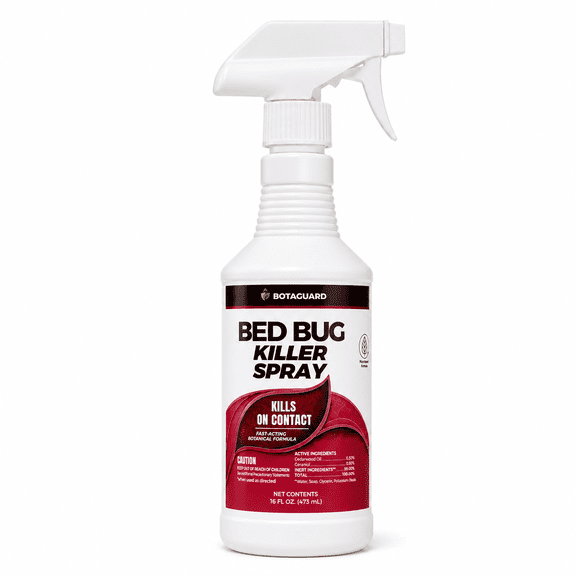
BotaGuard Bed Bug Killer Spray, Kills on Contact, Fast-Acting Plant-Based Formula with Cedarwood Oil, Ready-to-Use, 16 fl oz, Price $18.59
Sponsored
$1859
BotaGuard Bed Bug Killer Spray, Kills on Contact, Fast-Acting Plant-Based Formula with Cedarwood Oil, Ready-to-Use, 16 fl oz
5 out of 5 stars
Save with

Shipping, arrives Sat, Oct 17
Only 6 left
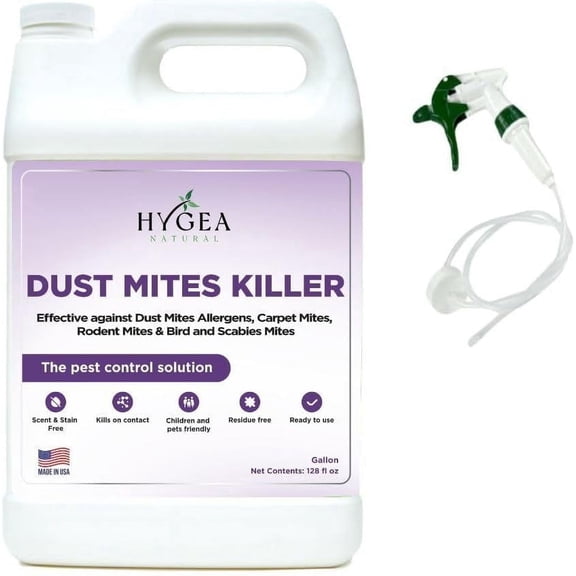
Hygea Natural Dust Mite Spray, Non Toxic, Kid Safe, and Pet Safe Pest Control Spray, 128 oz, Price Now $59.99 Was $85.00 Options from $13.50
Sponsored
Now$5999$85.00Options from $13.50
Hygea Natural Dust Mite Spray, Non Toxic, Kid Safe, and Pet Safe Pest Control Spray, 128 oz
4.3 out of 5 stars
Free shipping, arrives in 3+ days
Best Bee Brothers Shake + Shield Natural Bed Bug Spray with Essential Oils, Peppermint, Rosemary and Cedarwood, 2 Pack, Price $13.99

Sponsored
$1399
Best Bee Brothers Shake + Shield Natural Bed Bug Spray with Essential Oils, Peppermint, Rosemary and Cedarwood, 2 Pack
4 out of 5 stars
Free shipping, arrives in 3+ days
Best seller, Hot Shot Indoor Pyrethroid-Resistant Bed Bug Killer, 17.5 Ounces, Price $7.94 45.4 ¢/oz Options from $7.94 – $15.88
Best seller

2 options
Available in additional 2 optionsPrice $7.94 45.4 ¢/oz Options from $7.94 – $15.8818624.4 out of 5 Stars. 1862 reviews
$79445.4 ¢/ozOptions from $7.94 – $15.88
Hot Shot Indoor Pyrethroid-Resistant Bed Bug Killer, 17.5 Ounces
4.4 out of 5 stars
Save with
Delivery as soon as 33 minsShipping, arrives tomorrowPickup as soon as tomorrow
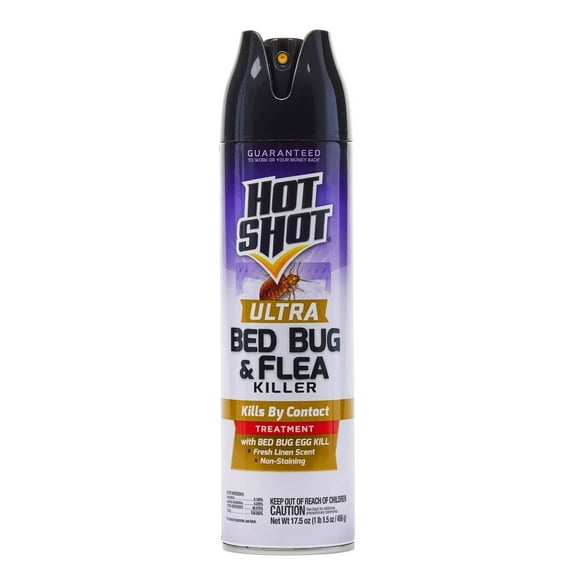
Overall pick, Hot Shot Ultra Bed Bug & Flea Killer Aerosol Formula, 17.5 Ounces, Price Now $10.48 Was $13.59 59.9 ¢/oz Options from $10.48 – $20.96
Overall pick
2 options
Available in additional 2 optionsPrice Now $10.48 Was $13.59 59.9 ¢/oz Options from $10.48 – $20.9616464.4 out of 5 Stars. 1646 reviews
Now$1048$13.5959.9 ¢/ozOptions from $10.48 – $20.96
Hot Shot Ultra Bed Bug & Flea Killer Aerosol Formula, 17.5 Ounces
4.4 out of 5 stars
Save with
Delivery as soon as 33 minsShipping, arrives tomorrowPickup as soon as tomorrow
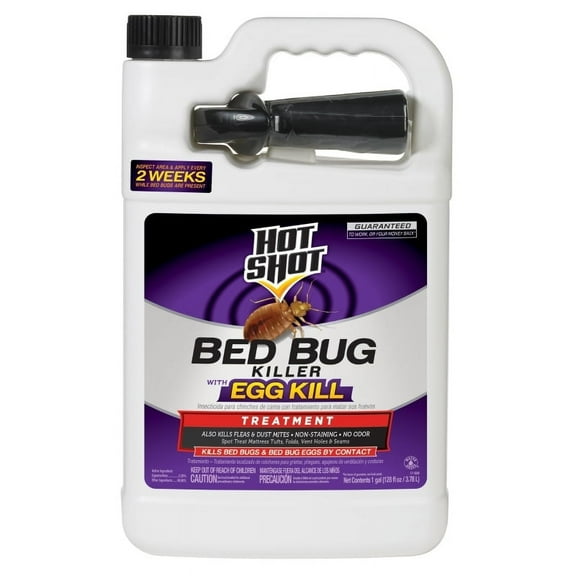
Hot Shot Bed Bug Killer Spray, Kills Bed Bugs and Eggs Indoors, 1 Gallon, Price $13.56 10.6 ¢/fl oz
2 sizes
Available in additional 2 sizesPrice $13.56 10.6 ¢/fl oz25654.3 out of 5 Stars. 2565 reviews
$135610.6 ¢/fl oz
Hot Shot Bed Bug Killer Spray, Kills Bed Bugs and Eggs Indoors, 1 Gallon
4.3 out of 5 stars
Save with
Shipping, arrives tomorrow
Low stock
100+ bought since yesterday, Ortho Home Defense Max Bed Bug, Flea and Tick Killer with Comfort Wand, 1 gal., Price Now $16.22 Was $24.49 12.7 ¢/fl oz
100+ bought since yesterday
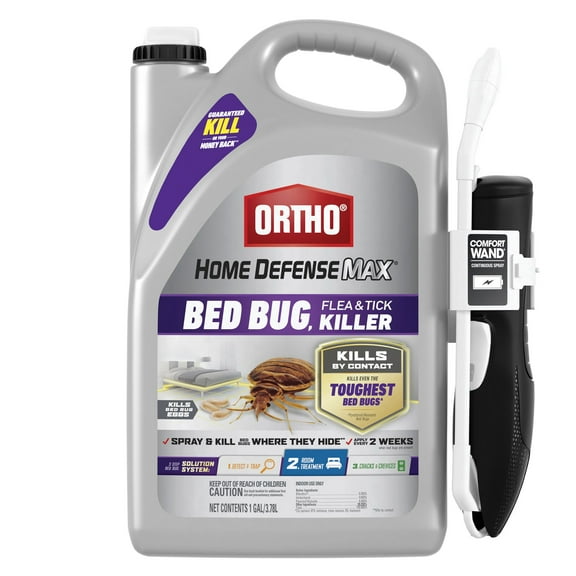
Price Now $16.22 Was $24.49 12.7 ¢/fl oz24634.5 out of 5 Stars. 2463 reviews
Now$1622$24.4912.7 ¢/fl oz
Ortho Home Defense Max Bed Bug, Flea and Tick Killer with Comfort Wand, 1 gal.
4.5 out of 5 stars
Save with
Shipping, arrives tomorrow
Low stock
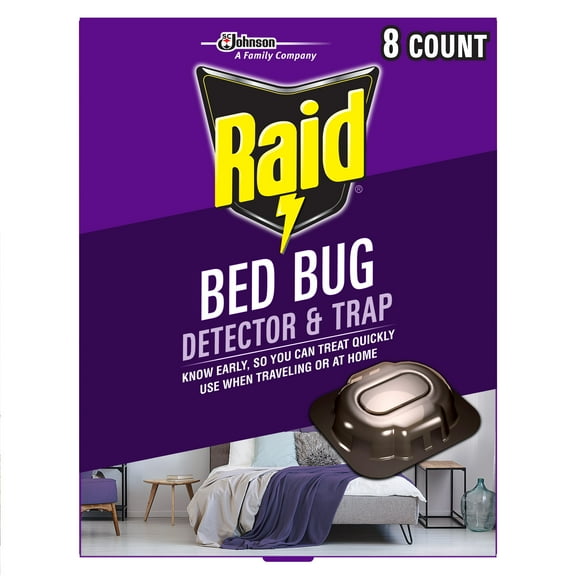
Raid Bed Bug Dete Countor & Trap, Inse Count Killer, For Home or Travel, 8 Count, Price $16.99
Price $16.9958773.9 out of 5 Stars. 5877 reviews
$1699
Raid Bed Bug Dete Countor & Trap, Inse Count Killer, For Home or Travel, 8 Count
3.9 out of 5 stars
Free shipping, arrives Sat, Oct 17
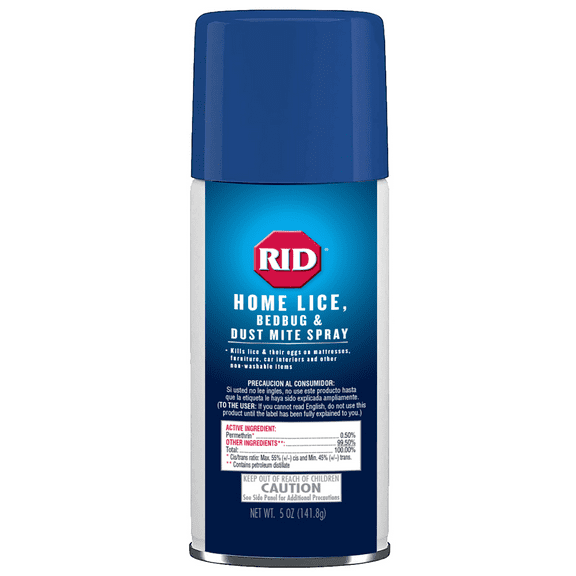
RID Home Lice Treatment Spray for Lice, Bed Bugs & Dust Mites, 5 oz, 1 Pack, Price $8.99 $1.80/oz
Price $8.99 $1.80/oz5074.4 out of 5 Stars. 507 reviews
$899$1.80/oz
RID Home Lice Treatment Spray for Lice, Bed Bugs & Dust Mites, 5 oz, 1 Pack
4.4 out of 5 stars
Save with
Shipping, arrives tomorrow
Best Bee Brothers Shake + Shield Natural Bed Bug Room and Linen Spray, 8oz, Essential Oils, Price $19.99

Sponsored
$1999
Best Bee Brothers Shake + Shield Natural Bed Bug Room and Linen Spray, 8oz, Essential Oils
4.3 out of 5 stars
Free shipping, arrives in 3+ days
Hygea Natural Lice, Mite, and Bed Bug Travel Spray Bed Bug Treatment Travel Bug Spray, Extra Strength, 3 fl oz, 3 Pack, Price $34.00 Options from $13.18

Sponsored
$3400Options from $13.18
Hygea Natural Lice, Mite, and Bed Bug Travel Spray Bed Bug Treatment Travel Bug Spray, Extra Strength, 3 fl oz, 3 Pack
4.1 out of 5 stars
Free shipping, arrives Sat, Oct 17
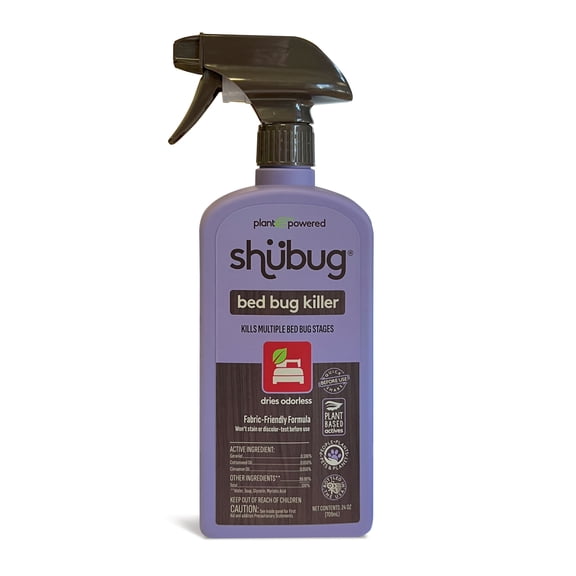
Shubug Plant-Powered Bed Bug Pest Killer Spray with 24 oz Trigger, Price $9.97 41.5 ¢/fl oz Options from $9.97 – $35.89
2 options
Available in additional 2 optionsPrice $9.97 41.5 ¢/fl oz Options from $9.97 – $35.891844.5 out of 5 Stars. 184 reviews
$99741.5 ¢/fl ozOptions from $9.97 – $35.89
Shubug Plant-Powered Bed Bug Pest Killer Spray with 24 oz Trigger
4.5 out of 5 stars
Save with
Shipping, arrives tomorrow
Stop Bugging Me Bed Bug Treatment & Repellent Spray for Bed Bugs – All-Natural, Non-Toxic, Poison Free | Indoor Use | Non-Aerosol Trigger Spray | 8 oz - 774262, Price Now $8.99 Was $9.99 Options from $5.68

3 sizes
Available in additional 3 sizesPrice Now $8.99 Was $9.99 Options from $5.682474.1 out of 5 Stars. 247 reviews
Now$899$9.99Options from $5.68
Stop Bugging Me Bed Bug Treatment & Repellent Spray for Bed Bugs – All-Natural, Non-Toxic, Poison Free | Indoor Use | Non-Aerosol Trigger Spray | 8 oz - 774262
4.1 out of 5 stars
Free shipping, arrives in 3+ days
Raid Bed Bug Foaming Spray, Treatment to Kill Pyrethroid-resistant Bed Bugs, 16.5 oz., Price $10.84 65.7 ¢/oz

2 options
Available in additional 2 optionsPrice $10.84 65.7 ¢/oz12444.4 out of 5 Stars. 1244 reviews
$108465.7 ¢/oz
Raid Bed Bug Foaming Spray, Treatment to Kill Pyrethroid-resistant Bed Bugs, 16.5 oz.
4.4 out of 5 stars
Save with
Delivery as soon as 33 minsShipping, arrives tomorrowPickup as soon as tomorrow
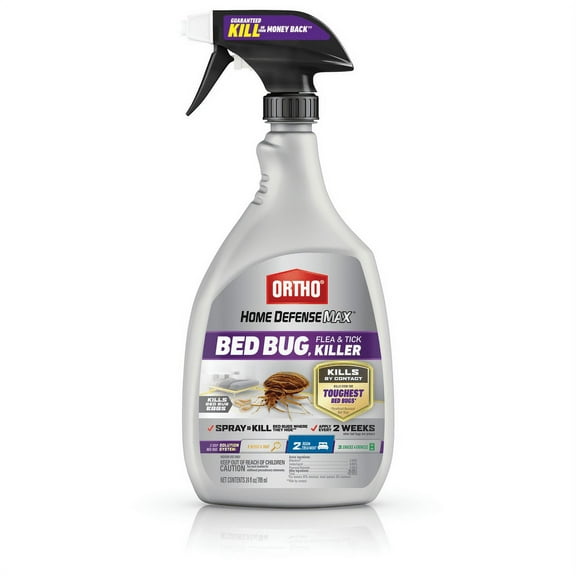
Ortho Home Defense Max Bed Bug, Flea & Tick Killer, 24 oz., Kills Bed Bugs, Price $11.96 49.8 ¢/fl oz
Price $11.96 49.8 ¢/fl oz11404.4 out of 5 Stars. 1140 reviews
$119649.8 ¢/fl oz
Ortho Home Defense Max Bed Bug, Flea & Tick Killer, 24 oz., Kills Bed Bugs
4.4 out of 5 stars
Save with
Shipping, arrives tomorrow
Ortho Home Defense Max Bed Bug Killer, 18 oz, Price Now $11.97 Was $14.49 66.5 ¢/oz Options from $11.97 – $23.94

2 options
Available in additional 2 optionsPrice Now $11.97 Was $14.49 66.5 ¢/oz Options from $11.97 – $23.943574.3 out of 5 Stars. 357 reviews
Now$1197$14.4966.5 ¢/ozOptions from $11.97 – $23.94
Ortho Home Defense Max Bed Bug Killer, 18 oz
4.3 out of 5 stars
Save with
Shipping, arrives tomorrow
Harris Egg Kill and Resistant Bed Bug Killer 32oz, Price $26.90

Price $26.902124.5 out of 5 Stars. 212 reviews
$2690
Harris Egg Kill and Resistant Bed Bug Killer 32oz
4.5 out of 5 stars
Free shipping, arrives Sat, Oct 17
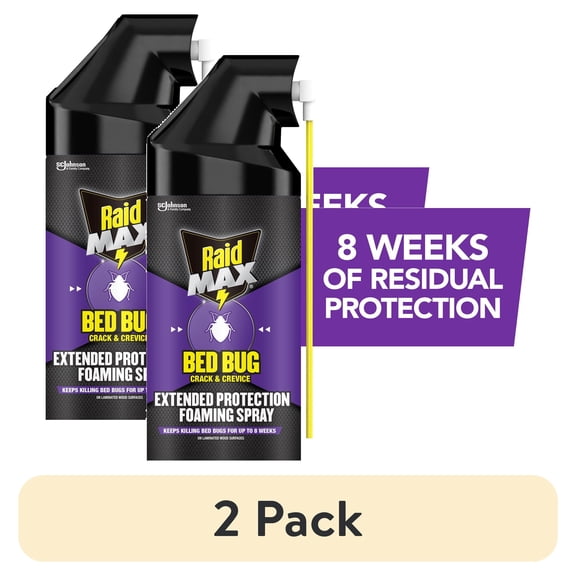
(2 pack) Raid Max Bed Bug & Flea Foaming Spray, 8 Week Residual Protection Bed Bug Control, 17.5 oz, Price $27.94 79.8 ¢/oz Options from $13.97
2 options
Available in additional 2 optionsPrice $27.94 79.8 ¢/oz Options from $13.973234.4 out of 5 Stars. 323 reviews
$279479.8 ¢/ozOptions from $13.97
(2 pack) Raid Max Bed Bug & Flea Foaming Spray, 8 Week Residual Protection Bed Bug Control, 17.5 oz
4.4 out of 5 stars
Save with
Delivery as soon as 33 minsShipping, arrives Fri, Oct 16Pickup as soon as tomorrow
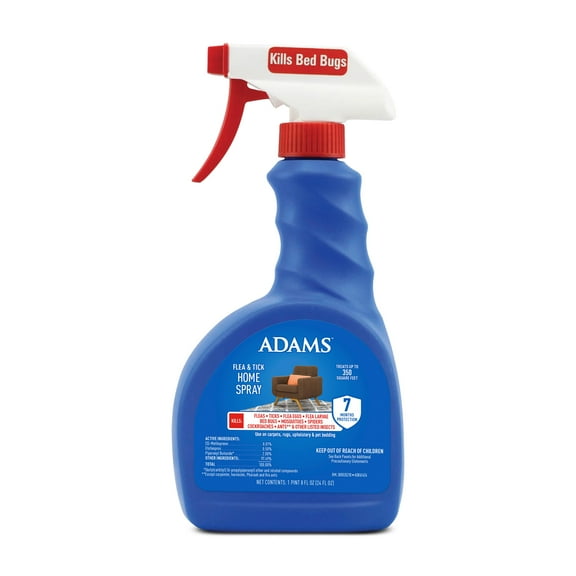
100+ bought since yesterday, ADAMS Flea & Tick Home Spray for Indoor Treatment, Kills Bed Bugs, Fleas, & Ticks, For Carpet, Furniture & Pet Bedding, Controls Fleas, Ticks, Bed Bugs, Cockroaches, Spiders & Mosquitoes, 24 fl oz, Price Now $14.46 Was $16.99 60.3 ¢/fl oz Options from $14.46 – $57.84
100+ bought since yesterday
4 options
Available in additional 4 optionsPrice Now $14.46 Was $16.99 60.3 ¢/fl oz Options from $14.46 – $57.8417584.4 out of 5 Stars. 1758 reviews
Now$1446$16.9960.3 ¢/fl ozOptions from $14.46 – $57.84
ADAMS Flea & Tick Home Spray for Indoor Treatment, Kills Bed Bugs, Fleas, & Ticks, For Carpet, Furniture & Pet Bedding, Controls Fleas, Ticks, Bed Bugs, Cockroaches, Spiders & Mosquitoes, 24 fl oz
4.4 out of 5 stars
Save with
Delivery as soon as 33 minsShipping, arrives tomorrowPickup as soon as tomorrow
Alvantor Bed Bug Killer Spray Natural Plant Based Mattress Treatment for Home, 4fl.oz, Price $5.99 Options from $5.99 – $11.99

Sponsored
$599Options from $5.99 – $11.99
Alvantor Bed Bug Killer Spray Natural Plant Based Mattress Treatment for Home, 4fl.oz
Save with
Shipping, arrives in 3+ days
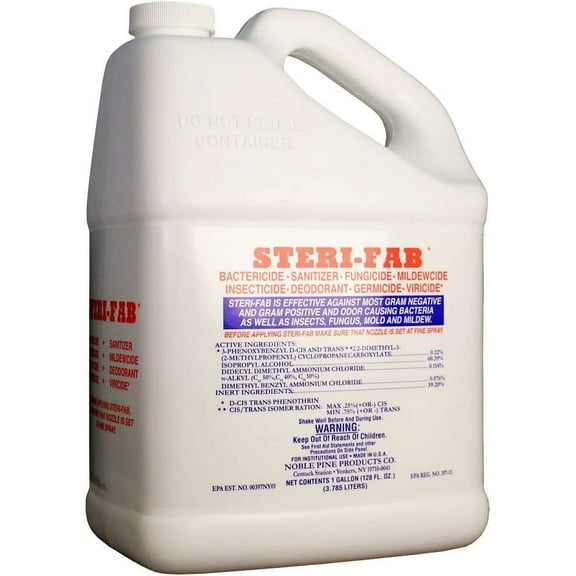
Steri-fab All-In-One Disinfectant & Insecticide Spray – Kills Bed Bugs, Fleas, Mites, Roaches, Viruses, Fungi, & Odors – Quick-Drying, Non-Residual, 1 Gallon Jug, Price $71.57
Sponsored
$7157
Steri-fab All-In-One Disinfectant & Insecticide Spray – Kills Bed Bugs, Fleas, Mites, Roaches, Viruses, Fungi, & Odors – Quick-Drying, Non-Residual, 1 Gallon Jug
4.4 out of 5 stars
Free shipping, arrives in 3+ days
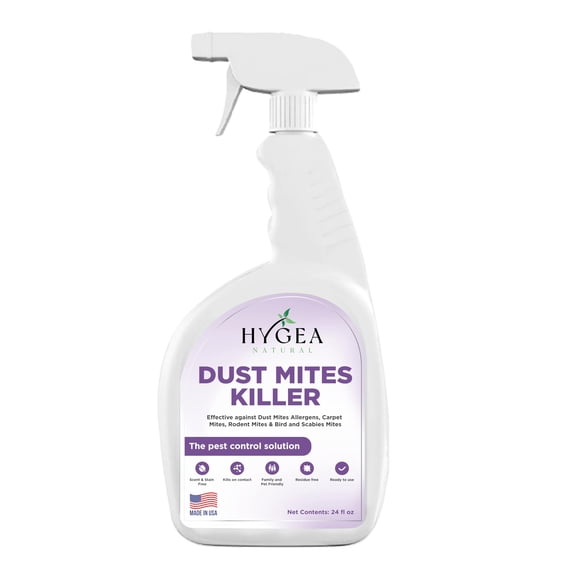
Hygea Natural Dust Mite Spray, Non Toxic, Kid Safe, and Pet Safe Pest Control Spray, 24 oz, Price Now $23.75 Was $40.00 Options from $13.50
5 sizes
Available in additional 5 sizesPrice Now $23.75 Was $40.00 Options from $13.502304.3 out of 5 Stars. 230 reviews
Now$2375$40.00Options from $13.50
Hygea Natural Dust Mite Spray, Non Toxic, Kid Safe, and Pet Safe Pest Control Spray, 24 oz
4.3 out of 5 stars
Free shipping, arrives in 3+ days
EcoVenger (Formerly EcoRaider) 16 oz Plant-Based Bed Bug Killer RTU Spray, Price $19.95
Price $19.95784.6 out of 5 Stars. 78 reviews
$1995
EcoVenger (Formerly EcoRaider) 16 oz Plant-Based Bed Bug Killer RTU Spray
4.6 out of 5 stars
Free shipping, arrives in 3+ days
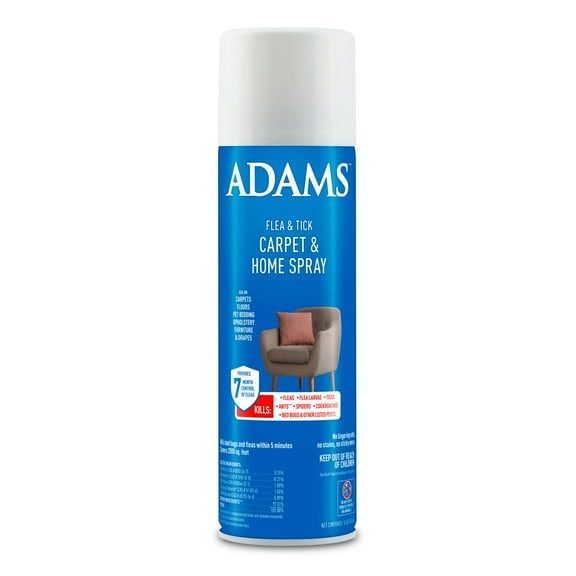
100+ bought since yesterday, ADAMS Flea & Tick Carpet & Home Spray, Kills Bed Bugs, Fleas, Ticks, Spiders, Ants, For Indoor Home Treatment, 7 Month Flea Protection, Treats Up to 2,000 Sq Ft, 16 oz, Price $11.48 71.8 ¢/oz Options from $11.48 – $45.92
100+ bought since yesterday
4 options
Available in additional 4 optionsPrice $11.48 71.8 ¢/oz Options from $11.48 – $45.9221114.4 out of 5 Stars. 2111 reviews
$114871.8 ¢/ozOptions from $11.48 – $45.92
ADAMS Flea & Tick Carpet & Home Spray, Kills Bed Bugs, Fleas, Ticks, Spiders, Ants, For Indoor Home Treatment, 7 Month Flea Protection, Treats Up to 2,000 Sq Ft, 16 oz
4.4 out of 5 stars
Save with
Delivery as soon as 33 minsShipping, arrives tomorrowPickup as soon as tomorrow
Alvantor Bed Bug Killer Spray Natural Plant Based Mattress Treatment for Home, 4fl.oz, Price $5.99 Options from $5.99 – $11.99
4 sizes
Available in additional 4 sizesPrice $5.99 Options from $5.99 – $11.99
$599Options from $5.99 – $11.99
Alvantor Bed Bug Killer Spray Natural Plant Based Mattress Treatment for Home, 4fl.oz
Save with
Shipping, arrives in 3+ days
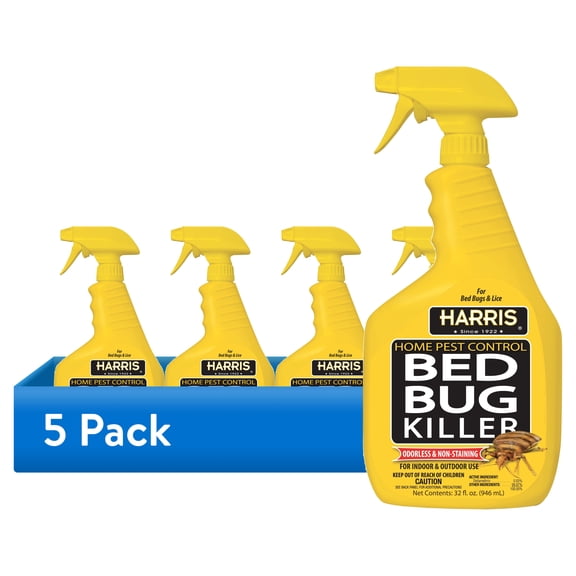
(5 pack) (5 pack) Harris Bed Bug Killer Spray, 32 Fluid Ounce, Price $49.37 30.9 ¢/fl oz Options from $10.97
2 options
Available in additional 2 optionsPrice $49.37 30.9 ¢/fl oz Options from $10.976894.1 out of 5 Stars. 689 reviews
$493730.9 ¢/fl ozOptions from $10.97
(5 pack) (5 pack) Harris Bed Bug Killer Spray, 32 Fluid Ounce
4.1 out of 5 stars
Save with
Free shipping, arrives in 3+ days
Hygea Natural Bed Bug Spray Killer, Flea Spray for Home & Insect Killer, Regular, 24 fl oz, Price Now $24.98 Was $35.00 Options from $24.98 – $69.99

4 sizes
Available in additional 4 sizesPrice Now $24.98 Was $35.00 Options from $24.98 – $69.992224.3 out of 5 Stars. 222 reviews
Now$2498$35.00Options from $24.98 – $69.99
Hygea Natural Bed Bug Spray Killer, Flea Spray for Home & Insect Killer, Regular, 24 fl oz
4.3 out of 5 stars
Free shipping, arrives in 3+ days
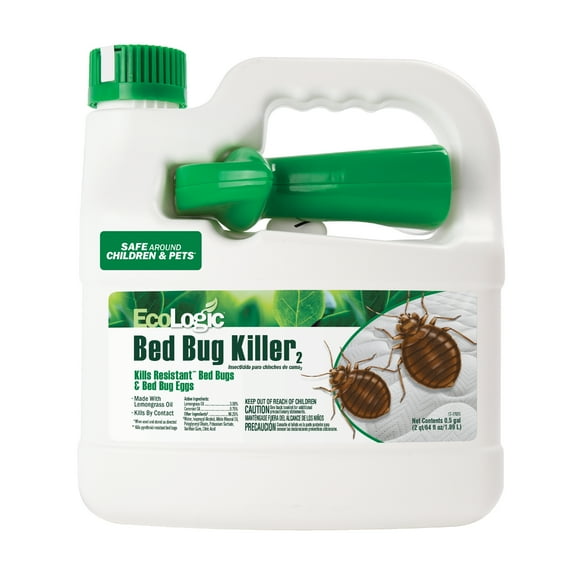
EcoLogic Bed Bug Killer Ready-to-Use Spray, Kills Pyrethroid-Resistant Bed Bugs and Eggs, 64 Ounces, Price Now $19.99 Was $25.18 31.2 ¢/fl oz
Price Now $19.99 Was $25.18 31.2 ¢/fl oz1714.3 out of 5 Stars. 171 reviews
Now$1999$25.1831.2 ¢/fl oz
EcoLogic Bed Bug Killer Ready-to-Use Spray, Kills Pyrethroid-Resistant Bed Bugs and Eggs, 64 Ounces
4.3 out of 5 stars
Save with
Shipping, arrives in 3+ days
Clearance, Bed Bug & Dust Mite Killer Natural Spray for Mattresses, Covers, Carpets & Furniture - Fast Protection 50ML 3PCS, Price Now $9.65 Was $13.13 + $2.99 shipping
Clearance
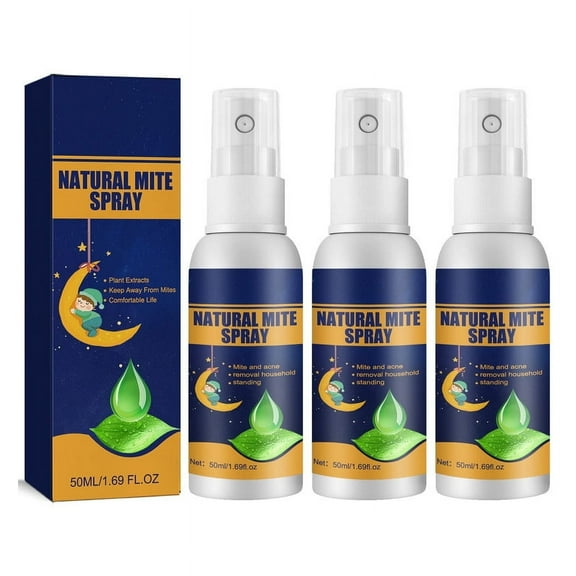
Price Now $9.65 Was $13.13 + $2.99 shipping64.8 out of 5 Stars. 6 reviews
Now$965$13.13+$2.99 shipping
Bed Bug & Dust Mite Killer Natural Spray for Mattresses, Covers, Carpets & Furniture - Fast Protection 50ML 3PCS
4.8 out of 5 stars
Shipping, arrives in 3+ days
Hygea Natural Bed Bug Spray Killer & Laundry Detergent Additive, Flea Spray for Home Insect Killer Combo Kit, Extra Strength, 3 Pack, Price $89.99 Options from $79.99
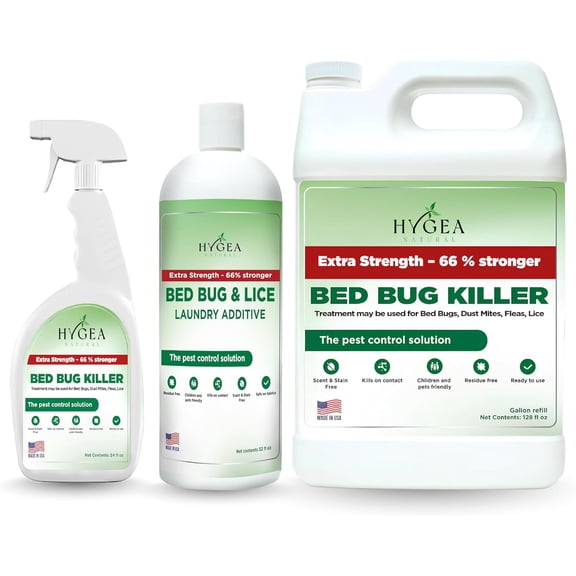
Sponsored
$8999Options from $79.99
Hygea Natural Bed Bug Spray Killer & Laundry Detergent Additive, Flea Spray for Home Insect Killer Combo Kit, Extra Strength, 3 Pack
4.3 out of 5 stars
Free shipping, arrives in 3+ days
Hygea Natural Lice, Mite, and Bed Bug Travel Spray Bed Bug Treatment Travel Bug Spray Combo, Regular, 3 oz Travel Spray, 24 oz Spray, Price $35.00 Options from $35.00 – $36.50

Sponsored
$3500Options from $35.00 – $36.50
Hygea Natural Lice, Mite, and Bed Bug Travel Spray Bed Bug Treatment Travel Bug Spray Combo, Regular, 3 oz Travel Spray, 24 oz Spray
4.5 out of 5 stars
Free shipping, arrives Sat, Oct 17
PF Harris Bed Bug Kit Liquid - Pesticide Spray for Bed Bugs - 4 Piece Kit Residential Use, Standard Application, Price $58.94

Price $58.94784 out of 5 Stars. 78 reviews
$5894
PF Harris Bed Bug Kit Liquid - Pesticide Spray for Bed Bugs - 4 Piece Kit Residential Use, Standard Application
4 out of 5 stars
Free shipping, arrives in 3+ days
128 oz Bed Bug Extra Strength Treatment Spray, Price $68.89
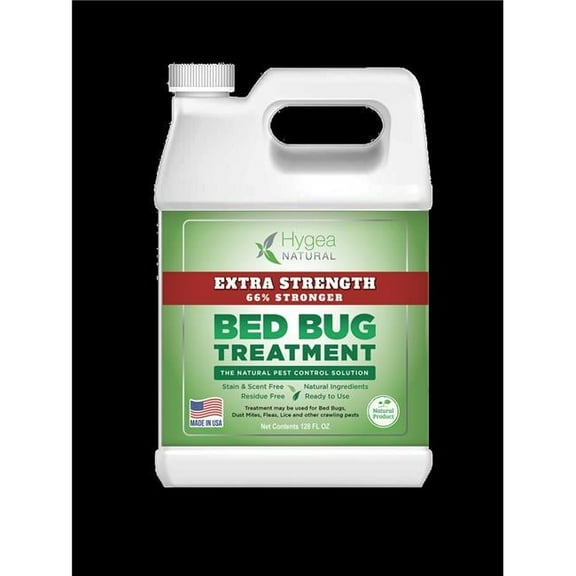
Price $68.89
$6889
128 oz Bed Bug Extra Strength Treatment Spray
Free shipping, arrives in 3+ days
PF Harris Bed Bug Killer Gold Aerosol Foam Spray - 5 Minute Kill - 16 Oz Construction & DIY Use, Standard Hardware Spec, Price $24.95
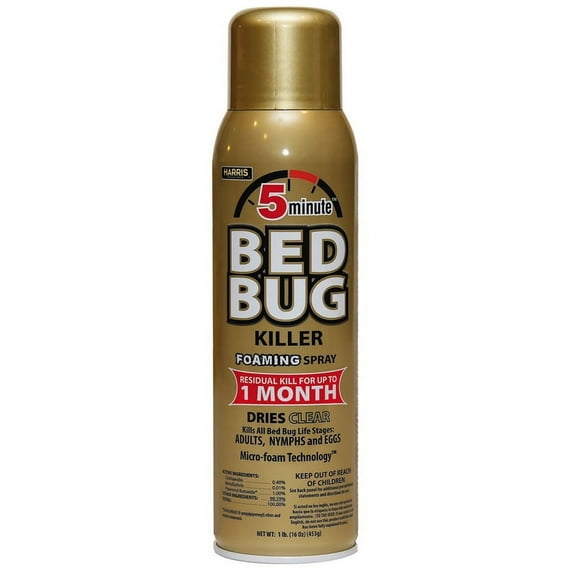
Price $24.95174.4 out of 5 Stars. 17 reviews
$2495
PF Harris Bed Bug Killer Gold Aerosol Foam Spray - 5 Minute Kill - 16 Oz Construction & DIY Use, Standard Hardware Spec
4.4 out of 5 stars
Free shipping, arrives Sat, Oct 17
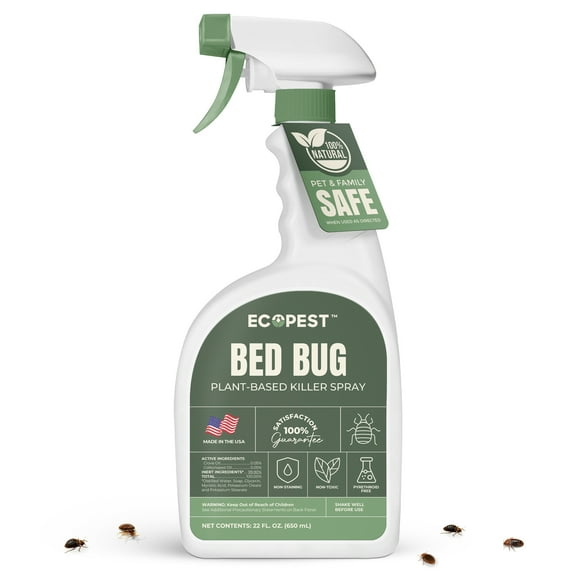
Bed Bug Spray – Natural, Plant-Based Killer for Carpet Beetles, Eggs & Nymphs | Fabric & Furniture-Safe Home Treatment for Indoor Use | Child & Pet Safe, Low Odor, Eco-Friendly | 22 oz, Price $24.99 Options from $24.99 – $74.99
2 sizes
Available in additional 2 sizesPrice $24.99 Options from $24.99 – $74.99144.4 out of 5 Stars. 14 reviews
$2499Options from $24.99 – $74.99
Bed Bug Spray – Natural, Plant-Based Killer for Carpet Beetles, Eggs & Nymphs | Fabric & Furniture-Safe Home Treatment for Indoor Use | Child & Pet Safe, Low Odor, Eco-Friendly | 22 oz
4.4 out of 5 stars
Free shipping, arrives in 3+ days
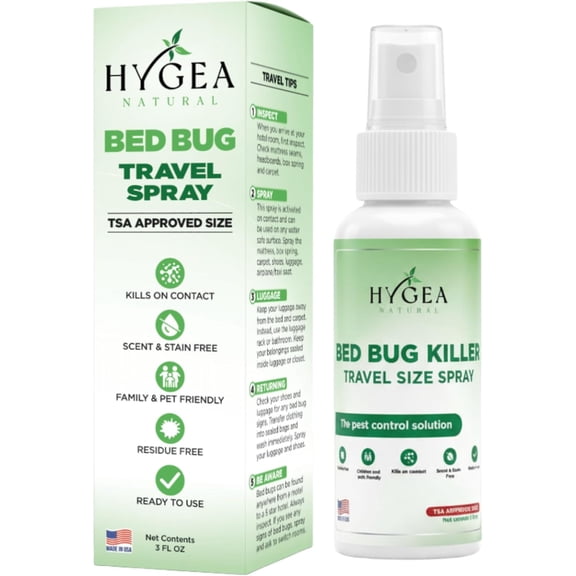
Hygea Natural Lice, Mite, and Bed Bug Travel Spray Bed Bug Treatment Travel Bug Spray, Regular, 3 oz, Price $15.00 $5.00/fl oz
Price $15.00 $5.00/fl oz914.6 out of 5 Stars. 91 reviews
$1500$5.00/fl oz
Hygea Natural Lice, Mite, and Bed Bug Travel Spray Bed Bug Treatment Travel Bug Spray, Regular, 3 oz
4.6 out of 5 stars
Free shipping, arrives in 3+ days
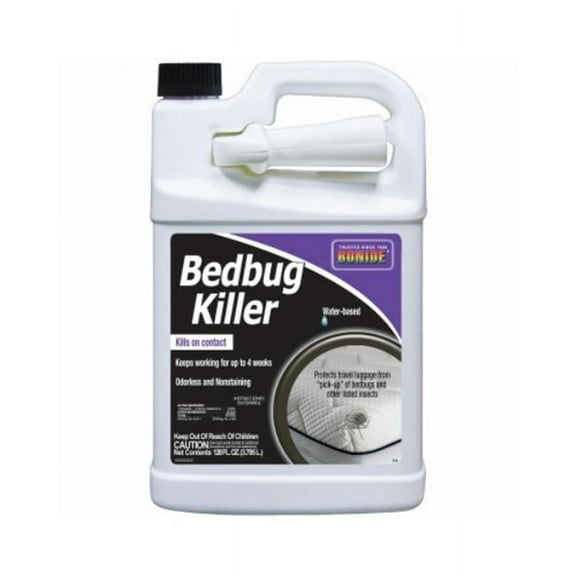
Bonide Products 208953 RTU Revenge Bed Bug Killer, Price $29.95
Price $29.9542.8 out of 5 Stars. 4 reviews
$2995
Bonide Products 208953 RTU Revenge Bed Bug Killer
2.8 out of 5 stars
Free shipping, arrives Sat, Oct 17
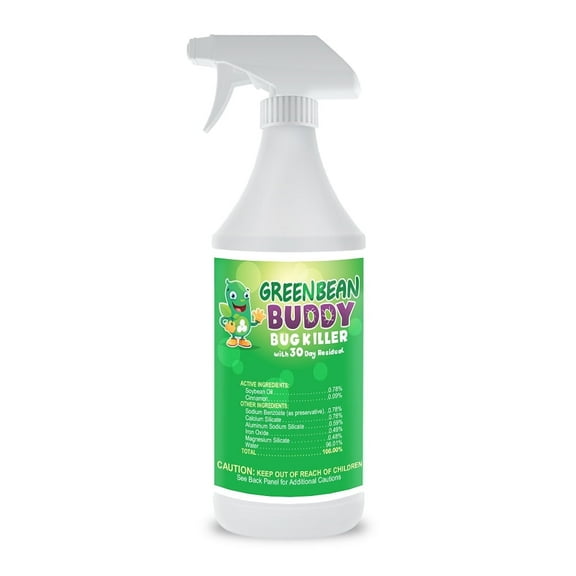
Bed Bug Killer, Flea Tick Treatment, Roach Killer with Residual Protection, Child & Pet Friendly, Green Bean Buddy Bug Spray, 32oz, Price $50.59 Options from $50.59 – $116.65
2 sizes
Available in additional 2 sizesPrice $50.59 Options from $50.59 – $116.65564.2 out of 5 Stars. 56 reviews
$5059Options from $50.59 – $116.65
Bed Bug Killer, Flea Tick Treatment, Roach Killer with Residual Protection, Child & Pet Friendly, Green Bean Buddy Bug Spray, 32oz
4.2 out of 5 stars
Free shipping, arrives in 3+ days
Hot Shot Bed Bug And Flea Home Insect Killer, Ready-to-Use, 1-Gallon, Price $23.67

Price $23.671974.1 out of 5 Stars. 197 reviews
$2367
Hot Shot Bed Bug And Flea Home Insect Killer, Ready-to-Use, 1-Gallon
4.1 out of 5 stars
Free shipping, arrives in 3+ days
BUGMD Bed Bug Trap (3 Pack), BUGMD Essential Pest Control Concentrate (1 Pack) and Spray Bottle 32 oz (1 Pack) Bundle, Price $109.99
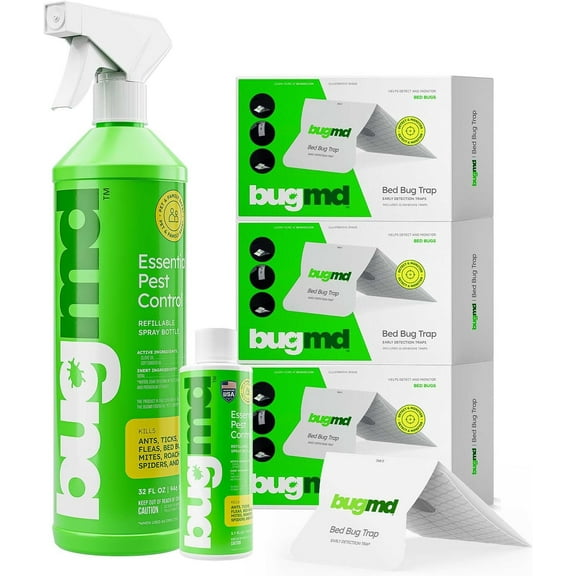
Price $109.99234 out of 5 Stars. 23 reviews
$10999
BUGMD Bed Bug Trap (3 Pack), BUGMD Essential Pest Control Concentrate (1 Pack) and Spray Bottle 32 oz (1 Pack) Bundle
4 out of 5 stars
Free shipping, arrives in 3+ days
QARUN Natural Bed Bug and Dust Mite Killer Spray for Mattress, Furniture and Carpet, Fast-Acting Insecticide for Home, Hotel and Travel, Safe for Pets and Kids, 50mL, Price $12.16

Price $12.16
$1216
QARUN Natural Bed Bug and Dust Mite Killer Spray for Mattress, Furniture and Carpet, Fast-Acting Insecticide for Home, Hotel and Travel, Safe for Pets and Kids, 50mL
Free shipping, arrives in 3+ days
Nature's MACE 32oz Bed Bug Treatment Spray (2-Pack) | Effective Lice, Flea, and Mite Killer, Price $51.13 + $12.97 shipping Options from $19.97

2 sizes
Available in additional 2 sizesPrice $51.13 + $12.97 shipping Options from $19.97
$5113+$12.97 shippingOptions from $19.97
Nature's MACE 32oz Bed Bug Treatment Spray (2-Pack) | Effective Lice, Flea, and Mite Killer
Shipping, arrives Sat, Oct 17
Hot Shot Bed Bug Killer Spray - Kills Bed Bugs, Eggs, Fleas, Dust Mites - 32 Ounce Residential Use, Standard Application, Price $17.88

Price $17.8865 out of 5 Stars. 6 reviews
$1788
Hot Shot Bed Bug Killer Spray - Kills Bed Bugs, Eggs, Fleas, Dust Mites - 32 Ounce Residential Use, Standard Application
5 out of 5 stars
Free shipping, arrives in 3+ days
Harris Bed Bug Killer Spray 1 Gallon, Price $34.31

Price $34.315614.2 out of 5 Stars. 561 reviews
$3431
Harris Bed Bug Killer Spray 1 Gallon
4.2 out of 5 stars
Save with
Free shipping, arrives Fri, Oct 16
QARUN Natural Mite Killer Spray for Bedding and Furniture, 100ml Dust Mite and Bed Bug Treatment for Mattress, Sofa, Curtains, Price $8.43
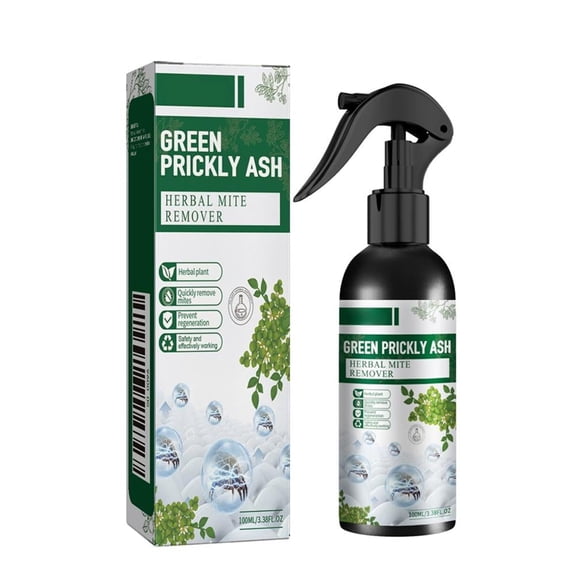
Price $8.4315 out of 5 Stars. 1 reviews
$843
QARUN Natural Mite Killer Spray for Bedding and Furniture, 100ml Dust Mite and Bed Bug Treatment for Mattress, Sofa, Curtains
5 out of 5 stars
Free shipping, arrives in 3+ days
BioAdvanced Home Pest Bed Bug & Flea Continuous Spray for Home 15.7 oz, Price $24.46
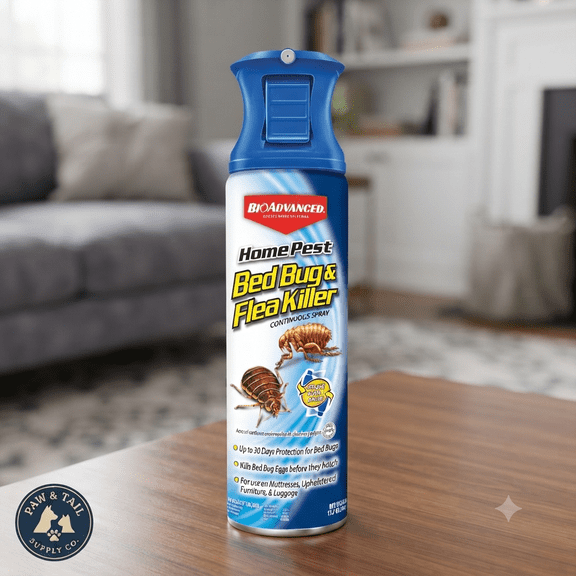
Price $24.46734.5 out of 5 Stars. 73 reviews
$2446
BioAdvanced Home Pest Bed Bug & Flea Continuous Spray for Home 15.7 oz
4.5 out of 5 stars
Free shipping, arrives in 3+ days
Best Bee Brothers Shake + Shield Natural Bed Bug Spray with Essential Oils, Peppermint, Rosemary and Cedarwood, 2 Pack, Price $13.99
Price $13.99244 out of 5 Stars. 24 reviews
$1399
Best Bee Brothers Shake + Shield Natural Bed Bug Spray with Essential Oils, Peppermint, Rosemary and Cedarwood, 2 Pack
4 out of 5 stars
Free shipping, arrives in 3+ days
BotaGuard Bed Bug Killer Spray, Kills on Contact, Fast-Acting Plant-Based Formula with Cedarwood Oil, Ready-to-Use, 16 fl oz, Price $18.59
Price $18.5945 out of 5 Stars. 4 reviews
$1859
BotaGuard Bed Bug Killer Spray, Kills on Contact, Fast-Acting Plant-Based Formula with Cedarwood Oil, Ready-to-Use, 16 fl oz
5 out of 5 stars
Save with
Shipping, arrives Sat, Oct 17
Only 6 left
Premo Guard Travel Bed Bug & Mite Killer Spray 3 oz TSA Compliant Natural Non-Toxic Formula Stain Free and Scent Free Safe for Bedding, Furniture, and Clothing, Price $12.97

Price $12.972734.7 out of 5 Stars. 273 reviews
$1297
Premo Guard Travel Bed Bug & Mite Killer Spray 3 oz TSA Compliant Natural Non-Toxic Formula Stain Free and Scent Free Safe for Bedding, Furniture, and Clothing
4.7 out of 5 stars
Save with
Shipping, arrives Sat, Oct 17
FAQ
What's the best way to use bed bug spray?
To get the most out of bed bug spray, start by thoroughly cleaning the affected area. Remove bedding, vacuum mattresses, and carpets before spraying. Apply the spray directly to places where bed bugs hide, like mattress seams, bed frames, and baseboards.
- Always follow the instructions on the product label for safe use.
- Let treated surfaces dry completely before putting bedding back.
- Repeat applications as directed for ongoing protection.
How long does bed bug spray take to work?
Bed bug sprays can start working within hours, but the time it takes to see noticeable results depends on the product and the level of infestation.
- Some sprays target adult bed bugs immediately, while others also affect eggs and larvae.
- Multiple treatments may be needed for complete coverage.
- Check the product label for specific timelines and reapplication instructions.
Can I use bed bug spray on my mattress?
Many bed bug sprays are designed for use on mattresses, but it's essential to check the product label for specific directions.
- Look for sprays labeled as safe for bedding and mattresses.
- Apply to seams, tufts, and folds where bed bugs often hide.
- Allow the mattress to dry completely before putting sheets back on.
Do bed bug sprays work on eggs too?
Some bed bug sprays are formulated to target both adult bed bugs and their eggs, but effectiveness can vary.
- Check the product label to see if it mentions killing eggs.
- Sprays that target eggs may require repeated applications for thorough coverage.
- Combining spray use with regular cleaning and vacuuming can help address all life stages.
Where should I spray to target bed bugs?
Bed bugs often hide in tight spaces near where people sleep.
- Focus on mattress seams, bed frames, headboards, and baseboards.
- Don't forget cracks in walls, behind furniture, and carpet edges.
- Always follow the product's instructions for safe and effective application.