





Canvas Tents: Heavy Duty Wall & Bell Tents | Walmart



















About Canvas Tents: Heavy Duty Wall & Bell Tents | Walmart - Walmart.com
You can compare canvas tents more confidently when you know how size, fabric, and frame details affect camping comfort. You’ll also notice canvas breathes differently than many synthetic shelters, which helps your space feel less stuffy during longer stays.
If you’re planning base camp weekends, hunting trips, or glamping setups, you’ll want decision-ready guidance before you choose. You can use this guide to compare wall tents, bell tents, and cabin-style options with clearer expectations.
How to choose canvas tents for your camp setup
You should start with your group size, sleeping gear, and the amount of standing room you want. You’ll usually need more floor space than a listed capacity suggests when you bring cots, storage bins, or a stove.
When you compare sizes, you should check wall height and center height as closely as sleeping capacity. You’ll notice taller profiles give you easier movement, better changing space, and more usable room along the sides.
If you’re narrowing down styles, you can compare common tent types by how you camp and pack. You’ll often see these differences matter significantly:
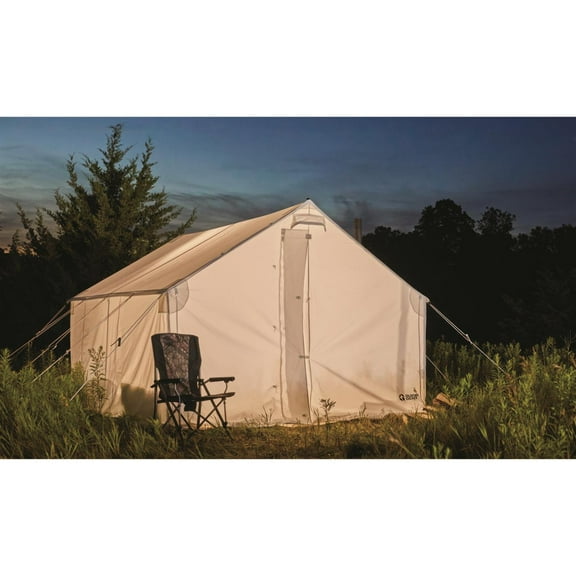
- You may prefer wall tents when you want straighter sidewalls, stove compatibility, and room for cots or tables.
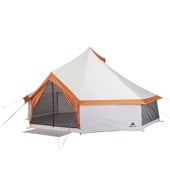
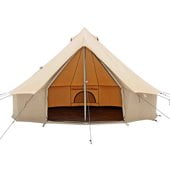
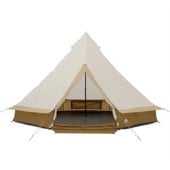
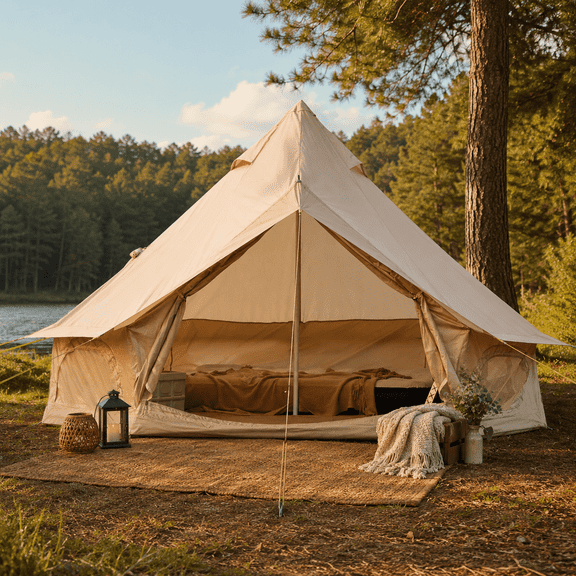
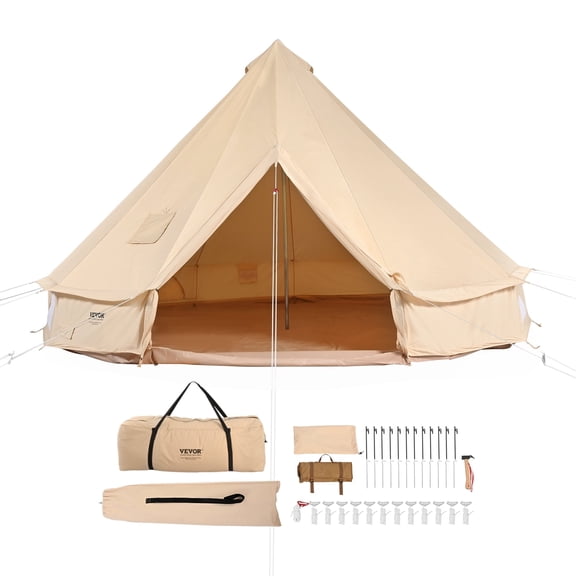
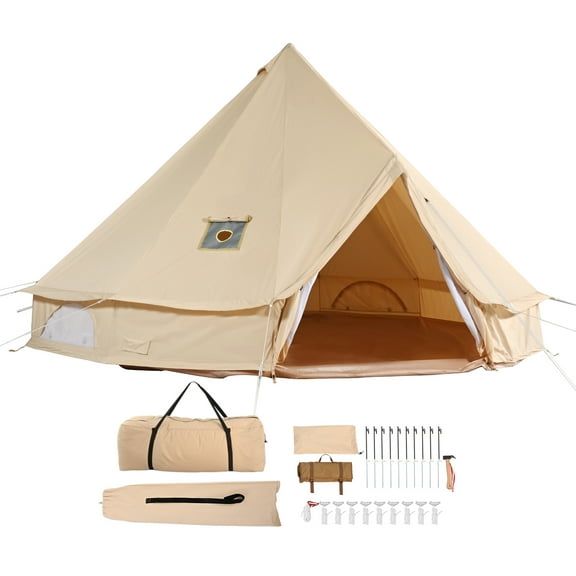
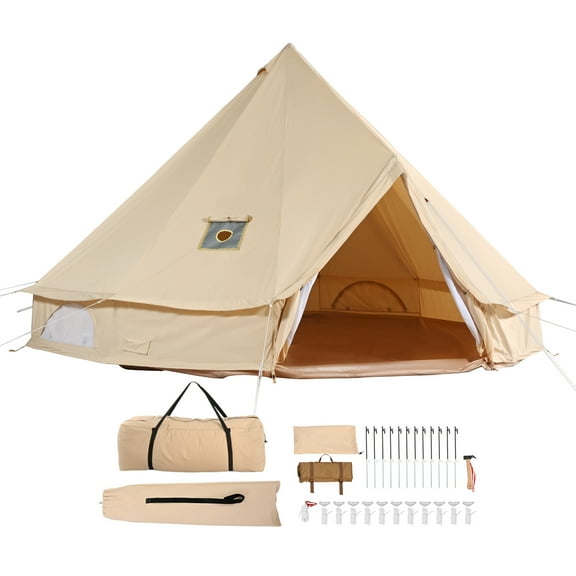
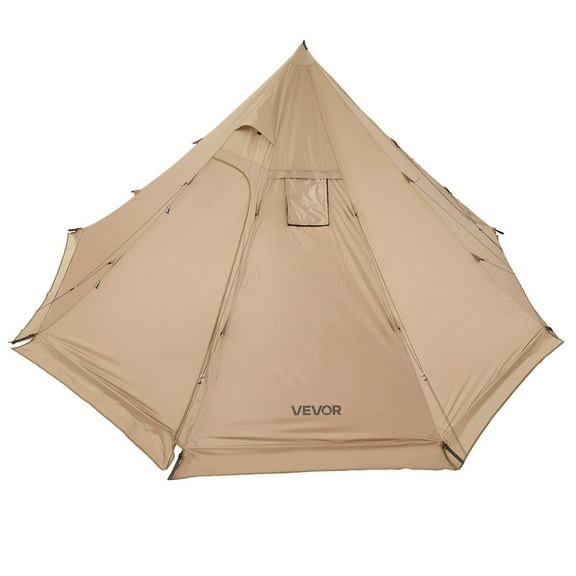
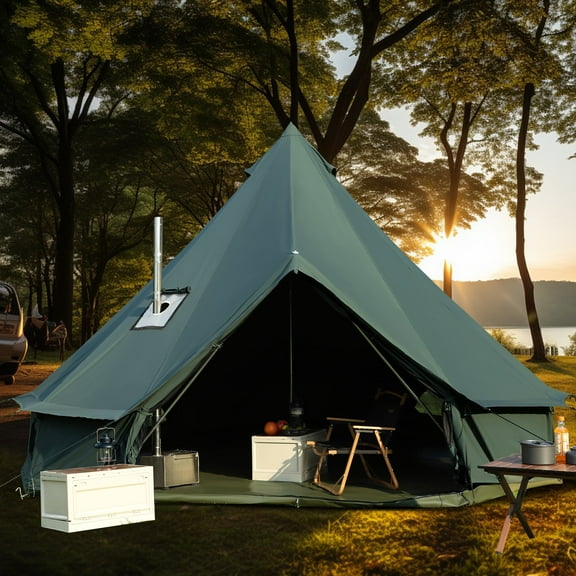
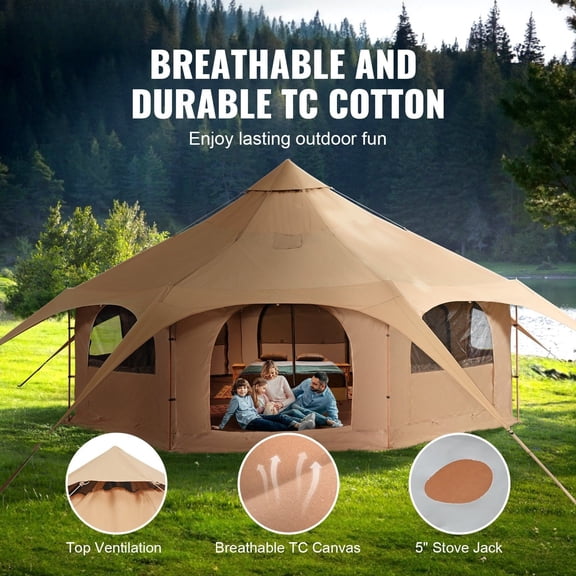
- You may choose bell tents when you want an open center area and a round layout for glamping camps.
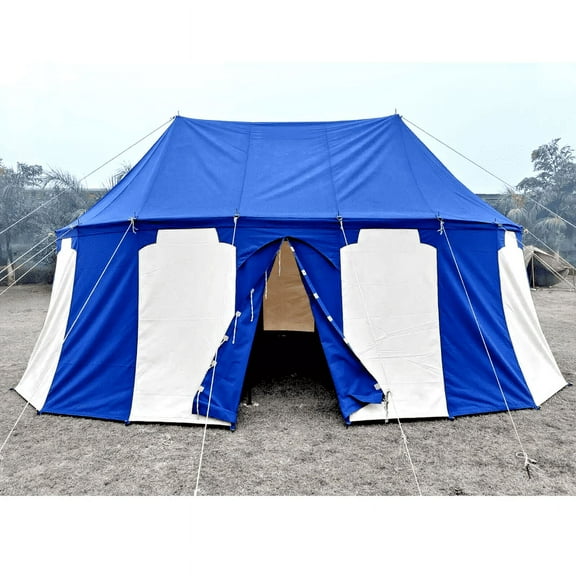
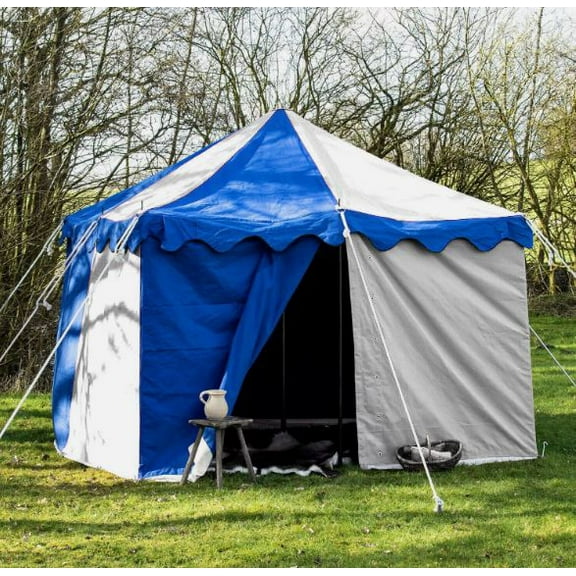
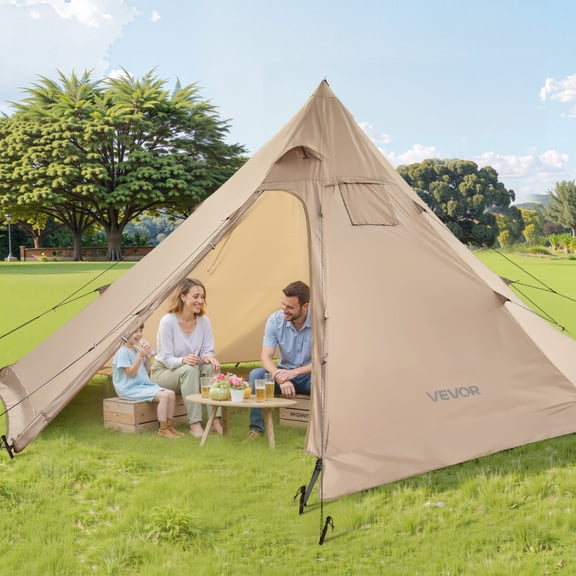
- You may consider a scout tent or range tent when you want traditional shapes for simpler group camping setups.
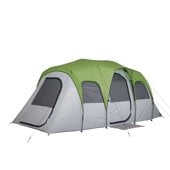
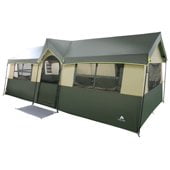
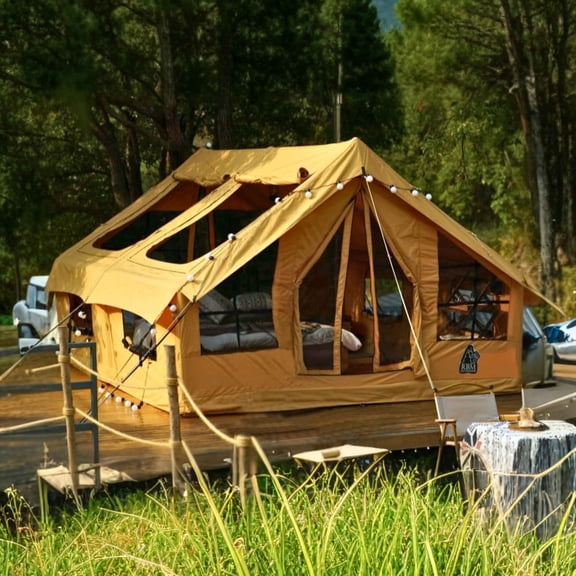
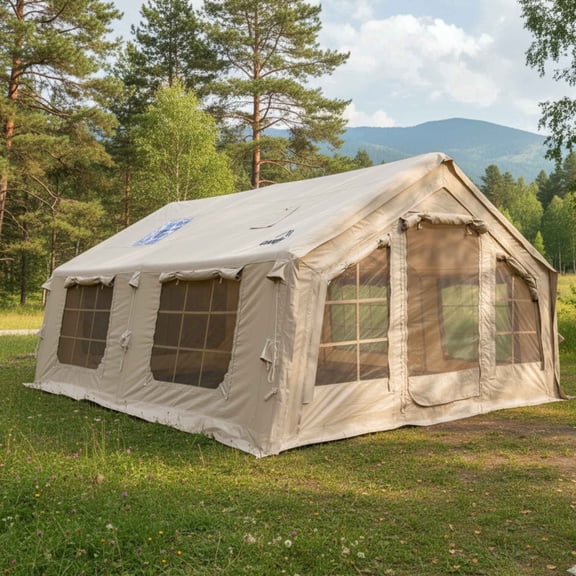
- You may look at cabin tent layouts when you want a more familiar floor plan and easier gear organization.
You’ll also want to compare packed weight before you commit to a larger shelter. You can carry smaller canvas options more easily, while large group shelters usually fit vehicle-based camping plans.
Choosing the right canvas tent 4 person to large group size
You can use a canvas tent 4 person size when you want a manageable footprint for couples, small families, or shorter gear lists. You should still measure sleeping pads, cots, and coolers so your tent doesn’t feel tighter than expected.
If you need six-person or eight-person capacity, you’ll want to compare real floor dimensions instead of label alone. You can often gain comfort by sizing up one category when you expect wet gear or longer trips.
For large group camping, you should check whether the layout supports separate sleeping and gear zones. You’ll appreciate extra wall length when you want clear pathways, folding tables, or space around a wood stove.
You can also compare center height with wall height to judge standing room more accurately. You’ll find that high peaks feel spacious, but taller walls often create more practical room across the whole tent.
What to look for in wall tents, bell tents, and fabric options
You should compare cotton canvas, poly-cotton blend, and water-resistant canvas by how often you camp and how much weight you can transport. You’ll usually get a sturdy feel from heavier fabrics, though they add more bulk when packed.
When you review fabric weight, you can treat it as a clue about durability and structure. You’ll generally notice thicker canvas feels more substantial for base camps and repeated seasonal use.
You may also see hydrostatic head listed with some shelters, and you can read it as a water-resistance benchmark. You’ll want higher numbers when you expect sustained rain, while breathable canvas still helps reduce that closed-in feeling.
If you’re comparing wall tents with bell tents, you should think about interior shape as much as weather coverage. You can line cots and gear along wall tent sides more easily, while bell tents create an open central living area.
You may search for white duck tents when you already know a familiar brand, but you should still compare category-level details first. You can make a smarter choice by checking dimensions, canvas type, and frame design before brand preference.
Checking setup, stove jack details, and transport needs
You should review pole material and frame style before you plan your first trip. You’ll often find that simple center-pole systems set up differently than ridge-pole or cabin-style frames.
When you compare setup effort, you can look at packed weight, pole count, and canvas thickness together. You’ll want a realistic match for your vehicle space, campsite access, and the number of hands available.
If you want stove compatibility, you should check for a stove jack and confirm its placement. You’ll also want to compare stove jack diameter and heat-resistant silicone details for fit with your camping stove pipe.
You can make colder weather camping more practical when your shelter supports stove use and stable airflow planning. You’ll want to confirm that the shape leaves room for cots, wood storage, and daily movement inside.
For road trips and seasonal camp setups, you should think about how often you’ll pack down and move. You can choose lighter builds for easier transport, or you can choose heavier canvas when your shelter stays put longer.
Using canvas tents for glamping, hunting camps, and extended stays
You can use canvas tents for weekend glamping when you want room for rugs, sleeping furniture, and lantern lighting. You’ll often appreciate the quieter feel of canvas during windy nights and busy campgrounds.
If you’re setting up a hunting base camp, you may prefer wall tents for their straight walls and stove-ready layouts. You can organize cots, bags, and cooking gear with less wasted floor space.
For family camping, you should compare six-person and eight-person options with your real packing habits. You’ll get a smoother trip when your shelter leaves room for changing clothes, storing boots, and staying organized.
You may choose a scout tent or range tent when you want a traditional look with practical shelter space. You can use these styles for group camps, reenactment settings, or simple overnight setups with classic appeal.
If you’re planning longer stays, you should focus on breathability, standing room, and setup workflow. You’ll feel more prepared when your tent matches your season, your stove plans, and your transport limits.
You can narrow the field faster when you compare canvas tents by size, style, fabric, and stove compatibility instead of brand alone. You’ll end up with a shelter that fits your campsite routine, gear load, and expected weather more cleanly.