

Tartine Bread
Key item features
Specs
- Fiction/nonfictionNon-Fiction
- GenreCooking, Food & Wine
- Pub date2010-09-15
- Pages304
- Reading levelGeneral, 18-99
- Age range18 - 99 Years
 Free 90-day returns
How do you want your item?


More seller options (4)

About this item
Product details
Specifications
Fiction/nonfiction
Genre
Pub date
Pages
Warranty
Warranty information
Similar items you might like
Based on what customers bought
Flour Water Salt Yeast: The Fundamentals of Artisan Bread and Pizza [a Cookbook] $26.69 Was $35.00
![Flour Water Salt Yeast: The Fundamentals of Artisan Bread and Pizza [a Cookbook]](https://i5.walmartimages.com/seo/Flour-Water-Salt-Yeast-The-Fundamentals-of-Artisan-Bread-and-Pizza-9781607742739_8b8825c2-451c-4527-a334-b7d48a82de1b.d4eb489820d5784904da687b99fc894a.jpeg?odnHeight=576&odnWidth=576&odnBg=FFFFFF) 2 optionsAvailable in additional 2 optionsNow$2669current price Now $26.69, Was $35.00$35.00Options from $26.69 – $49.99
2 optionsAvailable in additional 2 optionsNow$2669current price Now $26.69, Was $35.00$35.00Options from $26.69 – $49.99Flour Water Salt Yeast: The Fundamentals of Artisan Bread and Pizza [a Cookbook]
245 out of 5 Stars. 24 reviewsSave with Shipping, arrives tomorrow
Tartine Book No. 3: Moder n Ancient Classic Whole $25.01
 $2501current price $25.01
Tartine Book No. 3: Moder n Ancient Classic Whole
Save withShipping, arrives in 3+ daysHow to Cure Myofascial Pain $27.45
 $2745current price $27.45
How to Cure Myofascial Pain
Save withShipping, arrives in 3+ daysThe Bread Baker's Apprentice, 15th Anniversary Edition (Hardcover) $30.00
 2 optionsAvailable in additional 2 options$3000current price $30.00Options from $30.00 – $49.99
The Bread Baker's Apprentice, 15th Anniversary Edition (Hardcover)
55 out of 5 Stars. 5 reviewsSave withShipping, arrives tomorrowThe Pamirs, (Paperback) $24.95
 $2495current price $24.95
The Pamirs, (Paperback)
Save withShipping, arrives in 3+ daysThe Sourdough Cookbook, (Paperback) $12.99 Was $14.95
 Now$1299current price Now $12.99, Was $14.95$14.95
The Sourdough Cookbook, (Paperback)
15 out of 5 Stars. 1 reviewsSave withShipping, arrives in 3+ daysThe Joys of Living $25.95
 $2595current price $25.95
The Joys of Living
Save withShipping, arrives in 3+ daysModern Appalachian Cuisine, (Paperback) $25.74
 $2574current price $25.74
Modern Appalachian Cuisine, (Paperback)
Save withShipping, arrives in 3+ daysBREAKING BREAD - A Memoir, (Paperback) $18.50
 $1850current price $18.50
BREAKING BREAD - A Memoir, (Paperback)
Save withShipping, arrives in 3+ daysTeachings from the Tap $16.00
 $1600current price $16.00
Teachings from the Tap
Save withShipping, arrives in 3+ daysThe Tassajara Bread Book, (Paperback) $20.00
 $2000current price $20.00
The Tassajara Bread Book, (Paperback)
Save withShipping, arrives tomorrowBroken Bread, from an Evangelist's Wallet, (Paperback) $21.49
 $2149current price $21.49
Broken Bread, from an Evangelist's Wallet, (Paperback)
Save withShipping, arrives in 3+ daysMatthew 10: 10 Travels of an Awareness, (Paperback) $29.99
 $2999current price $29.99
Matthew 10: 10 Travels of an Awareness, (Paperback)
Save withShipping, arrives in 3+ daysThe Struggle for Bread [microform] (Paperback) $22.95
![The Struggle for Bread [microform] (Paperback)](https://i5.walmartimages.com/asr/6580b255-601e-4adf-9873-f64befe84b94.cce6919ea31317caa60632b1bb33b8e9.jpeg?odnHeight=576&odnWidth=576&odnBg=FFFFFF) $2295current price $22.95
$2295current price $22.95The Struggle for Bread [microform] (Paperback)
Save withShipping, arrives in 3+ daysFlying Scroll : Zechariah 5:1-4 $22.95
 $2295current price $22.95
Flying Scroll : Zechariah 5:1-4
Save withShipping, arrives in 3+ daysA Man for Others, (Paperback) $17.41
 $1741current price $17.41
A Man for Others, (Paperback)
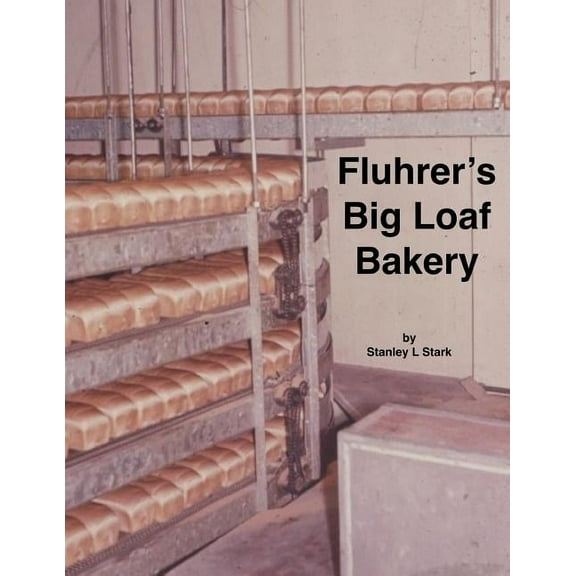
Save withShipping, arrives in 3+ daysFluhrer's Big Loaf Bakery (Paperback) $29.96
 $2996current price $29.96
Fluhrer's Big Loaf Bakery (Paperback)
Save withShipping, arrives in 3+ daysPain Into Purpose (Paperback) $20.00
 $2000current price $20.00
Pain Into Purpose (Paperback)
Save withShipping, arrives in 3+ daysThe Story of a Loaf of Bread, (Paperback) $19.74
 $1974current price $19.74
The Story of a Loaf of Bread, (Paperback)
Save withShipping, arrives in 3+ daysBest seller The Perfect Loaf: The Craft and Science of Sourdough Breads, Sweets, and More: a Baking Book (Hardcover) $22.29
Best seller 2 optionsAvailable in additional 2 options$2229current price $22.29Options from $22.29 – $52.00
The Perfect Loaf: The Craft and Science of Sourdough Breads, Sweets, and More: a Baking Book (Hardcover)
244.5 out of 5 Stars. 24 reviewsSave withShipping, arrives tomorrow

Popular items in this category
Best selling items that customers love
Music in American Life The Hayloft Gang, (Paperback) $40.82
 $4082current price $40.82
Music in American Life The Hayloft Gang, (Paperback)
Shipping, arrives in 3+ daysBaking Artisan Bread: 10 Expert Formulas for Baking Better Bread at Home, (Paperback) $17.86
 $1786current price $17.86
Baking Artisan Bread: 10 Expert Formulas for Baking Better Bread at Home, (Paperback)
Save withShipping, arrives in 3+ daysSmall Loaf Bread Machine Cookbook: Classic and Creative Recipes for Delicious 1-Pound Loaves, (Paperback) $12.60
 $1260current price $12.60
Small Loaf Bread Machine Cookbook: Classic and Creative Recipes for Delicious 1-Pound Loaves, (Paperback)
25 out of 5 Stars. 2 reviewsSave withShipping, arrives in 3+ daysEat Local in Barcelona: A Guide to Catalan Cuisine, (Paperback) $24.99
 $2499current price $24.99
Eat Local in Barcelona: A Guide to Catalan Cuisine, (Paperback)
Save withShipping, arrives in 3+ daysBest seller The No-Fuss Bread Machine Cookbook : Hands-Off Recipes for Perfect Homemade Bread (Paperback) $13.97
Best seller 2 optionsAvailable in additional 2 options$1397current price $13.97Options from $13.97 – $22.98
The No-Fuss Bread Machine Cookbook : Hands-Off Recipes for Perfect Homemade Bread (Paperback)
524.7 out of 5 Stars. 52 reviewsSave withShipping, arrives in 2 daysBittman Bread: No-Knead Whole Grain Baking for Every Day: A Bread Recipe Cookbook (Hardcover) $12.80
 2 optionsAvailable in additional 2 options$1280current price $12.80
Bittman Bread: No-Knead Whole Grain Baking for Every Day: A Bread Recipe Cookbook (Hardcover)
Save withShipping, arrives in 2 daysBread Toast Crumbs: Recipes for No-Knead Loaves & Meals to Savor Every Slice: A Cookbook, (Hardcover) $17.89
 $1789current price $17.89
Bread Toast Crumbs: Recipes for No-Knead Loaves & Meals to Savor Every Slice: A Cookbook, (Hardcover)
55 out of 5 Stars. 5 reviewsSave withShipping, arrives tomorrowThe Bread Book, (Hardcover) $27.87
 $2787current price $27.87
The Bread Book, (Hardcover)
Shipping, arrives in 3+ daysThe No-Fuss KBS Bread Machine Cookbook: 1500-Day Hands-Off Recipes for Perfect Homemade Bread (Hardcover) $25.00
 $2500current price $25.00
The No-Fuss KBS Bread Machine Cookbook: 1500-Day Hands-Off Recipes for Perfect Homemade Bread (Hardcover)
Save withShipping, arrives in 3+ daysAbout Power: How to Democratize Electricity Now, (Paperback) $17.66
 $1766current price $17.66
About Power: How to Democratize Electricity Now, (Paperback)
Save withShipping, arrives in 3+ daysNadiya Bakes: Over 100 Must-Try Recipes for Breads, Cakes, Biscuits, Pies, and More $23.94
 2 optionsAvailable in additional 2 options$2394current price $23.94
Nadiya Bakes: Over 100 Must-Try Recipes for Breads, Cakes, Biscuits, Pies, and More
Shipping, arrives in 3+ daysThe Art of Baking: From Pastries to Bread, (Paperback) $16.99
 $1699current price $16.99
The Art of Baking: From Pastries to Bread, (Paperback)
Save withShipping, arrives in 3+ daysSmart, Not Spoiled: The 7 Money Skills Kids Must Master Before Leaving the Nest, (Paperback) $7.61 $9.40/lb
 $761current price $7.61$9.40/lb
Smart, Not Spoiled: The 7 Money Skills Kids Must Master Before Leaving the Nest, (Paperback)
Save withShipping, arrives in 3+ daysA Banh Mi for Two, (Hardcover) $16.10
 $1610current price $16.10
A Banh Mi for Two, (Hardcover)
Save withShipping, arrives tomorrowThe All New Ultimate Bread Machine Cookbook: 101 Brand New Irresistible Foolproof Recipes for Family and Friends, (Paperback) $10.69
 $1069current price $10.69
The All New Ultimate Bread Machine Cookbook: 101 Brand New Irresistible Foolproof Recipes for Family and Friends, (Paperback)
43.3 out of 5 Stars. 4 reviewsSave withShipping, arrives in 3+ daysA Diamond in the Rough, (Paperback) $4.61
 $461current price $4.61
A Diamond in the Rough, (Paperback)
Save withShipping, arrives in 3+ daysCooking with Scraps - Hardcover $15.22
 $1522current price $15.22
Cooking with Scraps - Hardcover
34.3 out of 5 Stars. 3 reviewsShipping, arrives in 3+ daysBuried in Treasures: Help for Compulsive Acquiring, Saving, and Hoarding, (Paperback) $18.97
 $1897current price $18.97
Buried in Treasures: Help for Compulsive Acquiring, Saving, and Hoarding, (Paperback)
35 out of 5 Stars. 3 reviewsSave withShipping, arrives tomorrowThe Laurel's Kitchen Bread Book: A Guide to Whole-Grain Breadmaking: A Baking Book, (Paperback) $15.78 Was $23.00
 Now$1578current price Now $15.78, Was $23.00$23.00
The Laurel's Kitchen Bread Book: A Guide to Whole-Grain Breadmaking: A Baking Book, (Paperback)
Save withShipping, arrives in 3+ daysWhat Is It Like to Be an Addict?: Understanding Substance Abuse, (Hardcover) $21.52 Was $24.99



 Now$2152current price Now $21.52, Was $24.99$24.99
What Is It Like to Be an Addict?: Understanding Substance Abuse, (Hardcover)
Save withShipping, arrives in 3+ days
Customer ratings & reviews
Filtered and sorted results would be available on the new 'Customer ratings & reviews' page.
Showing 1-3 of 4 reviews
Verified Purchase
Great book!
Shipped quickly, perfect condition.
Best Artisan Loaf You Can Bake At Home
Tartine Bread is the 'Zen of Bread Making'. Chad Robertson's Tartine Bread introduces you to a bread-making system (the 'Tartine Method') with a strong emphasis on sensory feedback and adaptation. Robertson is less prescriptive than Ken Forkish, in his Flour, Water, Salt, Yeast book --which is also an excellent bread book. Chad Robertson's "overly ripe fruity smell" test for leaven is the kind of intuitive and sensory guidance he gives the reader. Robertson will tell you to use 'warm water'; Forkish will specify the temperature (to the degree). I find the Tartine Method and Robertson's instruction both intuitive and enduring (beyond the recipe), a bit metaphysical and philosophical, and Zen-like in its ambiguity and continual learning. I understand why other commenters have suggested Tartine Bread might be less appropriate for 'beginners', since experience certainly does help one feel and understand what Robertson is asking for as he guides you through the steps of artisan bread making. Through repetition, I now achieve pretty consistent success. I have had some lesser variants, esp. early on, which I have learned from. I was glad I worked through Ken Forkish's book first, since he is more 'programatic' in his approach, and the program works. But I was delighted to discover Tartine Bread afterward. Tartine Bread felt like a master class in the Zen of bread making, with Robertson as the Zen master. I really enjoy Robertson's style of writing and bread making, but it isn't for everyone. And don't expect the very same success every time. With natural leaven and variably temperatures and humidity, consistency is hard to accomplish. However, repetition builds your intuition and increases consistency of outcome, in spite of the variable conditions. The Zen of Roberton's Tartine Method is in repetition of that core Country Loaf over and over until almost meditatively acquiring knowledge and experience you master and the process and it becomes instinctive. For me, the Country Loaf is almost like a mantra, a ritual. Mastering the basic loaf, you can then experiment. Robertson offers a few variations in the book: olive, sesame, walnut, etc. The new ingredients transform the bread. The core bread becomes orchestra, with a bright new soloist playing a concerto. Other variants are up to the practitioner. There are other great breads besides the the core Country Loaf, but the Country Loaf is where you will build your skill and master Robertson's Tartine Method. Robertson's olive variant to the Country Loaf is the 'best' olive bread I have ever tasted. Since bread making is a creative, adaptive, learning experience, and Tartine Bread is written in that spirit, it is not surprising that bread baking and surfing are Chad Robertson's twin passions. Much as there is no Rx for how bake great bread, there is no formula for how surf. There are some basics and lots of acquired wisdom in surfing and bread-making, however, in both you have to feel the moment and everything around you, adapt (sometimes rescuing success from near-failure), and above all enjoy the journey ...wherever it takes you. Each batch of Tartine bread I bake is a little different; a little softer, more aerated, stiffer,... As Robertson says, you sense (and measure when you can) what is going on and adjust. When feeding the leaven, Robertson says use equal parts flour and water, but he adds don't be too concerned about the exact proportions, the leaven should "look like a thick batter." That kind of description is very helpful. Adjustments like that are what bread making is about, esp. at home, where we do not generally control systematically for temperature and humidity as a professional bakery does. A caution to bread-bakers: Robertson's leavened breads will take the day to make. The 'hands on' time is relatively small, but there are many steps requiring continuous intervention and observation. You really need to be home or near home to make this bread, esp. during the 3 hr bulk rise. Robertson starts first thing in the morning with starter fed the night before (so it is still 'young', sweet and milky), and the bread is ready by dinner time. During that time, there is mixing, folding, resting and rising, proofing and of course baking itself (which is quick, just 40 min). If you want the great product in the end, it takes time and patience --and some adaptation and intuition as conditions and outcomes change. And you will need a 4-5 quart dutch oven to make Robertson's artisan loaves, at least one (@~$50) if you don't already have one. The Robertson no-kneed bread will just not work without that. I would suggest that advancing bread-makers get both Tartine Bread and Flour Water Salt Yeast: The Fundamentals of Artisan Bread and Pizza. I would start with Forkish, gain some experience and confidence, graduate to Robertson, and continue to experiment using both books. If you are just starting out, it is hard to beat Peter Reinhardt's The Bread Baker's Apprentice: Mastering the Art of Extraordinary Bread. The photos are great and he walks you things step by step, commenting all the way. I learned basic bread making from that book, a kind of Bread Making 101, but I grew out of it more quickly than I thought. Robertson's 'Tartine Method' is more enduring, since it is built around learning a core practice and all the knowledge that goes with it (a bit Zen enlightenment) that goes beyond the recipes. Reinhart is all about following the recipes. Robertson is more about developing your knowledge, intuition, and skill by mastering a core practice. If you need more recipes, I recommend Jeffrey Hamelman's book Bread: A Baker's Book of Techniques and Recipes. These are not wet dutch oven breads like Robertson and Forkish, but they are nice alternatives, well-tested and reliable.
Sourdough Expertise
Fantastic book, especially to continue to advance in sourdough bread making.
