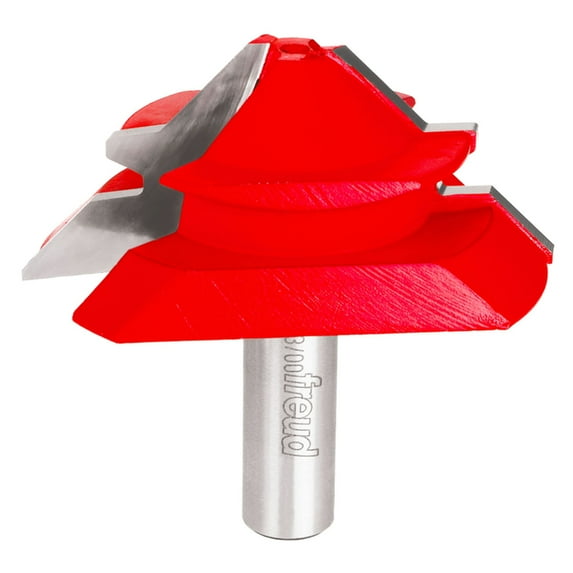
I agree, this is a nice bit but clearly 1 of the more challenging to set up. Having worked with it a bit and doing research I found the following to help "dial it in" for a tight joint. As you perform your setup:
1. Start with a shallow cut and sneak up to the proper setting.
2. Bit Height: If the joint is loose, then the height of the router bit must be changed. If loose, raise the bit; if tight, lower the bit.
3. If the drawer front is proud on the sides, then move the fence closer to the bit. If the drawer front is not flush, or slightly proud to the side, then move the fence away from the bit.
Once the setup is done, rout some setup blocks for future setups. However ANY deviation to the stock thickness from the set up blocks will effect the results and therefore some additional trial and error will have to occur each set up.
Usage:
1. Rout the drawer fronts and backs first. Position drawer sides on the router table – this will result in a drawer construction where the force of opening the draw will be applied to a joint that won't pull apart. Front and back of drawers should be placed flat on the router table.
2. Drawer sides should be held vertically, running along the fence. Use a push block with a backer board to eliminate tear-out.
Hope this helps!