
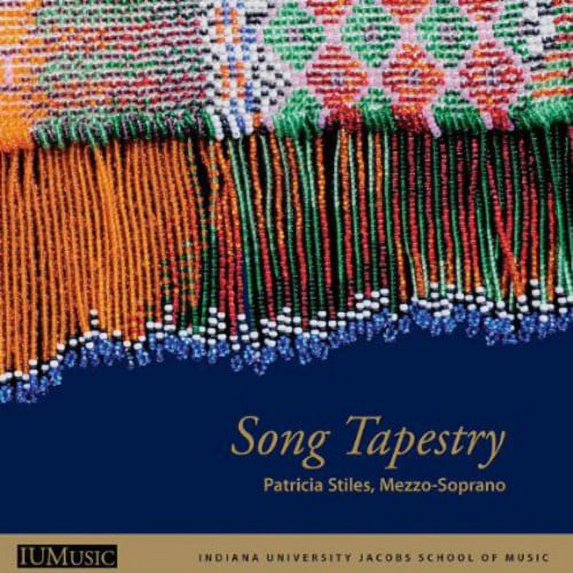
Although the musicians assembled here represent varied musical traditions, they share an academic and geographical connection, practicing their craft in Bloomington, Ind., as professors and instructors at the Indiana University Jacobs School of Music. In 2001, I had the pleasure of singing Don Freund's Three Songs with a wonderful ensemble of colleagues and students from the Jacobs School of Music. Having just completed another CD, I was ready for a new project, and the germ of an idea began to form. Throughout my singing life, I have always particularly enjoyed the interplay between composer and singer, the process of exchanging ideas until they are thoroughly woven together. Being so close to the creative process-working to realize another artist's vision-is a challenge and a privilege that has truly fascinated me. Just two years later, I was the privileged recipient of an Arts and Humanities Grant from Indiana University to record Songs of Indiana. As a professor at the Jacobs School of Music, I am so fortunate to be surrounded by composers of great originality and freshness, and my search for new music required me to reach out to colleagues, whom I did not know, in order to ask if they might have songs for a mezzo- soprano. I feel very honored by the faith of the composers who entrusted their works to me and by those who either wrote, rewrote, or reworked songs for this project. Song Tapestry is the product of learning, rehearsing and recording these very individual creations. Themes of nature, love, conflict, dreams, death, and God, which come from such different cultures and languages, become intertwined. Poetry that spans eight centuries is sewn into a new, modern cloth. This rich and colorful tapestry is spun from surprises, new friends, and songs which speak the truth and which speak to the heart. I am glad to share it with you. Patricia Stiles The first of Don Freund's Three Songs, a setting of Gerard Manley Hopkins, stands apart from the rest of the group. quot;God's Grandeur,quot; says Freund, quot;is different in that the entire conception was ignited by the mixing of Hopkins' scintillating poem with sounds made possible by the chamber orchestra medium.quot; The second and third songs were first performed in an orchestral setting in 1968. The second song, quot;Sephestia's Song to Her Child,quot; is a setting of a secular poem by Robert Greene, contemporary and critic of William Shakespeare. In contrast, quot;I Syng of a Mayden,quot; a quot;magnificatquot; of sorts, is an anonymous, fifteenth-century text in which Mary anticipates, and then celebrates, the birth of Jesus. Haiku, by Edwin Penhorwood, features 13 of Harold G. Henderson's English translations of the restrained Japanese poetic form. Interestingly, Penhorwood discovered these haiku as a college student, in 1959, and kept them until 1995, when he decided they would make a good song cycle for a mezzo soprano. Such a long wait is richly rewarded-the poetry is subtle and subdued, but it's profound ideas and emotions are captured in the composer's dramatic, soaring vocal lines and expansive piano accompaniment. P. Q. Phan's Confession, composed for and dedicated to Stiles, captures quot;the outmost internal expression and social beliefquot; of eighteenth-century Vietnamese poet Ho xuan Huong. Rather than quot;describing the poetry,quot; says Phan, in these songs, quot;I have imagined what the poet would have sung.quot; Ho Xuan Huong, writing during an era dominated almost exclusively by men, challenged authority with ideas from th
