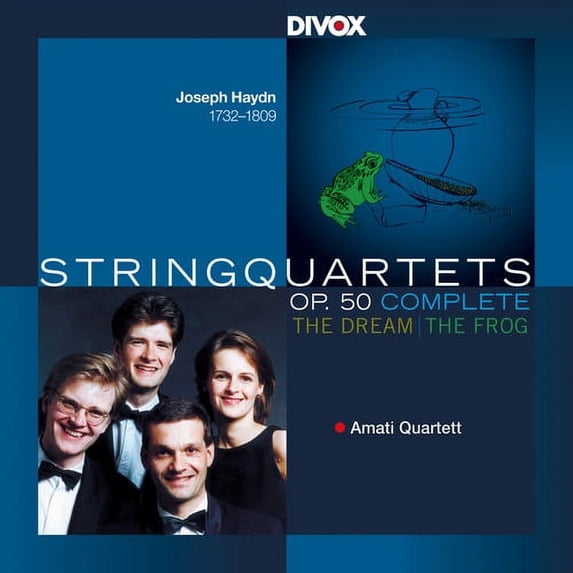
The six quartets of Opus 50 by Joseph Haydn are among the most important works in the string quartet genre - that chamber music formation so highly valued since the era of the First Viennese School, allowing only masters of the composer's art to express themselves. Haydn's so-called quot;Prussian Quartetsquot; (Hob. III:44-49) of 1787 were dedicated to the Prussian King Friedrich Wilhelm II, an enthusiastic amateur cellist. Here, he developed the classical style of music-making, which he had shaped so decisively himself, even further. Starting with a rather simple theme, the motifs are artfully wrought - especially in the opening movement of the quartets - and it is notable that all four instrument are treated as near-equals. The six masterworks of the Austrian composer were captured by the Amati Quartet in studio recordings made in 1995 and 1997, winning the French record award quot;Choc du monde de la musiquequot; at the time - now they have been assembled and released together by DIVOX on a double album. The interpretation by the renowned Amati Quartet is undoubtedly a reference recording of these sophisticated and mellifluous, yet humorous and by no means academic string quartets.