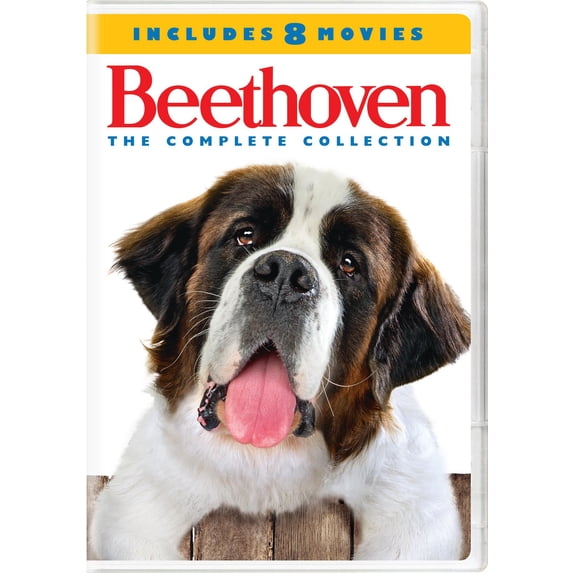
The first film in this collection is so genuinely hilarious and emotionally sharp that it single‑handedly justifies buying the entire set. The sequels gradually shift toward a lighter tone aimed at younger viewers, but the original “Beethoven” remains a near‑perfect example of 1990s family comedy — the kind that had audiences laughing out loud when it was released and still holds its charm today.
The father's performance is the film's comedic engine. His facial expressions, tightly controlled frustration, and impeccable physical timing turn ordinary household mishaps into a symphony of escalating chaos. Every slow blink, every defeated slump of the shoulders, every moment of dawning horror is delivered with such precision that the humor feels almost architectural. Adults will appreciate the craftsmanship; children will simply enjoy watching a man repeatedly outmatched by a dog twice his size.
Beethoven, however, is the soul of the movie. His behavior — no matter how chaotic — is always rooted in absolute devotion. Every toppled chair, every muddy disaster, every moment of “trouble” is driven by a dog's pure instinct to protect, uplift, and love his family. The film makes it clear that the conflict arises not because Beethoven is misbehaving, but because the humans are trying to impose rigid control on a creature whose nature is fundamentally benevolent. If they had simply allowed him to be the dog he is, much of the chaos would never occur — and the family would have found their emotional freedom much sooner.
This theme mirrors the real history of the St. Bernard breed. Originally bred by monks in the 17th century at the Great St. Bernard Hospice in the Swiss Alps, these dogs became legendary for rescuing lost travelers from snowstorms and avalanches. The film cleverly echoes that heritage: Beethoven isn't pulling stranded mountaineers from the Alps, but he is rescuing a suburban family from emotional stagnation, fear, and their own self‑imposed limitations. That parallel gives the movie a surprising depth beneath the slapstick.
The sequels gradually shift toward simpler plots and adorable puppy antics, and while they never recapture the sophistication of the original, they still offer cheerful, harmless entertainment for children. The second film retains some of the original charm because the father returns, bringing a bit of that same expressive comedic timing with him. After that, the series becomes more youth‑oriented, but the set remains an excellent value — especially for families who enjoy lighthearted, easygoing movies.
As a complete collection, this set is absolutely worth owning. The original “Beethoven” is warm, sharply funny, and unexpectedly insightful, while the sequels offer easy, family‑friendly entertainment. It's a delightful addition to any home movie library.






![Beethoven/Beethoven's 2nd/Beethoven's 3rd (DVD Triple Feature) [DVD]](https://i5.walmartimages.com/asr/1c4e5248-e99d-4f2c-bbd3-07400dc72cf1.86948addf0ee56957b0deee1ae1a70b0.jpeg?odnHeight=576&odnWidth=576&odnBg=FFFFFF)
![Dogs 10-Movie Adventure Collection [DVD]](https://i5.walmartimages.com/asr/6c929a7d-635e-42b8-9505-83c5dfc95543.6c370b97889460ba4f2dda74eb0af0ed.jpeg?odnHeight=576&odnWidth=576&odnBg=FFFFFF)

![K-9/K-9 II/K-9 PI (DVD Set) [DVD]](https://i5.walmartimages.com/asr/6ae5a8fa-51a0-4ab3-884e-4150281cf0ab.6da231411099d5a23ae85ef596834d5c.jpeg?odnHeight=576&odnWidth=576&odnBg=FFFFFF)
![Dolphin Tale / Flipper / Free Willy [DVD]](https://i5.walmartimages.com/asr/30773f89-71c5-4739-af9a-5ed918199c66.f613561bc935644dc3ce9a13685a040a.jpeg?odnHeight=576&odnWidth=576&odnBg=FFFFFF)


![Beethoven (2009) [DVD]](https://i5.walmartimages.com/asr/73add2f1-5632-4b45-b75f-9b6b8ea4e180.d6b0ba33d296066902c7453034a6ee99.jpeg?odnHeight=576&odnWidth=576&odnBg=FFFFFF)
![Balto/Balto 2/Balto 3 (DVD Set) [DVD]](https://i5.walmartimages.com/asr/3d258110-1692-4e19-ae80-b11c53af750f.f2dfc7e866e18295c9878e8a282e8fc2.jpeg?odnHeight=576&odnWidth=576&odnBg=FFFFFF)

![Happy Feet / Happy Feet 2 [DVD]](https://i5.walmartimages.com/asr/80228c76-1799-4a04-a4f3-70465cd1c3d9.2eb65defd4da53a626609e1ade725274.jpeg?odnHeight=576&odnWidth=576&odnBg=FFFFFF)


![Santa Claus Is Comin' to Town (Deluxe Edition) [DVD]](https://i5.walmartimages.com/asr/72710611-2009-4a2d-82ed-27ca3a995f6f.b18504c401098a28183040c000d43dfe.jpeg?odnHeight=576&odnWidth=576&odnBg=FFFFFF)
![Dolittle [DVD], Feature, Adventure](https://i5.walmartimages.com/asr/68ce7d6f-c281-4025-b669-9ab426a16a26.ccbf076e9dbabca9ceb04b154e696b51.jpeg?odnHeight=576&odnWidth=576&odnBg=FFFFFF)