


Hero image 0 of Journal of the American Revolution Books: 1764—The First Year of the American Revolution (Hardcover), 0 of 2
Journal of the American Revolution Books: 1764—The First Year of the American Revolution (Hardcover)
(No ratings yet)
Key item features
How the American Response to British Plans for Parliamentary Taxation Set in Motion the Movement for Independence
The year 1764 is of extraordinary importance to the history of the American Revolution. It was a watershed year in the relationship between Great Britain and its North American colonies.
In 1763, the British began to strictly enforce the laws of trade in order to advance a newly formulated colonial policy that included use of customs duties as a means of drawing revenue from the colonies. Americans early in 1764 protested that the laws being enforced were economically unsound and would be destructive to the trade of the colonies. Despite knowing of the American discontent, British officials moved forward with their new colonial policy. Resolutions made by the House of Commons in March 1764 not only codified a more restrictive trade policy, but revealed a plan to impose direct parliamentary taxation. A resolution to levy stamp duties brought forth a storm of American petitions and essays in late 1764 that constitute the beginning of what has become known as the Stamp Act Crisis.
In 1764: The First Year of the American Revolution, Ken Shumate presents the American arguments against the new British policy. The most prominent protests against direct parliamentary taxation were made by New York, Massachusetts, Virginia, Connecticut, and Rhode Island. Supporting the petitions were thoughtful essays by James Otis, Oxenbridge Thacher, Richard Bland, Thomas Fitch, and Stephen Hopkins. Shumate demonstrates the importance of these petitions and essays, written before the passage of the Stamp Act in 1765, as establishing the constitutional basis for the heated protests of that year and the following decade. The British interpretation of these writings as rejecting the supremacy of Parliament—even the sovereignty of Great Britain—further motivated the need for the Stamp Act as a demonstration of the fundamental right of Parliament to levy such taxes.
The year 1764 is of extraordinary importance to the history of the American Revolution. It was a watershed year in the relationship between Great Britain and its North American colonies.
In 1763, the British began to strictly enforce the laws of trade in order to advance a newly formulated colonial policy that included use of customs duties as a means of drawing revenue from the colonies. Americans early in 1764 protested that the laws being enforced were economically unsound and would be destructive to the trade of the colonies. Despite knowing of the American discontent, British officials moved forward with their new colonial policy. Resolutions made by the House of Commons in March 1764 not only codified a more restrictive trade policy, but revealed a plan to impose direct parliamentary taxation. A resolution to levy stamp duties brought forth a storm of American petitions and essays in late 1764 that constitute the beginning of what has become known as the Stamp Act Crisis.
In 1764: The First Year of the American Revolution, Ken Shumate presents the American arguments against the new British policy. The most prominent protests against direct parliamentary taxation were made by New York, Massachusetts, Virginia, Connecticut, and Rhode Island. Supporting the petitions were thoughtful essays by James Otis, Oxenbridge Thacher, Richard Bland, Thomas Fitch, and Stephen Hopkins. Shumate demonstrates the importance of these petitions and essays, written before the passage of the Stamp Act in 1765, as establishing the constitutional basis for the heated protests of that year and the following decade. The British interpretation of these writings as rejecting the supremacy of Parliament—even the sovereignty of Great Britain—further motivated the need for the Stamp Act as a demonstration of the fundamental right of Parliament to levy such taxes.
Specs
- Book formatHardcover
- Fiction/nonfictionNon-Fiction
- GenreHistory
- Pub date20210101
- Pages224
- Reading levelGeneral
Current price is USD$26.06
Price when purchased online
Out of stock
How do you want your item?
Out of stock
About this item
Product details
How the American Response to British Plans for Parliamentary Taxation Set in Motion the Movement for Independence
In 1764: The First Year of the American Revolution, Ken Shumate presents the American arguments against the new British policy. The most prominent protests against direct parliamentary taxation were made by New York, Massachusetts, Virginia, Connecticut, and Rhode Island. Supporting the petitions were thoughtful essays by James Otis, Oxenbridge Thacher, Richard Bland, Thomas Fitch, and Stephen Hopkins. Shumate demonstrates the importance of these petitions and essays, written before the passage of the Stamp Act in 1765, as establishing the constitutional basis for the heated protests of that year and the following decade. The British interpretation of these writings as rejecting the supremacy of Parliament—even the sovereignty of Great Britain—further motivated the need for the Stamp Act as a demonstration of the fundamental right of Parliament to levy such taxes.
In 1764: The First Year of the American Revolution, Ken Shumate presents the American arguments against the new British policy. The most prominent protests against direct parliamentary taxation were made by New York, Massachusetts, Virginia, Connecticut, and Rhode Island. Supporting the petitions were thoughtful essays by James Otis, Oxenbridge Thacher, Richard Bland, Thomas Fitch, and Stephen Hopkins. Shumate demonstrates the importance of these petitions and essays, written before the passage of the Stamp Act in 1765, as establishing the constitutional basis for the heated protests of that year and the following decade. The British interpretation of these writings as rejecting the supremacy of Parliament—even the sovereignty of Great Britain—further motivated the need for the Stamp Act as a demonstration of the fundamental right of Parliament to levy such taxes.
How the American Response to British Plans for Parliamentary Taxation Set in Motion the Movement for Independence
The year 1764 is of extraordinary importance to the history of the American Revolution. It was a watershed year in the relationship between Great Britain and its North American colonies.
In 1763, the British began to strictly enforce the laws of trade in order to advance a newly formulated colonial policy that included use of customs duties as a means of drawing revenue from the colonies. Americans early in 1764 protested that the laws being enforced were economically unsound and would be destructive to the trade of the colonies. Despite knowing of the American discontent, British officials moved forward with their new colonial policy. Resolutions made by the House of Commons in March 1764 not only codified a more restrictive trade policy, but revealed a plan to impose direct parliamentary taxation. A resolution to levy stamp duties brought forth a storm of American petitions and essays in late 1764 that constitute the beginning of what has become known as the Stamp Act Crisis.
In 1764: The First Year of the American Revolution, Ken Shumate presents the American arguments against the new British policy. The most prominent protests against direct parliamentary taxation were made by New York, Massachusetts, Virginia, Connecticut, and Rhode Island. Supporting the petitions were thoughtful essays by James Otis, Oxenbridge Thacher, Richard Bland, Thomas Fitch, and Stephen Hopkins. Shumate demonstrates the importance of these petitions and essays, written before the passage of the Stamp Act in 1765, as establishing the constitutional basis for the heated protests of that year and the following decade. The British interpretation of these writings as rejecting the supremacy of Parliament—even the sovereignty of Great Britain—further motivated the need for the Stamp Act as a demonstration of the fundamental right of Parliament to levy such taxes.
The year 1764 is of extraordinary importance to the history of the American Revolution. It was a watershed year in the relationship between Great Britain and its North American colonies.
In 1763, the British began to strictly enforce the laws of trade in order to advance a newly formulated colonial policy that included use of customs duties as a means of drawing revenue from the colonies. Americans early in 1764 protested that the laws being enforced were economically unsound and would be destructive to the trade of the colonies. Despite knowing of the American discontent, British officials moved forward with their new colonial policy. Resolutions made by the House of Commons in March 1764 not only codified a more restrictive trade policy, but revealed a plan to impose direct parliamentary taxation. A resolution to levy stamp duties brought forth a storm of American petitions and essays in late 1764 that constitute the beginning of what has become known as the Stamp Act Crisis.
In 1764: The First Year of the American Revolution, Ken Shumate presents the American arguments against the new British policy. The most prominent protests against direct parliamentary taxation were made by New York, Massachusetts, Virginia, Connecticut, and Rhode Island. Supporting the petitions were thoughtful essays by James Otis, Oxenbridge Thacher, Richard Bland, Thomas Fitch, and Stephen Hopkins. Shumate demonstrates the importance of these petitions and essays, written before the passage of the Stamp Act in 1765, as establishing the constitutional basis for the heated protests of that year and the following decade. The British interpretation of these writings as rejecting the supremacy of Parliament—even the sovereignty of Great Britain—further motivated the need for the Stamp Act as a demonstration of the fundamental right of Parliament to levy such taxes.
info:
We aim to show you accurate product information. Manufacturers, suppliers and others provide what you see here, and we have not verified it.
Specifications
Book format
Hardcover
Fiction/nonfiction
Non-Fiction
Genre
History
Pub date
20210101
Similar items you might like
Based on what customers bought
Liberty and Insanity in the Age of the American Revolution, (Paperback) $23.95
 $2395current price $23.95
Liberty and Insanity in the Age of the American Revolution, (Paperback)
Deconstructing the Story of the American Revolution, (Hardcover) $21.99
 $2199current price $21.99
Deconstructing the Story of the American Revolution, (Hardcover)
Year Book of the Pennsylvania Society Sons of the American Revolution, 1903 (Paperback) $22.95
 $2295current price $22.95
Year Book of the Pennsylvania Society Sons of the American Revolution, 1903 (Paperback)
Pre-Owned The American Heritage History of the American Revolution (Hardcover) 0743486811 9780743486811 $10.57 Was $12.22
 $1057current price $10.57, Was $12.22$12.22
Pre-Owned The American Heritage History of the American Revolution (Hardcover) 0743486811 9780743486811
Military Remarkable Charlestonians in the American Revolution, (Paperback) $18.60 Was $20.99
 $1860current price $18.60, Was $20.99$20.99
Military Remarkable Charlestonians in the American Revolution, (Paperback)
A Plea For The Constitution Of The U.S. Of America : Wounded In The House Of Its Guardians (1886) (Paperback) $21.59
 $2159current price $21.59
A Plea For The Constitution Of The U.S. Of America : Wounded In The House Of Its Guardians (1886) (Paperback)
We Survived the Night (Hardcover) $14.21 Was $17.66
 $1421current price $14.21, Was $17.66$17.66
We Survived the Night (Hardcover)
The Peril of the Republic of the United States of America (Paperback) $20.95
 $2095current price $20.95
The Peril of the Republic of the United States of America (Paperback)
The American Revolution Through British Eyes, (Paperback) $20.95
 $2095current price $20.95
The American Revolution Through British Eyes, (Paperback)
Combat Continental Soldier Vs Hessian Soldier: American Revolution 1775-83, Book 83, (Paperback) $19.67
 $1967current price $19.67
Combat Continental Soldier Vs Hessian Soldier: American Revolution 1775-83, Book 83, (Paperback)
15 out of 5 Stars. 1 reviewsLibrary of Alexandria The U.S. Constitution: The Supreme Law of the United States (Deluxe Hardbound Edition), Book 193, (Hardcover) $19.95
 $1995current price $19.95
Library of Alexandria The U.S. Constitution: The Supreme Law of the United States (Deluxe Hardbound Edition), Book 193, (Hardcover)
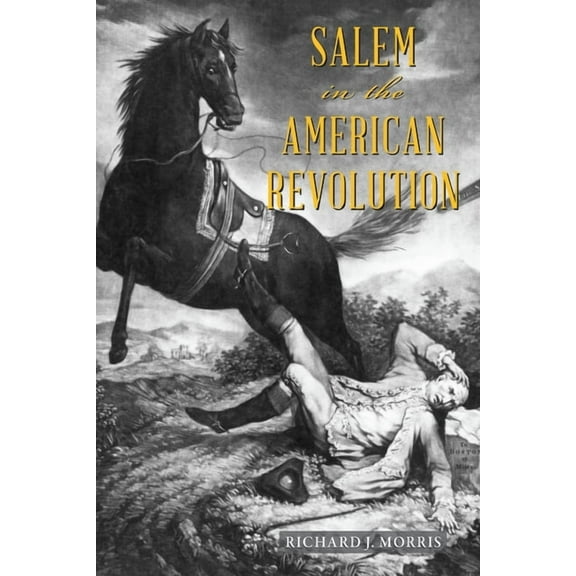
Salem in the American Revolution, (Paperback) $15.60
 $1560current price $15.60
Salem in the American Revolution, (Paperback)
Documents Relating to the History of South Carolina During the Revolutionary War. $24.02
 $2402current price $24.02
Documents Relating to the History of South Carolina During the Revolutionary War.
American Revolution (Paperback) $20.95
 $2095current price $20.95
American Revolution (Paperback)
The Founding of America: The Words That Shaped a Nation, (Hardcover) $19.00
 $1900current price $19.00
The Founding of America: The Words That Shaped a Nation, (Hardcover)
Pre-Owned George Washington in the American Revolution (1775-1783) (Hardcover) 0316285951 9780316285957 $12.72
 $1272current price $12.72
Pre-Owned George Washington in the American Revolution (1775-1783) (Hardcover) 0316285951 9780316285957
Pre-Owned Encyclopedia of the American Revolution (Hardcover) 0811705781 9780811705783 $67.79
 $6779current price $67.79
Pre-Owned Encyclopedia of the American Revolution (Hardcover) 0811705781 9780811705783
Pre-Owned The Intimate Lives of the Founding Fathers (Hardcover) 0061139122 9780061139123 $6.35
 3 optionsAvailable in additional 3 options$635current price $6.35
Pre-Owned The Intimate Lives of the Founding Fathers (Hardcover) 0061139122 9780061139123
The Rebellion Begins: Westborough and the Start of the American Revolution $16.99
 $1699current price $16.99
The Rebellion Begins: Westborough and the Start of the American Revolution
Pre-Owned The Nine Nations of North America (Paperback) 0380578859 9780380578856 $10.31
 2 optionsAvailable in additional 2 options$1031current price $10.31
Pre-Owned The Nine Nations of North America (Paperback) 0380578859 9780380578856
Customer ratings & reviews
0 ratings|0 reviews
This item does not have any reviews yet
