


The Dissolution of Yugoslavia: The History of the Yugoslav Wars and the Political Problems that Led to Yugoslavia's Demi, (Paperback)
(No ratings yet)
Key item features
- The Dissolution of Yugoslavia: The History of the Yugoslav Wars and the Political Problems that Led to Yugoslavia's Demi, (Paperback)
- Author: Independently Published
- ISBN: 9781790709021
- Format: Paperback
- Publication Date: 2018-12-03
- Page Count: 138
Specs
- Book formatPaperback
- Fiction/nonfictionNon-Fiction
- GenreHistory
- Publication dateDecember, 2018
- Pages138
- SubgenreRussia
Current price is USD$13.65
Price when purchased online
- Free shipping
 Free 30-day returns
How do you want your item?
Columbus, 43215
Arrives between May 1 - May 4
|
Sold and shipped by Alibris Books
4.566297076880784 stars out of 5, based on 10913 seller reviews(4.6)10913 seller reviews

Free 30-day returns
Other sellers
$14.85
+Free shippingShipping, arrives by Sat, May 2 to Columbus, 43215
Sold and shipped by thebookpros
Free 30-day returns
About this item
Product details
*Includes pictures
*Includes online resources and a bibliography for further reading
Yugoslavia was arguably one of the most unusual geopolitical creations of the 20th century. The Yugoslav state had never existed in any historical sense, and the ties that bound together its constituent peoples were tenuous at best. Although nominally all "Slavs," the country was an amalgamation of languages, alphabets, cultures, religions and traditions, which ensured its short existence was littered with splits, conflicts, and shocking violence. In a sense, it's somewhat surprising that it lasted as long as it did.
In the wake of World War I, as the political boundaries of Europe and the Middle East were redrawn, the Kingdom of Yugoslavia, initially known as the Kingdom of Serbs, Croats and Slovenes, came into existence with a monarch as its head of state. Confirmed at the 1919 Versailles Conference, the "first" Yugoslavia was a particularly fragile enterprise, and there was almost constant tension between the majority Serbs and the other Yugoslav nationalities, especially the Croats. As a result, the Kingdom was a land of political assassinations, underground terrorist organizations, and ethnic animosities. In 1929, King Alexander I suspended democracy and ruled as a dictator until he himself was assassinated in 1934.
During his reign, Tito managed to quash the intense national feelings of the diverse groups making up the Yugoslavian population, and he did so through several methods. He managed to successfully play the two superpower rivals, the United States and Soviet Union, off against each other during the Cold War, and in doing so, he maintained a considerable amount of independence from both, even as he additionally received foreign aid to keep his regime afloat. All the while he remained defiant, once penning a legendary letter to Joseph Stalin warning the Soviet dictator, "To Joseph Stalin: Stop sending people to kill me! We've already captured five of them, one of them with a bomb and another with a rifle... If you don't stop sending killers, I'll send a very fast working one to Moscow and I certainly won't have to send another."
Internal issues plagued the country in its final years and Tito had tinkered with Yugoslavia's constitution on several occasions. His final attempt, in 1974, saw the partial separation of Kosovo - crucial in the Serb national story - from the rest of Serbia. A number of reasons led to the rising Serb nationalist sentiment after Tito's death, but Kosovo was a central aspect. Yugoslavia required far-sighted, magnanimous leaders to avoid internecine disputes, but none were available, or at least in positions of power in the 1980s. In Croatia, Franjo Tudjman - a long time Croat nationalist - emerged as the republic's leader, and Slobodan Milosevic rose to prominence in the middle of the decade and, despite apparently being a career communist, positioned himself as "defender of the Serbs." He began ousting his rivals and installing sympathetic underlings into leadership positions in Kosovo, Vojvodina, and Montenegro, essentially giving him a majority bloc at the federal level.
Depending on the source, many authors have focused on different catalysts for Yugoslavia's demise, but Vesna Drapac may have succinctly summed the situation up when he wrote that by the end, the state "lacked a reason to exist." There is certainly something in this sentiment, but the disintegration came at an enormous cost.
The Dissolution of Yugoslavia: The History of the Yugoslav Wars and the Political Problems that Led to Yugoslavia's Demise examines how the multicultural nation broke apart in the 1980s and 1990s. Along with pictures of important p
*Includes online resources and a bibliography for further reading
Yugoslavia was arguably one of the most unusual geopolitical creations of the 20th century. The Yugoslav state had never existed in any historical sense, and the ties that bound together its constituent peoples were tenuous at best. Although nominally all "Slavs," the country was an amalgamation of languages, alphabets, cultures, religions and traditions, which ensured its short existence was littered with splits, conflicts, and shocking violence. In a sense, it's somewhat surprising that it lasted as long as it did.
In the wake of World War I, as the political boundaries of Europe and the Middle East were redrawn, the Kingdom of Yugoslavia, initially known as the Kingdom of Serbs, Croats and Slovenes, came into existence with a monarch as its head of state. Confirmed at the 1919 Versailles Conference, the "first" Yugoslavia was a particularly fragile enterprise, and there was almost constant tension between the majority Serbs and the other Yugoslav nationalities, especially the Croats. As a result, the Kingdom was a land of political assassinations, underground terrorist organizations, and ethnic animosities. In 1929, King Alexander I suspended democracy and ruled as a dictator until he himself was assassinated in 1934.
During his reign, Tito managed to quash the intense national feelings of the diverse groups making up the Yugoslavian population, and he did so through several methods. He managed to successfully play the two superpower rivals, the United States and Soviet Union, off against each other during the Cold War, and in doing so, he maintained a considerable amount of independence from both, even as he additionally received foreign aid to keep his regime afloat. All the while he remained defiant, once penning a legendary letter to Joseph Stalin warning the Soviet dictator, "To Joseph Stalin: Stop sending people to kill me! We've already captured five of them, one of them with a bomb and another with a rifle... If you don't stop sending killers, I'll send a very fast working one to Moscow and I certainly won't have to send another."
Internal issues plagued the country in its final years and Tito had tinkered with Yugoslavia's constitution on several occasions. His final attempt, in 1974, saw the partial separation of Kosovo - crucial in the Serb national story - from the rest of Serbia. A number of reasons led to the rising Serb nationalist sentiment after Tito's death, but Kosovo was a central aspect. Yugoslavia required far-sighted, magnanimous leaders to avoid internecine disputes, but none were available, or at least in positions of power in the 1980s. In Croatia, Franjo Tudjman - a long time Croat nationalist - emerged as the republic's leader, and Slobodan Milosevic rose to prominence in the middle of the decade and, despite apparently being a career communist, positioned himself as "defender of the Serbs." He began ousting his rivals and installing sympathetic underlings into leadership positions in Kosovo, Vojvodina, and Montenegro, essentially giving him a majority bloc at the federal level.
Depending on the source, many authors have focused on different catalysts for Yugoslavia's demise, but Vesna Drapac may have succinctly summed the situation up when he wrote that by the end, the state "lacked a reason to exist." There is certainly something in this sentiment, but the disintegration came at an enormous cost.
The Dissolution of Yugoslavia: The History of the Yugoslav Wars and the Political Problems that Led to Yugoslavia's Demise examines how the multicultural nation broke apart in the 1980s and 1990s. Along with pictures of important p
- The Dissolution of Yugoslavia: The History of the Yugoslav Wars and the Political Problems that Led to Yugoslavia's Demi, (Paperback)
- Author: Independently Published
- ISBN: 9781790709021
- Format: Paperback
- Publication Date: 2018-12-03
- Page Count: 138
info:
We aim to show you accurate product information. Manufacturers, suppliers and others provide what you see here, and we have not verified it.
Specifications
Book format
Paperback
Fiction/nonfiction
Non-Fiction
Genre
History
Publication date
December, 2018
Warranty
Warranty information
Please be aware that the warranty terms on items offered for sale by third party Marketplace sellers may differ from those displayed in this section (if any). To confirm warranty terms on an item offered for sale by a third party Marketplace seller, please use the 'Contact seller' feature on the third party Marketplace seller's information page and request the item's warranty terms prior to purchase.
Similar items you might like
Based on what customers bought
The Battle of Kosovo: The History and Legacy of the Battle Between the Serbs and Ottomans that Forged Serbia's National , (Paperback) $13.46
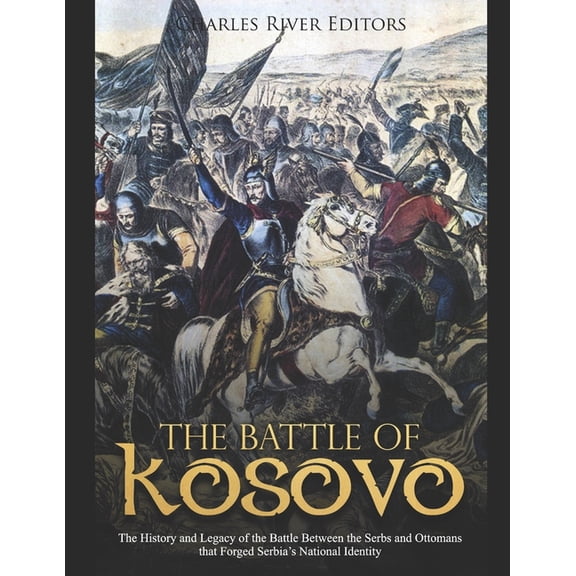 $1346current price $13.46
The Battle of Kosovo: The History and Legacy of the Battle Between the Serbs and Ottomans that Forged Serbia's National , (Paperback)
Prague Winter: A Personal Story of Remembrance and War, 1937-1948, (Paperback) $15.19 $19.99/lb
 $1519current price $15.19$19.99/lb
Prague Winter: A Personal Story of Remembrance and War, 1937-1948, (Paperback)
15 out of 5 Stars. 1 reviewsThe Crusades: The Authoritative History of the War for the Holy Land, (Paperback) $13.79
 $1379current price $13.79
The Crusades: The Authoritative History of the War for the Holy Land, (Paperback)
Pre-Owned Day of the Barbarians (Paperback) 1843545942 9781843545941 $4.57
 2 optionsAvailable in additional 2 options$457current price $4.57
Pre-Owned Day of the Barbarians (Paperback) 1843545942 9781843545941
Le Grandi Guerre del Mondo Le Guerre Napoleoniche, Book 3, (Paperback) $9.99
 $999current price $9.99
Le Grandi Guerre del Mondo Le Guerre Napoleoniche, Book 3, (Paperback)
American Heritage Library World War II, (Paperback) $3.99
 $399current price $3.99
American Heritage Library World War II, (Paperback)
Pre-Owned The Napoleonic Wars: The Rise And Fall Of An Empire (Essential Histories Specials) (Paperback) 1841768316 9781841768311 $10.98 Was $12.64
 $1098current price $10.98, Was $12.64$12.64
Pre-Owned The Napoleonic Wars: The Rise And Fall Of An Empire (Essential Histories Specials) (Paperback) 1841768316 9781841768311
Waterloo: The History of Four Days, Three Armies, and Three Battles, (Paperback) $11.33
 $1133current price $11.33
Waterloo: The History of Four Days, Three Armies, and Three Battles, (Paperback)
The History of the Peloponnesian War: Historical Account of the War between Sparta and Athens, (Paperback) $10.20
 $1020current price $10.20
The History of the Peloponnesian War: Historical Account of the War between Sparta and Athens, (Paperback)
Pre-Owned American Military History, Vol. 2: 1902-1996 (Paperback) 0938289713 9780938289715 $9.64
 $964current price $9.64
Pre-Owned American Military History, Vol. 2: 1902-1996 (Paperback) 0938289713 9780938289715
History of the United Netherlands From the Death of William the Silent to the Twelve Year's Truce, (Paperback) $14.97
 $1497current price $14.97
History of the United Netherlands From the Death of William the Silent to the Twelve Year's Truce, (Paperback)
History of the Modern World The Age of Extremes: A History of the World, 1914-1991, (Paperback) $12.69
 $1269current price $12.69
History of the Modern World The Age of Extremes: A History of the World, 1914-1991, (Paperback)
Napoleon: The Decline and Fall of an Empire: 1811-1821, (Paperback) $11.33
 $1133current price $11.33
Napoleon: The Decline and Fall of an Empire: 1811-1821, (Paperback)
Pre-Owned The United States in the First World War: An Encyclopedia (Military History of the United States) Paperback $12.88
 $1288current price $12.88
Pre-Owned The United States in the First World War: An Encyclopedia (Military History of the United States) Paperback
Hitler's Revolution: Ideology, Social Programs, Foreign Affairs, (Paperback) $18.12
 $1812current price $18.12
Hitler's Revolution: Ideology, Social Programs, Foreign Affairs, (Paperback)
Pre-Owned History of the First World War Paperback $6.64
 2 optionsAvailable in additional 2 options$664current price $6.64
Pre-Owned History of the First World War Paperback
Pre-Owned Origins of Major War (Paperback) 0801487579 9780801487576 $8.63
 2 optionsAvailable in additional 2 options$863current price $8.63
Pre-Owned Origins of Major War (Paperback) 0801487579 9780801487576
Hitler's New Disorder: The Second World War in Yugoslavia, (Paperback) $15.48 Was $17.38
 $1548current price $15.48, Was $17.38$17.38
Hitler's New Disorder: The Second World War in Yugoslavia, (Paperback)


Customer ratings & reviews
0 ratings|0 reviews
This item does not have any reviews yet

Related pages
- Soviet Union Military
- Former Ussr
- History 1301
- German Unification
- Military Russian History
- Right Hundred Year War American Conservatism
- Wales History Books
- General Great Britain History Books
- 21st Century Great Britain History Books
- Canada Military History Books
- Persian Gulf War Military History Books
- Russian & Former Soviet Union Political Books