

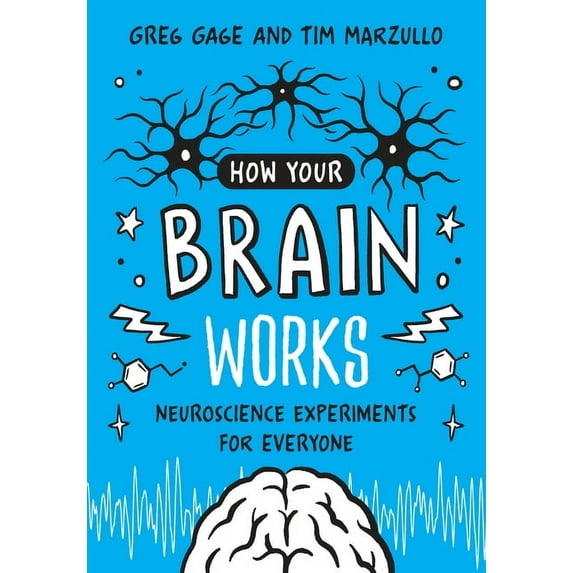
Hero image 0 of How Your Brain Works : Neuroscience Experiments for Everyone (Paperback), 0 of 1
How Your Brain Works : Neuroscience Experiments for Everyone (Paperback)
Key item features
Discover the hidden electrical world inside your nervous system using DIY, hands-on experiments, for all ages. No MD or PhD required!
The workings of the brain are mysterious: What are neural signals? What do they mean? How do our senses really sense? How does our brain control our movements? What happens when we meditate?
Techniques to record signals from living brains were once thought to be the realm of advanced university labs . . . but not anymore! This book allows anyone to participate in the discovery of neuroscience through hands-on experiments that record the hidden electrical world beneath our skin and skulls. In How Your Brain Works, neuroscientists Greg Gage and Tim Marzullo offer a practical guide—accessible and useful to readers from middle schoolers to college undergraduates to curious adults—for learning about the brain through hands-on experiments.
Armed with some DIY electrodes, readers will get to see what brain activity really looks like through simple neuroscience experiments. Written by two neuroscience researchers who invented open-source techniques to record signals from neurons, muscles, hearts, eyes, and brains, How Your Brain Works includes more than forty-five experiments to gain a deeper understanding of your brain.
Using a homemade scientific instrument called a SpikerBox, readers can see how fast neural signals travel by recording electrical signals from an earthworm. Or, turning themselves into subjects, readers can strap on some electrode stickers to detect the nervous system in their own bodies. Each chapter begins by describing some phenomenology of a particular area of neuroscience, then guides readers step-by-step through an experiment, and concludes with a series of open-ended questions to inspire further investigation. Some experiments use invertebrates (such as insects), and the book provides a thoughtful framework for the ethical use of these animals in education. How Your Brain Works offers fascinating reading for students at any level, curious readers, and scientists interested in using electrophysiology in their research or teaching.
Example Experiments
• How fast do signals travel down a neuron? The brain uses electricity . . . but do neurons communicate as fast as lightning inside our bodies? In this experiment you will make a speed trap for spikes!
• Can we really enhance our memories during sleep? Strap on a brainwave-reading sweatband and test the power of cueing up and strengthening memories while you dream away!
• Wait, that’s my number! Ever feel that moment of excitement when you see your number displayed while waiting for an opening at the counter? In this experiment, you will peer into your brainwaves to see what happens when the unexpected occurs and how the brain gets your attention.
• Using hip hop to talk to the brain. Tired of simply “reading” the electricity from the brain? Would you like to “write” to the nervous system as well? In this experiment you will use a smartphone and hack a headphone cable to see how brain stimulators (used in treating Parkinson’s disease) really work.
• How long does it take the brain to decide? Using simple classroom rulers and a clever technique, readers can determine how long it takes the brain to make decisions.
The workings of the brain are mysterious: What are neural signals? What do they mean? How do our senses really sense? How does our brain control our movements? What happens when we meditate?
Techniques to record signals from living brains were once thought to be the realm of advanced university labs . . . but not anymore! This book allows anyone to participate in the discovery of neuroscience through hands-on experiments that record the hidden electrical world beneath our skin and skulls. In How Your Brain Works, neuroscientists Greg Gage and Tim Marzullo offer a practical guide—accessible and useful to readers from middle schoolers to college undergraduates to curious adults—for learning about the brain through hands-on experiments.
Armed with some DIY electrodes, readers will get to see what brain activity really looks like through simple neuroscience experiments. Written by two neuroscience researchers who invented open-source techniques to record signals from neurons, muscles, hearts, eyes, and brains, How Your Brain Works includes more than forty-five experiments to gain a deeper understanding of your brain.
Using a homemade scientific instrument called a SpikerBox, readers can see how fast neural signals travel by recording electrical signals from an earthworm. Or, turning themselves into subjects, readers can strap on some electrode stickers to detect the nervous system in their own bodies. Each chapter begins by describing some phenomenology of a particular area of neuroscience, then guides readers step-by-step through an experiment, and concludes with a series of open-ended questions to inspire further investigation. Some experiments use invertebrates (such as insects), and the book provides a thoughtful framework for the ethical use of these animals in education. How Your Brain Works offers fascinating reading for students at any level, curious readers, and scientists interested in using electrophysiology in their research or teaching.
Example Experiments
• How fast do signals travel down a neuron? The brain uses electricity . . . but do neurons communicate as fast as lightning inside our bodies? In this experiment you will make a speed trap for spikes!
• Can we really enhance our memories during sleep? Strap on a brainwave-reading sweatband and test the power of cueing up and strengthening memories while you dream away!
• Wait, that’s my number! Ever feel that moment of excitement when you see your number displayed while waiting for an opening at the counter? In this experiment, you will peer into your brainwaves to see what happens when the unexpected occurs and how the brain gets your attention.
• Using hip hop to talk to the brain. Tired of simply “reading” the electricity from the brain? Would you like to “write” to the nervous system as well? In this experiment you will use a smartphone and hack a headphone cable to see how brain stimulators (used in treating Parkinson’s disease) really work.
• How long does it take the brain to decide? Using simple classroom rulers and a clever technique, readers can determine how long it takes the brain to make decisions.
Specs
- Manual & guide typeInstruction Manual
- Book formatPaperback
- Edition1
- Skill levelBeginner
- Pages324
- LanguageEnglish
Current price is USD$21.82
Price when purchased online
- Free shipping
 Free 30-day returns
How do you want your item?
Columbus, 43215
Arrives by Thu, Apr 23
|
Sold and shipped by thebookpros
4.453603277898289 stars out of 5, based on 4149 seller reviews(4.5)4149 seller reviews

Free 30-day returns - in store or online
More seller options (4)
Starting from $21.82
About this item
Product details
Discover the hidden electrical world inside your nervous system using DIY, hands-on experiments, for all ages. No MD or PhD required! The workings of the brain are mysterious: What are neural signals? What do they mean? How do our senses really sense? How does our brain control our movements? What happens when we meditate? Techniques to record signals from living brains were once thought to be the realm of advanced university labs . . . but not anymore! This book allows anyone to participate in the discovery of neuroscience through hands-on experiments that record the hidden electrical world beneath our skin and skulls. In How Your Brain Works, neuroscientists Greg Gage and Tim Marzullo offer a practical guide--accessible and useful to readers from middle schoolers to college undergraduates to curious adults--for learning about the brain through hands-on experiments. Armed with some DIY electrodes, readers will get to see what brain activity really looks like through simple neuroscience experiments. Written by two neuroscience researchers who invented open-source techniques to record signals from neurons, muscles, hearts, eyes, and brains, How Your Brain Works includes more than forty-five experiments to gain a deeper understanding of your brain. Using a homemade scientific instrument called a SpikerBox, readers can see how fast neural signals travel by recording electrical signals from an earthworm. Or, turning themselves into subjects, readers can strap on some electrode stickers to detect the nervous system in their own bodies. Each chapter begins by describing some phenomenology of a particular area of neuroscience, then guides readers step-by-step through an experiment, and concludes with a series of open-ended questions to inspire further investigation. Some experiments use invertebrates (such as insects), and the book provides a thoughtful framework for the ethical use of these animals in education. How Your Brain Works offers fascinating reading for students at any level, curious readers, and scientists interested in using electrophysiology in their research or teaching. Example Experiments - How fast do signals travel down a neuron? The brain uses electricity . . . but do neurons communicate as fast as lightning inside our bodies? In this experiment you will make a speed trap for spikes!
- Can we really enhance our memories during sleep? Strap on a brainwave-reading sweatband and test the power of cueing up and strengthening memories while you dream away!
- Wait, that's my number! Ever feel that moment of excitement when you see your number displayed while waiting for an opening at the counter? In this experiment, you will peer into your brainwaves to see what happens when the unexpected occurs and how the brain gets your attention.
- Using hip hop to talk to the brain. Tired of simply "reading" the electricity from the brain? Would you like to "write" to the nervous system as well? In this experiment you will use a smartphone and hack a headphone cable to see how brain stimulators (used in treating Parkinson's disease) really work.
- How long does it take the brain to decide? Using simple classroom rulers and a clever technique, readers can determine how long it takes the brain to make decisions.
- Can we really enhance our memories during sleep? Strap on a brainwave-reading sweatband and test the power of cueing up and strengthening memories while you dream away!
- Wait, that's my number! Ever feel that moment of excitement when you see your number displayed while waiting for an opening at the counter? In this experiment, you will peer into your brainwaves to see what happens when the unexpected occurs and how the brain gets your attention.
- Using hip hop to talk to the brain. Tired of simply "reading" the electricity from the brain? Would you like to "write" to the nervous system as well? In this experiment you will use a smartphone and hack a headphone cable to see how brain stimulators (used in treating Parkinson's disease) really work.
- How long does it take the brain to decide? Using simple classroom rulers and a clever technique, readers can determine how long it takes the brain to make decisions.
Discover the hidden electrical world inside your nervous system using DIY, hands-on experiments, for all ages. No MD or PhD required!
The workings of the brain are mysterious: What are neural signals? What do they mean? How do our senses really sense? How does our brain control our movements? What happens when we meditate?
Techniques to record signals from living brains were once thought to be the realm of advanced university labs . . . but not anymore! This book allows anyone to participate in the discovery of neuroscience through hands-on experiments that record the hidden electrical world beneath our skin and skulls. In How Your Brain Works, neuroscientists Greg Gage and Tim Marzullo offer a practical guide—accessible and useful to readers from middle schoolers to college undergraduates to curious adults—for learning about the brain through hands-on experiments.
Armed with some DIY electrodes, readers will get to see what brain activity really looks like through simple neuroscience experiments. Written by two neuroscience researchers who invented open-source techniques to record signals from neurons, muscles, hearts, eyes, and brains, How Your Brain Works includes more than forty-five experiments to gain a deeper understanding of your brain.
Using a homemade scientific instrument called a SpikerBox, readers can see how fast neural signals travel by recording electrical signals from an earthworm. Or, turning themselves into subjects, readers can strap on some electrode stickers to detect the nervous system in their own bodies. Each chapter begins by describing some phenomenology of a particular area of neuroscience, then guides readers step-by-step through an experiment, and concludes with a series of open-ended questions to inspire further investigation. Some experiments use invertebrates (such as insects), and the book provides a thoughtful framework for the ethical use of these animals in education. How Your Brain Works offers fascinating reading for students at any level, curious readers, and scientists interested in using electrophysiology in their research or teaching.
Example Experiments
• How fast do signals travel down a neuron? The brain uses electricity . . . but do neurons communicate as fast as lightning inside our bodies? In this experiment you will make a speed trap for spikes!
• Can we really enhance our memories during sleep? Strap on a brainwave-reading sweatband and test the power of cueing up and strengthening memories while you dream away!
• Wait, that’s my number! Ever feel that moment of excitement when you see your number displayed while waiting for an opening at the counter? In this experiment, you will peer into your brainwaves to see what happens when the unexpected occurs and how the brain gets your attention.
• Using hip hop to talk to the brain. Tired of simply “reading” the electricity from the brain? Would you like to “write” to the nervous system as well? In this experiment you will use a smartphone and hack a headphone cable to see how brain stimulators (used in treating Parkinson’s disease) really work.
• How long does it take the brain to decide? Using simple classroom rulers and a clever technique, readers can determine how long it takes the brain to make decisions.
The workings of the brain are mysterious: What are neural signals? What do they mean? How do our senses really sense? How does our brain control our movements? What happens when we meditate?
Techniques to record signals from living brains were once thought to be the realm of advanced university labs . . . but not anymore! This book allows anyone to participate in the discovery of neuroscience through hands-on experiments that record the hidden electrical world beneath our skin and skulls. In How Your Brain Works, neuroscientists Greg Gage and Tim Marzullo offer a practical guide—accessible and useful to readers from middle schoolers to college undergraduates to curious adults—for learning about the brain through hands-on experiments.
Armed with some DIY electrodes, readers will get to see what brain activity really looks like through simple neuroscience experiments. Written by two neuroscience researchers who invented open-source techniques to record signals from neurons, muscles, hearts, eyes, and brains, How Your Brain Works includes more than forty-five experiments to gain a deeper understanding of your brain.
Using a homemade scientific instrument called a SpikerBox, readers can see how fast neural signals travel by recording electrical signals from an earthworm. Or, turning themselves into subjects, readers can strap on some electrode stickers to detect the nervous system in their own bodies. Each chapter begins by describing some phenomenology of a particular area of neuroscience, then guides readers step-by-step through an experiment, and concludes with a series of open-ended questions to inspire further investigation. Some experiments use invertebrates (such as insects), and the book provides a thoughtful framework for the ethical use of these animals in education. How Your Brain Works offers fascinating reading for students at any level, curious readers, and scientists interested in using electrophysiology in their research or teaching.
Example Experiments
• How fast do signals travel down a neuron? The brain uses electricity . . . but do neurons communicate as fast as lightning inside our bodies? In this experiment you will make a speed trap for spikes!
• Can we really enhance our memories during sleep? Strap on a brainwave-reading sweatband and test the power of cueing up and strengthening memories while you dream away!
• Wait, that’s my number! Ever feel that moment of excitement when you see your number displayed while waiting for an opening at the counter? In this experiment, you will peer into your brainwaves to see what happens when the unexpected occurs and how the brain gets your attention.
• Using hip hop to talk to the brain. Tired of simply “reading” the electricity from the brain? Would you like to “write” to the nervous system as well? In this experiment you will use a smartphone and hack a headphone cable to see how brain stimulators (used in treating Parkinson’s disease) really work.
• How long does it take the brain to decide? Using simple classroom rulers and a clever technique, readers can determine how long it takes the brain to make decisions.
info:
We aim to show you accurate product information. Manufacturers, suppliers and others provide what you see here, and we have not verified it.
Specifications
Manual & guide type
Instruction Manual
Book format
Paperback
Edition
1
Skill level
Beginner
Warranty
Warranty information
Please be aware that the warranty terms on items offered for sale by third party Marketplace sellers may differ from those displayed in this section (if any). To confirm warranty terms on an item offered for sale by a third party Marketplace seller, please use the 'Contact seller' feature on the third party Marketplace seller's information page and request the item's warranty terms prior to purchase.
Similar items you might like
Based on what customers bought
Études de Biologie Comparée Basées Sur l'Évolution Organique. Partie 1 (Paperback) $16.86
 $1686current price $16.86
Études de Biologie Comparée Basées Sur l'Évolution Organique. Partie 1 (Paperback)
Don't Be the A-hole on the Team, (Paperback) $8.97
 $897current price $8.97
Don't Be the A-hole on the Team, (Paperback)
An Introduction to the Theory of Knowledge (Paperback) $25.86
 $2586current price $25.86
An Introduction to the Theory of Knowledge (Paperback)
The Meaning Of Home Science, (Paperback) $15.95
 $1595current price $15.95
The Meaning Of Home Science, (Paperback)
How Our Brain Works: The Construction and Functionality of Your Brain Presented and Explained (Paperback) $19.01 Was $21.95
 $1901current price $19.01, Was $21.95$21.95
How Our Brain Works: The Construction and Functionality of Your Brain Presented and Explained (Paperback)
Puzzles of the Past : An Introduction to Thinking about History (Paperback) $21.55
 $2155current price $21.55
Puzzles of the Past : An Introduction to Thinking about History (Paperback)
Experimental Plant Physiology, (Paperback) $14.90
 $1490current price $14.90
Experimental Plant Physiology, (Paperback)
Memories Of My Working Life, (Paperback) $18.95
 $1895current price $18.95
Memories Of My Working Life, (Paperback)
Sciences: La Vie Et Pensée, Essai de Conception Expérimentale (Paperback) $22.95
 $2295current price $22.95
Sciences: La Vie Et Pensée, Essai de Conception Expérimentale (Paperback)
Best seller Psychoanalytic Diagnosis : Understanding Personality Structure in the Clinical Process (Edition 2) (Paperback) $28.00 Was $40.00
Best seller $2800current price $28.00, Was $40.00$40.00
Psychoanalytic Diagnosis : Understanding Personality Structure in the Clinical Process (Edition 2) (Paperback)
65 out of 5 Stars. 6 reviewsRed Book A Guide Book of Lincoln Cents, Book 9, (Paperback) $21.41 Was $24.95
 $2141current price $21.41, Was $24.95$24.95
Red Book A Guide Book of Lincoln Cents, Book 9, (Paperback)
34.7 out of 5 Stars. 3 reviewsUnshakeable: 20 Ways to Enjoy Teaching Every Day...No Matter What (Paperback) $21.29
 $2129current price $21.29
Unshakeable: 20 Ways to Enjoy Teaching Every Day...No Matter What (Paperback)
Day Trading for Dummies, (Paperback) $20.57 Was $29.99
 $2057current price $20.57, Was $29.99$29.99
Day Trading for Dummies, (Paperback)
15 out of 5 Stars. 1 reviewsPsychoanalysis and Existential Philosophy, (Paperback) $22.95
 $2295current price $22.95
Psychoanalysis and Existential Philosophy, (Paperback)
Do Hard Things: Why We Get Resilience Wrong and the Surprising Science of Real Toughness, (Hardcover) $10.58
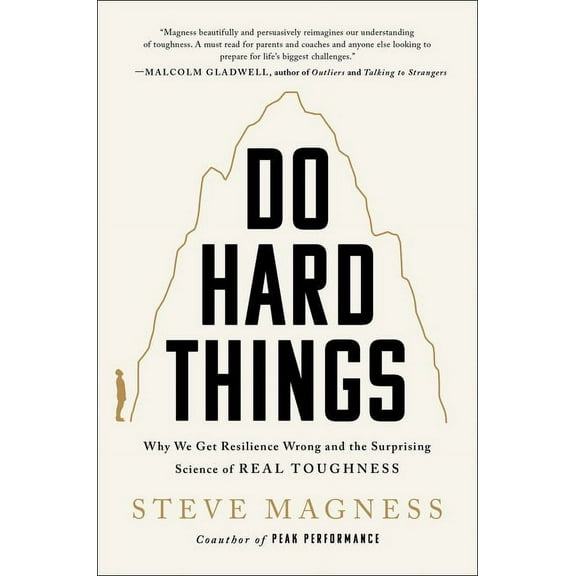 $1058current price $10.58
Do Hard Things: Why We Get Resilience Wrong and the Surprising Science of Real Toughness, (Hardcover)
15 out of 5 Stars. 1 reviewsExtraordinary Knowledge: Science, Psychology, Spirituality and Myths (Paperback) $23.56
 $2356current price $23.56
Extraordinary Knowledge: Science, Psychology, Spirituality and Myths (Paperback)
The Thought Leadership Manual (Paperback) $21.95
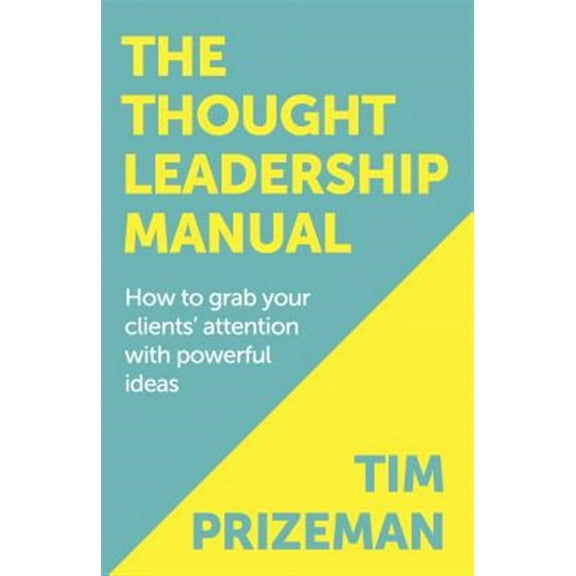 $2195current price $21.95
The Thought Leadership Manual (Paperback)
Student Success How to Argue, (Paperback) $22.98
 $2298current price $22.98
Student Success How to Argue, (Paperback)
Paleontology: An Illustrated History, (Hardcover) $20.97
 $2097current price $20.97
Paleontology: An Illustrated History, (Hardcover)
25 out of 5 Stars. 2 reviews
Customer ratings & reviews
5 out of 55 out of 5 stars
stars1 rating|0 reviews
How item rating is calculated
Filtered and sorted results would be available on the new 'Customer ratings & reviews' page.
Sort by |
This item does not have any reviews yet
