

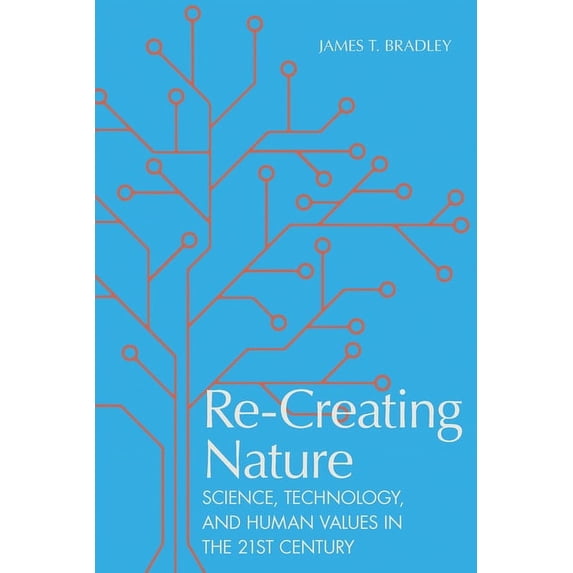
Hero image 0 of Re-Creating Nature : Science, Technology, and Human Values in the Twenty-First Century (Edition 1) (Hardcover), 0 of 1
Re-Creating Nature : Science, Technology, and Human Values in the Twenty-First Century (Edition 1) (Hardcover)
(No ratings yet)
Key item features
An exploration of the moral and ethical implications of new biotechnologies
Many of the ethical issues raised by new technologies have not been widely examined, discussed, or indeed settled. For example, robotics technology challenges the notion of personhood. Should a robot, capable of making what humans would call ethical decisions, be held responsible for those decisions and the resultant actions? Should society reward and punish robots in the same way that it does humans? Likewise, issues of safety, environmental concerns, and distributive justice arise with the increasing acceptance of genetically modified organisms (GMOs) in food production nanotechnology in engineering and medicine, and human gene therapy and enhancement. The problem of dual-use—when a technology can be used both to benefit and to harm—exists with virtually all new technologies but is central in the context of emerging 21st century technologies ranging from artificial intelligence and robotics to human gene-editing and brain-computer interfacing.
In Re-Creating Nature: Science, Technology, and Human Values in the Twenty-First Century, James T. Bradley addresses emerging biotechnologies with prodigious potential to benefit humankind but that are also fraught with ethical consequences. Some actually possess the power to directly alter the evolution of life on earth including human. Specifically, these topics include stem cells, synthetic biology, GMOs in agriculture, nanotechnology, bioterrorism, CRISPR gene-editing technology, three-parent babies, robotics and roboethics, artificial intelligence, and human brain research and neurotechnologies.
Offering clear explanations of these various technologies, a pragmatic presentation of the conundrums involved, and questions that illuminate hypothetical situations, Bradley guides discussions of these and other thorny issues resulting from the development of new biotechnologies. He also highlights the responsibilities of scientists to conduct research in an ethical manner and the responsibilities of nonscientists to become “science literate” in the twenty-first century.
Many of the ethical issues raised by new technologies have not been widely examined, discussed, or indeed settled. For example, robotics technology challenges the notion of personhood. Should a robot, capable of making what humans would call ethical decisions, be held responsible for those decisions and the resultant actions? Should society reward and punish robots in the same way that it does humans? Likewise, issues of safety, environmental concerns, and distributive justice arise with the increasing acceptance of genetically modified organisms (GMOs) in food production nanotechnology in engineering and medicine, and human gene therapy and enhancement. The problem of dual-use—when a technology can be used both to benefit and to harm—exists with virtually all new technologies but is central in the context of emerging 21st century technologies ranging from artificial intelligence and robotics to human gene-editing and brain-computer interfacing.
In Re-Creating Nature: Science, Technology, and Human Values in the Twenty-First Century, James T. Bradley addresses emerging biotechnologies with prodigious potential to benefit humankind but that are also fraught with ethical consequences. Some actually possess the power to directly alter the evolution of life on earth including human. Specifically, these topics include stem cells, synthetic biology, GMOs in agriculture, nanotechnology, bioterrorism, CRISPR gene-editing technology, three-parent babies, robotics and roboethics, artificial intelligence, and human brain research and neurotechnologies.
Offering clear explanations of these various technologies, a pragmatic presentation of the conundrums involved, and questions that illuminate hypothetical situations, Bradley guides discussions of these and other thorny issues resulting from the development of new biotechnologies. He also highlights the responsibilities of scientists to conduct research in an ethical manner and the responsibilities of nonscientists to become “science literate” in the twenty-first century.
Specs
- Book formatHardcover
- Fiction/nonfictionNon-Fiction
- GenreReligion
- Publication dateSeptember, 2019
- Pages408
- Reading levelGrade 12
Current price is USD$45.41
Price when purchased online
- Free shipping
 Free 30-day returns
How do you want your item?
Ships to
Arrives between Jun 2 - Jun 8
|
Sold and shipped by newbookdeals
4.5605676634566645 stars out of 5, based on 1973 seller reviews(4.6)1973 seller reviews

Free 30-day returns
About this item
Product details
An exploration of the moral and ethical implications of new biotechnologies
An exploration of the moral and ethical implications of new biotechnologies
Many of the ethical issues raised by new technologies have not been widely examined, discussed, or indeed settled. For example, robotics technology challenges the notion of personhood. Should a robot, capable of making what humans would call ethical decisions, be held responsible for those decisions and the resultant actions? Should society reward and punish robots in the same way that it does humans? Likewise, issues of safety, environmental concerns, and distributive justice arise with the increasing acceptance of genetically modified organisms (GMOs) in food production nanotechnology in engineering and medicine, and human gene therapy and enhancement. The problem of dual-use—when a technology can be used both to benefit and to harm—exists with virtually all new technologies but is central in the context of emerging 21st century technologies ranging from artificial intelligence and robotics to human gene-editing and brain-computer interfacing.
In Re-Creating Nature: Science, Technology, and Human Values in the Twenty-First Century, James T. Bradley addresses emerging biotechnologies with prodigious potential to benefit humankind but that are also fraught with ethical consequences. Some actually possess the power to directly alter the evolution of life on earth including human. Specifically, these topics include stem cells, synthetic biology, GMOs in agriculture, nanotechnology, bioterrorism, CRISPR gene-editing technology, three-parent babies, robotics and roboethics, artificial intelligence, and human brain research and neurotechnologies.
Offering clear explanations of these various technologies, a pragmatic presentation of the conundrums involved, and questions that illuminate hypothetical situations, Bradley guides discussions of these and other thorny issues resulting from the development of new biotechnologies. He also highlights the responsibilities of scientists to conduct research in an ethical manner and the responsibilities of nonscientists to become “science literate” in the twenty-first century.
Many of the ethical issues raised by new technologies have not been widely examined, discussed, or indeed settled. For example, robotics technology challenges the notion of personhood. Should a robot, capable of making what humans would call ethical decisions, be held responsible for those decisions and the resultant actions? Should society reward and punish robots in the same way that it does humans? Likewise, issues of safety, environmental concerns, and distributive justice arise with the increasing acceptance of genetically modified organisms (GMOs) in food production nanotechnology in engineering and medicine, and human gene therapy and enhancement. The problem of dual-use—when a technology can be used both to benefit and to harm—exists with virtually all new technologies but is central in the context of emerging 21st century technologies ranging from artificial intelligence and robotics to human gene-editing and brain-computer interfacing.
In Re-Creating Nature: Science, Technology, and Human Values in the Twenty-First Century, James T. Bradley addresses emerging biotechnologies with prodigious potential to benefit humankind but that are also fraught with ethical consequences. Some actually possess the power to directly alter the evolution of life on earth including human. Specifically, these topics include stem cells, synthetic biology, GMOs in agriculture, nanotechnology, bioterrorism, CRISPR gene-editing technology, three-parent babies, robotics and roboethics, artificial intelligence, and human brain research and neurotechnologies.
Offering clear explanations of these various technologies, a pragmatic presentation of the conundrums involved, and questions that illuminate hypothetical situations, Bradley guides discussions of these and other thorny issues resulting from the development of new biotechnologies. He also highlights the responsibilities of scientists to conduct research in an ethical manner and the responsibilities of nonscientists to become “science literate” in the twenty-first century.
info:
We aim to show you accurate product information. Manufacturers, suppliers and others provide what you see here, and we have not verified it.
Specifications
Book format
Hardcover
Fiction/nonfiction
Non-Fiction
Genre
Religion
Publication date
September, 2019
Warranty
Warranty information
Please be aware that the warranty terms on items offered for sale by third party Marketplace sellers may differ from those displayed in this section (if any). To confirm warranty terms on an item offered for sale by a third party Marketplace seller, please use the 'Contact seller' feature on the third party Marketplace seller's information page and request the item's warranty terms prior to purchase.
Similar items you might like
Based on what customers bought
Human Physiology: Prepared With Special Reference to Students of Medicine (Hardcover) $44.95
 $4495current price $44.95
Human Physiology: Prepared With Special Reference to Students of Medicine (Hardcover)
Revolution: The Birth of the Greatest Nation in the History of the World, (Hardcover) $36.98
 $3698current price $36.98
Revolution: The Birth of the Greatest Nation in the History of the World, (Hardcover)
The Genesis of Technoscientific Revolutions (Hardcover) $47.78
 $4778current price $47.78
The Genesis of Technoscientific Revolutions (Hardcover)
Hidden in Plain Sight: The History, Science, and Engineering of Microfluidic Technology, (Hardcover) $44.60
 $4460current price $44.60
Hidden in Plain Sight: The History, Science, and Engineering of Microfluidic Technology, (Hardcover)
Masters of Modern Physics This Gifted Age: Science and Technology at the Millennium, (Hardcover) $44.11
 $4411current price $44.11
Masters of Modern Physics This Gifted Age: Science and Technology at the Millennium, (Hardcover)
Effective Science Communication (Third Edition): A practical guide to surviving as a scientist, (Hardcover) $46.15
 $4615current price $46.15
Effective Science Communication (Third Edition): A practical guide to surviving as a scientist, (Hardcover)
Victorian Popularizers of Science : Designing Nature for New Audiences (Paperback) $59.23
 $5923current price $59.23
Victorian Popularizers of Science : Designing Nature for New Audiences (Paperback)
Rescuing Humanity: Transcending the Limits of Mathematics, Science, and Technology, (Paperback) $42.94
 $4294current price $42.94
Rescuing Humanity: Transcending the Limits of Mathematics, Science, and Technology, (Paperback)
Wildavsky Forum Series: Missing Persons : A Critique of the Personhood in the Social Sciences (Series #1) (Edition 1) (Hardcover) $47.78
 $4778current price $47.78
Wildavsky Forum Series: Missing Persons : A Critique of the Personhood in the Social Sciences (Series #1) (Edition 1) (Hardcover)
In Defence of Computer Science: from Aristotle to Agile (Hardcover) $26.63
 $2663current price $26.63
In Defence of Computer Science: from Aristotle to Agile (Hardcover)
Greenwood Press Daily Life Through Histo Science and Technology in 20th-Century American Life, (Hardcover) $100.40
 $10040current price $100.40
Greenwood Press Daily Life Through Histo Science and Technology in 20th-Century American Life, (Hardcover)
Earthscan Science in Society Philanthropy and the Future of Science and Technology, (Paperback) $44.79
 $4479current price $44.79
Earthscan Science in Society Philanthropy and the Future of Science and Technology, (Paperback)
Mrs Proceedings Science and Technology of Magnetic Oxides: Volume 494, (Hardcover) $44.64
 $4464current price $44.64
Mrs Proceedings Science and Technology of Magnetic Oxides: Volume 494, (Hardcover)
Man and Technology: How Humanity Thrives in a Changing World, (Hardcover) $50.71
 $5071current price $50.71
Man and Technology: How Humanity Thrives in a Changing World, (Hardcover)
Suny Science, Technology, and Society Science, Technology, and Democracy, (Paperback) $33.95 Was $40.20
 $3395current price $33.95, Was $40.20$40.20
Suny Science, Technology, and Society Science, Technology, and Democracy, (Paperback)
Science Networks. Historical Studies The First Professional Scientist: Robert Hooke and the Royal Society of London, Book 39, (Hardcover) $56.14
 $5614current price $56.14
Science Networks. Historical Studies The First Professional Scientist: Robert Hooke and the Royal Society of London, Book 39, (Hardcover)
Larry's Story, (Hardcover) $46.38
 $4638current price $46.38
Larry's Story, (Hardcover)
Are We Unique: A Scientist Explores the Unparalleled Intelligence of the Human Mind, (Hardcover) $24.15
 $2415current price $24.15
Are We Unique: A Scientist Explores the Unparalleled Intelligence of the Human Mind, (Hardcover)
Scientific Sublime: Popular Science Unravels the Mysteries of the Universe, (Hardcover) $37.66
 $3766current price $37.66
Scientific Sublime: Popular Science Unravels the Mysteries of the Universe, (Hardcover)
Physics, Consciousness and the Nature of Existence (Hardcover) $24.92
 $2492current price $24.92
Physics, Consciousness and the Nature of Existence (Hardcover)
Customer ratings & reviews
0 ratings|0 reviews
This item does not have any reviews yet
