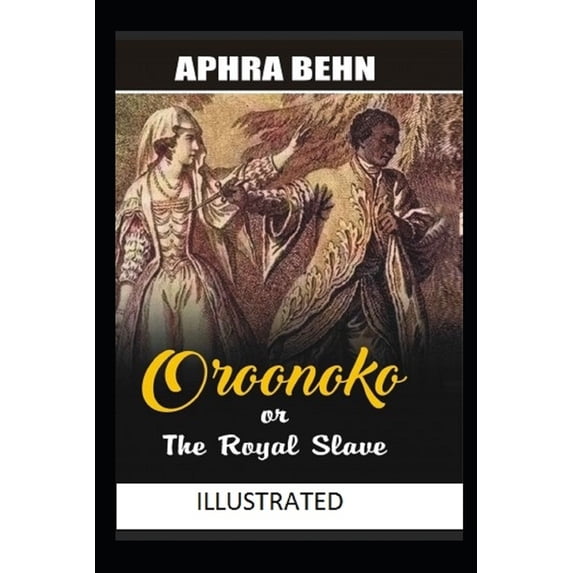
Oroonoko: or, the Royal Slave is a short work of prose fiction by Aphra Behn (1640-1689), published in 1688 by William Canning and reissued with two other fictions later that year. The eponymous hero is an African prince from Coramantien who is tricked into slavery and sold to British colonists in Surinam where he meets the narrator. Behn's text is a first-person account of his life, love, rebellion, and execution.Behn, often cited as the first known professional female writer, [1] was a successful playwright, poet, translator and essayist. She began writing prose fiction in the 1680s, probably in response to the consolidation of theatres that led to a reduced need for new plays.[2] Published less than a year before she died, Oroonoko is sometimes described as one of the earliest English novels. Interest in it has increased since the 1970s, with critics arguing that Behn is the foremother of British women writers, and that Oroonoko is a crucial text in the history of the novel|N|39798740076775|The Financier is a novel by Theodore Dreiser, based on real-life streetcar tycoon Charles Yerkes. Dreiser started writing his manuscript in 1911, and the following year published the first part of his lengthy work as The Financier.[1] The second part appeared in 1914 as The Titan; the third volume of his Trilogy of Desire was also Dreiser's final novel, The Stoic (1947).|N|39798740077390|From the creator of exciting, historically accurate fiction for young readers comes this tale of loyalty and courage in 11th-century Britain. Wulf and his best friend, Beorn, fight bravely for their Saxon king capturing castles, rescuing shipwrecked survivors, repelling Viking invaders, and fighting the Battle of Hastings.|N|39798740079271|In The Good Soldier, Ford Madox Ford paved the way for over a century of thriller writers and film-makers who would go on to use the idea of the unreliable narrator to create mystery and suspense. Events in the story unfold just before World War I and chronicle the tragedy of Edward Ashburnham, the soldier to whom the title refers, and his own seemingly perfect marriage and that of two American friends. The novel opens with the famous line, This is the saddest story I have ever heard."