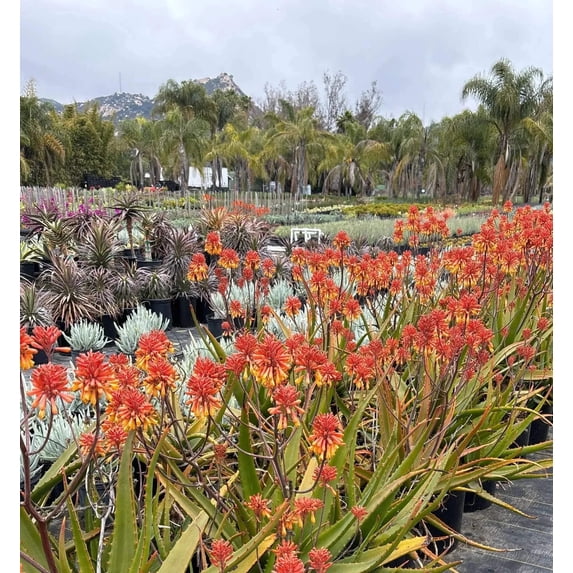
Aloe Camperi: exotic flair for your garden
Aloe camperi, a striking succulent species native to the arid regions of South Africa, commands attention with its imposing size and striking appearance. This majestic aloe forms large, sculptural rosettes of thick, fleshy leaves, often adorned with distinctive markings and spines. Its dramatic form and ability to thrive in challenging conditions have made it a popular choice among succulent enthusiasts and landscape designers alike. Whether planted as a solitary specimen or incorporated into a mixed succulent garden, Aloe camperi adds a bold and exotic touch to any outdoor space.
Botanical Characteristics:
- Scientific Name: Aloe camperi
- Growth Habit: Arborescent (tree-like)
- Foliage: Rosettes of thick, fleshy leaves with serrated margins
- Flowers: Tall, branched inflorescences bearing tubular flowers in shades of orange and red
- Bloom Time: Late winter to early spring
Cultivation and Care:
- Sunlight: Thrives in full sun to partial shade.
- Temperature: Tolerates a wide range of temperatures, including mild frosts.
- Mature Size: 12-18 inches tall and wide
- Hardiness Zones: USDA Zones 9b-11
- Soil: Well-draining, sandy or rocky soil.
- Water: Water sparingly, allowing the soil to dry out completely between waterings. Overwatering can lead to root rot.
- Fertilizer: Apply a balanced, slow-release fertilizer formulated for succulents during the growing season.
- Pruning: Remove dead or damaged leaves to maintain a tidy appearance.
Landscape Use:
- Specimen Plant: A stunning focal point in any garden or landscape.
- Container Gardening: Can be grown in large containers, making it suitable for patios and balconies.
- Xeriscaping: A perfect choice for drought-tolerant landscapes.
Wildlife Attraction:
- Pollinators: Attracts pollinators such as bees and butterflies.
- Birds: Provides nesting and foraging opportunities for birds.
Propagation:
- Offsets: Propagate easily by removing offsets from the base of the plant.
- Seed: Can be grown from seed, but it's a slower process.
Incorporating into Your Landscape:
When incorporating aloe camperi into your landscape, consider the following tips:
- Site Selection: Choose a well-drained location with ample sunlight.
- Spacing: Allow sufficient space for the plant to mature and spread.
- Companion Plants: Pair with other drought-tolerant plants, such as agaves, yuccas, or cacti.
- Mulching: Apply a layer of gravel or crushed rock around the base of the plant to help retain moisture and suppress weeds.
Relevant products: aloe, succulent, low-maintenance plant, drought-tolerant plant, indoor plant, outdoor plant, rock garden plant, container garden plant