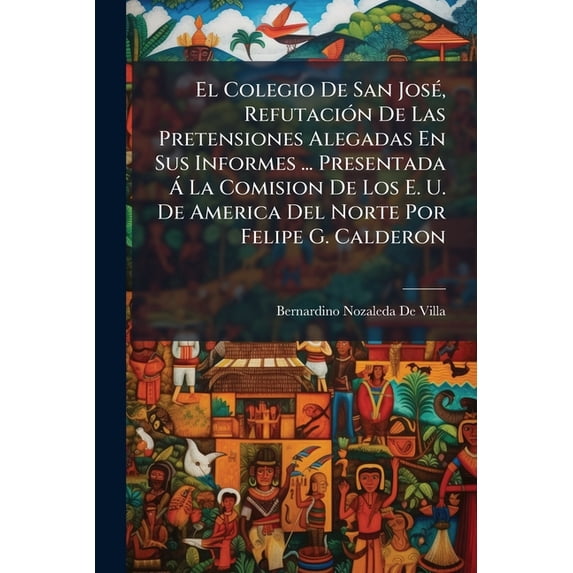
En "El Colegio De San José, Refutación De Las Pretensiones Alegadas En Sus Informes ... Presentada Á La Comision De Los E. U. De America Del Norte Por Felipe G. Calderon," Bernardino Nozaleda De Villa presenta una refutación detallada de las reclamaciones relacionadas con el Colegio de San José. Este documento histórico ofrece una visión profunda de las complejidades de la educación católica en Filipinas a finales del siglo XIX y principios del siglo XX.
La obra aborda las controversias y los desafíos enfrentados por el colegio, proporcionando un contexto valioso sobre el período colonial español y la transición a la administración estadounidense. A través de un análisis meticuloso, el autor examina las pretensiones de Felipe G. Calderon ante la comisión estadounidense, ofreciendo una perspectiva crítica y documentada de los eventos y circunstancias que rodearon al Colegio de San José. Este libro es esencial para aquellos interesados en la historia de la educación, la historia de Filipinas y el impacto del colonialismo en las instituciones educativas.
This work has been selected by scholars as being culturally important, and is part of the knowledge base of civilization as we know it. This work was reproduced from the original artifact, and remains as true to the original work as possible. Therefore, you will see the original copyright references, library stamps (as most of these works have been housed in our most important libraries around the world), and other notations in the work.
This work is in the public domain in the United States of America, and possibly other nations. Within the United States, you may freely copy and distribute this work, as no entity (individual or corporate) has a copyright on the body of the work.
As a reproduction of a historical artifact, this work may contain missing or blurred pages, poor pictures, errant marks, etc. Scholars believe, and we concur, that this work is important enough to be preserved, reproduced, and made generally available to the public. We appreciate your support of the preservation process, and thank you for being an important part of keeping this knowledge alive and relevant.