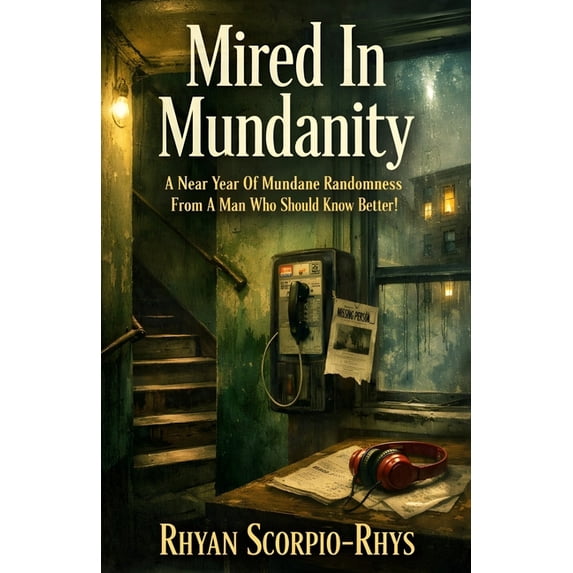
What if the ordinary life you complain about every day is hiding something far worse?
Terence Black starts a blog to document the petty humiliations of modern existence: bad grocery stores, dead hallway lights, hostile stairwells, damp apartment buildings, awkward neighbors, and the soul-flattening absurdity of adulthood. Sharp, self-mocking, and faintly superior, Mired In Mundanity: A Near Year Of Mundane Randomness From A Man Who Should Know Better! begins as a darkly funny chronicle of everyday banality from a man who thinks noticing life beautifully might count as wisdom.
Then the comments begin.
A mysterious woman starts replying to Terence's posts with unsettling precision, pointing out details he never included and places he has somehow forgotten. Soon she is appearing at the edges of his routine-outside the market, near a dead pay phone, in the margins of old notes and fractured memory. As her presence grows harder to dismiss, Terence's archive of petty complaints begins to reveal something he never meant to document at all: a vanished apartment building, a neighborhood trained to normalize quiet danger, and the unstable afterlife of a young man named Herman who disappeared after one bad winter night everyone remembers differently.
What begins as a sardonic literary novel about mundane modern life slowly transforms into something stranger, sadder, and far more unsettling: a psychological mystery about memory, neglect, disappearance, and the terrible cost of mistaking warning for atmosphere.
Perfect for readers of literary mystery, psychological suspense, surreal literary fiction, quiet horror, and character-driven novels with a strong voice, Mired In Mundanity blends dark humor, urban unease, neighborhood secrets, and emotional depth into a haunting story about the ordinary world and what it helps hide.
If you love:
literary suspense,
slow-burn mystery novels,
unreliable memory,
atmospheric urban fiction,
strange neighborhood stories,
quiet uncanny fiction,
and darkly funny contemporary novels,
this book is for you.
Because the ordinary was never innocent. Only repeated.