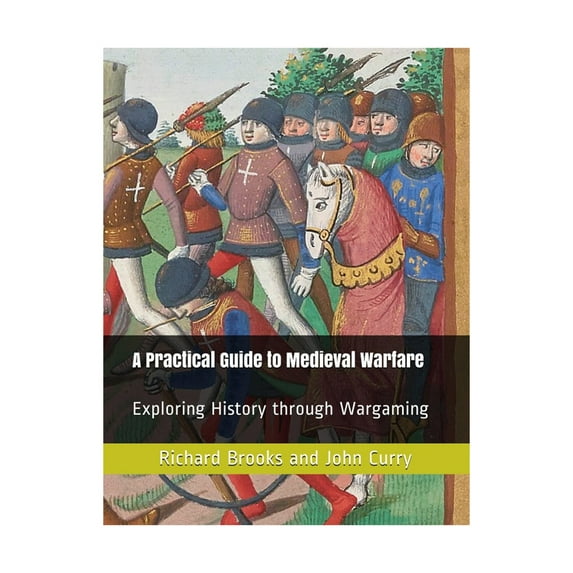
Medieval warfare is part of our culture. However, there are severe limits to our current understanding of the conduct of military campaigns culminating in sieges and pitch battles during the medieval era. This book is an attempt to develop further understanding of some aspects of the medieval military reality, in particular around the operational and tactical scale.
It looks at the medieval operation art of war such as the numbers involved, scouting, logistics, march rates and the length of the campaign season.
Then it looks at the medieval battle; how armies deployed, advanced, fought, won and lost. The many topics include dressing the ranks, the advance to contact, battle cries and pre-battle speeches.
The third section explores sieges and street fighting. Such as the lengths of sieges, success rates, and the practical details involved in storming a castle.
The fourth section of the book includes five sets of rules to allow the reader to create interactive models of medieval warfare on the tabletop for them to explore. From pitch battles, to skirmishes, raids and retreats, the games allow the reader to create interactive models of medieval warfare on the tabletop for them to explore.
This book is written from the perspective that there was a medieval art of war. War took time, effort, planning, logistics and skill to initiate, conduct and win. We assume that the medieval warrior largely knew what they were doing and if we do not comprehend the decisions they took when waging war, this reflects our lack of understanding, not theirs. This book aims to fill some of the gaps in our mental models of the medieval warfare.
Game #1: Middle Aged Spread - Battle level rules 1066-1485
Game #2: Sword and Spear: Wargaming Low-Level Battle Tactics
Game #3: Once More unto the Breach: Skirmish Rules
Game #4: Gaming Retreats: Cymerau (1257)
Game #5: Gaming Cattle Raids: The Night Belongs to Paddy
The book is published by the History of Wargaming Project as part of ongoing work to document the development of wargaming.




 WARNING: