


Hero image 0 of Russian and East European Studies: Bread upon the Waters : The St. Petersburg Grain Trade and the Russian Economy, 1703-1811 (Paperback), 0 of 1
Russian and East European Studies: Bread upon the Waters : The St. Petersburg Grain Trade and the Russian Economy, 1703-1811 (Paperback)
(No ratings yet)
Key item features
In eighteenth-century Russia, as elsewhere in Europe, bread was a dietary staple—truly grain was the staff of economic, social, and political life. Early on Tsar Peter the Great founded St. Petersburg to export goods from Russia’s vast but remote interior and by doing so to drive Russia’s growth and prosperity. But the new city also had to be fed with grain brought over great distances from those same interior provinces. In this compelling account, Robert E. Jones chronicles how the unparalleled effort put into the building of a wide infrastructure to support the provisioning of the newly created but physically isolated city of St. Petersburg profoundly affected all of Russia’s economic life and, ultimately, the historical trajectory of the Russian Empire as a whole.
Jones details the planning, engineering, and construction of extensive canal systems that efficiently connected the new capital city to grain and other resources as far away as the Urals, the Volga, and Ukraine. He then offers fresh insights to the state’s careful promotion and management of the grain trade during the long eighteenth century. He shows how the government established public granaries to combat shortages, created credit instruments to encourage risk taking by grain merchants, and encouraged the development of capital markets and private enterprise. The result was the emergence of an increasingly important cash economy along with a reliable system of provisioning the fifth largest city in Europe, with the political benefit that St. Petersburg never suffered the food riots common elsewhere in Europe.
Thanks to this well-regulated but distinctly free-market trade arrangement, the grain-fueled economy became a wellspring for national economic growth, while also providing a substantial infrastructural foundation for a modernizing Russian state. In many ways, this account reveals the foresight of both Peter I and Catherine II and their determination to steer imperial Russia’s national economy away from statist solutions and onto a path remarkably similar to that taken by Western European countries but distinctly different than that of either their Muscovite predecessors or Soviet successors.
Jones details the planning, engineering, and construction of extensive canal systems that efficiently connected the new capital city to grain and other resources as far away as the Urals, the Volga, and Ukraine. He then offers fresh insights to the state’s careful promotion and management of the grain trade during the long eighteenth century. He shows how the government established public granaries to combat shortages, created credit instruments to encourage risk taking by grain merchants, and encouraged the development of capital markets and private enterprise. The result was the emergence of an increasingly important cash economy along with a reliable system of provisioning the fifth largest city in Europe, with the political benefit that St. Petersburg never suffered the food riots common elsewhere in Europe.
Thanks to this well-regulated but distinctly free-market trade arrangement, the grain-fueled economy became a wellspring for national economic growth, while also providing a substantial infrastructural foundation for a modernizing Russian state. In many ways, this account reveals the foresight of both Peter I and Catherine II and their determination to steer imperial Russia’s national economy away from statist solutions and onto a path remarkably similar to that taken by Western European countries but distinctly different than that of either their Muscovite predecessors or Soviet successors.
Specs
- Manual & guide typeInstruction Manual
- Book formatPaperback
- Edition1
- Pages312
- LanguageEnglish
- BrandColonel Robert E Jones
Current price is USD$60.85
Price when purchased online
- Free shipping
 Free 30-day returns
How do you want your item?
Ships to
Arrives by Wed, Jun 24
|
Sold and shipped by Alibris Books
4.570630554380025 stars out of 5, based on 11815 seller reviews(4.6)11815 seller reviews

Free 30-day returns
Other sellers
$68.72
+Free shippingShipping, arrives by Tue, Jun 23 to Columbus, 43215
Sold and shipped by thebookpros
Free 30-day returns
About this item
Product details
Bread upon the Waters chronicles how the unparalleled effort put into the building of a wide infrastructure to support the provisioning of the newly created but physically isolated city of St. Petersburg profoundly affected all of Russia’s economic life and, ultimately, the historical trajectory of the Russian Empire as a whole.
In eighteenth-century Russia, as elsewhere in Europe, bread was a dietary staple—truly grain was the staff of economic, social, and political life. Early on Tsar Peter the Great founded St. Petersburg to export goods from Russia’s vast but remote interior and by doing so to drive Russia’s growth and prosperity. But the new city also had to be fed with grain brought over great distances from those same interior provinces. In this compelling account, Robert E. Jones chronicles how the unparalleled effort put into the building of a wide infrastructure to support the provisioning of the newly created but physically isolated city of St. Petersburg profoundly affected all of Russia’s economic life and, ultimately, the historical trajectory of the Russian Empire as a whole.
Jones details the planning, engineering, and construction of extensive canal systems that efficiently connected the new capital city to grain and other resources as far away as the Urals, the Volga, and Ukraine. He then offers fresh insights to the state’s careful promotion and management of the grain trade during the long eighteenth century. He shows how the government established public granaries to combat shortages, created credit instruments to encourage risk taking by grain merchants, and encouraged the development of capital markets and private enterprise. The result was the emergence of an increasingly important cash economy along with a reliable system of provisioning the fifth largest city in Europe, with the political benefit that St. Petersburg never suffered the food riots common elsewhere in Europe.
Thanks to this well-regulated but distinctly free-market trade arrangement, the grain-fueled economy became a wellspring for national economic growth, while also providing a substantial infrastructural foundation for a modernizing Russian state. In many ways, this account reveals the foresight of both Peter I and Catherine II and their determination to steer imperial Russia’s national economy away from statist solutions and onto a path remarkably similar to that taken by Western European countries but distinctly different than that of either their Muscovite predecessors or Soviet successors.
Jones details the planning, engineering, and construction of extensive canal systems that efficiently connected the new capital city to grain and other resources as far away as the Urals, the Volga, and Ukraine. He then offers fresh insights to the state’s careful promotion and management of the grain trade during the long eighteenth century. He shows how the government established public granaries to combat shortages, created credit instruments to encourage risk taking by grain merchants, and encouraged the development of capital markets and private enterprise. The result was the emergence of an increasingly important cash economy along with a reliable system of provisioning the fifth largest city in Europe, with the political benefit that St. Petersburg never suffered the food riots common elsewhere in Europe.
Thanks to this well-regulated but distinctly free-market trade arrangement, the grain-fueled economy became a wellspring for national economic growth, while also providing a substantial infrastructural foundation for a modernizing Russian state. In many ways, this account reveals the foresight of both Peter I and Catherine II and their determination to steer imperial Russia’s national economy away from statist solutions and onto a path remarkably similar to that taken by Western European countries but distinctly different than that of either their Muscovite predecessors or Soviet successors.
info:
We aim to show you accurate product information. Manufacturers, suppliers and others provide what you see here, and we have not verified it.
Specifications
Manual & guide type
Instruction Manual
Book format
Paperback
Edition
1
Pages
312
Warranty
Warranty information
Please be aware that the warranty terms on items offered for sale by third party Marketplace sellers may differ from those displayed in this section (if any). To confirm warranty terms on an item offered for sale by a third party Marketplace seller, please use the 'Contact seller' feature on the third party Marketplace seller's information page and request the item's warranty terms prior to purchase.
Similar items you might like
Based on what customers bought
Russian and East European Studies Inventing a Soviet Countryside: State Power and the Transformation of Rural Russia, 1917-1929, Book 233, (Paperback) $60.85
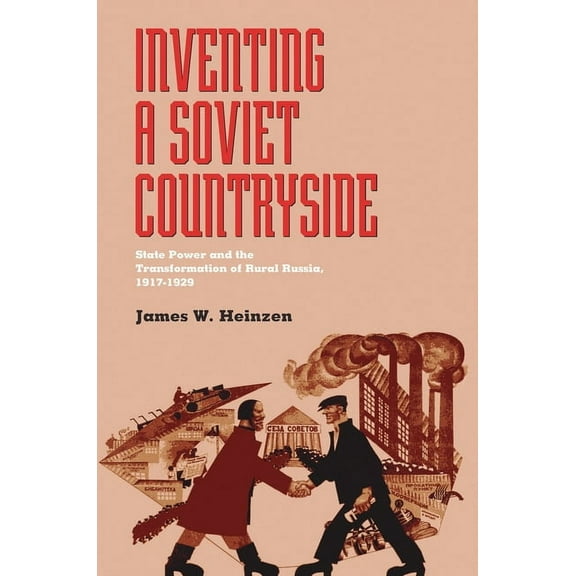 $6085current price $60.85
Russian and East European Studies Inventing a Soviet Countryside: State Power and the Transformation of Rural Russia, 1917-1929, Book 233, (Paperback)
One-Hour Sourdough: The Revolutionary Method for Great Bread in a Fraction of the Time, (Paperback) $25.99
 $2599current price $25.99
One-Hour Sourdough: The Revolutionary Method for Great Bread in a Fraction of the Time, (Paperback)
Russian Russian for Business Studies, (Paperback) $43.00
 $4300current price $43.00
Russian Russian for Business Studies, (Paperback)
HBR Guide HBR Guide to Generative AI for Teams, (Paperback) $21.95
 $2195current price $21.95
HBR Guide HBR Guide to Generative AI for Teams, (Paperback)
Fly Fishing Maine: Local Experts on the State's Best Waters, (Paperback) $29.10 Was $34.95
 $2910current price $29.10, Was $34.95$34.95
Fly Fishing Maine: Local Experts on the State's Best Waters, (Paperback)
Math Mammoth Grade 8 Answer Keys, (Paperback) $27.66
 $2766current price $27.66
Math Mammoth Grade 8 Answer Keys, (Paperback)
Chesnok: Cooking from My Corner of the Diaspora: Recipes from Eastern Europe, the Caucasus, and Central Asia, (Hardcover) $30.99
 $3099current price $30.99
Chesnok: Cooking from My Corner of the Diaspora: Recipes from Eastern Europe, the Caucasus, and Central Asia, (Hardcover)
Keystone Fly Fishing : The Ultimate Guide to Pennsylvania's Best Water (Paperback) $23.96 Was $29.95
 $2396current price $23.96, Was $29.95$29.95
Keystone Fly Fishing : The Ultimate Guide to Pennsylvania's Best Water (Paperback)
Apress Pocket Guides From Culture to Code: Leading Software Engineering Teams Effectively, (Paperback) $14.45
 $1445current price $14.45
Apress Pocket Guides From Culture to Code: Leading Software Engineering Teams Effectively, (Paperback)
Europe's Legacy in the Modern World Political Reform in the Ottoman and Russian Empires: A Comparative Approach, (Paperback) $55.64
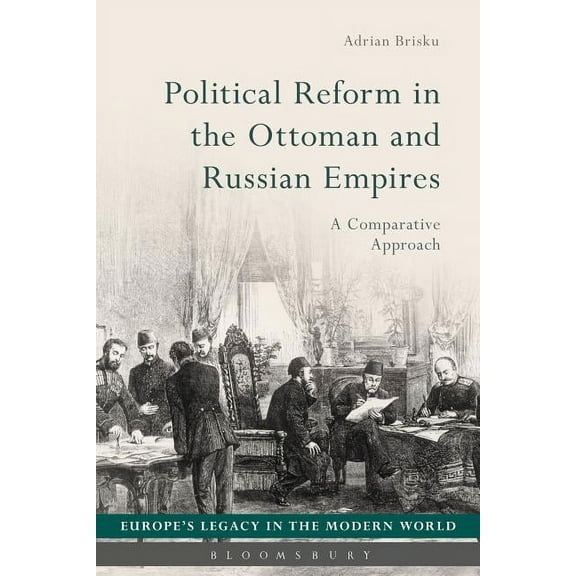 $5564current price $55.64
Europe's Legacy in the Modern World Political Reform in the Ottoman and Russian Empires: A Comparative Approach, (Paperback)
The Mechanical Engineer's Pocket-book. A Reference-book of Rules, Tables, Data, and Formulæ, for the Use of Engineers, M, (Paperback) $44.95
 $4495current price $44.95
The Mechanical Engineer's Pocket-book. A Reference-book of Rules, Tables, Data, and Formulæ, for the Use of Engineers, M, (Paperback)
Fasttrack Bid Management $47.95
 $4795current price $47.95
Fasttrack Bid Management
History and Human Existence—From Marx to Merleau-Ponty (Edition 1) (Paperback) $40.94
 $4094current price $40.94
History and Human Existence—From Marx to Merleau-Ponty (Edition 1) (Paperback)
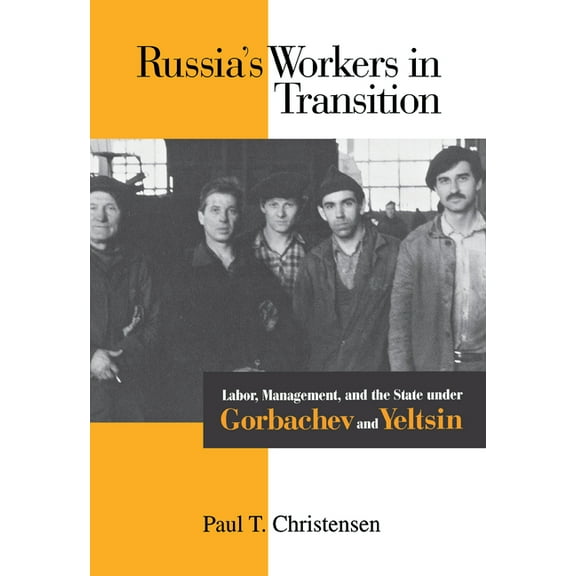
Russia's Workers in Transition : Labor, Management, and the State under Gorbachev and Yeltsin (Hardcover) $58.12
 $5812current price $58.12
Russia's Workers in Transition : Labor, Management, and the State under Gorbachev and Yeltsin (Hardcover)
Routledge Studies in Conflict, Security Emerging Technologies and International Security: Machines, the State, and War, (Paperback) $60.84
 $6084current price $60.84
Routledge Studies in Conflict, Security Emerging Technologies and International Security: Machines, the State, and War, (Paperback)
Pre-Owned Baba's Kitchen: Slovak & Rusyn Family Recipes & Traditions $33.86 Was $49.77
 $3386current price $33.86, Was $49.77$49.77
Pre-Owned Baba's Kitchen: Slovak & Rusyn Family Recipes & Traditions
Springerbriefs in Geography Real Estate Market of Ukraine: Practical Aspects and Trends, (Paperback) $49.99
 $4999current price $49.99
Springerbriefs in Geography Real Estate Market of Ukraine: Practical Aspects and Trends, (Paperback)
CCISO Exam Guide and Security Leadership Essentials: Essential strategies for today's security leaders (English Edition), (Paperback) $47.79
 $4779current price $47.79
CCISO Exam Guide and Security Leadership Essentials: Essential strategies for today's security leaders (English Edition), (Paperback)
Niu Slavic, East European, and Eurasian Bolshevik Sexual Forensics, (Paperback) $36.25
 $3625current price $36.25
Niu Slavic, East European, and Eurasian Bolshevik Sexual Forensics, (Paperback)
How to make Russian Switchblade Knives, (Paperback) $27.90
 $2790current price $27.90
How to make Russian Switchblade Knives, (Paperback)
Customer ratings & reviews
0 ratings|0 reviews
This item does not have any reviews yet
