


Hero image 0 of Legal Reasoning and Political Conflict (Paperback), 0 of 1
Legal Reasoning and Political Conflict (Paperback)
(No ratings yet)
Key item features
Legal Reasoning and Political Conflict (Paperback)
Specs
- Book formatPaperback
- Fiction/nonfictionNon-Fiction
- Publication dateFebruary, 1998
- Pages240
- EditionStandard Edition
- Original languagesEnglish
Current price is USD$58.21
Price when purchased online
Out of stock
How do you want your item?
Out of stock
About this item
Product details
The most glamorous and even glorious moments in a legal system come when a high court recognizes an abstract principle involving, for example, human liberty or equality. Indeed, Americans, and not a few non-Americans, have been greatly stirred--and divided--by the opinions of the Supreme Court, especially in the area of race relations, where the Court has tried to revolutionize American society. But these stirring decisions are aberrations, says Cass R. Sunstein, and perhaps thankfully so. In Legal Reasoning and Political Conflict, Sunstein, one of America's best known commentators on our legal system, offers a bold, new thesis about how the law should work in America, arguing that the courts best enable people to live together, despite their diversity, by resolving particular cases without taking sides in broader, more abstract conflicts.
Sunstein offers a close analysis of the way the law can mediate disputes in a diverse society, examining how the law works in practical terms, and showing that, to arrive at workable, practical solutions, judges must avoid broad, abstract reasoning. Why? For one thing, critics and adversaries who would never agree on fundamental ideals are often willing to accept the concrete details of a particular decision. Likewise, a plea bargain for someone caught exceeding the speed limit need not--indeed, must not--delve into sweeping issues of government regulation and personal liberty. Thus judges purposely limit the scope of their decisions to avoid reopening large-scale controversies. Sunstein calls such actions incompletely theorized agreements. In identifying them as the core feature of legal reasoning--and as a central part of constitutional thinking in America, South Africa, and Eastern Europe-- he takes issue with advocates of comprehensive theories and systemization, from Robert Bork (who champions the original understanding of the Constitution) to Jeremy Bentham, the father of utilitarianism, and Ronald Dworkin, who defends an ambitious role for courts in the elaboration of rights. Equally important, Sunstein goes on to argue that it is the living practice of the nation's citizens that truly makes law. For example, he cites Griswold v. Connecticut, a groundbreaking case in which the Supreme Court struck down Connecticut's restrictions on the use of contraceptives by married couples--a law that was no longer enforced by prosecutors. In overturning the legislation, the Court invoked the abstract right of privacy; the author asserts that the justices should have appealed to the narrower principle that citizens need not comply with laws that lack real enforcement. By avoiding large-scale issues and values, such a decision could have led to a different outcome in Bowers v. Hardwick, the decision that upheld Georgia's rarely prosecuted ban on sodomy. And by pointing to the need for flexibility over time and circumstances, Sunstein offers a novel understanding of the old ideal of the rule of law.
Legal reasoning can seem impenetrable, mysterious, baroque. This book helps dissolve the mystery. Whether discussing the interpretation of the Constitution or the spell cast by the revolutionary Warren Court, Cass Sunstein writes with grace and power, offering a striking and original vision of the role of the law in a diverse society. In his flexible, practical approach to legal reasoning, he moves the debate over fundamental values and principles out of the courts and back to its rightful place in a democratic state: the legislatures elected by the people.
Sunstein offers a close analysis of the way the law can mediate disputes in a diverse society, examining how the law works in practical terms, and showing that, to arrive at workable, practical solutions, judges must avoid broad, abstract reasoning. Why? For one thing, critics and adversaries who would never agree on fundamental ideals are often willing to accept the concrete details of a particular decision. Likewise, a plea bargain for someone caught exceeding the speed limit need not--indeed, must not--delve into sweeping issues of government regulation and personal liberty. Thus judges purposely limit the scope of their decisions to avoid reopening large-scale controversies. Sunstein calls such actions incompletely theorized agreements. In identifying them as the core feature of legal reasoning--and as a central part of constitutional thinking in America, South Africa, and Eastern Europe-- he takes issue with advocates of comprehensive theories and systemization, from Robert Bork (who champions the original understanding of the Constitution) to Jeremy Bentham, the father of utilitarianism, and Ronald Dworkin, who defends an ambitious role for courts in the elaboration of rights. Equally important, Sunstein goes on to argue that it is the living practice of the nation's citizens that truly makes law. For example, he cites Griswold v. Connecticut, a groundbreaking case in which the Supreme Court struck down Connecticut's restrictions on the use of contraceptives by married couples--a law that was no longer enforced by prosecutors. In overturning the legislation, the Court invoked the abstract right of privacy; the author asserts that the justices should have appealed to the narrower principle that citizens need not comply with laws that lack real enforcement. By avoiding large-scale issues and values, such a decision could have led to a different outcome in Bowers v. Hardwick, the decision that upheld Georgia's rarely prosecuted ban on sodomy. And by pointing to the need for flexibility over time and circumstances, Sunstein offers a novel understanding of the old ideal of the rule of law.
Legal reasoning can seem impenetrable, mysterious, baroque. This book helps dissolve the mystery. Whether discussing the interpretation of the Constitution or the spell cast by the revolutionary Warren Court, Cass Sunstein writes with grace and power, offering a striking and original vision of the role of the law in a diverse society. In his flexible, practical approach to legal reasoning, he moves the debate over fundamental values and principles out of the courts and back to its rightful place in a democratic state: the legislatures elected by the people.
Legal Reasoning and Political Conflict (Paperback)
info:
We aim to show you accurate product information. Manufacturers, suppliers and others provide what you see here, and we have not verified it.
Specifications
Book format
Paperback
Fiction/nonfiction
Non-Fiction
Genre
Political & Social Sciences
Publication date
February, 1998
Warranty
Warranty information
Please be aware that the warranty terms on items offered for sale by third party Marketplace sellers may differ from those displayed in this section (if any). To confirm warranty terms on an item offered for sale by a third party Marketplace seller, please use the 'Contact seller' feature on the third party Marketplace seller's information page and request the item's warranty terms prior to purchase.
Similar items you might like
Based on what customers bought
Legal Specialization: A Handbook, (Paperback) $56.95
 $5695current price $56.95
Legal Specialization: A Handbook, (Paperback)
The Vote: Bush, Gore, and the Supreme Court, (Paperback) $20.00
 $2000current price $20.00
The Vote: Bush, Gore, and the Supreme Court, (Paperback)
After the Rights Revolution: Reconceiving the Regulatory State (Paperback) $41.00
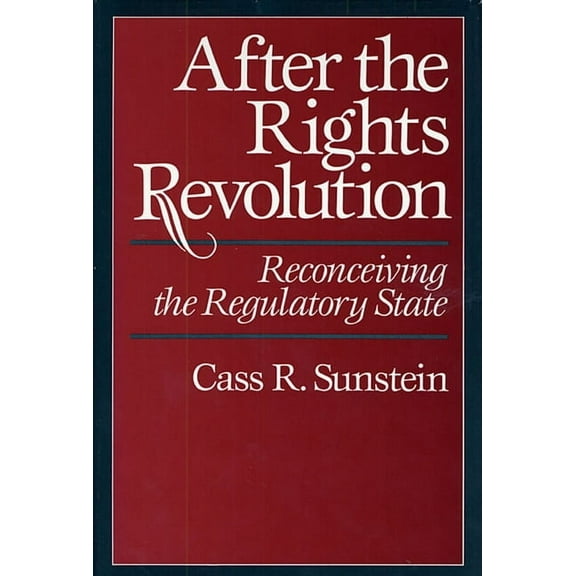 $4100current price $41.00
After the Rights Revolution: Reconceiving the Regulatory State (Paperback)
Free Markets and Social Justice, (Paperback) $59.93
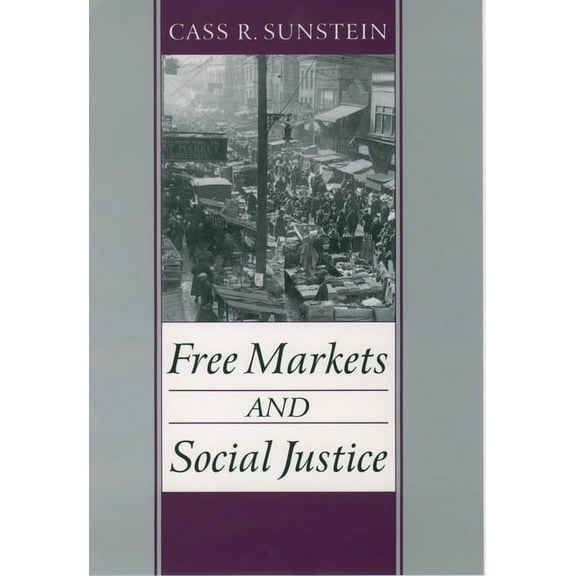 $5993current price $59.93
Free Markets and Social Justice, (Paperback)
The Italian Legal System: An Introduction, Second Edition, (Hardcover) $66.03
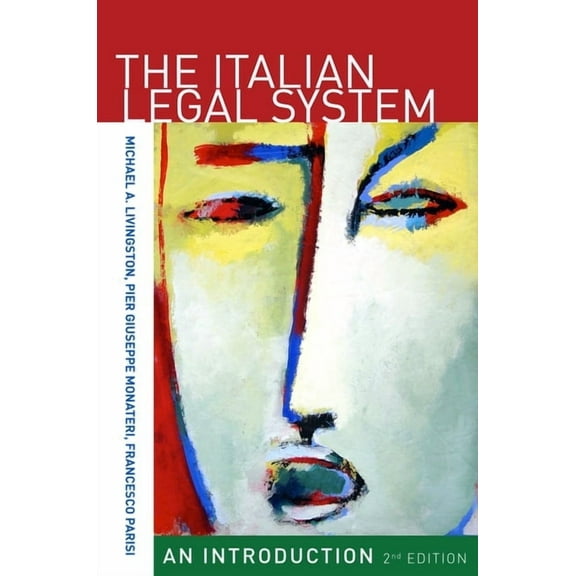 $6603current price $66.03
The Italian Legal System: An Introduction, Second Edition, (Hardcover)
Infotopia: How Many Minds Produce Knowledge, (Hardcover) $25.73 Was $55.33
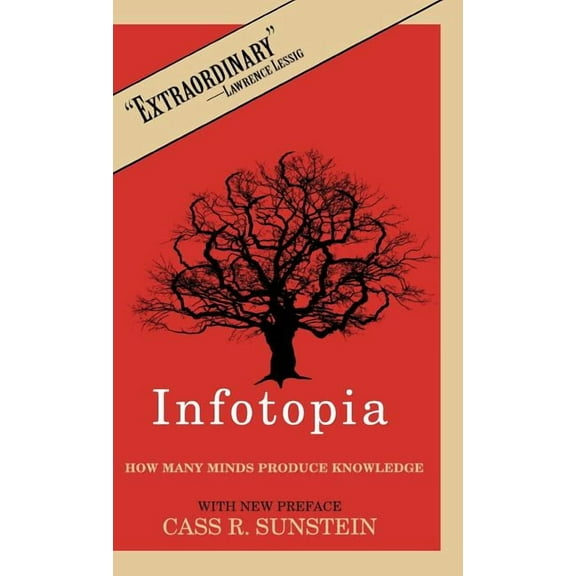 $2573current price $25.73, Was $55.33$55.33
Infotopia: How Many Minds Produce Knowledge, (Hardcover)
Punitive Damages : How Juries Decide (Paperback) $40.00
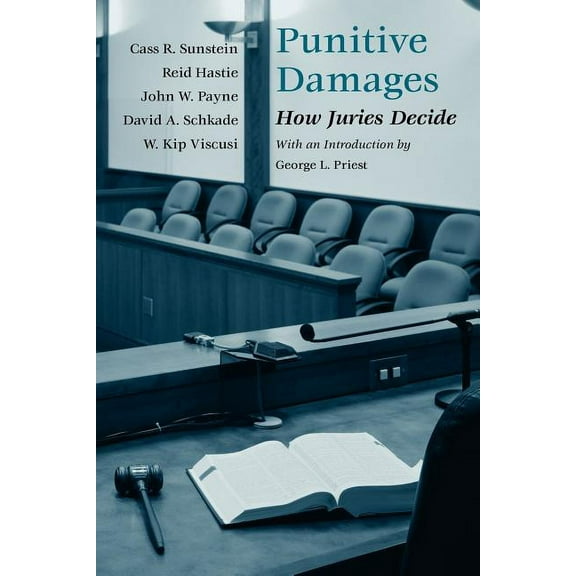 $4000current price $40.00
Punitive Damages : How Juries Decide (Paperback)
Campus Free Speech: A Pocket Guide, (Hardcover) $20.26
 $2026current price $20.26
Campus Free Speech: A Pocket Guide, (Hardcover)
Law and Leviathan: Redeeming the Administrative State, (Paperback) $26.37
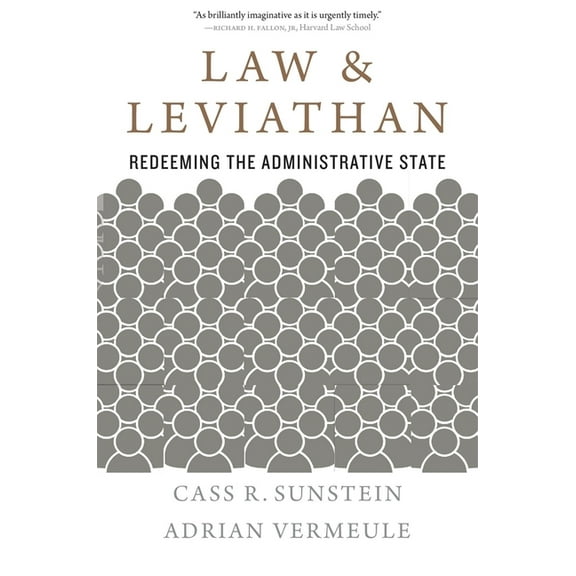 $2637current price $26.37
Law and Leviathan: Redeeming the Administrative State, (Paperback)
Infotopia: How Many Minds Produce Knowledge, (Paperback) $17.33
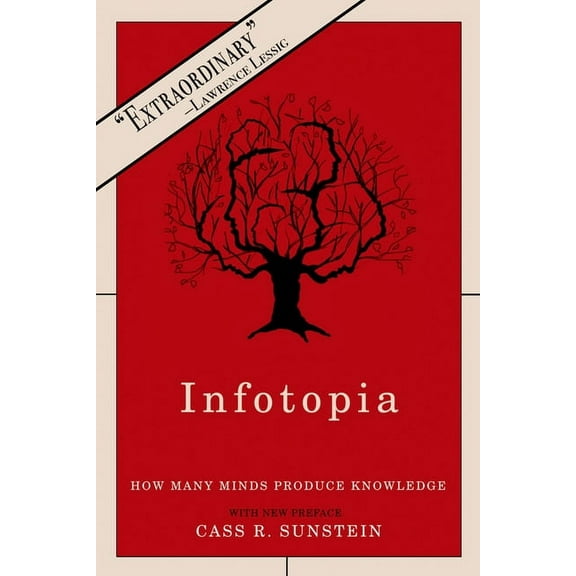 $1733current price $17.33
Infotopia: How Many Minds Produce Knowledge, (Paperback)
The Supreme Court October Term 2024: Taking Sides, (Paperback) $48.90
 $4890current price $48.90
The Supreme Court October Term 2024: Taking Sides, (Paperback)
The Limits of Judicial Power: The Supreme Court in American Politics, (Paperback) $60.85
 $6085current price $60.85
The Limits of Judicial Power: The Supreme Court in American Politics, (Paperback)
Law and the Limits of Reason, (Paperback) $47.11 Was $53.87
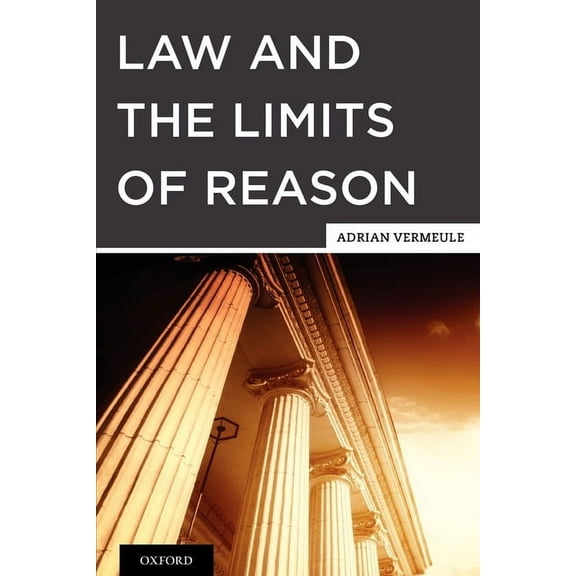 $4711current price $47.11, Was $53.87$53.87
Law and the Limits of Reason, (Paperback)
The Constitution in Conflict (Paperback) $63.81
 $6381current price $63.81
The Constitution in Conflict (Paperback)
Hart Law Masters Trusts Law, Book 6, (Paperback) $67.75
 $6775current price $67.75
Hart Law Masters Trusts Law, Book 6, (Paperback)
Law, Justice and Ecology Posthuman Legal Subjectivity: Reimagining the Human in the Anthropocene, (Paperback) $60.84
 $6084current price $60.84
Law, Justice and Ecology Posthuman Legal Subjectivity: Reimagining the Human in the Anthropocene, (Paperback)


Customer ratings & reviews
0 ratings|0 reviews
This item does not have any reviews yet
