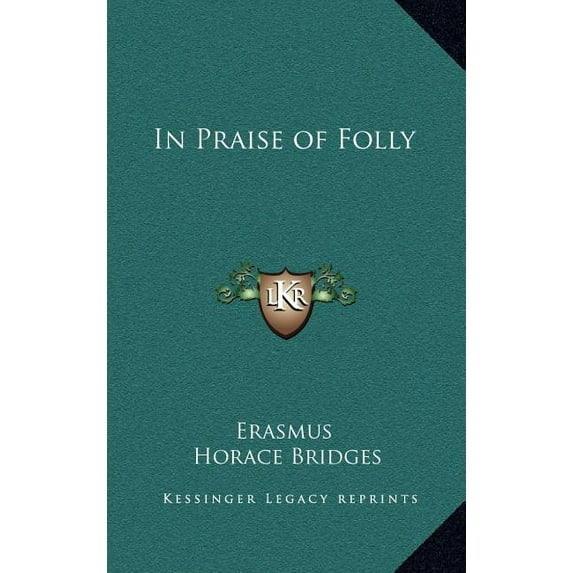
In Praise of Folly is a satirical essay written by the Dutch humanist and philosopher, Erasmus of Rotterdam, in 1509. The book is a witty and humorous criticism of the societal norms and conventions of the time, as well as the corrupt practices of the Church.Erasmus, through the voice of Folly, the goddess of foolishness, presents a scathing critique of the hypocrisy and foolishness of the clergy, the nobility, and the common people. He uses irony, sarcasm, and wit to expose the absurdities of the society and the Church.The book is divided into three parts. In the first part, Folly praises herself and her virtues, arguing that foolishness is essential for happiness and that wise men are often unhappy. In the second part, Folly criticizes the Church, pointing out the corruption of the clergy and the absurdity of their practices, such as indulgences and relics. In the third part, Folly criticizes the nobility and the common people, exposing their greed, vanity, and ignorance.In Praise of Folly is considered a masterpiece of Renaissance literature and a significant contribution to the humanist movement. It is a timeless work that continues to be relevant today, as it challenges us to question our own societal norms and conventions.1925. Also the pictures of Holbein etched in the author's time, to which are added Mr. Angarola's conception of the period and drawings by way of contemporary comment by Gene Markey. The Praise of Folly is the best known work of the greatest of the renaissance humanists, Erasmus of Rotterdam. Originally meant for private circulation, it scourges the abuses and follies of the various classes of society, especially of the Church. It is a deliberate attempt to discredit the Church and its satire and stinging comment on ecclesiastical conditions are not intended as a healing medicine but a deadly blow. It ends with a straightforward and touching statement of the Christian ideals which Erasmus shared notably with his English friends, John Colet and Thomas More. See other titles by this author available from Kessinger Publishing.This scarce antiquarian book is a facsimile reprint of the old original and may contain some imperfections such as library marks and notations. Because we believe this work is culturally important, we have made it available as part of our commitment for protecting, preserving, and promoting the world's literature in affordable, high quality, modern editions, that are true to their original work.










![Le meneur de louves; [par] Rachilde (Hardcover)](https://i5.walmartimages.com/asr/80e9d94c-2913-4928-9462-290fde97e424.55e51510437af2263e91c3f3e0d2a023.jpeg?odnHeight=576&odnWidth=576&odnBg=FFFFFF)