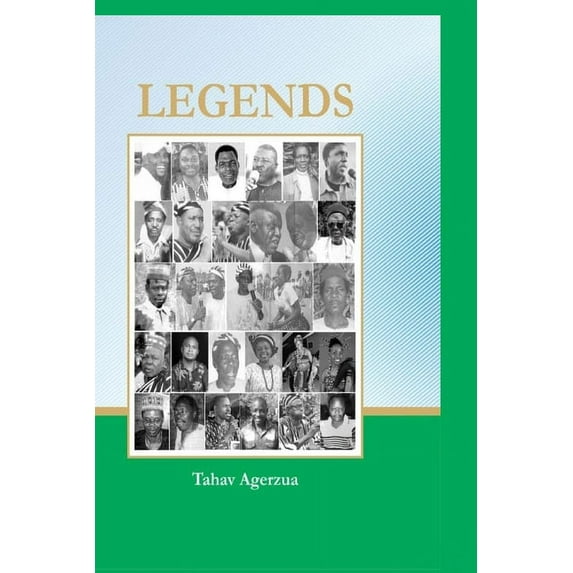
LEGENDS Folk music has over the years been a subject of passionate discussion in a variety of contexts. People talk about it over bottles of beer and at social gatherings with friends. We read about it in the pages of newspapers, either in general or specialized titles. In most cases, we end up ranting and raving over judgments on our favorite performer. However, discussing popular music is often dismissed and trivialized as a mundane activity. There is an underlying assumption among many of our educated elites that folk music is something not to be taken too seriously. This dismissal of folk music as having no significance beyond its entertainment value, while being a general feature in contemporary culture, is definitely more visible in Benue State.
The truth is that globalization has not done much in promoting our oral culture to the world; rather, foreign civilizations have taken over. Again, as with many cultural
innovations, the artistry of traditional poetry is increasingly undervalued while its entertainment appeal is overvalued. This sorry state of affairs is even more felt among the Tiv of central Nigeria whose oral tradition has received little or extremely sparse attention.
This is why this compilation of interviews and articles from the archives of Tahav Agerzua is significant. The author has worked for the growth and development of folk music for decades. He has taken his time to visit traditional composers in their neglected cocoons, sometimes trekking several kilometers, crossing rivers, climbing and descending mountains in order to interact with the very people whose songs we enjoy.
As a veteran journalist, he sees the coverage of folk singers as an important space of mediation between the artistes and their audience. He believes that folk singers and artistes have found themselves at the threshold of the evolution of these forms in the understanding that their role in society transcends mere entertainment. This is because traditional songs centre on folklore which crystalizes the history, philosophy, arts and literature of the people.
Through these essays and interviews with great traditional singers and an interaction here and there with modern musical legends like Bongos Ikwue and David Abex,
Agerzua provides the reader with an appreciable background of the artistes as well as basic information on their creative import, style, employment of symbols and so forth that make them stand out.
This book is, therefore, an engrossing assessment of where the folk singers stand at a time of resonant cultural and political developments in the history of Benue State and beyond. It is a volume richly suffused with personal recollection, both archival and contemporary.
Our final word here is that the book is capable of setting our mental machinery on high gear towards further exploration and enjoyment of the subject. This is certainly a book to read. It is a book that should gain wider audience, especially as it encourages the recognition of the place of our folk singers and artistes in promoting our essence as a people.
Maik Ortserga is National General Secretary, Association of Nigerian Authors, ANA.