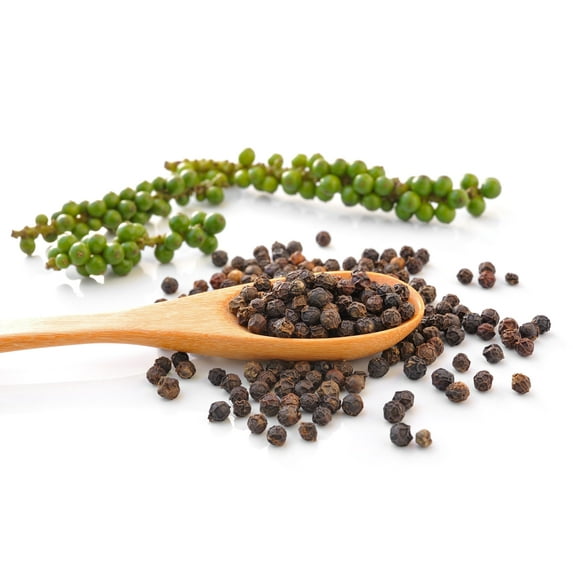
Piperine is a pungent component found in black pepper, which is in the Piper Nigrum family. This spice has a long history of use in Ayurvedic medicine as a restorative tonic. It is most well known for its ability to support the bioavailability of other foods and herbs in traditional herbal formulas. Much research has supported that it increases the bioavailability of turmeric root by as much as 20 fold.
Piperine extract, which is derived from black pepper fruit, has a long history of use dating back as far as 100 BC as noted in ancient Sanskrit literature. Pepper was a very common spice used in the middle ages to help cover the taste of salt-cured meats. It was highly prized and was used as currency. To give you a small idea of how important black pepper was during the times of the early Roman empire, 3000 pounds of black pepper was demanded along with gold, silver, and silk as ransom to free Rome from the Huns. Due to the value of spices, it was well known that those that ruled the black pepper and spice trade, in general, ruled the world.
Piperine has the ability to support the assimilation of food and herbs that are traditionally harder for the body to metabolize. It maysupport the inhibition of a variety of enzymes responsible for breaking down nutrients. It may stimulate amino acid transporters in the lining of the intestines, as well as, preventing removal of nutrients from the cells so they are available for a longer period of time. Finally, piperine may decrease activity in the intestines and possibly allowing a greater amount of active components to enter the bloodstream in larger quantities. Because of its stimulating effect, piperine has been shown to possibly support the pancreas in releasing digestive enzymes in order to reduce the transit time of food in the gut. The powerful end result is the possible inhibition of the rapid breakdown of certain substances allowing for better utilization by the body. This is a big reason why traditional herbal formulas almost always have some form of pepper in it, whether it is black or cayenne.
Piperine has been shown to support brain health because of its ability to cross the blood-brain barrier, as well as, support other nutrients to do the same.




 WARNING: