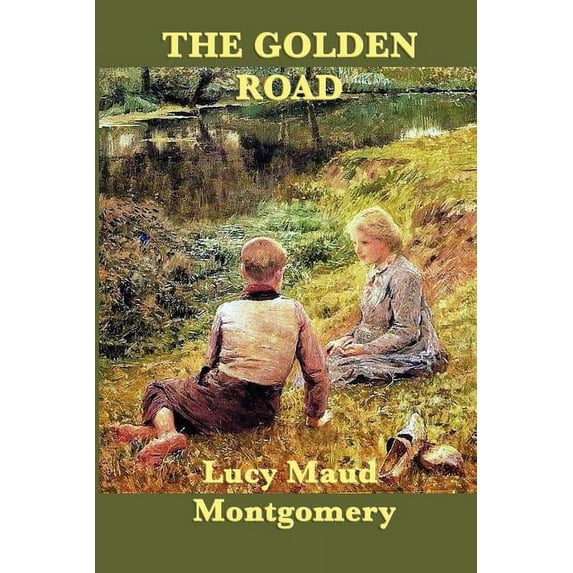
A continuation of the Story Girl cycle, depicting the transition from childhood to early adolescence within a rural Prince Edward Island community.
The Golden Road returns to the circle of cousins and companions first introduced in The Story Girl, tracing their gradual movement away from the imaginative certainties of childhood towards the more complex realities of growing up. Narrated with a reflective awareness of time passing, the novel presents a sequence of episodes shaped by seasonal rhythms, small domestic events, and the sustaining power of shared storytelling. At its centre remains the Story Girl herself, whose imaginative authority continues to bind the group even as their circumstances begin to change.
Montgomery's treatment of memory and loss distinguishes this work from its predecessor, introducing a quieter, more contemplative tone while preserving the humour and warmth of earlier episodes. The narrative attends closely to the textures of rural life-family gatherings, local customs, and the natural landscape-while acknowledging the inevitable dispersal that accompanies maturity. In this respect, the novel serves both as a continuation and a conclusion, offering a considered reflection on the end of a particular phase of life.
First published in 1913, The Golden Road forms part of Montgomery's broader contribution to early twentieth-century Canadian literature, in which regional detail and emotional restraint combine to produce narratives of enduring appeal. It remains of interest to readers of classic children's fiction, as well as to those concerned with the literary treatment of memory, community, and transition.