


Gulf Coast Books, sponsored by Texas A&M University-Corpus Christi: Life on Matagorda Island (Series #5) (Paperback)
(No ratings yet)
Key item features
From most people’s point of view, a barrier beach is a paradox: appealing to visit but appalling to live on. An enjoyable day’s excursion requires shade, dark glasses, sunblock, drinking water, food, and, of course, a shower afterward. Take all those amenities away and consider existing alone on the island fulltime, even during hurricanes.
When Wayne and Martha McAlister moved to Matagorda Island, a wildlife refuge off the central Texas coast, they anticipated staying perhaps five years. But sent to take up duties with the U.S. Fish and Wildlife Service, Wayne McAlister fell under the island’s spell the moment he stepped out of his aging house trailer and met his first Matagorda rattlesnake. Seven years later, the McAlisters were still observing the flora and fauna of Matagorda. Except for the road and some occasional fence posts, the island appears untouched by humans. In Life on Matagorda Island, Wayne McAlister shows what life was like amid such isolation.
McAlister revels in the ghostly twinkles of nights on the beach, as luminescent comb jellies, sea walnuts, and glow worms light up every crest of wave. He watches hungry whooping cranes snatch striped mullet trapped in tidal pools; hunts for Hurter’s spadefoots, reclusive amphibians that surface during warm deluges; and sinks to his knees in the sand, flashlight in hand, to catch a glimpse of a whip eel’s sharp snout.
Not all observations are limited to the psammobionts—the creatures of the sand. McAlister recounts petting a fatbellied coyote pup and handing out kitchen scraps to wild turkeys. Badgers make their home on Matagorda Island, as do alligators, raccoons, and hundreds of varieties of insects, including the aggravating salt marsh mosquito.
But McAlister doesn’t merely observe: he tells why and how. Why oysters spit, why pistol shrimp snap, or how debris from offshore boats affects the beach environment. He also relates the more sinister aspects of living on a barrier island, such as finding himself ankledeep in quicksand. But it’s all in a day’s work—or play—to the McAlisters, as they balance their lifestyle with the will of the island and its nonhuman inhabitants.
“We try to stay in the background, enthralled observers,” McAlister writes. “We do not belong, can never truly belong, but we can coexist and commingle. Close enough.”
When Wayne and Martha McAlister moved to Matagorda Island, a wildlife refuge off the central Texas coast, they anticipated staying perhaps five years. But sent to take up duties with the U.S. Fish and Wildlife Service, Wayne McAlister fell under the island’s spell the moment he stepped out of his aging house trailer and met his first Matagorda rattlesnake. Seven years later, the McAlisters were still observing the flora and fauna of Matagorda. Except for the road and some occasional fence posts, the island appears untouched by humans. In Life on Matagorda Island, Wayne McAlister shows what life was like amid such isolation.
McAlister revels in the ghostly twinkles of nights on the beach, as luminescent comb jellies, sea walnuts, and glow worms light up every crest of wave. He watches hungry whooping cranes snatch striped mullet trapped in tidal pools; hunts for Hurter’s spadefoots, reclusive amphibians that surface during warm deluges; and sinks to his knees in the sand, flashlight in hand, to catch a glimpse of a whip eel’s sharp snout.
Not all observations are limited to the psammobionts—the creatures of the sand. McAlister recounts petting a fatbellied coyote pup and handing out kitchen scraps to wild turkeys. Badgers make their home on Matagorda Island, as do alligators, raccoons, and hundreds of varieties of insects, including the aggravating salt marsh mosquito.
But McAlister doesn’t merely observe: he tells why and how. Why oysters spit, why pistol shrimp snap, or how debris from offshore boats affects the beach environment. He also relates the more sinister aspects of living on a barrier island, such as finding himself ankledeep in quicksand. But it’s all in a day’s work—or play—to the McAlisters, as they balance their lifestyle with the will of the island and its nonhuman inhabitants.
“We try to stay in the background, enthralled observers,” McAlister writes. “We do not belong, can never truly belong, but we can coexist and commingle. Close enough.”
Specs
- Book formatPaperback
- Fiction/nonfictionNon-Fiction
- GenreNonfiction
- Publication dateJuly, 2004
- Pages264
- Number in series5
Current price is USD$24.03
Price when purchased online
Out of stock
How do you want your item?
Out of stock
About this item
Product details
From most people's point of view, a barrier beach is a paradox: appealing to visit but appalling to live on. An enjoyable day's excursion requires shade, dark glasses, sunblock, drinking water, food, and, of course, a shower afterward. Take all those amenities away and consider existing alone on the island fulltime, even during hurricanes. When Wayne and Martha McAlister moved to Matagorda Island, a wildlife refuge off the central Texas coast, they anticipated staying perhaps five years. But sent to take up duties with the U.S. Fish and Wildlife Service, Wayne McAlister fell under the island's spell the moment he stepped out of his aging house trailer and met his first Matagorda rattlesnake. Seven years later, the McAlisters were still observing the flora and fauna of Matagorda. Except for the road and some occasional fence posts, the island appears untouched by humans. In Life on Matagorda Island, Wayne McAlister shows what life was like amid such isolation. McAlister revels in the ghostly twinkles of nights on the beach, as luminescent comb jellies, sea walnuts, and glow worms light up every crest of wave. He watches hungry whooping cranes snatch striped mullet trapped in tidal pools; hunts for Hurter's spadefoots, reclusive amphibians that surface during warm deluges; and sinks to his knees in the sand, flashlight in hand, to catch a glimpse of a whip eel's sharp snout. Not all observations are limited to the psammobionts--the creatures of the sand. McAlister recounts petting a fatbellied coyote pup and handing out kitchen scraps to wild turkeys. Badgers make their home on Matagorda Island, as do alligators, raccoons, and hundreds of varieties of insects, including the aggravating salt marsh mosquito. But McAlister doesn't merely observe: he tells why and how. Why oysters spit, why pistol shrimp snap, or how debris from offshore boats affects the beach environment. He also relates the more sinister aspects of living on a barrier island, such as finding himself ankledeep in quicksand. But it's all in a day's work--or play--to the McAlisters, as they balance their lifestyle with the will of the island and its nonhuman inhabitants. "We try to stay in the background, enthralled observers," McAlister writes. "We do not belong, can never truly belong, but we can coexist and commingle. Close enough."
From most people’s point of view, a barrier beach is a paradox: appealing to visit but appalling to live on. An enjoyable day’s excursion requires shade, dark glasses, sunblock, drinking water, food, and, of course, a shower afterward. Take all those amenities away and consider existing alone on the island fulltime, even during hurricanes.
When Wayne and Martha McAlister moved to Matagorda Island, a wildlife refuge off the central Texas coast, they anticipated staying perhaps five years. But sent to take up duties with the U.S. Fish and Wildlife Service, Wayne McAlister fell under the island’s spell the moment he stepped out of his aging house trailer and met his first Matagorda rattlesnake. Seven years later, the McAlisters were still observing the flora and fauna of Matagorda. Except for the road and some occasional fence posts, the island appears untouched by humans. In Life on Matagorda Island, Wayne McAlister shows what life was like amid such isolation.
McAlister revels in the ghostly twinkles of nights on the beach, as luminescent comb jellies, sea walnuts, and glow worms light up every crest of wave. He watches hungry whooping cranes snatch striped mullet trapped in tidal pools; hunts for Hurter’s spadefoots, reclusive amphibians that surface during warm deluges; and sinks to his knees in the sand, flashlight in hand, to catch a glimpse of a whip eel’s sharp snout.
Not all observations are limited to the psammobionts—the creatures of the sand. McAlister recounts petting a fatbellied coyote pup and handing out kitchen scraps to wild turkeys. Badgers make their home on Matagorda Island, as do alligators, raccoons, and hundreds of varieties of insects, including the aggravating salt marsh mosquito.
But McAlister doesn’t merely observe: he tells why and how. Why oysters spit, why pistol shrimp snap, or how debris from offshore boats affects the beach environment. He also relates the more sinister aspects of living on a barrier island, such as finding himself ankledeep in quicksand. But it’s all in a day’s work—or play—to the McAlisters, as they balance their lifestyle with the will of the island and its nonhuman inhabitants.
“We try to stay in the background, enthralled observers,” McAlister writes. “We do not belong, can never truly belong, but we can coexist and commingle. Close enough.”
When Wayne and Martha McAlister moved to Matagorda Island, a wildlife refuge off the central Texas coast, they anticipated staying perhaps five years. But sent to take up duties with the U.S. Fish and Wildlife Service, Wayne McAlister fell under the island’s spell the moment he stepped out of his aging house trailer and met his first Matagorda rattlesnake. Seven years later, the McAlisters were still observing the flora and fauna of Matagorda. Except for the road and some occasional fence posts, the island appears untouched by humans. In Life on Matagorda Island, Wayne McAlister shows what life was like amid such isolation.
McAlister revels in the ghostly twinkles of nights on the beach, as luminescent comb jellies, sea walnuts, and glow worms light up every crest of wave. He watches hungry whooping cranes snatch striped mullet trapped in tidal pools; hunts for Hurter’s spadefoots, reclusive amphibians that surface during warm deluges; and sinks to his knees in the sand, flashlight in hand, to catch a glimpse of a whip eel’s sharp snout.
Not all observations are limited to the psammobionts—the creatures of the sand. McAlister recounts petting a fatbellied coyote pup and handing out kitchen scraps to wild turkeys. Badgers make their home on Matagorda Island, as do alligators, raccoons, and hundreds of varieties of insects, including the aggravating salt marsh mosquito.
But McAlister doesn’t merely observe: he tells why and how. Why oysters spit, why pistol shrimp snap, or how debris from offshore boats affects the beach environment. He also relates the more sinister aspects of living on a barrier island, such as finding himself ankledeep in quicksand. But it’s all in a day’s work—or play—to the McAlisters, as they balance their lifestyle with the will of the island and its nonhuman inhabitants.
“We try to stay in the background, enthralled observers,” McAlister writes. “We do not belong, can never truly belong, but we can coexist and commingle. Close enough.”
info:
We aim to show you accurate product information. Manufacturers, suppliers and others provide what you see here, and we have not verified it.
Specifications
Book format
Paperback
Fiction/nonfiction
Non-Fiction
Genre
Nonfiction
Publication date
July, 2004
Warranty
Warranty information
Please be aware that the warranty terms on items offered for sale by third party Marketplace sellers may differ from those displayed in this section (if any). To confirm warranty terms on an item offered for sale by a third party Marketplace seller, please use the 'Contact seller' feature on the third party Marketplace seller's information page and request the item's warranty terms prior to purchase.
Similar items you might like
Based on what customers bought
Planting the Word: Missional Ecclesiology in Twenty-First-Century America, (Paperback) $38.39
 $3839current price $38.39
Planting the Word: Missional Ecclesiology in Twenty-First-Century America, (Paperback)
Texas Experience, Books Made Possible by Arrow Points of Texas and Its Borderlands, (Paperback) $44.49
 $4449current price $44.49
Texas Experience, Books Made Possible by Arrow Points of Texas and Its Borderlands, (Paperback)
15 out of 5 Stars. 1 reviewsBrown Thrasher Books The Gardener's Calendar for South-Carolina, Georgia, and North-Carolina, (Paperback) $33.43
 $3343current price $33.43
Brown Thrasher Books The Gardener's Calendar for South-Carolina, Georgia, and North-Carolina, (Paperback)
Clayton Wheat Williams Texas Life Tejano Empire: Life on the South Texas Ranchosvolume 7, Book 7, (Paperback) $11.84
 $1184current price $11.84
Clayton Wheat Williams Texas Life Tejano Empire: Life on the South Texas Ranchosvolume 7, Book 7, (Paperback)
Centennial Series of the Association of Through Fire and Flood: The Catholic Church in Fronntier Texas, 1836-1900, Book 42, (Paperback) $31.82
 $3182current price $31.82
Centennial Series of the Association of Through Fire and Flood: The Catholic Church in Fronntier Texas, 1836-1900, Book 42, (Paperback)
Tradesmen of St. Croix: U.S. Virgin Islands (Hardcover) $25.00
 $2500current price $25.00
Tradesmen of St. Croix: U.S. Virgin Islands (Hardcover)
Texas State Government, (Paperback) $20.95
 $2095current price $20.95
Texas State Government, (Paperback)
Joyspan: The Art and Science of Thriving in Life's Second Half, (Hardcover) $19.33
 $1933current price $19.33
Joyspan: The Art and Science of Thriving in Life's Second Half, (Hardcover)
25 out of 5 Stars. 2 reviewsThe Galveston Dispatches: A Swiss Missionary's Account of Nineteenth-Century Texas, (Paperback) $16.10
 $1610current price $16.10
The Galveston Dispatches: A Swiss Missionary's Account of Nineteenth-Century Texas, (Paperback)
Texas Pan American God and Production in a Guatemalan Town, (Paperback) $25.91
 $2591current price $25.91
Texas Pan American God and Production in a Guatemalan Town, (Paperback)
Barker Texas History Center The Evolution of a State, or, Recollections of Old Texas Days, Book 5, (Paperback) $14.57 $14.43/lb
 $1457current price $14.57$14.43/lb
Barker Texas History Center The Evolution of a State, or, Recollections of Old Texas Days, Book 5, (Paperback)
15 out of 5 Stars. 1 reviewsField Notebook: Texas 1957b, (Paperback) $22.95
 $2295current price $22.95
Field Notebook: Texas 1957b, (Paperback)
Clayton Wheat Williams Texas Life Spindletop Boom Days: Volume 9, (Paperback) $49.61
 $4961current price $49.61
Clayton Wheat Williams Texas Life Spindletop Boom Days: Volume 9, (Paperback)
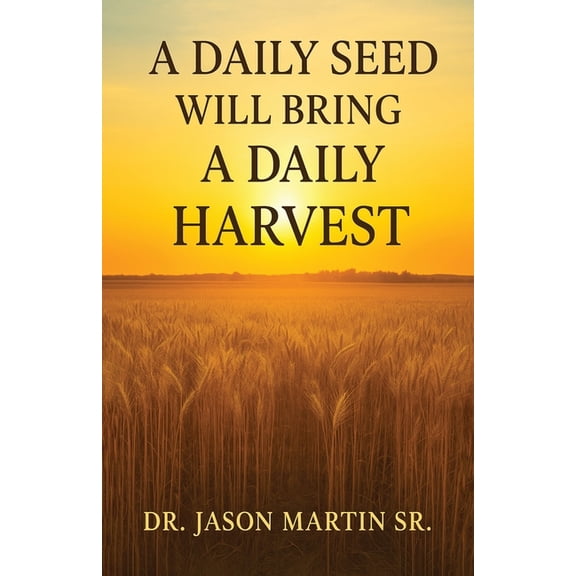
A Daily Seed Will Bring a Daily Harvest, (Paperback) $14.99
 $1499current price $14.99
A Daily Seed Will Bring a Daily Harvest, (Paperback)
Houston Freedmen's Town, (Paperback) $15.51
 $1551current price $15.51
Houston Freedmen's Town, (Paperback)
Jack and Doris Smothers Series in Texas Homesteads Ungovernable: Families, Sex, Race, and the Law in Frontier Texas, 1823-1860, Book 03, (Paperback) $31.33
 $3133current price $31.33
Jack and Doris Smothers Series in Texas Homesteads Ungovernable: Families, Sex, Race, and the Law in Frontier Texas, 1823-1860, Book 03, (Paperback)
Centennial Series of the Association of The Year America Discovered Texas Centennial '36, Book 23, (Paperback) $15.30
 $1530current price $15.30
Centennial Series of the Association of The Year America Discovered Texas Centennial '36, Book 23, (Paperback)

Customer ratings & reviews
0 ratings|0 reviews
This item does not have any reviews yet

Related pages
- Wake Forest University Press
- Colorado University Logo
- St Louis University Billikens
- Mobile Alabama
- Colorado College Mascot
- Michigan Ohio State
- Real Salt Lake Accessories
- Columbus Blue Jackets Bath & Kitchen
- East Carolina Pirates Outdoor
- San Jose Earthquakes Accessories
- Real Salt Lake
- East Carolina Pirates Auto Accessories