Controls of all kinds are integral parts of restaurant equipment operations. A control is a switch or other device by which a machine is regulated. A control may be manual or automatically operated. An electro-mechanical control typically consists of multiple relays, timers, and/or counters wired together on an enclosure panel. Electro-mechanical control is also referred to simply as "Relay Control", which is a more accurate term since solid state electronic relays, timers, and counters are standard components. Contactors, motor and compressor starters, valves, thermostats, and other output devices are used to turn on/off motors, indicator lights, heating elements, and other components used in the equipment. Motors are used in all kinds of restaurant equipment to power beaters, blenders, slicers, basket lifts, filters, fans and much more. A motor converts one form of energy into mechanical energy. Electric motors convert electrical energy into mechanical motion, pneumatic motors use compressed air. A motor is a device driven by electricity, air, or hydraulic pressure, which does not change the chemical composition of its energy source. Electric motors may be classified by considerations such as power source type, internal construction, application and type of motion output. In addition to AC versus DC types, motors may be brushed or brushless, may be of various phase (see single-phase, two-phase, or three-phase), and may be either air-cooled or liquid-cooled. General-purpose motor designs with standard dimensions and characteristics provide convenient mechanical power for foodservice equipment once customized to the exact OEM specifications (RPM, torque, magnet dimension, winding, etc.).
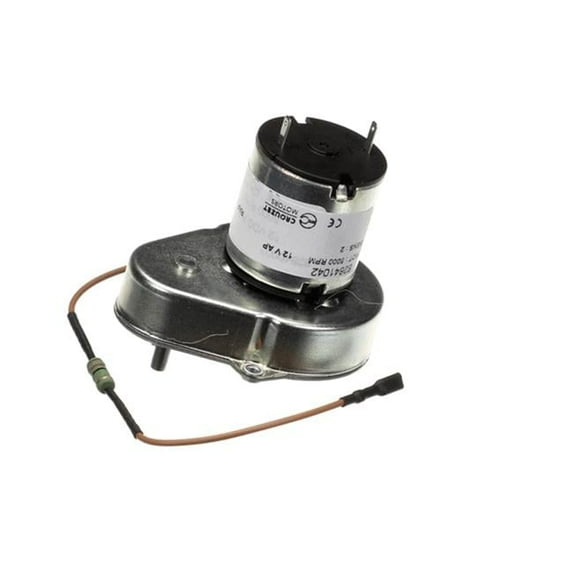
Specifications - Height: 2.69 in.
- Width: 4.25 in.
- Length: 6.25 in.
- SKU: PTSWN79865


 WARNING: