

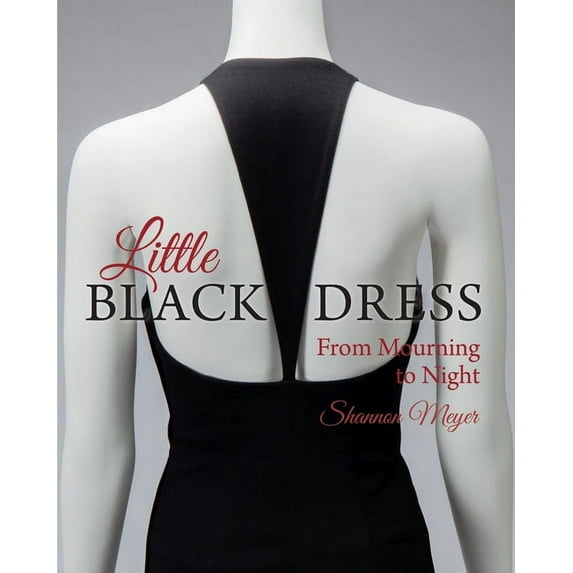
Hero image 0 of Little Black Dress : From Mourning to Night (Paperback), 0 of 1
Little Black Dress : From Mourning to Night (Paperback)
(No ratings yet)
Key item features
“Entertaining reading.”—Wall Street Journal
What’s the most important garment in a woman’s closet? More often than not, the answer is “the little black dress.” For decades, fashion magazines have touted the LBD as the perfect solution to almost every fashion crisis. Dressed up or down, with flats or heels, statement jewelry or a subdued jacket, the little black dress can be worn anywhere, for any occasion. Where did the little black dress come from? And how did black become the color of choice for every occasion?
In Little Black Dress, Shannon Meyer answers these questions by offering a visual history of the black dress, illustrating its transformation from a traditional mourning garment to the fashion staple it is today. Beginning with the Victorian era, Meyer describes how widows were required to wear plain black clothing with no decoration for one year and a day, as a symbol of full mourning. This gave way to concepts such as “ordinary” and “half” mourning that allowed for different fabrics and embellishments. Then, in the early twentieth century, women began to slowly adopt black into their everyday wardrobe, and, in the 1920s, Coco Chanel launched her revolutionary first line of black dresses, advertising them as versatile, affordable, and fashionable choices for women. As Meyer shows, other designers quickly followed suit, and black has since prevailed as a universal, ever appropriate, always fashionable choice.
Richly illustrated with seventy-five full-color photos of dresses and accessories spanning 150 years, and including information about the designer, original owner, and historical context for each, readers will find Little Black Dress a stylish guide to this wardrobe essential. Designed to accompany an exhibit by the same name at the Missouri History Museum, the book will impress historians and fashionistas alike.
What’s the most important garment in a woman’s closet? More often than not, the answer is “the little black dress.” For decades, fashion magazines have touted the LBD as the perfect solution to almost every fashion crisis. Dressed up or down, with flats or heels, statement jewelry or a subdued jacket, the little black dress can be worn anywhere, for any occasion. Where did the little black dress come from? And how did black become the color of choice for every occasion?
In Little Black Dress, Shannon Meyer answers these questions by offering a visual history of the black dress, illustrating its transformation from a traditional mourning garment to the fashion staple it is today. Beginning with the Victorian era, Meyer describes how widows were required to wear plain black clothing with no decoration for one year and a day, as a symbol of full mourning. This gave way to concepts such as “ordinary” and “half” mourning that allowed for different fabrics and embellishments. Then, in the early twentieth century, women began to slowly adopt black into their everyday wardrobe, and, in the 1920s, Coco Chanel launched her revolutionary first line of black dresses, advertising them as versatile, affordable, and fashionable choices for women. As Meyer shows, other designers quickly followed suit, and black has since prevailed as a universal, ever appropriate, always fashionable choice.
Richly illustrated with seventy-five full-color photos of dresses and accessories spanning 150 years, and including information about the designer, original owner, and historical context for each, readers will find Little Black Dress a stylish guide to this wardrobe essential. Designed to accompany an exhibit by the same name at the Missouri History Museum, the book will impress historians and fashionistas alike.
Specs
- Fiction/nonfictionNon-Fiction
- GenreGeneral Interest
- Pub date2016-04-15
- Pages160
- Reading levelGeneral/Trade
- SubgenreFashion
Current price is USD$40.08
Price when purchased online
- Free shipping
 Free 30-day returns
How do you want your item?
Columbus, 43215
Arrives between Apr 23 - Apr 29
|
Sold and shipped by newbookdeals
4.559348739495798 stars out of 5, based on 1904 seller reviews(4.6)1904 seller reviews

Free 30-day returns
About this item
Product details
The book is an exhibition catalog that explores the topic of the color black and how it went from a traditional color of mourning to an essential item in almost every woman’s wardrobe today.
The catalog begins with Victorian mourning rituals and the attire that was considered appropriate for women during the different stages of grief. During the nineteenth and early twentieth centuries, black was worn primarily as a symbol of mourning and loss. A widowed woman was considered in full mourning, which lasted for a year and a day, and was to wear plain black clothing with no decoration. “Second” and “half” mourning followed, which allowed for different kinds of fabrics and embellishments to be worn. Stages and time frames varied by a woman’s relationship to the deceased. Besides mourning dresses from the collection, mourning jewelry and accessories are featured.
The catalog then explores the transition of the color black into a fashion color. Between the late nineteenth and early twentieth centuries black worn for mourning and black worn for fashion were beginning to occur simultaneously. Fabric choices and trims help to distinguish the difference. Dresses from the collection ranging from 1880 to 1918 are shown in this section.
In the 1920s designer Coco Chanel created a line of black dresses as a versatile and affordable option for women. Other designers quickly followed suit, and black has prevailed in the fashions of almost every decade since. A special section of the catalog is devoted to Chanel and her dresses.
The remainder of the catalog is devoted to the little black dress, broken down into those that are worn for everyday versatility and those for evening wear—from the 1920s to the present. There is information pertaining to the designers, original owners, and historical context pertaining to the time period of each dress.
The catalog begins with Victorian mourning rituals and the attire that was considered appropriate for women during the different stages of grief. During the nineteenth and early twentieth centuries, black was worn primarily as a symbol of mourning and loss. A widowed woman was considered in full mourning, which lasted for a year and a day, and was to wear plain black clothing with no decoration. “Second” and “half” mourning followed, which allowed for different kinds of fabrics and embellishments to be worn. Stages and time frames varied by a woman’s relationship to the deceased. Besides mourning dresses from the collection, mourning jewelry and accessories are featured.
The catalog then explores the transition of the color black into a fashion color. Between the late nineteenth and early twentieth centuries black worn for mourning and black worn for fashion were beginning to occur simultaneously. Fabric choices and trims help to distinguish the difference. Dresses from the collection ranging from 1880 to 1918 are shown in this section.
In the 1920s designer Coco Chanel created a line of black dresses as a versatile and affordable option for women. Other designers quickly followed suit, and black has prevailed in the fashions of almost every decade since. A special section of the catalog is devoted to Chanel and her dresses.
The remainder of the catalog is devoted to the little black dress, broken down into those that are worn for everyday versatility and those for evening wear—from the 1920s to the present. There is information pertaining to the designers, original owners, and historical context pertaining to the time period of each dress.
“Entertaining reading.”—Wall Street Journal
What’s the most important garment in a woman’s closet? More often than not, the answer is “the little black dress.” For decades, fashion magazines have touted the LBD as the perfect solution to almost every fashion crisis. Dressed up or down, with flats or heels, statement jewelry or a subdued jacket, the little black dress can be worn anywhere, for any occasion. Where did the little black dress come from? And how did black become the color of choice for every occasion?
In Little Black Dress, Shannon Meyer answers these questions by offering a visual history of the black dress, illustrating its transformation from a traditional mourning garment to the fashion staple it is today. Beginning with the Victorian era, Meyer describes how widows were required to wear plain black clothing with no decoration for one year and a day, as a symbol of full mourning. This gave way to concepts such as “ordinary” and “half” mourning that allowed for different fabrics and embellishments. Then, in the early twentieth century, women began to slowly adopt black into their everyday wardrobe, and, in the 1920s, Coco Chanel launched her revolutionary first line of black dresses, advertising them as versatile, affordable, and fashionable choices for women. As Meyer shows, other designers quickly followed suit, and black has since prevailed as a universal, ever appropriate, always fashionable choice.
Richly illustrated with seventy-five full-color photos of dresses and accessories spanning 150 years, and including information about the designer, original owner, and historical context for each, readers will find Little Black Dress a stylish guide to this wardrobe essential. Designed to accompany an exhibit by the same name at the Missouri History Museum, the book will impress historians and fashionistas alike.
What’s the most important garment in a woman’s closet? More often than not, the answer is “the little black dress.” For decades, fashion magazines have touted the LBD as the perfect solution to almost every fashion crisis. Dressed up or down, with flats or heels, statement jewelry or a subdued jacket, the little black dress can be worn anywhere, for any occasion. Where did the little black dress come from? And how did black become the color of choice for every occasion?
In Little Black Dress, Shannon Meyer answers these questions by offering a visual history of the black dress, illustrating its transformation from a traditional mourning garment to the fashion staple it is today. Beginning with the Victorian era, Meyer describes how widows were required to wear plain black clothing with no decoration for one year and a day, as a symbol of full mourning. This gave way to concepts such as “ordinary” and “half” mourning that allowed for different fabrics and embellishments. Then, in the early twentieth century, women began to slowly adopt black into their everyday wardrobe, and, in the 1920s, Coco Chanel launched her revolutionary first line of black dresses, advertising them as versatile, affordable, and fashionable choices for women. As Meyer shows, other designers quickly followed suit, and black has since prevailed as a universal, ever appropriate, always fashionable choice.
Richly illustrated with seventy-five full-color photos of dresses and accessories spanning 150 years, and including information about the designer, original owner, and historical context for each, readers will find Little Black Dress a stylish guide to this wardrobe essential. Designed to accompany an exhibit by the same name at the Missouri History Museum, the book will impress historians and fashionistas alike.
info:
We aim to show you accurate product information. Manufacturers, suppliers and others provide what you see here, and we have not verified it.
Specifications
Fiction/nonfiction
Non-Fiction
Genre
General Interest
Pub date
2016-04-15
Pages
160
Warranty
Warranty information
Please be aware that the warranty terms on items offered for sale by third party Marketplace sellers may differ from those displayed in this section (if any). To confirm warranty terms on an item offered for sale by a third party Marketplace seller, please use the 'Contact seller' feature on the third party Marketplace seller's information page and request the item's warranty terms prior to purchase.
Similar items you might like
Based on what customers bought
Color Me Dead, (Paperback) $19.50 Was $23.15
 $1950current price $19.50, Was $23.15$23.15
Color Me Dead, (Paperback)
The Black Sequin Dress, (Paperback) $25.94
 $2594current price $25.94
The Black Sequin Dress, (Paperback)
Death in the Hills, (Paperback) $33.06
 $3306current price $33.06
Death in the Hills, (Paperback)
Meet Me in the Darkness, (Paperback) $18.95
 $1895current price $18.95
Meet Me in the Darkness, (Paperback)
Little Black Dress, (Paperback) $16.48
 $1648current price $16.48
Little Black Dress, (Paperback)
Dark Dahlias Rite, (Paperback) $23.22
 $2322current price $23.22
Dark Dahlias Rite, (Paperback)
Blue Collar Hero Mistletoe and Magnolias, Book 1, (Paperback) $19.06
 $1906current price $19.06
Blue Collar Hero Mistletoe and Magnolias, Book 1, (Paperback)
Dancing For Mourning, (Paperback) $15.96
 $1596current price $15.96
Dancing For Mourning, (Paperback)
Neither Dead nor Sleeping, (Paperback) $25.37
 $2537current price $25.37
Neither Dead nor Sleeping, (Paperback)
Alone in the Dark $29.99
 $2999current price $29.99
Alone in the Dark
Between the Light and Darkness, (Paperback) $15.00
 $1500current price $15.00
Between the Light and Darkness, (Paperback)
Echoes of Meaningful Mourning, (Paperback) $12.99
 $1299current price $12.99
Echoes of Meaningful Mourning, (Paperback)
Lyrische Lichtblicke: Die Glühbirnen, (Paperback) $17.50
 $1750current price $17.50
Lyrische Lichtblicke: Die Glühbirnen, (Paperback)
Echoes of a Broken Soul, (Paperback) $8.00
 $800current price $8.00
Echoes of a Broken Soul, (Paperback)
Light Shines Through the Darkness (Paperback) $15.95
 $1595current price $15.95
Light Shines Through the Darkness (Paperback)
Neither Dead Nor Sleeping 1920, (Paperback) $36.73 Was $43.43
 $3673current price $36.73, Was $43.43$43.43
Neither Dead Nor Sleeping 1920, (Paperback)
Mourning the Dream-Amor Fati (Paperback) $36.27
 $3627current price $36.27
Mourning the Dream-Amor Fati (Paperback)
A Penance for Crows, (Paperback) $18.95
 $1895current price $18.95
A Penance for Crows, (Paperback)
I Came Here To Die, (Paperback) $14.99
 $1499current price $14.99
I Came Here To Die, (Paperback)
Dark song from a timeless dream, (Paperback) $33.43
 $3343current price $33.43
Dark song from a timeless dream, (Paperback)
Customer ratings & reviews
0 ratings|0 reviews
This item does not have any reviews yet
