


Hero image 0 of Vaccine Nation : America's Changing Relationship with Immunization (Paperback), 0 of 1
Vaccine Nation : America's Changing Relationship with Immunization (Paperback)
(No ratings yet)
Key item features
With employers offering free flu shots and pharmacies expanding into one-stop shops to prevent everything from shingles to tetanus, vaccines are ubiquitous in contemporary life. The past fifty years have witnessed an enormous upsurge in vaccines and immunization in the United States: American children now receive more vaccines than any previous generation, and laws requiring their immunization against a litany of diseases are standard. Yet, while vaccination rates have soared and cases of preventable infections have plummeted, an increasingly vocal cross section of Americans have questioned the safety and necessity of vaccines. In Vaccine Nation, Elena Conis explores this complicated history and its consequences for personal and public health.
Vaccine Nation opens in the 1960s, when government scientists—triumphant following successes combating polio and smallpox—considered how the country might deploy new vaccines against what they called the “milder” diseases, including measles, mumps, and rubella. In the years that followed, Conis reveals, vaccines fundamentally changed how medical professionals, policy administrators, and ordinary Americans came to perceive the diseases they were designed to prevent. She brings this history up to the present with an insightful look at the past decade’s controversy over the implementation of the Gardasil vaccine for HPV, which sparked extensive debate because of its focus on adolescent girls and young women. Through this and other examples, Conis demonstrates how the acceptance of vaccines and vaccination policies has been as contingent on political and social concerns as on scientific findings.
By setting the complex story of American vaccination within the country’s broader history, Vaccine Nation goes beyond the simple story of the triumph of science over disease and provides a new and perceptive account of the role of politics and social forces in medicine.
Vaccine Nation opens in the 1960s, when government scientists—triumphant following successes combating polio and smallpox—considered how the country might deploy new vaccines against what they called the “milder” diseases, including measles, mumps, and rubella. In the years that followed, Conis reveals, vaccines fundamentally changed how medical professionals, policy administrators, and ordinary Americans came to perceive the diseases they were designed to prevent. She brings this history up to the present with an insightful look at the past decade’s controversy over the implementation of the Gardasil vaccine for HPV, which sparked extensive debate because of its focus on adolescent girls and young women. Through this and other examples, Conis demonstrates how the acceptance of vaccines and vaccination policies has been as contingent on political and social concerns as on scientific findings.
By setting the complex story of American vaccination within the country’s broader history, Vaccine Nation goes beyond the simple story of the triumph of science over disease and provides a new and perceptive account of the role of politics and social forces in medicine.
Specs
- Book formatPaperback
- Fiction/nonfictionNon-Fiction
- GenreTextbooks
- Pub date2016-05-02
- Pages361
- Edition1
Current price is USD$21.80
Price when purchased online
- Free shipping
 Free 30-day returns
How do you want your item?
Columbus, 43215
Arrives between Apr 17 - Apr 24
|
Sold and shipped by newbookdeals
4.559304164470216 stars out of 5, based on 1897 seller reviews(4.6)1897 seller reviews

Free 30-day returns
About this item
Product details
With employers offering free flu shots and pharmacies expanding into one-stop shops to prevent everything from shingles to tetanus, vaccines are ubiquitous in contemporary life. The past fifty years have witnessed an enormous upsurge in vaccines and immunization in the United States: American children now receive more vaccines than any previous generation, and laws requiring their immunization against a litany of diseases are standard. Yet, while vaccination rates have soared and cases of preventable infections have plummeted, an increasingly vocal cross section of Americans have questioned the safety and necessity of vaccines. In Vaccine Nation, Elena Conis explores this complicated history and its consequences for personal and public health. Vaccine Nation opens in the 1960s, when government scientists--triumphant following successes combating polio and smallpox--considered how the country might deploy new vaccines against what they called the "milder" diseases, including measles, mumps, and rubella. In the years that followed, Conis reveals, vaccines fundamentally changed how medical professionals, policy administrators, and ordinary Americans came to perceive the diseases they were designed to prevent. She brings this history up to the present with an insightful look at the past decade's controversy over the implementation of the Gardasil vaccine for HPV, which sparked extensive debate because of its focus on adolescent girls and young women. Through this and other examples, Conis demonstrates how the acceptance of vaccines and vaccination policies has been as contingent on political and social concerns as on scientific findings. By setting the complex story of American vaccination within the country's broader history, Vaccine Nation goes beyond the simple story of the triumph of science over disease and provides a new and perceptive account of the role of politics and social forces in medicine.
With employers offering free flu shots and pharmacies expanding into one-stop shops to prevent everything from shingles to tetanus, vaccines are ubiquitous in contemporary life. The past fifty years have witnessed an enormous upsurge in vaccines and immunization in the United States: American children now receive more vaccines than any previous generation, and laws requiring their immunization against a litany of diseases are standard. Yet, while vaccination rates have soared and cases of preventable infections have plummeted, an increasingly vocal cross section of Americans have questioned the safety and necessity of vaccines. In Vaccine Nation, Elena Conis explores this complicated history and its consequences for personal and public health.
Vaccine Nation opens in the 1960s, when government scientists—triumphant following successes combating polio and smallpox—considered how the country might deploy new vaccines against what they called the “milder” diseases, including measles, mumps, and rubella. In the years that followed, Conis reveals, vaccines fundamentally changed how medical professionals, policy administrators, and ordinary Americans came to perceive the diseases they were designed to prevent. She brings this history up to the present with an insightful look at the past decade’s controversy over the implementation of the Gardasil vaccine for HPV, which sparked extensive debate because of its focus on adolescent girls and young women. Through this and other examples, Conis demonstrates how the acceptance of vaccines and vaccination policies has been as contingent on political and social concerns as on scientific findings.
By setting the complex story of American vaccination within the country’s broader history, Vaccine Nation goes beyond the simple story of the triumph of science over disease and provides a new and perceptive account of the role of politics and social forces in medicine.
Vaccine Nation opens in the 1960s, when government scientists—triumphant following successes combating polio and smallpox—considered how the country might deploy new vaccines against what they called the “milder” diseases, including measles, mumps, and rubella. In the years that followed, Conis reveals, vaccines fundamentally changed how medical professionals, policy administrators, and ordinary Americans came to perceive the diseases they were designed to prevent. She brings this history up to the present with an insightful look at the past decade’s controversy over the implementation of the Gardasil vaccine for HPV, which sparked extensive debate because of its focus on adolescent girls and young women. Through this and other examples, Conis demonstrates how the acceptance of vaccines and vaccination policies has been as contingent on political and social concerns as on scientific findings.
By setting the complex story of American vaccination within the country’s broader history, Vaccine Nation goes beyond the simple story of the triumph of science over disease and provides a new and perceptive account of the role of politics and social forces in medicine.
info:
We aim to show you accurate product information. Manufacturers, suppliers and others provide what you see here, and we have not verified it.
Specifications
Book format
Paperback
Fiction/nonfiction
Non-Fiction
Genre
Textbooks
Pub date
2016-05-02
Warranty
Warranty information
Please be aware that the warranty terms on items offered for sale by third party Marketplace sellers may differ from those displayed in this section (if any). To confirm warranty terms on an item offered for sale by a third party Marketplace seller, please use the 'Contact seller' feature on the third party Marketplace seller's information page and request the item's warranty terms prior to purchase.
Warnings
State Chemical Disclosure
None
Similar items you might like
Based on what customers bought
Vaccine Nation: Science, Reason and the Threat to 200 Years of Progress, (Paperback) $24.92
 $2492current price $24.92
Vaccine Nation: Science, Reason and the Threat to 200 Years of Progress, (Paperback)
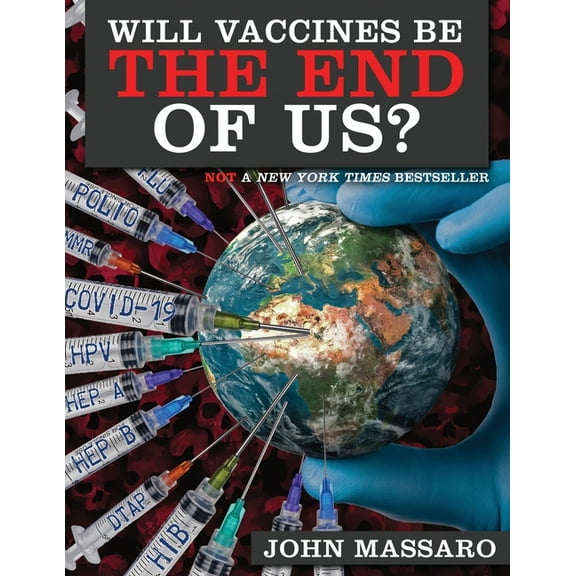
Will Vaccines Be the End of Us?, (Paperback) $27.57
 $2757current price $27.57
Will Vaccines Be the End of Us?, (Paperback)
Multisolving: Creating Systems Change in a Fractured World, (Paperback) $26.66
 $2666current price $26.66
Multisolving: Creating Systems Change in a Fractured World, (Paperback)
Bodily Harm: Symphysiotomy and Pubiotomy in Ireland 1944-92, (Paperback) $15.95
 $1595current price $15.95
Bodily Harm: Symphysiotomy and Pubiotomy in Ireland 1944-92, (Paperback)
Shots Without Guns; the Story of Vaccination, (Paperback) $24.19
 $2419current price $24.19
Shots Without Guns; the Story of Vaccination, (Paperback)
In the National Interest: Population Shock (Paperback) $24.54
 $2454current price $24.54
In the National Interest: Population Shock (Paperback)
Parasitism and Disease, (Paperback) $20.95
 $2095current price $20.95
Parasitism and Disease, (Paperback)
La Malaria Des Armées En Campagne (Paperback) $22.71
 $2271current price $22.71
La Malaria Des Armées En Campagne (Paperback)
Best seller Hey, Mama! Tell Me Something I Don't Know, (Paperback) $19.99
Best seller $1999current price $19.99
Hey, Mama! Tell Me Something I Don't Know, (Paperback)
11 out of 5 Stars. 1 reviewsGiving Back: A Lifetime of Service to Kansas and the Nation, (Paperback) $22.49
 $2249current price $22.49
Giving Back: A Lifetime of Service to Kansas and the Nation, (Paperback)
Culture and Politics of Health Care Work Anti/VAX: Reframing the Vaccination Controversy, (Paperback) $15.54
 $1554current price $15.54
Culture and Politics of Health Care Work Anti/VAX: Reframing the Vaccination Controversy, (Paperback)
Vaccines and CMV Reactivation, (Paperback) $21.19
 $2119current price $21.19
Vaccines and CMV Reactivation, (Paperback)
Vz: Volodymyr Zelenskyy and the Making of a Nation, (Paperback) $18.92 Was $21.23
 $1892current price $18.92, Was $21.23$21.23
Vz: Volodymyr Zelenskyy and the Making of a Nation, (Paperback)
The Human Touch: A Healthcare Odyssey, (Paperback) $16.98
 $1698current price $16.98
The Human Touch: A Healthcare Odyssey, (Paperback)
Papers on Small Pox, Vaccination, &c. ... (Paperback) $13.95
 $1395current price $13.95
Papers on Small Pox, Vaccination, &c. ... (Paperback)
The Small-pox Epidemic of 1870-73 in Relation to Vaccination (Paperback) $13.95
 $1395current price $13.95
The Small-pox Epidemic of 1870-73 in Relation to Vaccination (Paperback)
Hijacked Nation, (Paperback) $13.93
 $1393current price $13.93
Hijacked Nation, (Paperback)
The Waiting Room, (Paperback) $18.18
 $1818current price $18.18
The Waiting Room, (Paperback)
Lettre d'Un Médecin de Campagne À MM. Les Étudiants (Paperback) $14.02
 $1402current price $14.02
Lettre d'Un Médecin de Campagne À MM. Les Étudiants (Paperback)
American Monroe : The Making of a Body Politic (Edition 1) (Paperback) $35.58
 $3558current price $35.58
American Monroe : The Making of a Body Politic (Edition 1) (Paperback)
Customer ratings & reviews
0 ratings|0 reviews
This item does not have any reviews yet
