

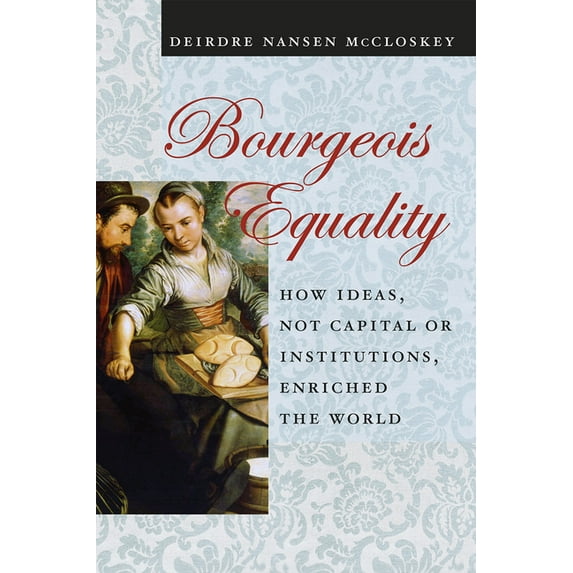
Bourgeois Equality : How Ideas, Not Capital or Institutions, Enriched the World (Hardcover)
(No ratings yet)
Bourgeois Equality : How Ideas, Not Capital or Institutions, Enriched the World (Hardcover)Bourgeois Equality How Ideas Not Capital or Institutions Enriched the World Hardcover 9780226333991Bourgeois Equality How Ideas Not Capital or Institutions Enriched the World Paperback 9780226527932
Book Format:Hardcover
Key item features
There’s little doubt that most humans today are better off than their forebears. Stunningly so, the economist and historian Deirdre McCloskey argues in the concluding volume of her trilogy celebrating the oft-derided virtues of the bourgeoisie. The poorest of humanity, McCloskey shows, will soon be joining the comparative riches of Japan and Sweden and Botswana.
Why? Most economists—from Adam Smith and Karl Marx to Thomas Piketty—say the Great Enrichment since 1800 came from accumulated capital. McCloskey disagrees, fiercely. “Our riches,” she argues, “were made not by piling brick on brick, bank balance on bank balance, but by piling idea on idea.” Capital was necessary, but so was the presence of oxygen. It was ideas, not matter, that drove “trade-tested betterment.” Nor were institutions the drivers. The World Bank orthodoxy of “add institutions and stir” doesn’t work, and didn’t. McCloskey builds a powerful case for the initiating role of ideas—ideas for electric motors and free elections, of course, but more deeply the bizarre and liberal ideas of equal liberty and dignity for ordinary folk. Liberalism arose from theological and political revolutions in northwest Europe, yielding a unique respect for betterment and its practitioners, and upending ancient hierarchies. Commoners were encouraged to have a go, and the bourgeoisie took up the Bourgeois Deal, and we were all enriched.
Few economists or historians write like McCloskey—her ability to invest the facts of economic history with the urgency of a novel, or of a leading case at law, is unmatched. She summarizes modern economics and modern economic history with verve and lucidity, yet sees through to the really big scientific conclusion. Not matter, but ideas. Big books don’t come any more ambitious, or captivating, than Bourgeois Equality.
Why? Most economists—from Adam Smith and Karl Marx to Thomas Piketty—say the Great Enrichment since 1800 came from accumulated capital. McCloskey disagrees, fiercely. “Our riches,” she argues, “were made not by piling brick on brick, bank balance on bank balance, but by piling idea on idea.” Capital was necessary, but so was the presence of oxygen. It was ideas, not matter, that drove “trade-tested betterment.” Nor were institutions the drivers. The World Bank orthodoxy of “add institutions and stir” doesn’t work, and didn’t. McCloskey builds a powerful case for the initiating role of ideas—ideas for electric motors and free elections, of course, but more deeply the bizarre and liberal ideas of equal liberty and dignity for ordinary folk. Liberalism arose from theological and political revolutions in northwest Europe, yielding a unique respect for betterment and its practitioners, and upending ancient hierarchies. Commoners were encouraged to have a go, and the bourgeoisie took up the Bourgeois Deal, and we were all enriched.
Few economists or historians write like McCloskey—her ability to invest the facts of economic history with the urgency of a novel, or of a leading case at law, is unmatched. She summarizes modern economics and modern economic history with verve and lucidity, yet sees through to the really big scientific conclusion. Not matter, but ideas. Big books don’t come any more ambitious, or captivating, than Bourgeois Equality.
Specs
- Book formatHardcover
- Fiction/nonfictionNon-Fiction
- GenreBusiness & Investing
- Pub date2016-04-21
- Pages768
- Reading levelGeneral (US: Trade)
Current price is USD$84.59
Price when purchased online
- Free shipping
 Free 30-day returns
How do you want your item?
Columbus, 43215
Arrives between Apr 28 - May 5
|
Sold and shipped by Rarewaves.com
4.243885635549431 stars out of 5, based on 2903 seller reviews(4.2)2903 seller reviews

Free 30-day returns
About this item
Product details
The last 200 years have witnessed a 100-fold leap in well-being. Deirdre McCloskey argues that most people today are stunningly better off than their forbearers were in 1800, and that the rest of humanity will soon be. A purely materialist, incentivist view of economic change does not explain this leap. We have now the third in McCloskey’s three-volume opus about how bourgeois values transformed Europe. Volume 3 nails the case for that transfiguration, telling us how aristocratic virtues of hierarchy were replaced by bourgeois virtues (more precisely, by attitudes toward virtues) that made it possible for ordinary folk with novel ideas to change the way people, farmed, manufactured, traveled, ruled themselves, and fought. It is a dramatic story, and joins a dramatic debate opened up by Thomas Piketty in his best-selling Capital in the 21st Century. McCloskey insists that economists are far too preoccupied by capital and saving, arguing against the position (of Piketty and most others) that capital induces a tendency to get more, that money reproduces itself, that riches are created from riches. Not so, our intrepid McCloskey shows. Bill Gates and Steve Jobs, among the biggest wealth accumulators in our era, didn’t get rich through the magic of compound interest on capital. They got rich through intellectual property, creating billions of dollars from virtually nothing. Capital was no more important an ingredient to the original Apple or Microsoft than cookies or cucumbers. The debate is between those who think riches are created from riches versus those who, with McCloskey, think riches are created from rags, between those who see profits as a generous return on capital, or profits coming from innovation that ultimately benefits us all.
There’s little doubt that most humans today are better off than their forebears. Stunningly so, the economist and historian Deirdre McCloskey argues in the concluding volume of her trilogy celebrating the oft-derided virtues of the bourgeoisie. The poorest of humanity, McCloskey shows, will soon be joining the comparative riches of Japan and Sweden and Botswana.
Why? Most economists—from Adam Smith and Karl Marx to Thomas Piketty—say the Great Enrichment since 1800 came from accumulated capital. McCloskey disagrees, fiercely. “Our riches,” she argues, “were made not by piling brick on brick, bank balance on bank balance, but by piling idea on idea.” Capital was necessary, but so was the presence of oxygen. It was ideas, not matter, that drove “trade-tested betterment.” Nor were institutions the drivers. The World Bank orthodoxy of “add institutions and stir” doesn’t work, and didn’t. McCloskey builds a powerful case for the initiating role of ideas—ideas for electric motors and free elections, of course, but more deeply the bizarre and liberal ideas of equal liberty and dignity for ordinary folk. Liberalism arose from theological and political revolutions in northwest Europe, yielding a unique respect for betterment and its practitioners, and upending ancient hierarchies. Commoners were encouraged to have a go, and the bourgeoisie took up the Bourgeois Deal, and we were all enriched.
Few economists or historians write like McCloskey—her ability to invest the facts of economic history with the urgency of a novel, or of a leading case at law, is unmatched. She summarizes modern economics and modern economic history with verve and lucidity, yet sees through to the really big scientific conclusion. Not matter, but ideas. Big books don’t come any more ambitious, or captivating, than Bourgeois Equality.
Why? Most economists—from Adam Smith and Karl Marx to Thomas Piketty—say the Great Enrichment since 1800 came from accumulated capital. McCloskey disagrees, fiercely. “Our riches,” she argues, “were made not by piling brick on brick, bank balance on bank balance, but by piling idea on idea.” Capital was necessary, but so was the presence of oxygen. It was ideas, not matter, that drove “trade-tested betterment.” Nor were institutions the drivers. The World Bank orthodoxy of “add institutions and stir” doesn’t work, and didn’t. McCloskey builds a powerful case for the initiating role of ideas—ideas for electric motors and free elections, of course, but more deeply the bizarre and liberal ideas of equal liberty and dignity for ordinary folk. Liberalism arose from theological and political revolutions in northwest Europe, yielding a unique respect for betterment and its practitioners, and upending ancient hierarchies. Commoners were encouraged to have a go, and the bourgeoisie took up the Bourgeois Deal, and we were all enriched.
Few economists or historians write like McCloskey—her ability to invest the facts of economic history with the urgency of a novel, or of a leading case at law, is unmatched. She summarizes modern economics and modern economic history with verve and lucidity, yet sees through to the really big scientific conclusion. Not matter, but ideas. Big books don’t come any more ambitious, or captivating, than Bourgeois Equality.
info:
We aim to show you accurate product information. Manufacturers, suppliers and others provide what you see here, and we have not verified it.
Specifications
Book format
Hardcover
Fiction/nonfiction
Non-Fiction
Genre
Business & Investing
Pub date
2016-04-21
Warranty
Warranty information
Please be aware that the warranty terms on items offered for sale by third party Marketplace sellers may differ from those displayed in this section (if any). To confirm warranty terms on an item offered for sale by a third party Marketplace seller, please use the 'Contact seller' feature on the third party Marketplace seller's information page and request the item's warranty terms prior to purchase.
Warnings
State Chemical Disclosure
None
Similar items you might like
Based on what customers bought
Taking on the Political Prefigurative Democracy: Protest, Social Movements and the Political Institution of Society, (Paperback) $32.48
 $3248current price $32.48
Taking on the Political Prefigurative Democracy: Protest, Social Movements and the Political Institution of Society, (Paperback)
Political Economy of Institutions and De Institutions and the Path to the Modern Economy: Lessons from Medieval Trade, (Paperback) $41.13
 $4113current price $41.13
Political Economy of Institutions and De Institutions and the Path to the Modern Economy: Lessons from Medieval Trade, (Paperback)
Sociocultural, Political, and Historical Deculturalization and the Struggle for Equality: A Brief History of the Education of Dominated Cultures in the United St, (Paperback) $40.49
 $4049current price $40.49
Sociocultural, Political, and Historical Deculturalization and the Struggle for Equality: A Brief History of the Education of Dominated Cultures in the United St, (Paperback)
15 out of 5 Stars. 1 reviewsLeaders; 6 Economics of State and Local Government, (Paperback) $54.90
 $5490current price $54.90
Leaders; 6 Economics of State and Local Government, (Paperback)
Defending Democracy in the European Parliament: An Institutional Drama, (Paperback) $29.95
 $2995current price $29.95
Defending Democracy in the European Parliament: An Institutional Drama, (Paperback)
The Irresistible Manager - Managing, Leading and Thriving in a Disrupted World, (Paperback) $19.00
 $1900current price $19.00
The Irresistible Manager - Managing, Leading and Thriving in a Disrupted World, (Paperback)
Urgency of Now: A Small Book about the Madness of Inequality and Poverty: How They're Wrecking People's Lives and Why Do, (Paperback) $19.16
 $1916current price $19.16
Urgency of Now: A Small Book about the Madness of Inequality and Poverty: How They're Wrecking People's Lives and Why Do, (Paperback)
Liberal Arts of Management: A Toolkit for Today's Leaders, (Paperback) $35.48
 $3548current price $35.48
Liberal Arts of Management: A Toolkit for Today's Leaders, (Paperback)
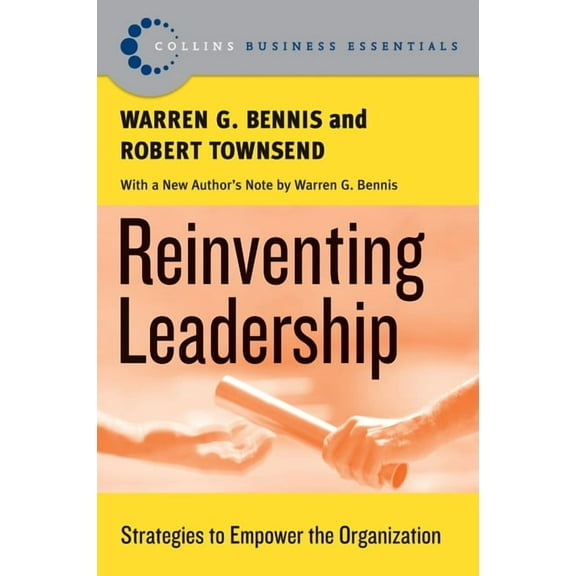
Collins Business Essentials Reinventing Leadership: Strategies to Empower the Organization, (Paperback) $6.99
 $699current price $6.99
Collins Business Essentials Reinventing Leadership: Strategies to Empower the Organization, (Paperback)
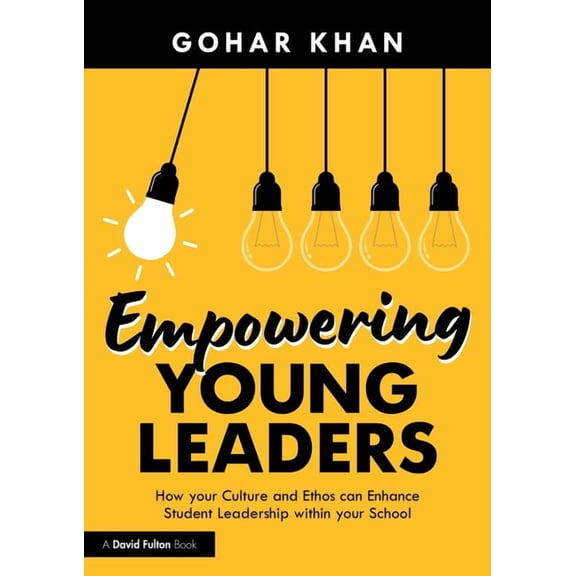
Empowering Young Leaders: How your Culture and Ethos can Enhance Student Leadership within your School, (Paperback) $28.90
 $2890current price $28.90
Empowering Young Leaders: How your Culture and Ethos can Enhance Student Leadership within your School, (Paperback)
It's Not About You: Winning New Business In A Crowded Agency World, (Paperback) $20.00
 $2000current price $20.00
It's Not About You: Winning New Business In A Crowded Agency World, (Paperback)
Pass/Fail: The Urgent Need for Strategic Leadership in Higher Education, (Paperback) $18.63
 $1863current price $18.63
Pass/Fail: The Urgent Need for Strategic Leadership in Higher Education, (Paperback)
Uberpreneurs: How to Create Innovative Global Businesses and Transform Human Societies, (Paperback) $39.02
 $3902current price $39.02
Uberpreneurs: How to Create Innovative Global Businesses and Transform Human Societies, (Paperback)
Trade and Development Measuring Empowerment: Cross-Disciplinary Perspectives, (Paperback) $44.42
 $4442current price $44.42
Trade and Development Measuring Empowerment: Cross-Disciplinary Perspectives, (Paperback)
Competency Management - A Practitioner's Handbook: Develop Self, Businesses, Communities & Societies, (Paperback) $28.52
 $2852current price $28.52
Competency Management - A Practitioner's Handbook: Develop Self, Businesses, Communities & Societies, (Paperback)
Raising Little Leaders: Nurturing Leadership and Management Skills in Your Child, (Paperback) $20.00
 $2000current price $20.00
Raising Little Leaders: Nurturing Leadership and Management Skills in Your Child, (Paperback)
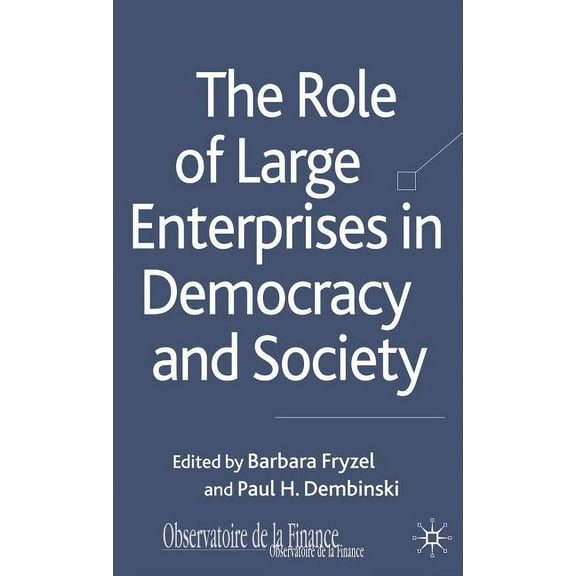
Observatoire de la Finance The Role of Large Enterprises in Democracy and Society, (Hardcover) $33.87
 $3387current price $33.87
Observatoire de la Finance The Role of Large Enterprises in Democracy and Society, (Hardcover)
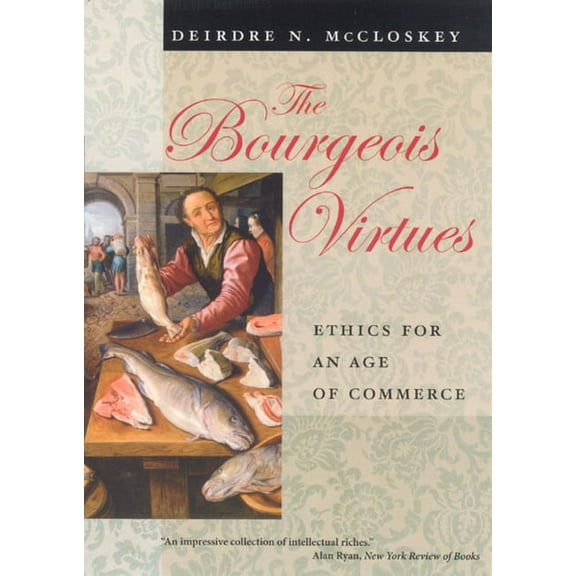
Put The Magic Back Into Your Business: Nine Management and Leadership Skills Paperback 1653801646 9781653801640 Jih Min Cheng, Gracy Yap $12.99
 $1299current price $12.99
Put The Magic Back Into Your Business: Nine Management and Leadership Skills Paperback 1653801646 9781653801640 Jih Min Cheng, Gracy Yap
Customer ratings & reviews
0 ratings|0 reviews
This item does not have any reviews yet

Related pages
- American Essence Magazine
- American Aesthetics
- Millennials Slang
- Debartolo Professor In The Liberal Arts Pat Rogers
- China Immigration Policy
- 4300 American Way
- Asian Political Books
- Globalization Business & Money Books
- Labor & Industrial Relations Political Books
- General Coming of Age Kids' Books
- Regional American Literary Criticism Books
- Colonialism & Post-Colonialism Political Books