

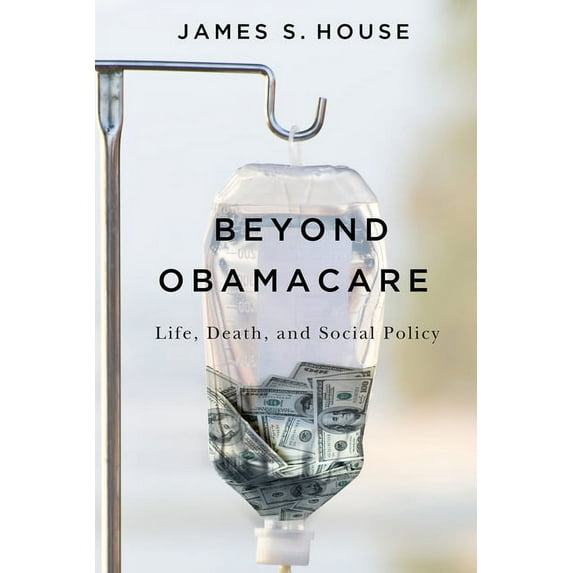
Hero image 0 of Beyond Obamacare : Life, Death, and Social Policy (Paperback), 0 of 1
Beyond Obamacare : Life, Death, and Social Policy (Paperback)
(No ratings yet)
Beyond Obamacare : Life, Death, and Social Policy (Paperback)Beyond Obamacare Life Death and Social Policy Paperback 9780871544773
Book Format:Paperback-Out of stock
Key item features
Health care spending in the United States today is approaching 20 percent of GDP, yet levels of U.S. population health have been declining for decades relative to other wealthy and even some developing nations. How is it possible that the United States, which spends more than any other nation on health care and insurance, now has a population markedly less healthy than those of many other nations? Sociologist and public health expert James S. House analyzes this paradoxical crisis, offering surprising new explanations for how and why the United States has fallen into this trap. In Beyond Obamacare, House shows that health care reforms, including the Affordable Care Act, cannot resolve this crisis because they do not focus on the underlying causes for the nation’s poor health outcomes, which are largely social, economic, environmental, psychological, and behavioral. House demonstrates that the problems of our broken health care and insurance system are interconnected with our large and growing social disparities in education, income, and other conditions of life and work, and calls for a complete reorientation of how we think about health. He concludes that we need to move away from our misguided and almost exclusive focus on biomedical determinants of health, and to place more emphasis on addressing social, economic, and other inequalities. House’s review of the evidence suggests that the landmark Affordable Care Act of 2010, and even universal access to health care, are likely to yield only marginal improvements in population health or in reducing health care expenditures. In order to rein in spending and improve population health, we need to refocus health policy from the supply side—which makes more and presumably better health care available to more citizens—to the demand side—which would improve population health though means other than health care and insurance, thereby reducing need and spending for health care. House shows how policies that provide expanded educational opportunities, more and better jobs and income, reduced racial-ethnic discrimination and segregation, and improved neighborhood quality enhance population health and quality of life as well as help curb health spending. He recommends redirecting funds from inefficient supply-side health care measures toward broader social initiatives focused on education, income support, civil rights, housing and neighborhoods, and other reforms, which can be paid for from savings in expenditures for health care and insurance. A provocative reconceptualization of health in America, Beyond Obamacare looks past partisan debates to show how cost-efficient and effective health policies begin with more comprehensive social policy reforms.
Specs
- Book formatPaperback
- Fiction/nonfictionNon-Fiction
- GenreNonfiction
- Publication dateMay, 2015
- Pages256
- EditionStandard Edition
Current price is USD$47.90
Price when purchased online
Out of stock
How do you want your item?
Out of stock
About this item
Product details
Health care spending in the United States today is approaching 20 percent of GDP, yet levels of U.S. population health have been declining for decades relative to other wealthy and even some developing nations. How is it possible that the United States, which spends more than any other nation on health care and insurance, now has a population markedly less healthy than those of many other nations? Sociologist and public health expert James S. House analyzes this paradoxical crisis, offering surprising new explanations for how and why the United States has fallen into this trap. In Beyond Obamacare, House shows that health care reforms, including the Affordable Care Act, cannot resolve this crisis because they do not focus on the underlying causes for the nation's poor health outcomes, which are largely social, economic, environmental, psychological, and behavioral. House demonstrates that the problems of our broken health care and insurance system are interconnected with our large and growing social disparities in education, income, and other conditions of life and work, and calls for a complete reorientation of how we think about health. He concludes that we need to move away from our misguided and almost exclusive focus on biomedical determinants of health, and to place more emphasis on addressing social, economic, and other inequalities. House's review of the evidence suggests that the landmark Affordable Care Act of 2010, and even universal access to health care, are likely to yield only marginal improvements in population health or in reducing health care expenditures. In order to rein in spending and improve population health, we need to refocus health policy from the supply side--which makes more and presumably better health care available to more citizens--to the demand side--which would improve population health though means other than health care and insurance, thereby reducing need and spending for health care. House shows how policies that provide expanded educational opportunities, more and better jobs and income, reduced racial-ethnic discrimination and segregation, and improved neighborhood quality enhance population health and quality of life as well as help curb health spending. He recommends redirecting funds from inefficient supply-side health care measures toward broader social initiatives focused on education, income support, civil rights, housing and neighborhoods, and other reforms, which can be paid for from savings in expenditures for health care and insurance. A provocative reconceptualization of health in America, Beyond Obamacare looks past partisan debates to show how cost-efficient and effective health policies begin with more comprehensive social policy reforms.
Health care spending in the United States today is approaching 20 percent of GDP, yet levels of U.S. population health have been declining for decades relative to other wealthy and even some developing nations. How is it possible that the United States, which spends more than any other nation on health care and insurance, now has a population markedly less healthy than those of many other nations? Sociologist and public health expert James S. House analyzes this paradoxical crisis, offering surprising new explanations for how and why the United States has fallen into this trap. In Beyond Obamacare, House shows that health care reforms, including the Affordable Care Act, cannot resolve this crisis because they do not focus on the underlying causes for the nation’s poor health outcomes, which are largely social, economic, environmental, psychological, and behavioral. House demonstrates that the problems of our broken health care and insurance system are interconnected with our large and growing social disparities in education, income, and other conditions of life and work, and calls for a complete reorientation of how we think about health. He concludes that we need to move away from our misguided and almost exclusive focus on biomedical determinants of health, and to place more emphasis on addressing social, economic, and other inequalities. House’s review of the evidence suggests that the landmark Affordable Care Act of 2010, and even universal access to health care, are likely to yield only marginal improvements in population health or in reducing health care expenditures. In order to rein in spending and improve population health, we need to refocus health policy from the supply side—which makes more and presumably better health care available to more citizens—to the demand side—which would improve population health though means other than health care and insurance, thereby reducing need and spending for health care. House shows how policies that provide expanded educational opportunities, more and better jobs and income, reduced racial-ethnic discrimination and segregation, and improved neighborhood quality enhance population health and quality of life as well as help curb health spending. He recommends redirecting funds from inefficient supply-side health care measures toward broader social initiatives focused on education, income support, civil rights, housing and neighborhoods, and other reforms, which can be paid for from savings in expenditures for health care and insurance. A provocative reconceptualization of health in America, Beyond Obamacare looks past partisan debates to show how cost-efficient and effective health policies begin with more comprehensive social policy reforms.
info:
We aim to show you accurate product information. Manufacturers, suppliers and others provide what you see here, and we have not verified it.
Specifications
Book format
Paperback
Fiction/nonfiction
Non-Fiction
Genre
Nonfiction
Publication date
May, 2015
Warranty
Warranty information
Please be aware that the warranty terms on items offered for sale by third party Marketplace sellers may differ from those displayed in this section (if any). To confirm warranty terms on an item offered for sale by a third party Marketplace seller, please use the 'Contact seller' feature on the third party Marketplace seller's information page and request the item's warranty terms prior to purchase.
Similar items you might like
Based on what customers bought
The Psychology of Politicians, (Paperback) $45.00
 $4500current price $45.00
The Psychology of Politicians, (Paperback)
Ideology and the Future of Progressive Social Movements, (Paperback) $44.00
 $4400current price $44.00
Ideology and the Future of Progressive Social Movements, (Paperback)
Our Unsystematic Healthcare System, (Paperback) $35.00
 $3500current price $35.00
Our Unsystematic Healthcare System, (Paperback)
Society and Aging Dying in Old Age: U.S. Practice and Policy, (Paperback) $57.99
 $5799current price $57.99
Society and Aging Dying in Old Age: U.S. Practice and Policy, (Paperback)
The Psychology of Radical Social Change: From Rage to Revolution, (Paperback) $45.00
 $4500current price $45.00
The Psychology of Radical Social Change: From Rage to Revolution, (Paperback)
Intelligence in Politics: An Approach to Social Problems, (Paperback) $35.00 Was $44.29
 $3500current price $35.00, Was $44.29$44.29
Intelligence in Politics: An Approach to Social Problems, (Paperback)
Leading and Managing Healthcare, (Paperback) $52.50
 $5250current price $52.50
Leading and Managing Healthcare, (Paperback)
The Impact of Devolution on Social Policy, (Paperback) $49.39
 $4939current price $49.39
The Impact of Devolution on Social Policy, (Paperback)
The Politics of the New Welfare State, (Paperback) $46.60
 $4660current price $46.60
The Politics of the New Welfare State, (Paperback)
Social Ethics and Policy The Need for Health Care, (Hardcover) $58.96
 $5896current price $58.96
Social Ethics and Policy The Need for Health Care, (Hardcover)
Social Work and Society: Political and Ideological Perspectives, (Paperback) $40.61
 $4061current price $40.61
Social Work and Society: Political and Ideological Perspectives, (Paperback)
Social Insurance (Paperback) $29.35
 $2935current price $29.35
Social Insurance (Paperback)
The Labour Government and Social Policy, (Paperback) $49.95
 $4995current price $49.95
The Labour Government and Social Policy, (Paperback)
Before You Go: Why Planning Your Funeral Makes Sense, (Paperback) $22.87
 $2287current price $22.87
Before You Go: Why Planning Your Funeral Makes Sense, (Paperback)
Sciences Sociales: Le Péril Social Et Le Devoir Actuel: Le Mal, Le Remède (Paperback) $17.95
 $1795current price $17.95
Sciences Sociales: Le Péril Social Et Le Devoir Actuel: Le Mal, Le Remède (Paperback)
All Our Welfare: Towards Participatory Social Policy, (Paperback) $40.61
 $4061current price $40.61
All Our Welfare: Towards Participatory Social Policy, (Paperback)
Making-Up People: Youth, Truth and Politics, (Paperback) $58.96
 $5896current price $58.96
Making-Up People: Youth, Truth and Politics, (Paperback)
Losing Political Office, (Paperback) $37.36
 $3736current price $37.36
Losing Political Office, (Paperback)
Dynamic Finland: The Political System and the Welfare State, (Paperback) $40.72
 $4072current price $40.72
Dynamic Finland: The Political System and the Welfare State, (Paperback)
Customer ratings & reviews
0 ratings|0 reviews
This item does not have any reviews yet

Related pages
- Unfreedom Press Mark Levin
- Obama Acceptance Speech
- Best Sellers In Political Conservatism Liberalism
- Population 11 Conservatism Liberalism Political Ideologies Books
- Best Sellers In Political Advocacy Books
- Political Parties Process Books
- Campaign Report Conservatism Liberalism Political Ideologies Books
- Social Policy Books
- Political Advocacy Process Books
- Democracy Political Ideology Books
- Conservatism & Liberalism Political Ideologies Books
- Anarchism Political Ideology Books