

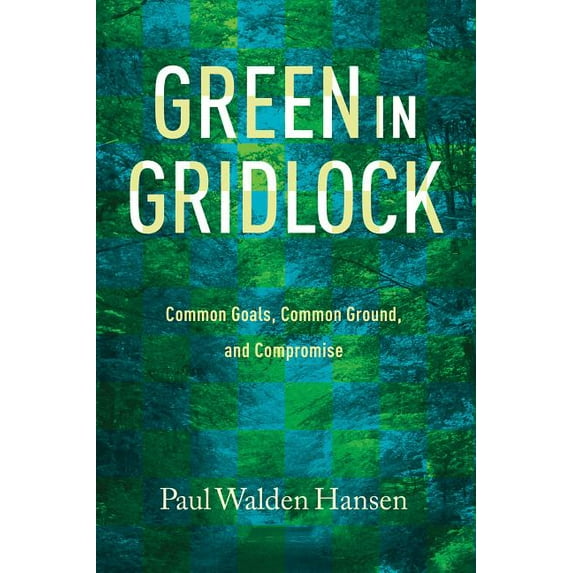
Kathie and Ed Cox Jr. Books on Conservation Leadership, sponsored by The Meadows Center for Water and the Environment, Texas State University: Green in Gridlock : Common Goals, Common Ground, and Compromise (Paperback)
(No ratings yet)
Key item features
Facing one of the most dangerous conservation crises in history—acid rain—lawmakers, industry leaders, and activists embraced an attitude of civil engagement that sought common ground and acceptance of compromise solutions on all sides. As a result, they achieved a spectacular outcome. This approach was also at work when another planet-threatening event—ozone depletion—was reversed.
In Green in Gridlock, Paul Walden Hansen, the former head of the Izaak Walton League, takes stock of what has been accomplished and what has been squandered in the many environmental contests in which he was involved during his forty-year career as a conservationist. In seeking to identify the strategies that worked and to pinpoint why progress on so many important issues never materialized, Hansen realized that the most important predictor of success or failure was the willingness of opposing interests to find common ground and to compromise in order to attain mutually important goals.
Polling demonstrates that, overwhelmingly, Americans care about the environment but are less enthusiastic about environmentalists. Accordingly, Hansen issues a pointed critique for activism of the “rather fight than win” variety. But he is also critical of conservative interests that oppose environmental legislation as a matter of principle while forgetting that a long string of cost-effective environmental legislation from the Clean Air Act to the Wilderness Act—was passed by overwhelming bipartisan margins and signed into law by Republican presidents in the 1970s. Hansen makes a convincing case that thinking and acting ideologically rather than strategically is ultimately bad for the environment.
More than a simplistic call for civility or yet another admonition that we all “work together,” this book offers practical lessons and a positive vision from a seasoned veteran on how to create support instead of opposition, how to recognize natural allies, and how to acknowledge common purpose in the name of progress.
To learn more about The Meadows Center for Water and the Environment, sponsors of this book's series, please click here.
In Green in Gridlock, Paul Walden Hansen, the former head of the Izaak Walton League, takes stock of what has been accomplished and what has been squandered in the many environmental contests in which he was involved during his forty-year career as a conservationist. In seeking to identify the strategies that worked and to pinpoint why progress on so many important issues never materialized, Hansen realized that the most important predictor of success or failure was the willingness of opposing interests to find common ground and to compromise in order to attain mutually important goals.
Polling demonstrates that, overwhelmingly, Americans care about the environment but are less enthusiastic about environmentalists. Accordingly, Hansen issues a pointed critique for activism of the “rather fight than win” variety. But he is also critical of conservative interests that oppose environmental legislation as a matter of principle while forgetting that a long string of cost-effective environmental legislation from the Clean Air Act to the Wilderness Act—was passed by overwhelming bipartisan margins and signed into law by Republican presidents in the 1970s. Hansen makes a convincing case that thinking and acting ideologically rather than strategically is ultimately bad for the environment.
More than a simplistic call for civility or yet another admonition that we all “work together,” this book offers practical lessons and a positive vision from a seasoned veteran on how to create support instead of opposition, how to recognize natural allies, and how to acknowledge common purpose in the name of progress.
To learn more about The Meadows Center for Water and the Environment, sponsors of this book's series, please click here.
Specs
- Book formatPaperback
- Fiction/nonfictionNon-Fiction
- Publication dateJanuary, 2015
- Pages192
- Age range15 - 10 Years
- EditionReprint
Current price is USD$36.86
Price when purchased online
Out of stock
How do you want your item?
Out of stock
About this item
Product details
Facing one of the most dangerous conservation crises in history--acid rain--lawmakers, industry leaders, and activists embraced an attitude of civil engagement that sought common ground and acceptance of compromise solutions on all sides. As a result, they achieved a spectacular outcome. This approach was also at work when another planet-threatening event--ozone depletion--was reversed.
In Green in Gridlock, Paul Walden Hansen, the former head of the Izaak Walton League, takes stock of what has been accomplished and what has been squandered in the many environmental contests in which he was involved during his forty-year career as a conservationist. In seeking to identify the strategies that worked and to pinpoint why progress on so many important issues never materialized, Hansen realized that the most important predictor of success or failure was the willingness of opposing interests to find common ground and to compromise in order to attain mutually important goals.
Polling demonstrates that, overwhelmingly, Americans care about the environment but are less enthusiastic about environmentalists. Accordingly, Hansen issues a pointed critique for activism of the "rather fight than win" variety. But he is also critical of conservative interests that oppose environmental legislation as a matter of principle while forgetting that a long string of cost-effective environmental legislation from the Clean Air Act to the Wilderness Act--was passed by overwhelming bipartisan margins and signed into law by Republican presidents in the 1970s. Hansen makes a convincing case that thinking and acting ideologically rather than strategically is ultimately bad for the environment.
More than a simplistic call for civility or yet another admonition that we all "work together," this book offers practical lessons and a positive vision from a seasoned veteran on how to create support instead of opposition, how to recognize natural allies, and how to acknowledge common purpose in the name of progress.
To learn more about The Meadows Center for Water and the Environment, sponsors of this book's series, please click here.
In Green in Gridlock, Paul Walden Hansen, the former head of the Izaak Walton League, takes stock of what has been accomplished and what has been squandered in the many environmental contests in which he was involved during his forty-year career as a conservationist. In seeking to identify the strategies that worked and to pinpoint why progress on so many important issues never materialized, Hansen realized that the most important predictor of success or failure was the willingness of opposing interests to find common ground and to compromise in order to attain mutually important goals.
Polling demonstrates that, overwhelmingly, Americans care about the environment but are less enthusiastic about environmentalists. Accordingly, Hansen issues a pointed critique for activism of the "rather fight than win" variety. But he is also critical of conservative interests that oppose environmental legislation as a matter of principle while forgetting that a long string of cost-effective environmental legislation from the Clean Air Act to the Wilderness Act--was passed by overwhelming bipartisan margins and signed into law by Republican presidents in the 1970s. Hansen makes a convincing case that thinking and acting ideologically rather than strategically is ultimately bad for the environment.
More than a simplistic call for civility or yet another admonition that we all "work together," this book offers practical lessons and a positive vision from a seasoned veteran on how to create support instead of opposition, how to recognize natural allies, and how to acknowledge common purpose in the name of progress.
To learn more about The Meadows Center for Water and the Environment, sponsors of this book's series, please click here.
Facing one of the most dangerous conservation crises in history—acid rain—lawmakers, industry leaders, and activists embraced an attitude of civil engagement that sought common ground and acceptance of compromise solutions on all sides. As a result, they achieved a spectacular outcome. This approach was also at work when another planet-threatening event—ozone depletion—was reversed.
In Green in Gridlock, Paul Walden Hansen, the former head of the Izaak Walton League, takes stock of what has been accomplished and what has been squandered in the many environmental contests in which he was involved during his forty-year career as a conservationist. In seeking to identify the strategies that worked and to pinpoint why progress on so many important issues never materialized, Hansen realized that the most important predictor of success or failure was the willingness of opposing interests to find common ground and to compromise in order to attain mutually important goals.
Polling demonstrates that, overwhelmingly, Americans care about the environment but are less enthusiastic about environmentalists. Accordingly, Hansen issues a pointed critique for activism of the “rather fight than win” variety. But he is also critical of conservative interests that oppose environmental legislation as a matter of principle while forgetting that a long string of cost-effective environmental legislation from the Clean Air Act to the Wilderness Act—was passed by overwhelming bipartisan margins and signed into law by Republican presidents in the 1970s. Hansen makes a convincing case that thinking and acting ideologically rather than strategically is ultimately bad for the environment.
More than a simplistic call for civility or yet another admonition that we all “work together,” this book offers practical lessons and a positive vision from a seasoned veteran on how to create support instead of opposition, how to recognize natural allies, and how to acknowledge common purpose in the name of progress.
To learn more about The Meadows Center for Water and the Environment, sponsors of this book's series, please click here.
In Green in Gridlock, Paul Walden Hansen, the former head of the Izaak Walton League, takes stock of what has been accomplished and what has been squandered in the many environmental contests in which he was involved during his forty-year career as a conservationist. In seeking to identify the strategies that worked and to pinpoint why progress on so many important issues never materialized, Hansen realized that the most important predictor of success or failure was the willingness of opposing interests to find common ground and to compromise in order to attain mutually important goals.
Polling demonstrates that, overwhelmingly, Americans care about the environment but are less enthusiastic about environmentalists. Accordingly, Hansen issues a pointed critique for activism of the “rather fight than win” variety. But he is also critical of conservative interests that oppose environmental legislation as a matter of principle while forgetting that a long string of cost-effective environmental legislation from the Clean Air Act to the Wilderness Act—was passed by overwhelming bipartisan margins and signed into law by Republican presidents in the 1970s. Hansen makes a convincing case that thinking and acting ideologically rather than strategically is ultimately bad for the environment.
More than a simplistic call for civility or yet another admonition that we all “work together,” this book offers practical lessons and a positive vision from a seasoned veteran on how to create support instead of opposition, how to recognize natural allies, and how to acknowledge common purpose in the name of progress.
To learn more about The Meadows Center for Water and the Environment, sponsors of this book's series, please click here.
info:
We aim to show you accurate product information. Manufacturers, suppliers and others provide what you see here, and we have not verified it.
Specifications
Book format
Paperback
Fiction/nonfiction
Non-Fiction
Genre
Business & Economics/Economics - Macroeconomics
Publication date
January, 2015
Warranty
Warranty information
Please be aware that the warranty terms on items offered for sale by third party Marketplace sellers may differ from those displayed in this section (if any). To confirm warranty terms on an item offered for sale by a third party Marketplace seller, please use the 'Contact seller' feature on the third party Marketplace seller's information page and request the item's warranty terms prior to purchase.
Customer ratings & reviews
0 ratings|0 reviews
This item does not have any reviews yet

Related pages
- Mi Images
- Ninety Nine Nights
- Best Sellers In Biographies Of The Rich Famous
- Sal Or 120 Days Sodom 1975
- Clifton Webbdorothy Mcguirejean Negulesco&0more
- American 1822
- Cultural Heritage Biographies & Memoirs
- Business Biographies & Memoirs
- Personal Memoirs
- Historical Biographies & Memoirs
- Literary Biographies & Memoirs
- Reference Biographies & Memoirs