

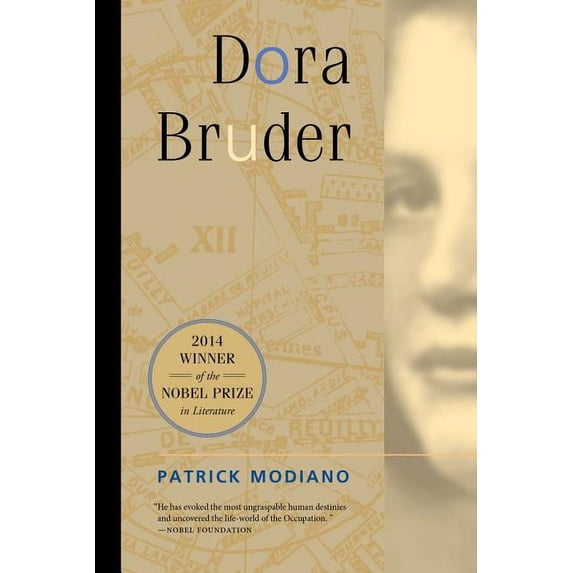
Hero image 0 of Dora Bruder (Edition 1) (Paperback), 0 of 1
Dora Bruder (Edition 1) (Paperback)
(No ratings yet)
Key item features
2014 Winner of the Nobel Prize in Literature
Patrick Modiano opens Dora Bruder by telling how in 1988 he stumbled across an ad in the personal columns of the New Year's Eve 1941 edition of Paris Soir. Placed by the parents of a 15-year-old Jewish girl, Dora Bruder, who had run away from her Catholic boarding school, the ad sets Modiano off on a quest to find out everything he can about Dora and why, at the height of German reprisals, she ran away on a bitterly cold day from the people hiding her. He finds only one other official mention of her name on a list of Jews deported from Paris to Auschwitz in September 1942.
With no knowledge of Dora Bruder aside from these two records, Modiano continues to dig for fragments from Dora's past. What little he discovers in official records and through remaining family members, becomes a meditation on the immense losses of the peroid—lost people, lost stories, and lost history. Modiano delivers a moving account of the ten-year investigation that took him back to the sights and sounds of Paris under the Nazi Occupation and the paranoia of the Pétain regime as he tries to find connections to Dora. In his efforts to exhume her from the past, Modiano realizes that he must come to terms with the specters of his own troubled adolescence. The result, a montage of creative and historical material, is Modiano's personal rumination on loss, both memoir and memorial.
Patrick Modiano opens Dora Bruder by telling how in 1988 he stumbled across an ad in the personal columns of the New Year's Eve 1941 edition of Paris Soir. Placed by the parents of a 15-year-old Jewish girl, Dora Bruder, who had run away from her Catholic boarding school, the ad sets Modiano off on a quest to find out everything he can about Dora and why, at the height of German reprisals, she ran away on a bitterly cold day from the people hiding her. He finds only one other official mention of her name on a list of Jews deported from Paris to Auschwitz in September 1942.
With no knowledge of Dora Bruder aside from these two records, Modiano continues to dig for fragments from Dora's past. What little he discovers in official records and through remaining family members, becomes a meditation on the immense losses of the peroid—lost people, lost stories, and lost history. Modiano delivers a moving account of the ten-year investigation that took him back to the sights and sounds of Paris under the Nazi Occupation and the paranoia of the Pétain regime as he tries to find connections to Dora. In his efforts to exhume her from the past, Modiano realizes that he must come to terms with the specters of his own troubled adolescence. The result, a montage of creative and historical material, is Modiano's personal rumination on loss, both memoir and memorial.
Specs
- Book formatPaperback
- Fiction/nonfictionFiction
- GenreLiterature & Fiction
- Publication dateNovember, 2014
- Pages128
- SubgenreHistorical
Current price is USD$16.96
Price when purchased online
 Free 90-day returns
How do you want your item?
Try 30 days for just $1! Choose a plan at checkout.
Ships to
Arrives by Thu, May 21
Sold and shipped by Walmart.com

Free 90-day returns

This item is gift eligible
More seller options (4)
Starting from $20.56

Try 30 days of Walmart+ for just $1!
T&C apply. Claim offer now
About this item
Product details
2014 Winner of the Nobel Prize in Literature Patrick Modiano opens Dora Bruder by telling how in 1988 he stumbled across an ad in the personal columns of the New Year's Eve 1941 edition of Paris Soir. Placed by the parents of a 15-year-old Jewish girl, Dora Bruder, who had run away from her Catholic boarding school, the ad sets Modiano off on a quest to find out everything he can about Dora and why, at the height of German reprisals, she ran away on a bitterly cold day from the people hiding her. He finds only one other official mention of her name on a list of Jews deported from Paris to Auschwitz in September 1942. With no knowledge of Dora Bruder aside from these two records, Modiano continues to dig for fragments from Dora's past. What little he discovers in official records and through remaining family members, becomes a meditation on the immense losses of the peroid--lost people, lost stories, and lost history. Modiano delivers a moving account of the ten-year investigation that took him back to the sights and sounds of Paris under the Nazi Occupation and the paranoia of the Pétain regime as he tries to find connections to Dora. In his efforts to exhume her from the past, Modiano realizes that he must come to terms with the specters of his own troubled adolescence. The result, a montage of creative and historical material, is Modiano's personal rumination on loss, both memoir and memorial.
2014 Winner of the Nobel Prize in Literature
Patrick Modiano opens Dora Bruder by telling how in 1988 he stumbled across an ad in the personal columns of the New Year's Eve 1941 edition of Paris Soir. Placed by the parents of a 15-year-old Jewish girl, Dora Bruder, who had run away from her Catholic boarding school, the ad sets Modiano off on a quest to find out everything he can about Dora and why, at the height of German reprisals, she ran away on a bitterly cold day from the people hiding her. He finds only one other official mention of her name on a list of Jews deported from Paris to Auschwitz in September 1942.
With no knowledge of Dora Bruder aside from these two records, Modiano continues to dig for fragments from Dora's past. What little he discovers in official records and through remaining family members, becomes a meditation on the immense losses of the peroid—lost people, lost stories, and lost history. Modiano delivers a moving account of the ten-year investigation that took him back to the sights and sounds of Paris under the Nazi Occupation and the paranoia of the Pétain regime as he tries to find connections to Dora. In his efforts to exhume her from the past, Modiano realizes that he must come to terms with the specters of his own troubled adolescence. The result, a montage of creative and historical material, is Modiano's personal rumination on loss, both memoir and memorial.
Patrick Modiano opens Dora Bruder by telling how in 1988 he stumbled across an ad in the personal columns of the New Year's Eve 1941 edition of Paris Soir. Placed by the parents of a 15-year-old Jewish girl, Dora Bruder, who had run away from her Catholic boarding school, the ad sets Modiano off on a quest to find out everything he can about Dora and why, at the height of German reprisals, she ran away on a bitterly cold day from the people hiding her. He finds only one other official mention of her name on a list of Jews deported from Paris to Auschwitz in September 1942.
With no knowledge of Dora Bruder aside from these two records, Modiano continues to dig for fragments from Dora's past. What little he discovers in official records and through remaining family members, becomes a meditation on the immense losses of the peroid—lost people, lost stories, and lost history. Modiano delivers a moving account of the ten-year investigation that took him back to the sights and sounds of Paris under the Nazi Occupation and the paranoia of the Pétain regime as he tries to find connections to Dora. In his efforts to exhume her from the past, Modiano realizes that he must come to terms with the specters of his own troubled adolescence. The result, a montage of creative and historical material, is Modiano's personal rumination on loss, both memoir and memorial.
info:
We aim to show you accurate product information. Manufacturers, suppliers and others provide what you see here, and we have not verified it.
Specifications
Book format
Paperback
Fiction/nonfiction
Fiction
Genre
Literature & Fiction
Publication date
November, 2014
Warranty
Warranty information
Please be aware that the warranty terms on items offered for sale by third party Marketplace sellers may differ from those displayed in this section (if any). To confirm warranty terms on an item offered for sale by a third party Marketplace seller, please use the 'Contact seller' feature on the third party Marketplace seller's information page and request the item's warranty terms prior to purchase.
Similar items you might like
Based on what customers bought
Sjur Gabriel and Two Friends, (Paperback) $19.69
 $1969current price $19.69
Sjur Gabriel and Two Friends, (Paperback)
Motherlands, (Paperback) $18.85
 $1885current price $18.85
Motherlands, (Paperback)
The Historian, (Paperback) $5.06
 $506current price $5.06
The Historian, (Paperback)
4133.6 out of 5 Stars. 413 reviewsCarryout, (Paperback) $19.95
 $1995current price $19.95
Carryout, (Paperback)
Disoriental, (Paperback) $11.07
 $1107current price $11.07
Disoriental, (Paperback)
Desiderium, (Paperback) $15.81
 $1581current price $15.81
Desiderium, (Paperback)
Seascraper, (Paperback) $17.00
 $1700current price $17.00
Seascraper, (Paperback)
Con, (Paperback) $15.33
 $1533current price $15.33
Con, (Paperback)
First Light The Uneven Road, Book 2, (Paperback) $18.21
 $1821current price $18.21
First Light The Uneven Road, Book 2, (Paperback)
Rebledo, (Paperback) $22.90
 $2290current price $22.90
Rebledo, (Paperback)
Butterfield Road, (Paperback) $17.36
 $1736current price $17.36
Butterfield Road, (Paperback)
Last Woman, (Paperback) $13.24
 $1324current price $13.24
Last Woman, (Paperback)
Now and Then, (Paperback) $18.94
 $1894current price $18.94
Now and Then, (Paperback)
Thunderwood (Paperback) $24.49
 $2449current price $24.49
Thunderwood (Paperback)
Vandringsmand, (Paperback) $20.95
 $2095current price $20.95
Vandringsmand, (Paperback)
Nobody's Girl, (Paperback) $25.05
 $2505current price $25.05
Nobody's Girl, (Paperback)
11 out of 5 Stars. 1 reviewsKillingly, (Paperback) $16.10
 $1610current price $16.10
Killingly, (Paperback)
We Do What We Must, (Paperback) $22.39
 $2239current price $22.39
We Do What We Must, (Paperback)
Outlook, (Paperback) $19.99
 $1999current price $19.99
Outlook, (Paperback)

Customer ratings & reviews
0 ratings|0 reviews
This item does not have any reviews yet
