

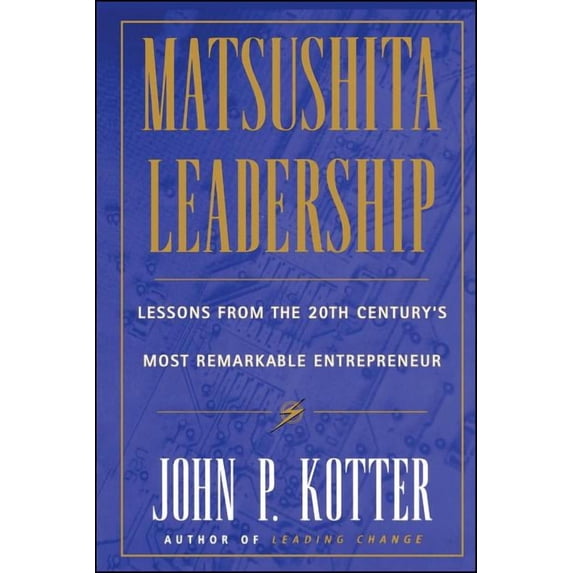
Hero image 0 of Matsushita: Lessons from the 20th Century's Most Remarkable Entrepreneur, (Hardcover), 0 of 1
Matsushita: Lessons from the 20th Century's Most Remarkable Entrepreneur, (Hardcover)
(No ratings yet)
Key item features
Publishers Weekly,Few Americans know that Matsushita Electric Co. is one of the largest exporters of electronic equipment to the U.S., under such brand names as Panasonic and JVC. Fewer still are aware that the $75-billion-a-year Japanese company was named after its founder, Konosuke Matsushita, the youngest child of a hard-pressed family, who left school at nine to work in a hibachi shop. This "analytical biography"-cum-management study tells how, in 1917, Matsushita began manufacturing electronic sockets and started what was to become a multibillion-dollar firm. By 1931, MEI was manufacturing more than 200 products with 886 employees. Even during the Depression, the firm expanded. The company devoted few resources to R&D, preferring to allow others to invent, but used more efficient production methods and better sales techniques to take market share from its rivals. Driven from his company after WWII, Matsushita was allowed to return in 1947, when he put it back on the fast track. Kotter (Leading Change) argues that Matsushita developed an intense desire to succeed as well as the ability to listen to new ideas and concepts. This insistence on growth manifested itself in two organizations he founded late in life: the PHP Institute (peace through happiness and prosperity) and the Matsushita Institute of Government and Management. Matsushita died in 1989 at the age of 94. Kotter has written a clear and compelling account of the factors that led to the businessman's remarkable success. (May) (c) Copyright PWxyz, LLC. All rights reserved,Publishers Weekly,Publishers Weekly,Few Americans know that Matsushita Electric Co. is one of the largest exporters of electronic equipment to the U.S., under such brand names as Panasonic and JVC. Fewer still are aware that the $75-billion-a-year Japanese company was named after its founder, Konosuke Matsushita, the youngest child of a hard-pressed family, who left school at nine to work in a hibachi shop. This "analytical biography"-cum-management study tells how, in 1917, Matsushita began manufacturing electronic sockets and started what was to become a multibillion-dollar firm. By 1931, MEI was manufacturing more than 200 products with 886 employees. Even during the Depression, the firm expanded. The company devoted few resources to R&D, preferring to allow others to invent, but used more efficient production methods and better sales techniques to take market share from its rivals. Driven from his company after WWII, Matsushita was allowed to return in 1947, when he put it back on the fast track. Kotter (Leading Change) argues that Matsushita developed an intense desire to succeed as well as the ability to listen to new ideas and concepts. This insistence on growth manifested itself in two organizations he founded late in life: the PHP Institute (peace through happiness and prosperity) and the Matsushita Institute of Government and Management. Matsushita died in 1989 at the age of 94. Kotter has written a clear and compelling account of the factors that led to the businessman's remarkable success. (May) (c) Copyright PWxyz, LLC. All rights reserved
Specs
- Book formatHardcover
- Fiction/nonfictionNon-Fiction
- GenreBiography & Memoirs
- Publication dateMay, 1997
- Pages320
- SubgenreBusiness
Current price is USD$21.86
Price when purchased online
 Free 90-day returns
How do you want your item?
Try 30 days for just $1! Choose a plan at checkout.
Ships to
Arrives by Wed, May 20
Sold and shipped by Walmart.com

Free 90-day returns

This item is gift eligible
More seller options (2)
Starting from $46.58

Try 30 days of Walmart+ for just $1!
T&C apply. Claim offer now
About this item
Product details
He was one of the most inspirational role models of all time. Thrown into poverty at age four, Konosuke Matsushita (Mat-SOSH-ta) struggled with the early deaths of family members, an apprenticeship which demanded sixteen-hour days at age nine, all the problems associated with starting a business with neither money nor connections, the death of his only son, the Great Depression, the horror of World War II in Japan, and more. Yet John P. Kotter shows in this fascinating and instructive book how, instead of being ground down by these hardships, Matsushita grew to be a fabulously successful entrepreneur and business leader, the founder of Japan's General Electric: the $65 billion a year Matsushita Electric Corporation. His accomplishments as a leader, author, educator, philanthropist, and management innovator are astonishing, and outshine even Soichiro Honda, J.C. Penney, Sam Walton, and Henry Ford. In this immensely readable book, Kotter relates how Matsushita created a large business, invented management practices that are increasingly being used today, helped lead his country's economic miracle after World War II wrote dozens of books in his latter years, founded a graduate school of leadership, created Japan's version of a Nobel Prize, and gave away hundreds of millions to good causes. The Matsushita story expands our notion of the possible, even for a sickly youngster who did not have the benefit of a privileged background, education, good looks, or a charismatic presence. It tells us much about leadership, entrepreneurship, a drive for lifelong learning, and their roots. It demonstrates the power of a longterm outlook, idealistic goals, and humility in the face of great success. Matsushita Leadership is both a biography and a set of lessons for careers and corporations in the 21st century. An inspirational story and a business primer, the implications are powerful, for organizations and for living a meaningful life.
Publishers Weekly,Few Americans know that Matsushita Electric Co. is one of the largest exporters of electronic equipment to the U.S., under such brand names as Panasonic and JVC. Fewer still are aware that the $75-billion-a-year Japanese company was named after its founder, Konosuke Matsushita, the youngest child of a hard-pressed family, who left school at nine to work in a hibachi shop. This "analytical biography"-cum-management study tells how, in 1917, Matsushita began manufacturing electronic sockets and started what was to become a multibillion-dollar firm. By 1931, MEI was manufacturing more than 200 products with 886 employees. Even during the Depression, the firm expanded. The company devoted few resources to R&D, preferring to allow others to invent, but used more efficient production methods and better sales techniques to take market share from its rivals. Driven from his company after WWII, Matsushita was allowed to return in 1947, when he put it back on the fast track. Kotter (Leading Change) argues that Matsushita developed an intense desire to succeed as well as the ability to listen to new ideas and concepts. This insistence on growth manifested itself in two organizations he founded late in life: the PHP Institute (peace through happiness and prosperity) and the Matsushita Institute of Government and Management. Matsushita died in 1989 at the age of 94. Kotter has written a clear and compelling account of the factors that led to the businessman's remarkable success. (May) (c) Copyright PWxyz, LLC. All rights reserved,Publishers Weekly,Publishers Weekly,Few Americans know that Matsushita Electric Co. is one of the largest exporters of electronic equipment to the U.S., under such brand names as Panasonic and JVC. Fewer still are aware that the $75-billion-a-year Japanese company was named after its founder, Konosuke Matsushita, the youngest child of a hard-pressed family, who left school at nine to work in a hibachi shop. This "analytical biography"-cum-management study tells how, in 1917, Matsushita began manufacturing electronic sockets and started what was to become a multibillion-dollar firm. By 1931, MEI was manufacturing more than 200 products with 886 employees. Even during the Depression, the firm expanded. The company devoted few resources to R&D, preferring to allow others to invent, but used more efficient production methods and better sales techniques to take market share from its rivals. Driven from his company after WWII, Matsushita was allowed to return in 1947, when he put it back on the fast track. Kotter (Leading Change) argues that Matsushita developed an intense desire to succeed as well as the ability to listen to new ideas and concepts. This insistence on growth manifested itself in two organizations he founded late in life: the PHP Institute (peace through happiness and prosperity) and the Matsushita Institute of Government and Management. Matsushita died in 1989 at the age of 94. Kotter has written a clear and compelling account of the factors that led to the businessman's remarkable success. (May) (c) Copyright PWxyz, LLC. All rights reserved
info:
We aim to show you accurate product information. Manufacturers, suppliers and others provide what you see here, and we have not verified it.
Specifications
Book format
Hardcover
Fiction/nonfiction
Non-Fiction
Genre
Biography & Memoirs
Publication date
May, 1997
Warranty
Warranty information
Please be aware that the warranty terms on items offered for sale by third party Marketplace sellers may differ from those displayed in this section (if any). To confirm warranty terms on an item offered for sale by a third party Marketplace seller, please use the 'Contact seller' feature on the third party Marketplace seller's information page and request the item's warranty terms prior to purchase.
Similar items you might like
Based on what customers bought
Our Deportment, (Hardcover) $36.22
 $3622current price $36.22
Our Deportment, (Hardcover)
A Sense of Urgency (Hardcover) $9.86 Was $11.35
 $986current price $9.86, Was $11.35$11.35
A Sense of Urgency (Hardcover)
25 out of 5 Stars. 2 reviewsPower and Influence, (Paperback) $6.94 Was $16.95
 $694current price $6.94, Was $16.95$16.95
Power and Influence, (Paperback)
15 out of 5 Stars. 1 reviewsBest seller The Widow: A Novel (Hardcover) $22.38
Best seller $2238current price $22.38
The Widow: A Novel (Hardcover)
3214.7 out of 5 Stars. 321 reviewsBest seller Alchemised (Hardcover) $24.48
Best seller $2448current price $24.48
Alchemised (Hardcover)
1454.6 out of 5 Stars. 145 reviewsA View of The Republic (Hardcover) $21.95
 $2195current price $21.95
A View of The Republic (Hardcover)
Annaka, (Hardcover) $21.91
 $2191current price $21.91
Annaka, (Hardcover)
Incineration (Hardcover) $26.95
 $2695current price $26.95
Incineration (Hardcover)
Against All Odds: A Memoir, (Hardcover) $23.33
 $2333current price $23.33
Against All Odds: A Memoir, (Hardcover)
Leading Change (Hardcover) by John P Kotter $9.49 Was $10.99
 $949current price $9.49, Was $10.99$10.99
Leading Change (Hardcover) by John P Kotter
Looking Back, (Hardcover) $26.69
 $2669current price $26.69
Looking Back, (Hardcover)
Life of an Ordinary Man, (Hardcover) $21.99
 $2199current price $21.99
Life of an Ordinary Man, (Hardcover)
School and Society, (Hardcover) $21.99
 $2199current price $21.99
School and Society, (Hardcover)
5 Dysfunctions of a Company (Hardcover) $24.06
 $2406current price $24.06
5 Dysfunctions of a Company (Hardcover)
The Intelligent Leader (Hardcover) $24.96
 $2496current price $24.96
The Intelligent Leader (Hardcover)
Alone with the President, (Hardcover) $23.13
 $2313current price $23.13
Alone with the President, (Hardcover)
The Workshop and the World, (Hardcover) $22.01
 $2201current price $22.01
The Workshop and the World, (Hardcover)

Customer ratings & reviews
0 ratings|0 reviews
This item does not have any reviews yet
