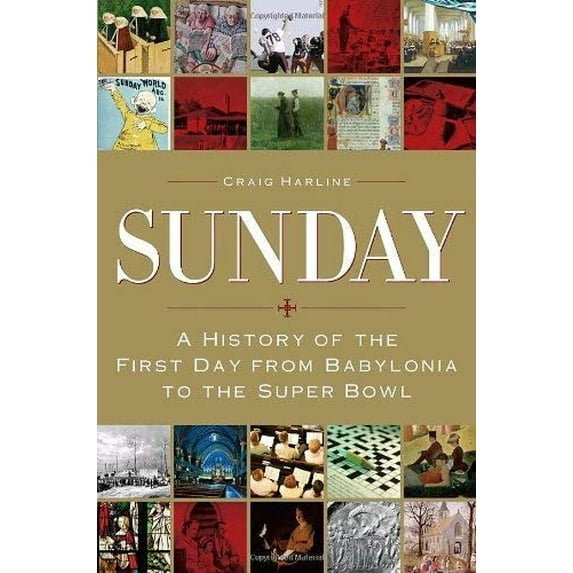
The mere mention of Sunday will immediately conjure up a rich mix of memories, associations, and ideas for most anyone of any age. Whatever we think of-- be it attending church, reading a bulky newspaper, eating brunch, or watching football-- Sunday occupies a unique place in Western civilization. But how did we come to have a day with such a singular set of traditions? Here, historian Craig Harline examines Sunday from its ancient beginnings to recent America in a fascinating blend of facts and anecdotes. For early Christians, the first day of the week was a time to celebrate the liturgy and observe the Resurrection. But over time, Sunday in the Western world took on still other meanings and rituals, especially in the addition of both rest and recreation to the day' s activities. Harline illuminates these changes in enlightening profiles of Sunday in medieval Catholic England, Sunday in the Reformation, and Sunday in nineteenth-century France-- home of the most envied and sometimes despised Sunday of the modern world. He continues with moving portraits of soldiers and civilians observing Sunday during World War I, examines the quiet Sunday of England in the 1930s, and concludes with the convergence of various European traditions in the American Sunday, which also adds some distinctly original habits of its own, including in the realms of commerce and professional sports. With engaging prose and scholarly integrity, Sunday is an entertaining and long-overdue look at a significant hallmark of Western culture.
Publishers Weekly,Harline, an acclaimed historian and author of A Bishop's Tale, adopts a brilliant day-in-the-life strategy to explore the history of the Christian Sabbath in various cultures and times. Rather than attempting a sweeping and methodically exhaustive approach, Harline investigates the topic episodically, portraying, for example, a medieval English Sunday in one chapter, a decadent fin-de-siecle Parisian Sunday in another, and a 1950s American Sunday in the last and longest chapter. Along the way we also visit the earliest Roman Christians; a Dutch Reformed family in the 17th century; some battle-weary soldiers during World War I; and England again during the interwar years. Harline is a marvelous storyteller, combing the diaries, popular periodicals and letters of the various periods to bring the people and their times to life. There are some surprising revelations; until the fifth century, Sunday was a day of worship but also one of work, as early Christian leaders were anxious to distinguish it from the Jewish Sabbath. And Sunday has sometimes given rise to unlikely leisure pastimes: in Holland 400 years ago, it was the preferred day for courting; and in America today, it seems sacrosanct for professional sports. Harline's engaging and wonderfully written popular history deserves a wide readership. (Mar. 27) (c) Copyright PWxyz, LLC. All rights reserved