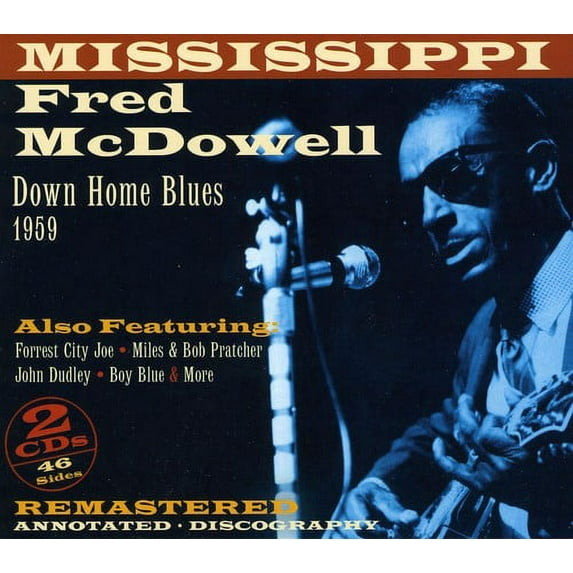
In her autobiography, Shirley Collins tells of her first meeting with Fred McDowell at the end of a hot September day in Tennessee in 1959. 'Towards dusk, a slight figure in dungarees and carrying a guitar appeared out of the trees and walked into the clearing... his name was Fred McDowell, he was a fifty-year-old farmer and he'd been picking cotton all day... Fred started to play bottleneck guitar, a shimmering and metallic sound. His singing was quiet but strong and with a heart-stopping intensity. By the time he'd finished his first blues, we knew we were in the presence of a great and extraordinary musician.' This was indeed an historic moment. By this time, the commonly-held perception was that blues was dead. Collectors were unaware that older members of the black community still clung to the music that had sustained them for so long. The depth of McDowell's repertoire was profound. Not only did he perform unique interpretations of long-established blues songs but he had original material of a comparable quality. When a handful of the recordings made that September night were issued a year later, the blues world was astonished at McDowell's modest mastery. His timely arrival would help fuel the emergence of a blues boom that would change the nature of popular music. Here's the astonishing sound that has haunted and inspired modern bluesmen in almost equal measure.