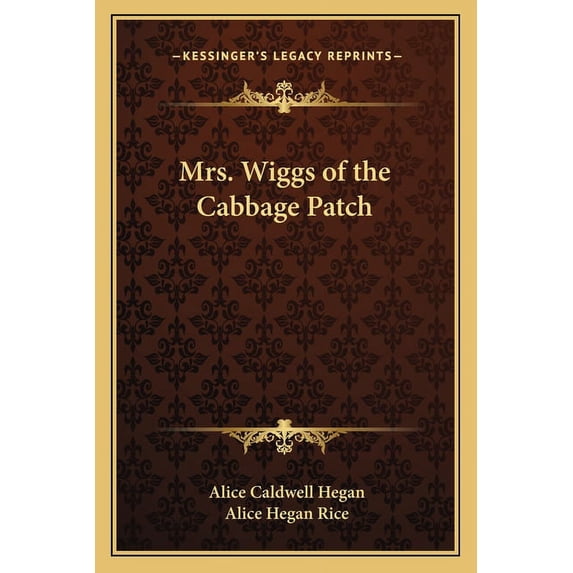
""Mrs. Wiggs of the Cabbage Patch"" is a heartwarming novel written by Alice Caldwell Hegan. The story is set in a poor neighborhood in Louisville, Kentucky, in the early 1900s. Mrs. Wiggs is a plucky, hardworking widow who lives in a ramshackle house with her five children and a few other people who have nowhere else to go. Despite their difficult circumstances, the Wiggs family is full of love, humor, and hope, and they find ways to make the best of their situation. The novel follows Mrs. Wiggs and her family as they face a series of challenges, including illness, poverty, and the threat of losing their home. Along the way, they meet a cast of colorful characters, including a wealthy philanthropist, a kindly doctor, and a mischievous young boy named Lovey Mary. Through it all, Mrs. Wiggs remains a steadfast and resourceful mother, determined to provide for her children and give them a better life.""Mrs. Wiggs of the Cabbage Patch"" is a classic of American literature, beloved for its portrayal of a strong and resilient family in the face of adversity. With its vivid characters, charming humor, and touching moments, this novel is sure to capture the hearts of readers young and old.1901. In the shanty town called the Cabbage Patch, Mrs. Wiggs scrabbles for survival with her brood of five children. The story begins: My, but it's nice an' cold this morning'! The thermometer's done fell up to zero! Mrs. Wiggs made the statement as cheerfully as if her elbows were not sticking out through the boy's coat that she wore, or her teeth chattering in her head like a pair of castanets. But, then, Mrs. Wiggs was a philosopher, and the sum and substance of her philosophy lay in keeping the dust off her rose-colored spectacles. When Mr. Wiggs traveled to eternity by the alcohol route, she buried his faults with him, and for want of better virtues to extol she always laid stress on the fine hand he wrote. It was the same way when their little country home burned and she had to come to the city to seek work; her one comment was: Thank God, it was the pig instid of the baby that was burned. See other titles by this author available from Kessinger Publishing.This scarce antiquarian book is a facsimile reprint of the old original and may contain some imperfections such as library marks and notations. Because we believe this work is culturally important, we have made it available as part of our commitment for protecting, preserving, and promoting the world's literature in affordable, high quality, modern editions, that are true to their original work.