

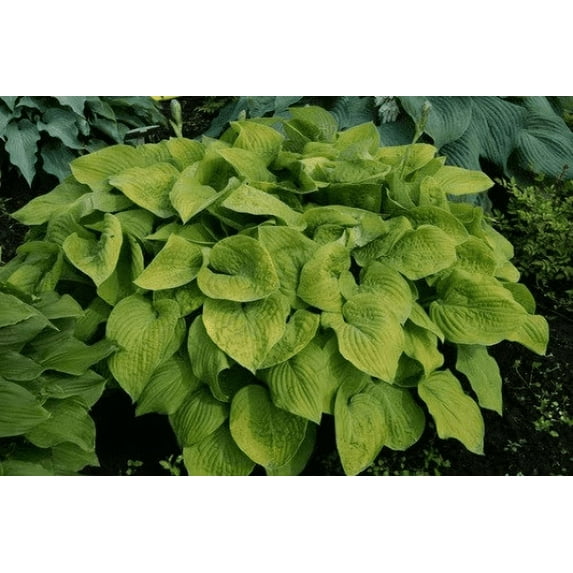
Hero image 0 of 3 August Moon Hosta Bareroot, 0 of 4
3 August Moon Hosta Bareroot
(No ratings yet)
Key item features
- Spread: 42.0 Inches
- Scape Height: 24.0 Inches
- Hardiness Zones: 3,4,5,6,7,8,9
- Flower Color: Purple shades
- Foliage Color: Yellow shades
- Sunlight: Full Sun (> 6 hrs. Direct Sun)
- Part Shade (4-6 hrs. Direct Sun)
- Full Shade (< 4 hrs. Direct Sun)
- Water Requirements: Average Water Needs
- Consistent Water Needs
- Soil Quality: Average Soil Quality
- Fertile Soil Quality
- Soil Chemistry:
- Acidic Soil (pH < 7.0)
- Neutral Soil (pH = 7.0)
- Bloomtime:
- Midsummer
- Late Summer
- Attracts Wings: Attracts Hummingbirds
- Growth Rate: Medium
- Growing guide:
- light/watering
- drought-tolerant once established these plants are at their best in evenly moist soil in partial shade, although a very few will tolerate full sun with sufficient water. Once established, hostas can handle drought and will compete successfully with tree roots in the north, but need regular watering in the south.
- fertilizer/soil + pH/zone
- Hostas thrive in average, even, and damp soils that are slightly acidic and will benefit from a light application of fertilizer in early spring. These low-maintenance plants can be ignored and they will still perform. However, to get the most out of them, provide deep rich soil with consistent watering along with occasional side dressing of compost or aged manure. An organic mulch is appreciated but keep it away from the crowns. Zone 3-9.
- reflowering
- Very few varieties will reflower; cut flower spikes off at theri base when blooming is over.
- diving/transplanting
- These forgiving plants are best divided in spring when the new leaves are still furled up, but both division and transplanting are successful throughout the season if attention is paid to through follow-up watering.
- end-of-season-care:
- Foliage should be cut back in the fall to eliminate cover for overwintering slugs but this can also be done in the spring.
Specs
- Plant nameAugust Moon Hosta
- Light needsFull Sun
- Plant height20 in
- Plant lifecyclePerennial
- Usda hardiness zone3, 4, 5, 6, 7, 8, 9
- BrandDaylily Nursery
Current price is USD$19.95
Price when purchased online
Out of stock
How do you want your item?
Out of stock
About this item
Product details
Large, heart-shaped leaves are bright gold to chartreuse depending on the amount of sun exposure They are corrugated, wavy, and of good substance making them slug resistant Tolerates full sun which will intensify the gold color of the leaves Pale lavender, open bell-shaped flowers are prolifically produced on 24" scapes in mid to late summer Hostas are exceedingly popular perennials in today's gardens due to their versatility in the landscape. Their subtle colors, tall flower scapes, and broad, coarse leaves fill a niche in garden designs that few other plants can achieve. Their large leaves provide excellent coverage for dying bulb foliage. Hostas also grow well in city environments where the air may be polluted by car exhaust, etc. Height: 20.0 Inches
- Spread: 42.0 Inches
- Scape Height: 24.0 Inches
- Hardiness Zones: 3,4,5,6,7,8,9
- Flower Color: Purple shades
- Foliage Color: Yellow shades
- Sunlight: Full Sun (> 6 hrs. Direct Sun)
- Part Shade (4-6 hrs. Direct Sun)
- Full Shade (< 4 hrs. Direct Sun)
- Water Requirements: Average Water Needs
- Consistent Water Needs
- Soil Quality: Average Soil Quality
- Fertile Soil Quality
- Soil Chemistry:
- Acidic Soil (pH < 7.0)
- Neutral Soil (pH = 7.0)
- Bloomtime:
- Midsummer
- Late Summer
- Attracts Wings: Attracts Hummingbirds
- Growth Rate: Medium
- Growing guide:
- light/watering
- drought-tolerant once established these plants are at their best in evenly moist soil in partial shade, although a very few will tolerate full sun with sufficient water. Once established, hostas can handle drought and will compete successfully with tree roots in the north, but need regular watering in the south.
- fertilizer/soil + pH/zone
- Hostas thrive in average, even, and damp soils that are slightly acidic and will benefit from a light application of fertilizer in early spring. These low-maintenance plants can be ignored and they will still perform. However, to get the most out of them, provide deep rich soil with consistent watering along with occasional side dressing of compost or aged manure. An organic mulch is appreciated but keep it away from the crowns. Zone 3-9.
- reflowering
- Very few varieties will reflower; cut flower spikes off at theri base when blooming is over.
- diving/transplanting
- These forgiving plants are best divided in spring when the new leaves are still furled up, but both division and transplanting are successful throughout the season if attention is paid to through follow-up watering.
- end-of-season-care:
- Foliage should be cut back in the fall to eliminate cover for overwintering slugs but this can also be done in the spring.
info:
We aim to show you accurate product information. Manufacturers, suppliers and others provide what you see here, and we have not verified it.
Specifications
Plant name
August Moon Hosta
Light needs
Full Sun
Plant height
20 in
Plant lifecycle
Perennial
Warranty
Warranty information
Please be aware that the warranty terms on items offered for sale by third party Marketplace sellers may differ from those displayed in this section (if any). To confirm warranty terms on an item offered for sale by a third party Marketplace seller, please use the 'Contact seller' feature on the third party Marketplace seller's information page and request the item's warranty terms prior to purchase.
Customer ratings & reviews
0 ratings|0 reviews
This item does not have any reviews yet
