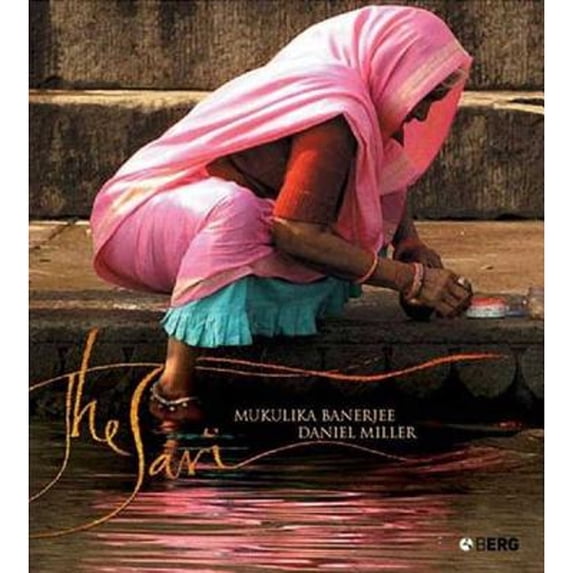
Drawing on experiences from villagers in Bengal to scientists in Bangalore, this book explores the beauty, adaptability and personality of India's most iconic garment. Banerjee and Miller show why the sari has survived and indeed flourished as everyday dress when most of the world has adopted western clothing. Their book presents both an intimate portrait of the lives of women in India today and an alternative way for us all to think about our relationship to the clothes we wear. A new bride is unable to move from her husband's motorbike as her sari comes undone. A young man wonders how he will cope with the saris complicated folds in a romantic clinch. A villager's soft, worn sari is her main comfort during a fever. Throughout the book, these and other remarkable stories place the sari at the heart of relationships between mothers and infants, mistresses and maids, designers and soap opera stars. Illustrated and rich in personal testimony, The Sari expertly shows how one of the world's most simply constructed garments can reveal the intricate design of life in modern India.
Publishers Weekly,Banerjee and Miller, a lecturer and a professor, respectively, in the anthropology department at University College London, examine five meters of fabric in their intricate study. Their academic background is only bothersome in the unnecessary and distracting footnotes, whose information could have easily been incorporated into the text. Otherwise, it's an enthralling celebration, exploration and analysis-through women's voices-of India's most symbolic garment. The authors quickly explain that their book isn't a primer on colors, types, draping and tying; rather, it uses interviews and research to explore the relationship between women and their saris. It covers the traditions and politics of acquisition, whether by a girl, a bride-to-be or a maid receiving a hand-me-down from her mistress; of learning to wear it; of storage and cleaning; and of sexuality. These implications combine with ever-present practical considerations: "She must try to avoid the frequent injuries that arise from getting the sari caught in doors, machines, or worst of all, the stove. But to achieve social respectability, she must learn to move, drape, sit, fold, pleat and swirl the sari in an appropriate way." One chapter takes readers through an executive woman's morning sari decision making and how she creatively makes her selection with specific visual (and political) goals in mind. The women's stories enrich throughout, successfully and unforgettably bringing the sari alive. Banerjee and Miller have provided an intimate peek into the culture of Indian women, and their research shows that although the subject is specific to a particular culture, its concerns are universal to all women. Photos. (Oct. 27) (c) Copyright PWxyz, LLC. All rights reserved