

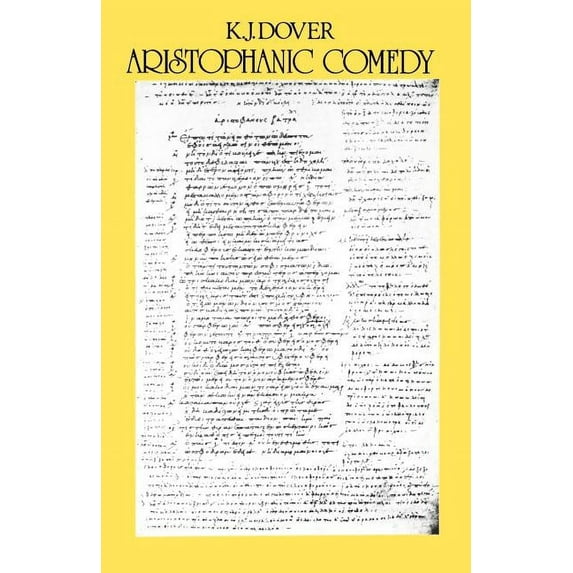
Hero image 0 of Aristophanic Comedy (Edition 1) (Paperback), 0 of 1
Aristophanic Comedy (Edition 1) (Paperback)
(No ratings yet)
Key item features
Professor Dover's newest book is designed for those who are interested in the history of comedy as an art form but who are not necessarily familiar with the Greek language.
The eleven surviving plays of Aristophanes are treated as representative of a genre. Old Attic Comedy, which was artistically and intellectually homogeneous and gave expression to the spirit of Athenian society in the late fifth and early fourth centuries B.C. Aristophanes is regarded primarily not as a reformer or propagandist but as a dramatist who sought, in competition with his rivals, to win the esteem both of the general public and of the cultivated and critical minority. He succeeded in this effort by making people laugh, and the book pays more attention than has generally been paid to the technical means, whether of language or of situation, on which Aristophanes' humor depends. Particular emphasis is laid on his indifference-positively assisted by the physical limitations of the Greek theatre and the conditions of the Athenian dramatic festivals-to the maintenance of continuous “dramatic illusion” or to the provision of a dramatic event with the antecedents and consequences which might logically be expected. More importance is attached to Aristophanes' adoption of popular attitudes and beliefs, to his creation of uninhibited characters with which the spectators could identify themselves, and to his acceptance of the comic poet's traditional role as a mordant but jocular critic of morals, than to any identifiable and consistent elements in his political standpoint.
The eleven surviving plays of Aristophanes are treated as representative of a genre. Old Attic Comedy, which was artistically and intellectually homogeneous and gave expression to the spirit of Athenian society in the late fifth and early fourth centuries B.C. Aristophanes is regarded primarily not as a reformer or propagandist but as a dramatist who sought, in competition with his rivals, to win the esteem both of the general public and of the cultivated and critical minority. He succeeded in this effort by making people laugh, and the book pays more attention than has generally been paid to the technical means, whether of language or of situation, on which Aristophanes' humor depends. Particular emphasis is laid on his indifference-positively assisted by the physical limitations of the Greek theatre and the conditions of the Athenian dramatic festivals-to the maintenance of continuous “dramatic illusion” or to the provision of a dramatic event with the antecedents and consequences which might logically be expected. More importance is attached to Aristophanes' adoption of popular attitudes and beliefs, to his creation of uninhibited characters with which the spectators could identify themselves, and to his acceptance of the comic poet's traditional role as a mordant but jocular critic of morals, than to any identifiable and consistent elements in his political standpoint.
Specs
- Book formatPaperback
- Fiction/nonfictionNon-Fiction
- Publication dateMarch, 1972
- Pages280
- SubgenreAncient & Classical
- Series titleNo Series
Current price is USD$33.95
Price when purchased online
 Free 90-day returns
How do you want your item?
Try 30 days for just $1! Choose a plan at checkout.
Ships to
Arrives by Wed, May 20
Sold and shipped by Walmart.com

Free 90-day returns

This item is gift eligible
More seller options (2)
Starting from $40.94

Try 30 days of Walmart+ for just $1!
T&C apply. Claim offer now
About this item
Product details
Professor Dover's newest book is designed for those who are interested in the history of comedy as an art form but who are not necessarily familiar with the Greek language.
The eleven surviving plays of Aristophanes are treated as representative of a genre. Old Attic Comedy, which was artistically and intellectually homogeneous and gave expression to the spirit of Athenian society in the late fifth and early fourth centuries B.C. Aristophanes is regarded primarily not as a reformer or propagandist but as a dramatist who sought, in competition with his rivals, to win the esteem both of the general public and of the cultivated and critical minority. He succeeded in this effort by making people laugh, and the book pays more attention than has generally been paid to the technical means, whether of language or of situation, on which Aristophanes' humor depends. Particular emphasis is laid on his indifference-positively assisted by the physical limitations of the Greek theatre and the conditions of the Athenian dramatic festivals-to the maintenance of continuous "dramatic illusion" or to the provision of a dramatic event with the antecedents and consequences which might logically be expected. More importance is attached to Aristophanes' adoption of popular attitudes and beliefs, to his creation of uninhibited characters with which the spectators could identify themselves, and to his acceptance of the comic poet's traditional role as a mordant but jocular critic of morals, than to any identifiable and consistent elements in his political standpoint.
The eleven surviving plays of Aristophanes are treated as representative of a genre. Old Attic Comedy, which was artistically and intellectually homogeneous and gave expression to the spirit of Athenian society in the late fifth and early fourth centuries B.C. Aristophanes is regarded primarily not as a reformer or propagandist but as a dramatist who sought, in competition with his rivals, to win the esteem both of the general public and of the cultivated and critical minority. He succeeded in this effort by making people laugh, and the book pays more attention than has generally been paid to the technical means, whether of language or of situation, on which Aristophanes' humor depends. Particular emphasis is laid on his indifference-positively assisted by the physical limitations of the Greek theatre and the conditions of the Athenian dramatic festivals-to the maintenance of continuous "dramatic illusion" or to the provision of a dramatic event with the antecedents and consequences which might logically be expected. More importance is attached to Aristophanes' adoption of popular attitudes and beliefs, to his creation of uninhibited characters with which the spectators could identify themselves, and to his acceptance of the comic poet's traditional role as a mordant but jocular critic of morals, than to any identifiable and consistent elements in his political standpoint.
Professor Dover's newest book is designed for those who are interested in the history of comedy as an art form but who are not necessarily familiar with the Greek language.
The eleven surviving plays of Aristophanes are treated as representative of a genre. Old Attic Comedy, which was artistically and intellectually homogeneous and gave expression to the spirit of Athenian society in the late fifth and early fourth centuries B.C. Aristophanes is regarded primarily not as a reformer or propagandist but as a dramatist who sought, in competition with his rivals, to win the esteem both of the general public and of the cultivated and critical minority. He succeeded in this effort by making people laugh, and the book pays more attention than has generally been paid to the technical means, whether of language or of situation, on which Aristophanes' humor depends. Particular emphasis is laid on his indifference-positively assisted by the physical limitations of the Greek theatre and the conditions of the Athenian dramatic festivals-to the maintenance of continuous “dramatic illusion” or to the provision of a dramatic event with the antecedents and consequences which might logically be expected. More importance is attached to Aristophanes' adoption of popular attitudes and beliefs, to his creation of uninhibited characters with which the spectators could identify themselves, and to his acceptance of the comic poet's traditional role as a mordant but jocular critic of morals, than to any identifiable and consistent elements in his political standpoint.
The eleven surviving plays of Aristophanes are treated as representative of a genre. Old Attic Comedy, which was artistically and intellectually homogeneous and gave expression to the spirit of Athenian society in the late fifth and early fourth centuries B.C. Aristophanes is regarded primarily not as a reformer or propagandist but as a dramatist who sought, in competition with his rivals, to win the esteem both of the general public and of the cultivated and critical minority. He succeeded in this effort by making people laugh, and the book pays more attention than has generally been paid to the technical means, whether of language or of situation, on which Aristophanes' humor depends. Particular emphasis is laid on his indifference-positively assisted by the physical limitations of the Greek theatre and the conditions of the Athenian dramatic festivals-to the maintenance of continuous “dramatic illusion” or to the provision of a dramatic event with the antecedents and consequences which might logically be expected. More importance is attached to Aristophanes' adoption of popular attitudes and beliefs, to his creation of uninhibited characters with which the spectators could identify themselves, and to his acceptance of the comic poet's traditional role as a mordant but jocular critic of morals, than to any identifiable and consistent elements in his political standpoint.
info:
We aim to show you accurate product information. Manufacturers, suppliers and others provide what you see here, and we have not verified it.
Specifications
Book format
Paperback
Fiction/nonfiction
Non-Fiction
Genre
Art, Music, and Photography
Publication date
March, 1972
Warranty
Warranty information
Please be aware that the warranty terms on items offered for sale by third party Marketplace sellers may differ from those displayed in this section (if any). To confirm warranty terms on an item offered for sale by a third party Marketplace seller, please use the 'Contact seller' feature on the third party Marketplace seller's information page and request the item's warranty terms prior to purchase.
Similar items you might like
Based on what customers bought
50+ bought since yesterday Project Hail Mary: A Novel (Paperback) $16.50
50+ bought since yesterday $1650current price $16.50
Project Hail Mary: A Novel (Paperback)
1094.8 out of 5 Stars. 109 reviewsBest seller The Housemaid Is Watching (Paperback) $8.25
Best seller $825current price $8.25
The Housemaid Is Watching (Paperback)
1704.7 out of 5 Stars. 170 reviewsPérdida Ambigua, La, (Paperback) $20.95
 $2095current price $20.95
Pérdida Ambigua, La, (Paperback)
Best seller Dungeon Crawler Carl (Paperback) $14.98
Best seller $1498current price $14.98
Dungeon Crawler Carl (Paperback)
285 out of 5 Stars. 28 reviewsBest seller A Court of Mist and Fury (Paperback) $9.39
Best seller $939current price $9.39
A Court of Mist and Fury (Paperback)
3934.9 out of 5 Stars. 393 reviewsBest seller Kingdom of Ash (Paperback) $12.70
Best seller $1270current price $12.70
Kingdom of Ash (Paperback)
994.9 out of 5 Stars. 99 reviewsBest seller Good Spirits: A Novel (Paperback) $8.50 Was $11.40
Best seller $850current price $8.50, Was $11.40$11.40
Good Spirits: A Novel (Paperback)
194.5 out of 5 Stars. 19 reviewsTwo Can Play (Paperback) $10.30
 $1030current price $10.30
Two Can Play (Paperback)
23 out of 5 Stars. 2 reviewsThe Weaving, (Paperback) $15.06
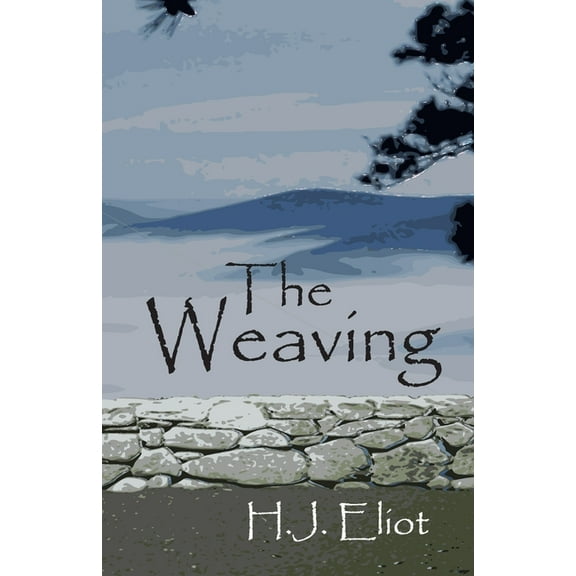 $1506current price $15.06
The Weaving, (Paperback)
Best seller It Starts with Us: A Novel (Paperback) $4.88
Best seller 2 optionsAvailable in additional 2 options$488current price $4.88
It Starts with Us: A Novel (Paperback)
3514.7 out of 5 Stars. 351 reviewsMythmatched Mythmatchedlets, (Paperback) $20.69
 $2069current price $20.69
Mythmatched Mythmatchedlets, (Paperback)
Best seller The Book of Bill Limited Collector's Edition (Hardcover) $22.01
Best seller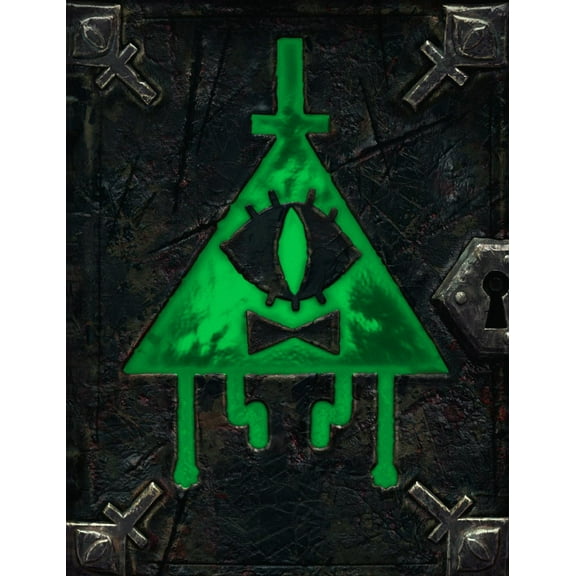 $2201current price $22.01
The Book of Bill Limited Collector's Edition (Hardcover)
804.5 out of 5 Stars. 80 reviewsMelissa, (Paperback) $17.32
 $1732current price $17.32
Melissa, (Paperback)
Eclectia: Vol. 1 (Paperback) $13.99
 $1399current price $13.99
Eclectia: Vol. 1 (Paperback)
Ali Hazelwood Mate (Paperback) $15.62
 $1562current price $15.62
Ali Hazelwood Mate (Paperback)
WaitStress (Paperback) $19.78
 $1978current price $19.78
WaitStress (Paperback)
Mere Bhaav, Mere Shabd, (Paperback) $13.24
 $1324current price $13.24
Mere Bhaav, Mere Shabd, (Paperback)
Dangerfield. [A Novel.] (Paperback) $22.88 Was $27.86
![Dangerfield. [A Novel.] (Paperback)](https://i5.walmartimages.com/asr/5b94800c-07b3-4635-a596-8bcb19323fb4.ad5dd1735dab29e205b80a4ab7fb8abe.jpeg?odnHeight=576&odnWidth=576&odnBg=FFFFFF) $2288current price $22.88, Was $27.86$27.86
$2288current price $22.88, Was $27.86$27.86Dangerfield. [A Novel.] (Paperback)
Deep End (Paperback) $7.99
 $799current price $7.99
Deep End (Paperback)
663.5 out of 5 Stars. 66 reviewsThe Defense of Duffers Drift (1916) (Paperback) $21.95
 $2195current price $21.95
The Defense of Duffers Drift (1916) (Paperback)
Customer ratings & reviews
0 ratings|0 reviews
This item does not have any reviews yet
