

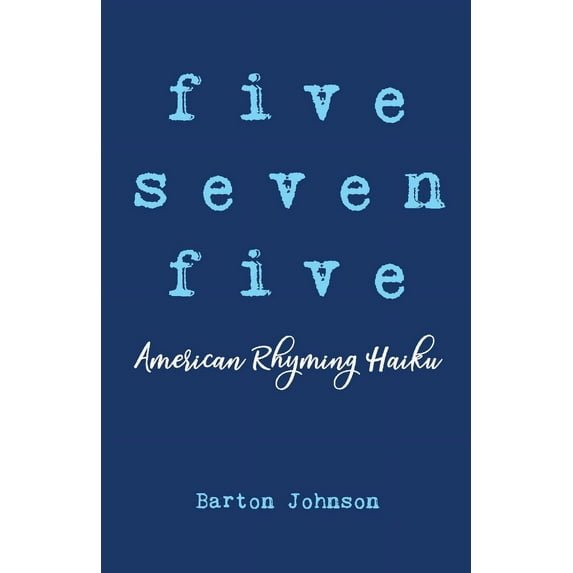
Hero image 0 of Five Seven Five - American Rhyming Haiku (Paperback), 0 of 1
Five Seven Five - American Rhyming Haiku (Paperback)
(No ratings yet)
Key item features
Haiku is a Japanese written art form featuring unrhymed poetic verses containing a total of seventeen syllables arranged in lines of five, seven, and five syllables respectively. Haiku generally include a seasonal or naturalistic reference that captures a brief moment in time. Haiku date back to the seventeenth century in reaction to what was at the time very elaborate poetic traditions. Thus they are short and highly structured, and evoke profound imagery rather than rhyme. The stark simplicity and sparseness of Haiku are absolutely elemental to their beauty and appeal.
Ancient Haiku often don't translate well to English, in terms of the rigorous construct and strict form required, as Japanese and English syllables simply do not usually correspond. Examples of traditional Japanese Haiku:
Only Mount Fuji The summer grasses
Is left unburied All that remains
By young leaves Of warriors' dreams
Haiku written in English obviously much more easily follow our form of the requisite structure. Examples of unrhymed English Haiku:
Refreshing and cool Calm as a river
Love is a sweet summer rain Tranquility in my heart
That washes the world Blue summer skies reign
The author is Western-born but with Eastern sensibilities. He is forever cursed by a lifelong penchant to reinvent all that he touches, and he proudly writes what no one else could have (perhaps because no one else would have wanted to?).
The author absolutely loves highly structured poetry, and rhyming within the already tight and abbreviated framework of Haiku seemed to him to represent the ultimate challenge. The exquisite form, with so few words that they cannot get in the way of the message, with the rigid structure, discipline, and focus required - all were too inviting an opportunity to ignore. Thus, he has produced redefined Haiku, all of which preserve the sacred 5-7-5 structure, all of which display careful internal rhyming (at minimum three rhymes within each seventeen-syllable poem), and most of which present signature teachable moments and life lessons, insights and punchlines, in a uniquely American way. Examples of my new American Rhyming Haiku:
Haiku underwent Sacred Fuji climbed
My passion to reinvent New Haiku written and rhymed
Not by accident Completion well-timed
Poet laureate Listen to the word
Words and rhymes a careful fit Let the meaning sink unblurred
Plus punchlines and wit Heed what you have heard
Haiku explore themes What I wrote you read
Consider what each one means As writer I worked and bled
Fulfill poet's dreams Ponder what I said
Some might argue that the sanctity of the already perfect Haiku written art form did not require or invite further experimentation. To those so inclined there is only a half-hearted apology. Please enjoy these short poems in an open-minded and positive way to seek out the value offered. The reader can either 'power read' through all of the Haiku, or use the calendar format to read one Haiku each day as a 'thought nugget' to stimulate hungry brain cells.
Ancient Haiku often don't translate well to English, in terms of the rigorous construct and strict form required, as Japanese and English syllables simply do not usually correspond. Examples of traditional Japanese Haiku:
Only Mount Fuji The summer grasses
Is left unburied All that remains
By young leaves Of warriors' dreams
Haiku written in English obviously much more easily follow our form of the requisite structure. Examples of unrhymed English Haiku:
Refreshing and cool Calm as a river
Love is a sweet summer rain Tranquility in my heart
That washes the world Blue summer skies reign
The author is Western-born but with Eastern sensibilities. He is forever cursed by a lifelong penchant to reinvent all that he touches, and he proudly writes what no one else could have (perhaps because no one else would have wanted to?).
The author absolutely loves highly structured poetry, and rhyming within the already tight and abbreviated framework of Haiku seemed to him to represent the ultimate challenge. The exquisite form, with so few words that they cannot get in the way of the message, with the rigid structure, discipline, and focus required - all were too inviting an opportunity to ignore. Thus, he has produced redefined Haiku, all of which preserve the sacred 5-7-5 structure, all of which display careful internal rhyming (at minimum three rhymes within each seventeen-syllable poem), and most of which present signature teachable moments and life lessons, insights and punchlines, in a uniquely American way. Examples of my new American Rhyming Haiku:
Haiku underwent Sacred Fuji climbed
My passion to reinvent New Haiku written and rhymed
Not by accident Completion well-timed
Poet laureate Listen to the word
Words and rhymes a careful fit Let the meaning sink unblurred
Plus punchlines and wit Heed what you have heard
Haiku explore themes What I wrote you read
Consider what each one means As writer I worked and bled
Fulfill poet's dreams Ponder what I said
Some might argue that the sanctity of the already perfect Haiku written art form did not require or invite further experimentation. To those so inclined there is only a half-hearted apology. Please enjoy these short poems in an open-minded and positive way to seek out the value offered. The reader can either 'power read' through all of the Haiku, or use the calendar format to read one Haiku each day as a 'thought nugget' to stimulate hungry brain cells.
Specs
- Book formatPaperback
- Fiction/nonfictionNon-Fiction
- GenreLiterature & Fiction
- Pages120
- Reading levelGeneral/Trade
- SubgenreReligious
Current price is USD$9.49
Price when purchased online
Out of stock
How do you want your item?
Out of stock
About this item
Product details
This book expands upon the beautiful Japanese written art form of traditional non-rhyming Haiku poetry, but in a uniquely American way. Haiku are, by definition, short and very tightly structured, consisting of seventeen syllables per three-line poem, with five, seven, and five syllables, respectively. This book preserves that sacred structure, but introduces careful internal rhyming (at minimum three rhymes per short poem), all while presenting important real-life lessons and teachable moments via memorable insights and punchlines. The stark simplicity and sparseness of Haiku are absolutely elemental to their beauty and appeal. These Haiku retain the exquisite character of traditional Haiku, but with the added elegance of rhyme.
The reader can either 'power read' through all of the Haiku, or use the calendar format to read one Haiku each day as a 'thought nugget' to stimulate hungry brain cells.
The reader can either 'power read' through all of the Haiku, or use the calendar format to read one Haiku each day as a 'thought nugget' to stimulate hungry brain cells.
Haiku is a Japanese written art form featuring unrhymed poetic verses containing a total of seventeen syllables arranged in lines of five, seven, and five syllables respectively. Haiku generally include a seasonal or naturalistic reference that captures a brief moment in time. Haiku date back to the seventeenth century in reaction to what was at the time very elaborate poetic traditions. Thus they are short and highly structured, and evoke profound imagery rather than rhyme. The stark simplicity and sparseness of Haiku are absolutely elemental to their beauty and appeal.
Ancient Haiku often don't translate well to English, in terms of the rigorous construct and strict form required, as Japanese and English syllables simply do not usually correspond. Examples of traditional Japanese Haiku:
Only Mount Fuji The summer grasses
Is left unburied All that remains
By young leaves Of warriors' dreams
Haiku written in English obviously much more easily follow our form of the requisite structure. Examples of unrhymed English Haiku:
Refreshing and cool Calm as a river
Love is a sweet summer rain Tranquility in my heart
That washes the world Blue summer skies reign
The author is Western-born but with Eastern sensibilities. He is forever cursed by a lifelong penchant to reinvent all that he touches, and he proudly writes what no one else could have (perhaps because no one else would have wanted to?).
The author absolutely loves highly structured poetry, and rhyming within the already tight and abbreviated framework of Haiku seemed to him to represent the ultimate challenge. The exquisite form, with so few words that they cannot get in the way of the message, with the rigid structure, discipline, and focus required - all were too inviting an opportunity to ignore. Thus, he has produced redefined Haiku, all of which preserve the sacred 5-7-5 structure, all of which display careful internal rhyming (at minimum three rhymes within each seventeen-syllable poem), and most of which present signature teachable moments and life lessons, insights and punchlines, in a uniquely American way. Examples of my new American Rhyming Haiku:
Haiku underwent Sacred Fuji climbed
My passion to reinvent New Haiku written and rhymed
Not by accident Completion well-timed
Poet laureate Listen to the word
Words and rhymes a careful fit Let the meaning sink unblurred
Plus punchlines and wit Heed what you have heard
Haiku explore themes What I wrote you read
Consider what each one means As writer I worked and bled
Fulfill poet's dreams Ponder what I said
Some might argue that the sanctity of the already perfect Haiku written art form did not require or invite further experimentation. To those so inclined there is only a half-hearted apology. Please enjoy these short poems in an open-minded and positive way to seek out the value offered. The reader can either 'power read' through all of the Haiku, or use the calendar format to read one Haiku each day as a 'thought nugget' to stimulate hungry brain cells.
Ancient Haiku often don't translate well to English, in terms of the rigorous construct and strict form required, as Japanese and English syllables simply do not usually correspond. Examples of traditional Japanese Haiku:
Only Mount Fuji The summer grasses
Is left unburied All that remains
By young leaves Of warriors' dreams
Haiku written in English obviously much more easily follow our form of the requisite structure. Examples of unrhymed English Haiku:
Refreshing and cool Calm as a river
Love is a sweet summer rain Tranquility in my heart
That washes the world Blue summer skies reign
The author is Western-born but with Eastern sensibilities. He is forever cursed by a lifelong penchant to reinvent all that he touches, and he proudly writes what no one else could have (perhaps because no one else would have wanted to?).
The author absolutely loves highly structured poetry, and rhyming within the already tight and abbreviated framework of Haiku seemed to him to represent the ultimate challenge. The exquisite form, with so few words that they cannot get in the way of the message, with the rigid structure, discipline, and focus required - all were too inviting an opportunity to ignore. Thus, he has produced redefined Haiku, all of which preserve the sacred 5-7-5 structure, all of which display careful internal rhyming (at minimum three rhymes within each seventeen-syllable poem), and most of which present signature teachable moments and life lessons, insights and punchlines, in a uniquely American way. Examples of my new American Rhyming Haiku:
Haiku underwent Sacred Fuji climbed
My passion to reinvent New Haiku written and rhymed
Not by accident Completion well-timed
Poet laureate Listen to the word
Words and rhymes a careful fit Let the meaning sink unblurred
Plus punchlines and wit Heed what you have heard
Haiku explore themes What I wrote you read
Consider what each one means As writer I worked and bled
Fulfill poet's dreams Ponder what I said
Some might argue that the sanctity of the already perfect Haiku written art form did not require or invite further experimentation. To those so inclined there is only a half-hearted apology. Please enjoy these short poems in an open-minded and positive way to seek out the value offered. The reader can either 'power read' through all of the Haiku, or use the calendar format to read one Haiku each day as a 'thought nugget' to stimulate hungry brain cells.
info:
We aim to show you accurate product information. Manufacturers, suppliers and others provide what you see here, and we have not verified it.
Specifications
Book format
Paperback
Fiction/nonfiction
Non-Fiction
Genre
Literature & Fiction
Pages
120
Similar items you might like
Based on what customers bought
Trigger Happy (Paperback) $7.48
 $748current price $7.48
Trigger Happy (Paperback)
Te pragu i ditëve: Haiku (Paperback) $10.00
 $1000current price $10.00
Te pragu i ditëve: Haiku (Paperback)
Painting the Town Red (Paperback) $7.48
 $748current price $7.48
Painting the Town Red (Paperback)
Trille dimri: Haiku, (Paperback) $9.73
 $973current price $9.73
Trille dimri: Haiku, (Paperback)
Haiku Seasons Haiku Summer, Book 2, (Paperback) $7.65
 $765current price $7.65
Haiku Seasons Haiku Summer, Book 2, (Paperback)
Spices of Life: A Diverse Collection of Poetry (Paperback) $7.73
 $773current price $7.73
Spices of Life: A Diverse Collection of Poetry (Paperback)
Haiku in the Dark: Poetry and Illustrations Written in the Pandemic (Paperback) $8.00
 $800current price $8.00
Haiku in the Dark: Poetry and Illustrations Written in the Pandemic (Paperback)
Cold Dead Cash (Paperback) $10.45
 $1045current price $10.45
Cold Dead Cash (Paperback)
Howl and Other Poems, (Paperback) $6.99
 $699current price $6.99
Howl and Other Poems, (Paperback)
This Merciless Beauty: Or Poems For No One, (Paperback) $8.00
 $800current price $8.00
This Merciless Beauty: Or Poems For No One, (Paperback)
First Flush: Sample Inspirational Poetry (Paperback) $7.99
 $799current price $7.99
First Flush: Sample Inspirational Poetry (Paperback)
Late to the Search Party: Poems, (Paperback) $7.49
 $749current price $7.49
Late to the Search Party: Poems, (Paperback)
How to Backwash: A Collection of Haiku, (Paperback) $8.88
 $888current price $8.88
How to Backwash: A Collection of Haiku, (Paperback)
Theater of the Absurd: A Collection of Haiku and Senryu Poetry, (Paperback) $8.94
 $894current price $8.94
Theater of the Absurd: A Collection of Haiku and Senryu Poetry, (Paperback)
Face Poems, (Paperback) $7.99
 $799current price $7.99
Face Poems, (Paperback)
Selected Poems, (Paperback) $6.99
 $699current price $6.99
Selected Poems, (Paperback)
The Haiku Project: Love in Seventeen Syllables, (Paperback) $10.00
 $1000current price $10.00
The Haiku Project: Love in Seventeen Syllables, (Paperback)
Mirabai: Ecstatic Poems, (Paperback) $11.29
 $1129current price $11.29
Mirabai: Ecstatic Poems, (Paperback)
Bird Is The Word - Twitter Haiku (Paperback) $9.28
 $928current price $9.28
Bird Is The Word - Twitter Haiku (Paperback)
Customer ratings & reviews
0 ratings|0 reviews
This item does not have any reviews yet
