

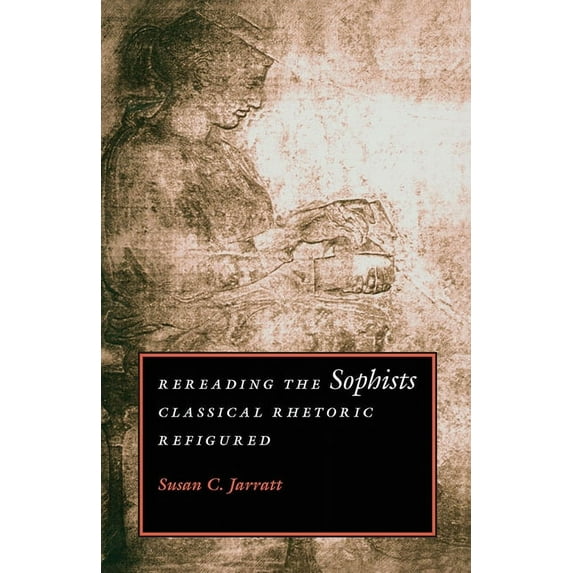
Rereading the Sophists : Classical Rhetoric Refigured (Paperback)
Key item features
This book is a critically informed challenge to the traditional histories of rhetoric and to the current emphasis on Aristotle and Plato as the most significant classical voices in rhetoric. In it, Susan C. Jarratt argues that the first sophists—a diverse group of traveling intellectuals in the fifth century B.C.—should be given a more prominent place in the study of rhetoric and composition. Rereading the ancient sophists, she creates a new lens through which to see contemporary social issues, including the orality/literacy debate, feminist writing, deconstruction, and writing pedagogy.
The sophists’ pleasure in the play of language, their focus on historical contin-gency, and the centrality of their teaching for democratic practice were sufficiently threatening to their successors Plato and Aristotle that both sought to bury the sophists under philosophical theories of language. The censure of Plato and Aris-totle set a pattern for historical views of the sophists for centuries. Following Hegel and Nietzsche, Jarratt breaks the pattern, finding in the sophists a more progressive charter for teachers and scholars of reading and writing, as well as for those in the adjacent disciplines of literary criticism and theory, education, speech communication, and ancient history.
In tracing the historical interpretations of sophistic rhetoric, Jarratt suggests that the sophists themselves provide the outlines of an alternative to history-writing as the discovery and recounting of a set of stable facts. She sees sophistic use of narrative in argument as a challenge to a simple division between orality and literacy, current discussions of which virtually ignore the sophists. Outlining similarities between écriture féminine and sophistic style, Jarratt shows that contemporary feminisms have more in common with sophists than just a style; they share a rhetorical basis for deployment of theory in political action. In her final chapter, Jarratt takes issue with accounts of sophistic pedagogy focusing on technique and the development of the individual. She argues that, despite its employment by powerful demagogues, sophistic pedagogy offers a resource for today’s teachers interested in encouraging minority voices of resistance through language study as the practice of democracy.
Specs
- Book formatPaperback
- Fiction/nonfictionNon-Fiction
- GenreHistory
- Publication dateAugust, 1998
- Pages184
- Number in series1
- Free shipping
 Free 30-day returns
How do you want your item?


More seller options (1)
About this item
Product details
This book is a critically informed challenge to the traditional histories of rhetoric and to the current emphasis on Aristotle and Plato as the most significant classical voices in rhetoric. In it, Susan C. Jarratt argues that the first sophists--a diverse group of traveling intellectuals in the fifth century B.C.--should be given a more prominent place in the study of rhetoric and composition. Rereading the ancient sophists, she creates a new lens through which to see contemporary social issues, including the orality/literacy debate, feminist writing, deconstruction, and writing pedagogy.
The sophists' pleasure in the play of language, their focus on historical contin-gency, and the centrality of their teaching for democratic practice were sufficiently threatening to their successors Plato and Aristotle that both sought to bury the sophists under philosophical theories of language. The censure of Plato and Aris-totle set a pattern for historical views of the sophists for centuries. Following Hegel and Nietzsche, Jarratt breaks the pattern, finding in the sophists a more progressive charter for teachers and scholars of reading and writing, as well as for those in the adjacent disciplines of literary criticism and theory, education, speech communication, and ancient history.
In tracing the historical interpretations of sophistic rhetoric, Jarratt suggests that the sophists themselves provide the outlines of an alternative to history-writing as the discovery and recounting of a set of stable facts. She sees sophistic use of narrative in argument as a challenge to a simple division between orality and literacy, current discussions of which virtually ignore the sophists. Outlining similarities between écriture féminine and sophistic style, Jarratt shows that contemporary feminisms have more in common with sophists than just a style; they share a rhetorical basis for deployment of theory in political action. In her final chapter, Jarratt takes issue with accounts of sophistic pedagogy focusing on technique and the development of the individual. She argues that, despite its employment by powerful demagogues, sophistic pedagogy offers a resource for today's teachers interested in encouraging minority voices of resistance through language study as the practice of democracy.
This book is a critically informed challenge to the traditional histories of rhetoric and to the current emphasis on Aristotle and Plato as the most significant classical voices in rhetoric. In it, Susan C. Jarratt argues that the first sophists—a diverse group of traveling intellectuals in the fifth century B.C.—should be given a more prominent place in the study of rhetoric and composition. Rereading the ancient sophists, she creates a new lens through which to see contemporary social issues, including the orality/literacy debate, feminist writing, deconstruction, and writing pedagogy.
The sophists’ pleasure in the play of language, their focus on historical contin-gency, and the centrality of their teaching for democratic practice were sufficiently threatening to their successors Plato and Aristotle that both sought to bury the sophists under philosophical theories of language. The censure of Plato and Aris-totle set a pattern for historical views of the sophists for centuries. Following Hegel and Nietzsche, Jarratt breaks the pattern, finding in the sophists a more progressive charter for teachers and scholars of reading and writing, as well as for those in the adjacent disciplines of literary criticism and theory, education, speech communication, and ancient history.
In tracing the historical interpretations of sophistic rhetoric, Jarratt suggests that the sophists themselves provide the outlines of an alternative to history-writing as the discovery and recounting of a set of stable facts. She sees sophistic use of narrative in argument as a challenge to a simple division between orality and literacy, current discussions of which virtually ignore the sophists. Outlining similarities between écriture féminine and sophistic style, Jarratt shows that contemporary feminisms have more in common with sophists than just a style; they share a rhetorical basis for deployment of theory in political action. In her final chapter, Jarratt takes issue with accounts of sophistic pedagogy focusing on technique and the development of the individual. She argues that, despite its employment by powerful demagogues, sophistic pedagogy offers a resource for today’s teachers interested in encouraging minority voices of resistance through language study as the practice of democracy.
Specifications
Book format
Fiction/nonfiction
Genre
Publication date
Warranty
Warranty information
Similar items you might like
Based on what customers bought
Philosophy, (Paperback) $22.94
 $2294current price $22.94
Philosophy, (Paperback)
Complete French Course (Paperback) $28.55
 $2855current price $28.55
Complete French Course (Paperback)
Advanced C , (Paperback) $43.99
 $4399current price $43.99
Advanced C , (Paperback)
O Consciencismo de Nkrumah e a Restituição da Dignidade Africana, (Paperback) $40.00
 $4000current price $40.00
O Consciencismo de Nkrumah e a Restituição da Dignidade Africana, (Paperback)
Affrontare la povertà e le molestie sessuali, (Paperback) $46.00
 $4600current price $46.00
Affrontare la povertà e le molestie sessuali, (Paperback)
Verständliche Wissenschaft Der Menschliche Körper, Book 91, (Paperback) $44.33
 $4433current price $44.33
Verständliche Wissenschaft Der Menschliche Körper, Book 91, (Paperback)
Conversations With Opa, (Paperback) $13.93
 $1393current price $13.93
Conversations With Opa, (Paperback)
Kristuslegender (Paperback) $22.95
 $2295current price $22.95
Kristuslegender (Paperback)
Ancestorial Echoes of Yule, (Paperback) $23.53
 $2353current price $23.53
Ancestorial Echoes of Yule, (Paperback)
Historiographies of Philosophy 1800-1950, (Paperback) $63.48
 $6348current price $63.48
Historiographies of Philosophy 1800-1950, (Paperback)
Les maîtres penseurs, (Paperback) $36.38
 $3638current price $36.38
Les maîtres penseurs, (Paperback)
Principia Discordia, (Paperback) $20.09
 $2009current price $20.09
Principia Discordia, (Paperback)
Pragmatism and French Voluntarism: With Especial Reference to the Notion of Truth in the Development of French Philosoph, (Paperback) $40.00
 $4000current price $40.00
Pragmatism and French Voluntarism: With Especial Reference to the Notion of Truth in the Development of French Philosoph, (Paperback)
Relaciones Empoderadas, (Paperback) $14.67 Was $16.57
 $1467current price $14.67, Was $16.57$16.57
Relaciones Empoderadas, (Paperback)
Kurzes Lehrbuch Des Dampflokomotivbaues, (Paperback) $49.65
 $4965current price $49.65
Kurzes Lehrbuch Des Dampflokomotivbaues, (Paperback)
The History of Sprinkling, (Paperback) $20.90
 $2090current price $20.90
The History of Sprinkling, (Paperback)
Philosophy of 60th St, (Paperback) $7.99
 $799current price $7.99
Philosophy of 60th St, (Paperback)
The Book of Financial Wisdom (Paperback) $13.07
 $1307current price $13.07
The Book of Financial Wisdom (Paperback)
Explanatory Pluralism, (Paperback) $30.04
 $3004current price $30.04
Explanatory Pluralism, (Paperback)
Philosophie: Les Colloques d'Érasme. Tome 3 (Éd.1875-1876) (Paperback) $26.85
 $2685current price $26.85
Philosophie: Les Colloques d'Érasme. Tome 3 (Éd.1875-1876) (Paperback)
