


Hero image 0 of The Trouble with Principle (Paperback), 0 of 1
The Trouble with Principle (Paperback)
(No ratings yet)
Key item features
Publishers Weekly,American democracy rests its freedoms and legal procedures on principles that are impersonal and universal (e.g., freedom, equality). A good idea? No, says Fish. He argues vigorously that universal principles actually impede democracy. Counterintuitive as his claim may appear, Fish makes a strong and lucid case. The trouble with principle, he explains, is this: it disregards history, tradition and contexts of every sort that shape understanding. According to Fish???a controversial literary scholar and theorist who has applied his theories of interpretation to the study of law???we can never find a neutral position that will fully transcend our prejudices, commitments and beliefs. And worse yet, high-minded abstractions can be used to mask undemocratic privilege. He offers the current controversy over affirmative action and reverse discrimination as a case in point. Those who agitate for an end to affirmative action usually do so on the principled grounds that it ignores "merit." But what is merit? It describes, says Fish, "whatever qualifications are deemed desirable for the performance of a particular task, and there is nothing fixed about those qualifications." Fish supports affirmative action because he believes we must take into account the history of oppression suffered by the groups that affirmative action is meant to benefit. Yet Fish is no liberal. In fact, he devotes most of his book to the problems entailed in the liberal understanding of freedom of speech and freedom of religion. Liberals, he says, duck behind the comforting fiction???or "principle"???that we are all the same underneath. Fish???hard-nosed, unflinching and persuasive???maintains that differences are real and must be faced squarely without recourse to timeless, abstract principles. His cautiously reasoned argument, not easily dismissed, will excite controversy. (Dec.) (c) Copyright PWxyz, LLC. All rights reserved,Publishers Weekly,Publishers Weekly,American democracy rests its freedoms and legal procedures on principles that are impersonal and universal (e.g., freedom, equality). A good idea? No, says Fish. He argues vigorously that universal principles actually impede democracy. Counterintuitive as his claim may appear, Fish makes a strong and lucid case. The trouble with principle, he explains, is this: it disregards history, tradition and contexts of every sort that shape understanding. According to Fish???a controversial literary scholar and theorist who has applied his theories of interpretation to the study of law???we can never find a neutral position that will fully transcend our prejudices, commitments and beliefs. And worse yet, high-minded abstractions can be used to mask undemocratic privilege. He offers the current controversy over affirmative action and reverse discrimination as a case in point. Those who agitate for an end to affirmative action usually do so on the principled grounds that it ignores "merit." But what is merit? It describes, says Fish, "whatever qualifications are deemed desirable for the performance of a particular task, and there is nothing fixed about those qualifications." Fish supports affirmative action because he believes we must take into account the history of oppression suffered by the groups that affirmative action is meant to benefit. Yet Fish is no liberal. In fact, he devotes most of his book to the problems entailed in the liberal understanding of freedom of speech and freedom of religion. Liberals, he says, duck behind the comforting fiction???or "principle"???that we are all the same underneath. Fish???hard-nosed, unflinching and persuasive???maintains that differences are real and must be faced squarely without recourse to timeless, abstract principles. His cautiously reasoned argument, not easily dismissed, will excite controversy. (Dec.) (c) Copyright PWxyz, LLC. All rights reserved
Specs
- Book formatPaperback
- Fiction/nonfictionNon-Fiction
- GenreLiterature & Fiction
- Pages336
- Reading levelGeneral Adult
- SubgenrePolitical Science
Current price is USD$16.50
Price when purchased online
- Free shipping
 Free 30-day returns
How do you want your item?
Columbus, 43215
Arrives between Apr 17 - Apr 20
|
Sold and shipped by Alibris Books
4.563627863487611 stars out of 5, based on 10695 seller reviews(4.6)10695 seller reviews

Free 30-day returns
More seller options (2)
Starting from $33.94
About this item
Product details
Stanley Fish is an equal opportunity antagonist. A theorist who has taken on theorists, an academician who has riled the academy, a legal scholar and political pundit who has ruffled feathers left and right, Fish here turns with customary gusto to the trouble with principle. Specifically, Fish has a quarrel with neutral principles. The trouble? They operate by sacrificing everything people care about to their own purity. And they are deployed with equal highmindedness and equally absurd results by liberals and conservatives alike.
In this bracing book, Fish argues that there is no realm of higher order impartiality--no neutral or fair territory on which to stake a claim--and that those who invoke one are always making a rhetorical and political gesture. In the end, it is history and context, the very substance against which a purportedly abstract principle defines itself, that determines a principle's content and power. In the course of making this argument, Fish takes up questions about academic freedom and hate speech, affirmative action and multiculturalism, the boundaries between church and state, and much more. Sparing no one, he shows how our notions of intellectual and religious liberty--cherished by those at both ends of the political spectrum--are artifacts of the very partisan politics they supposedly transcend. The Trouble with Principle offers a provocative challenge to the debates of our day that no intellectually honest citizen can afford to ignore.Publishers Weekly,American democracy rests its freedoms and legal procedures on principles that are impersonal and universal (e.g., freedom, equality). A good idea? No, says Fish. He argues vigorously that universal principles actually impede democracy. Counterintuitive as his claim may appear, Fish makes a strong and lucid case. The trouble with principle, he explains, is this: it disregards history, tradition and contexts of every sort that shape understanding. According to Fish???a controversial literary scholar and theorist who has applied his theories of interpretation to the study of law???we can never find a neutral position that will fully transcend our prejudices, commitments and beliefs. And worse yet, high-minded abstractions can be used to mask undemocratic privilege. He offers the current controversy over affirmative action and reverse discrimination as a case in point. Those who agitate for an end to affirmative action usually do so on the principled grounds that it ignores "merit." But what is merit? It describes, says Fish, "whatever qualifications are deemed desirable for the performance of a particular task, and there is nothing fixed about those qualifications." Fish supports affirmative action because he believes we must take into account the history of oppression suffered by the groups that affirmative action is meant to benefit. Yet Fish is no liberal. In fact, he devotes most of his book to the problems entailed in the liberal understanding of freedom of speech and freedom of religion. Liberals, he says, duck behind the comforting fiction???or "principle"???that we are all the same underneath. Fish???hard-nosed, unflinching and persuasive???maintains that differences are real and must be faced squarely without recourse to timeless, abstract principles. His cautiously reasoned argument, not easily dismissed, will excite controversy. (Dec.) (c) Copyright PWxyz, LLC. All rights reserved,Publishers Weekly,Publishers Weekly,American democracy rests its freedoms and legal procedures on principles that are impersonal and universal (e.g., freedom, equality). A good idea? No, says Fish. He argues vigorously that universal principles actually impede democracy. Counterintuitive as his claim may appear, Fish makes a strong and lucid case. The trouble with principle, he explains, is this: it disregards history, tradition and contexts of every sort that shape understanding. According to Fish???a controversial literary scholar and theorist who has applied his theories of interpretation to the study of law???we can never find a neutral position that will fully transcend our prejudices, commitments and beliefs. And worse yet, high-minded abstractions can be used to mask undemocratic privilege. He offers the current controversy over affirmative action and reverse discrimination as a case in point. Those who agitate for an end to affirmative action usually do so on the principled grounds that it ignores "merit." But what is merit? It describes, says Fish, "whatever qualifications are deemed desirable for the performance of a particular task, and there is nothing fixed about those qualifications." Fish supports affirmative action because he believes we must take into account the history of oppression suffered by the groups that affirmative action is meant to benefit. Yet Fish is no liberal. In fact, he devotes most of his book to the problems entailed in the liberal understanding of freedom of speech and freedom of religion. Liberals, he says, duck behind the comforting fiction???or "principle"???that we are all the same underneath. Fish???hard-nosed, unflinching and persuasive???maintains that differences are real and must be faced squarely without recourse to timeless, abstract principles. His cautiously reasoned argument, not easily dismissed, will excite controversy. (Dec.) (c) Copyright PWxyz, LLC. All rights reserved
info:
We aim to show you accurate product information. Manufacturers, suppliers and others provide what you see here, and we have not verified it.
Specifications
Book format
Paperback
Fiction/nonfiction
Non-Fiction
Genre
Literature & Fiction
Pages
336
Warranty
Warranty information
Please be aware that the warranty terms on items offered for sale by third party Marketplace sellers may differ from those displayed in this section (if any). To confirm warranty terms on an item offered for sale by a third party Marketplace seller, please use the 'Contact seller' feature on the third party Marketplace seller's information page and request the item's warranty terms prior to purchase.
Similar items you might like
Based on what customers bought
Against All Odds (Paperback) $21.49
 $2149current price $21.49
Against All Odds (Paperback)
How to Write a Sentence: And How to Read One, (Paperback) $9.67
 $967current price $9.67
How to Write a Sentence: And How to Read One, (Paperback)
To Mock a Mockingbird, (Paperback) $22.07
 $2207current price $22.07
To Mock a Mockingbird, (Paperback)
Crack, (Paperback) $17.46
 $1746current price $17.46
Crack, (Paperback)
The Fall of Public Man, (Paperback) $13.73
 $1373current price $13.73
The Fall of Public Man, (Paperback)
Winning Arguments: What Works and Doesn't Work in Politics, the Bedroom, the Courtroom, and the Classroom, (Paperback) $7.49 Was $11.75
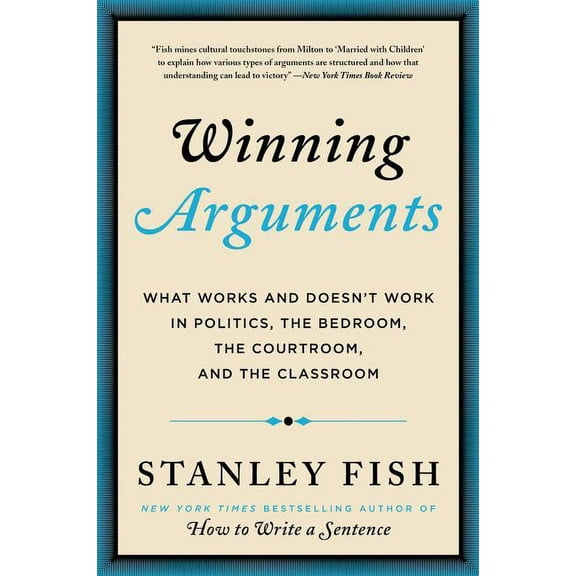 2 optionsAvailable in additional 2 options$749current price $7.49, Was $11.75$11.75
Winning Arguments: What Works and Doesn't Work in Politics, the Bedroom, the Courtroom, and the Classroom, (Paperback)
The Roots of Normativity, (Paperback) $27.04
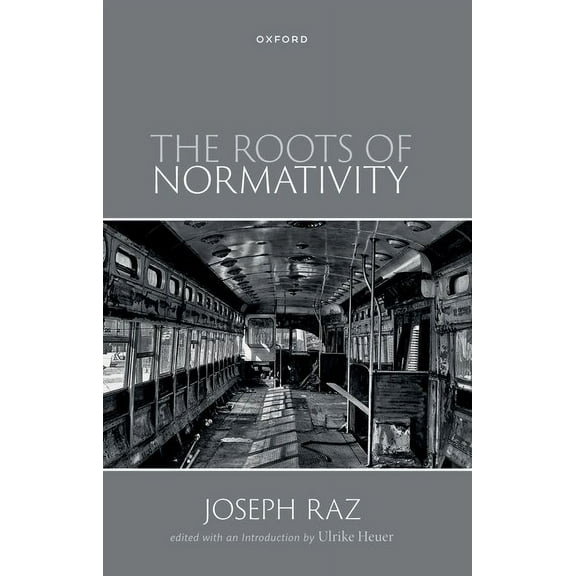 $2704current price $27.04
The Roots of Normativity, (Paperback)
Pre-Owned Is There a Text in This Class? The Authority of Interpretive Communities $6.64
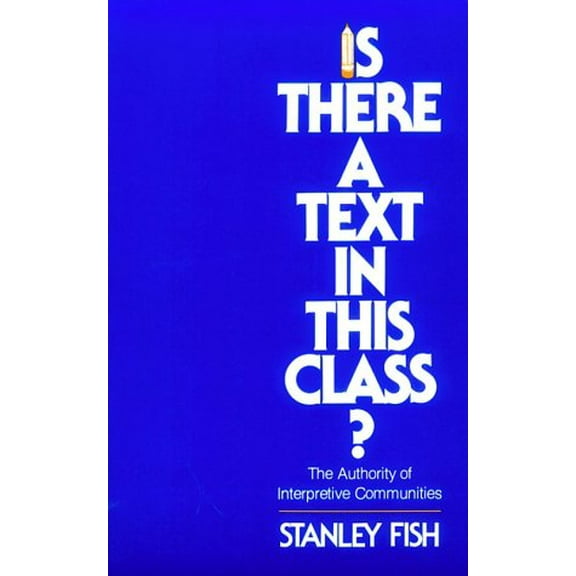 2 optionsAvailable in additional 2 options$664current price $6.64
Pre-Owned Is There a Text in This Class? The Authority of Interpretive Communities
The Jobless Future, (Paperback) $36.43
 $3643current price $36.43
The Jobless Future, (Paperback)
Think Again: Contrarian Reflections on Life, Culture, Politics, Religion, Law, and Education, (Hardcover) $26.07
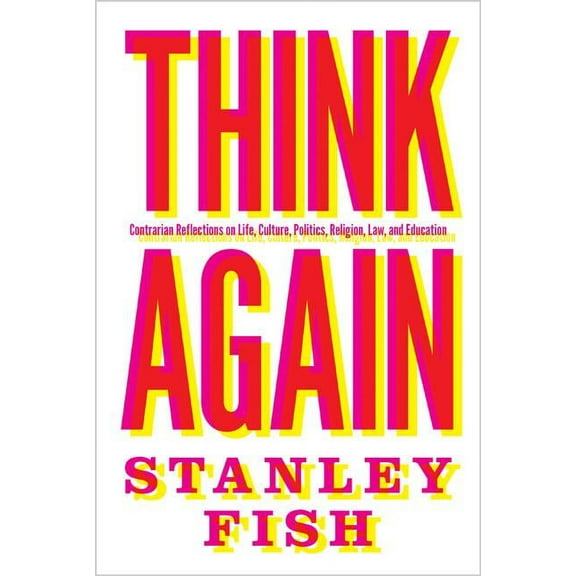 $2607current price $26.07
Think Again: Contrarian Reflections on Life, Culture, Politics, Religion, Law, and Education, (Hardcover)
Versions of Antihumanism, (Paperback) $26.95
 $2695current price $26.95
Versions of Antihumanism, (Paperback)
Think Again: Contrarian Reflections on Life, Culture, Politics, Religion, Law, and Education, (Paperback) $21.36
 $2136current price $21.36
Think Again: Contrarian Reflections on Life, Culture, Politics, Religion, Law, and Education, (Paperback)
The Trial of Oscar Wilde, from the Shorthand Reports, (Paperback) $23.82
 $2382current price $23.82
The Trial of Oscar Wilde, from the Shorthand Reports, (Paperback)
Give It No Thought: Know the Cause, (Paperback) $16.80
 $1680current price $16.80
Give It No Thought: Know the Cause, (Paperback)
Unspeakable Monsters: In All Our Lives, (Paperback) $20.68 Was $23.64
 $2068current price $20.68, Was $23.64$23.64
Unspeakable Monsters: In All Our Lives, (Paperback)



Customer ratings & reviews
0 ratings|0 reviews
This item does not have any reviews yet
