


The Collected Works of Langston Hughes: Autobiography (LH14) : I Wonder as I Wander (Series #14) (Hardcover)
Key item features
I Wonder As I Wander (1956), Hughes's second volume of autobiography, is a continuation from The Big Sea, detailing his global travels to such areas as Cuba, Haiti, Paris, the Soviet Union, and the Far East. It culminates in his 1937 coverage for the Baltimore Afro-American of the Spanish Civil War. The travelogue highlights the beginning of Hughes's career as a journalist, a further realization of his goal to live as a professional writer. Furthermore, it shows the influence of legendary black educator Mary McLeod Bethune, who inspired Hughes to travel through the South giving readings of his poetry. His recollections of American journeys place him as well in Carmel, California, and the San Francisco area, where he was befriended by Noël Sullivan and was among the set of Hollywood personalities sometimes including James Cagney, Greta Garbo, Jean Harlow, as well as Indian mystic J. Krishnamurti. Hughes also shows readers the lighter side of his adventures in the Caribbean, where he experienced the rhythms of Afro-Cuban music and the wonders of such sights as the Citadel in Haiti.
In 1932, having traveled with a group of African Americans to the Soviet Union to make a film about southern black steelworkers and domestic laborers, Hughes became familiar not only with Moscow's theatrical life but also with "colored" minorities in the new republics of Soviet Central Asia. As a wanderer, he carried with him a record player and a collection of jazz recordings and became an informal participant in "cultural exchange." For Hughes, the lack of appreciation of jazz by Russian ideologues was a major flaw in the system. In Tokyo and Shanghai, he learned about Asian global politics and tough street life, and in Paris he reacquainted himself with its nightlife and such personalities as Ada "Bricktop" Smith and Josephine Baker.
Throughout his journey, he observed the presence of blacks, whether as entertainers in major capitals or as soldiers on the battlefront in Barcelona and Madrid. His coverage of the Spanish Civil War is a serious report of the tragedy of conscripted North African Moors and the heroic efforts of the International Brigades and such African Americans as Milton Herndon in their fight against fascism. Spain is also a window into flamenco musical culture, where singers such as Pastora Pavón offer their own form of the blues.
In rare moments, Hughes reveals aspects of his personal romantic encounters. Also of great interest are his recollections of writers Arthur Koestler, Nicolás Guillén, Pablo Neruda, and Ernest Hemingway. I Wonder As I Wander shows how Hughes maintained a Harlem-derived black consciousness, while expanding it through global wandering.
Specs
- Book formatHardcover
- Fiction/nonfictionNon-Fiction
- GenreLiterature & Fiction
- Publication dateFebruary, 2003
- Pages448
- Age range18 - 100 Years
- Free shipping
 Free 30-day returns
How do you want your item?


About this item
Product details
I Wonder As I Wander (1956), Hughes's second volume of autobiography, is a continuation from The Big Sea, detailing his global travels to such areas as Cuba, Haiti, Paris, the Soviet Union, and the Far East. It culminates in his 1937 coverage for the Baltimore Afro-American of the Spanish Civil War. The travelogue highlights the beginning of Hughes's career as a journalist, a further realization of his goal to live as a professional writer. Furthermore, it shows the influence of legendary black educator Mary McLeod Bethune, who inspired Hughes to travel through the South giving readings of his poetry. His recollections of American journeys place him as well in Carmel, California, and the San Francisco area, where he was befriended by Noël Sullivan and was among the set of Hollywood personalities sometimes including James Cagney, Greta Garbo, Jean Harlow, as well as Indian mystic J. Krishnamurti. Hughes also shows readers the lighter side of his adventures in the Caribbean, where he experienced the rhythms of Afro-Cuban music and the wonders of such sights as the Citadel in Haiti.
In 1932, having traveled with a group of African Americans to the Soviet Union to make a film about southern black steelworkers and domestic laborers, Hughes became familiar not only with Moscow's theatrical life but also with "colored" minorities in the new republics of Soviet Central Asia. As a wanderer, he carried with him a record player and a collection of jazz recordings and became an informal participant in "cultural exchange." For Hughes, the lack of appreciation of jazz by Russian ideologues was a major flaw in the system. In Tokyo and Shanghai, he learned about Asian global politics and tough street life, and in Paris he reacquainted himself with its nightlife and such personalities as Ada "Bricktop" Smith and Josephine Baker.
Throughout his journey, he observed the presence of blacks, whether as entertainers in major capitals or as soldiers on the battlefront in Barcelona and Madrid. His coverage of the Spanish Civil War is a serious report of the tragedy of conscripted North African Moors and the heroic efforts of the International Brigades and such African Americans as Milton Herndon in their fight against fascism. Spain is also a window into flamenco musical culture, where singers such as Pastora Pavón offer their own form of the blues.
In rare moments, Hughes reveals aspects of his personal romantic encounters. Also of great interest are his recollections of writers Arthur Koestler, Nicolás Guillén, Pablo Neruda, and Ernest Hemingway. I Wonder As I Wander shows how Hughes maintained a Harlem-derived black consciousness, while expanding it through global wandering.
I Wonder As I Wander (1956), Hughes's second volume of autobiography, is a continuation from The Big Sea, detailing his global travels to such areas as Cuba, Haiti, Paris, the Soviet Union, and the Far East. It culminates in his 1937 coverage for the Baltimore Afro-American of the Spanish Civil War. The travelogue highlights the beginning of Hughes's career as a journalist, a further realization of his goal to live as a professional writer. Furthermore, it shows the influence of legendary black educator Mary McLeod Bethune, who inspired Hughes to travel through the South giving readings of his poetry. His recollections of American journeys place him as well in Carmel, California, and the San Francisco area, where he was befriended by Noël Sullivan and was among the set of Hollywood personalities sometimes including James Cagney, Greta Garbo, Jean Harlow, as well as Indian mystic J. Krishnamurti. Hughes also shows readers the lighter side of his adventures in the Caribbean, where he experienced the rhythms of Afro-Cuban music and the wonders of such sights as the Citadel in Haiti.
In 1932, having traveled with a group of African Americans to the Soviet Union to make a film about southern black steelworkers and domestic laborers, Hughes became familiar not only with Moscow's theatrical life but also with "colored" minorities in the new republics of Soviet Central Asia. As a wanderer, he carried with him a record player and a collection of jazz recordings and became an informal participant in "cultural exchange." For Hughes, the lack of appreciation of jazz by Russian ideologues was a major flaw in the system. In Tokyo and Shanghai, he learned about Asian global politics and tough street life, and in Paris he reacquainted himself with its nightlife and such personalities as Ada "Bricktop" Smith and Josephine Baker.
Throughout his journey, he observed the presence of blacks, whether as entertainers in major capitals or as soldiers on the battlefront in Barcelona and Madrid. His coverage of the Spanish Civil War is a serious report of the tragedy of conscripted North African Moors and the heroic efforts of the International Brigades and such African Americans as Milton Herndon in their fight against fascism. Spain is also a window into flamenco musical culture, where singers such as Pastora Pavón offer their own form of the blues.
In rare moments, Hughes reveals aspects of his personal romantic encounters. Also of great interest are his recollections of writers Arthur Koestler, Nicolás Guillén, Pablo Neruda, and Ernest Hemingway. I Wonder As I Wander shows how Hughes maintained a Harlem-derived black consciousness, while expanding it through global wandering.
Specifications
Book format
Fiction/nonfiction
Genre
Publication date
Warranty
Warranty information
Similar items you might like
Based on what customers bought
W. E. B. Du Bois's Data Portraits: Visualizing Black America, (Hardcover) $20.66
 $2066current price $20.66
W. E. B. Du Bois's Data Portraits: Visualizing Black America, (Hardcover)
Harlan Renaissance: Stories of Black Life in Appalachian Coal Towns, (Hardcover) $111.84
 $11184current price $111.84
Harlan Renaissance: Stories of Black Life in Appalachian Coal Towns, (Hardcover)
Not Without Laughter: Langston Hughes: Langston Hughes (Hardcover) $32.88 Was $43.00
 $3288current price $32.88, Was $43.00$43.00
Not Without Laughter: Langston Hughes: Langston Hughes (Hardcover)
Higher Flight: Refocusing Black/Africana Studies for the 21st Century, (Hardcover) $58.35 Was $75.00
 $5835current price $58.35, Was $75.00$75.00
Higher Flight: Refocusing Black/Africana Studies for the 21st Century, (Hardcover)
Not Without Laughter: Langston Hughes: Langston Hughes (Paperback) $21.24 Was $26.00
 $2124current price $21.24, Was $26.00$26.00
Not Without Laughter: Langston Hughes: Langston Hughes (Paperback)
Collected Works of Langston Hughes The Short Stories (Lh15): Volume 15, Book 15, (Hardcover) $59.59
 $5959current price $59.59
Collected Works of Langston Hughes The Short Stories (Lh15): Volume 15, Book 15, (Hardcover)
The Collected Works of Langston Hughes: Translations (LH16) : Frederico García Lorca, Nicolás Guillén, and Jacques Roumain (Series #16) (Hardcover) $55.95
 $5595current price $55.95
The Collected Works of Langston Hughes: Translations (LH16) : Frederico García Lorca, Nicolás Guillén, and Jacques Roumain (Series #16) (Hardcover)
Aaron McDuffie Moore: An African American Physician, Educator, and Founder of Durham's Black Wall Street, (Hardcover) $24.32
 $2432current price $24.32
Aaron McDuffie Moore: An African American Physician, Educator, and Founder of Durham's Black Wall Street, (Hardcover)
Black Americans 17th Century to 21st Century : Black Struggles and Successes (Hardcover) $39.01
 $3901current price $39.01
Black Americans 17th Century to 21st Century : Black Struggles and Successes (Hardcover)
The John Hope Franklin African American Something to Do with Power: Julian Mayfield's Journey Toward a Black Radical Thought, 1948-1984, (Hardcover) $52.61
 $5261current price $52.61
The John Hope Franklin African American Something to Do with Power: Julian Mayfield's Journey Toward a Black Radical Thought, 1948-1984, (Hardcover)
Best seller 107 Days (Hardcover) $7.02
Best seller $702current price $7.02
107 Days (Hardcover)
1334.8 out of 5 Stars. 133 reviewsWilliam E. Massey Sr. Lectures in American Studies: Playing in the Dark : Whiteness and the Literary Imagination (Series #6) (Hardcover) $32.99
 $3299current price $32.99
William E. Massey Sr. Lectures in American Studies: Playing in the Dark : Whiteness and the Literary Imagination (Series #6) (Hardcover)
Margaret Walker Alexander African Americ Maria W. Stewart and the Roots of Black Political Thought, (Hardcover) $129.85
 $12985current price $129.85
Margaret Walker Alexander African Americ Maria W. Stewart and the Roots of Black Political Thought, (Hardcover)
Coming Out of the Dark Into the Light, (Hardcover) $32.11 Was $36.43
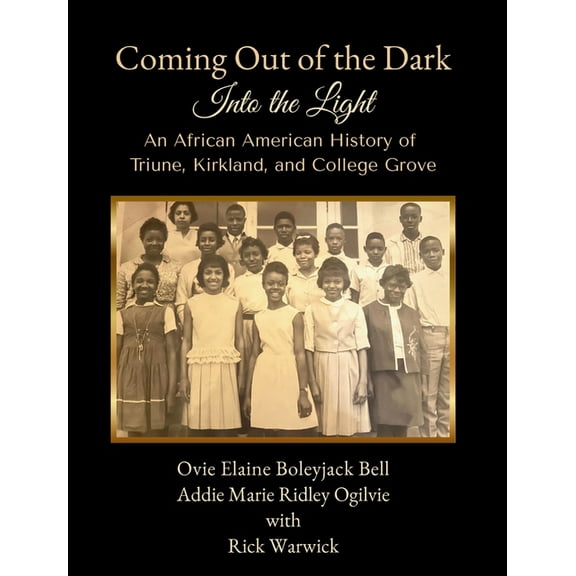 $3211current price $32.11, Was $36.43$36.43
Coming Out of the Dark Into the Light, (Hardcover)
Caddying on the Color Line: How Black Caddies Defined and Redefined Golf in the South, (Hardcover) $29.19 Was $34.13
 $2919current price $29.19, Was $34.13$34.13
Caddying on the Color Line: How Black Caddies Defined and Redefined Golf in the South, (Hardcover)
Mississippi Scenes (Hardcover) $33.95
 $3395current price $33.95
Mississippi Scenes (Hardcover)
Early American Places Dark Work: The Business of Slavery in Rhode Island, Book 12, (Hardcover) $109.70
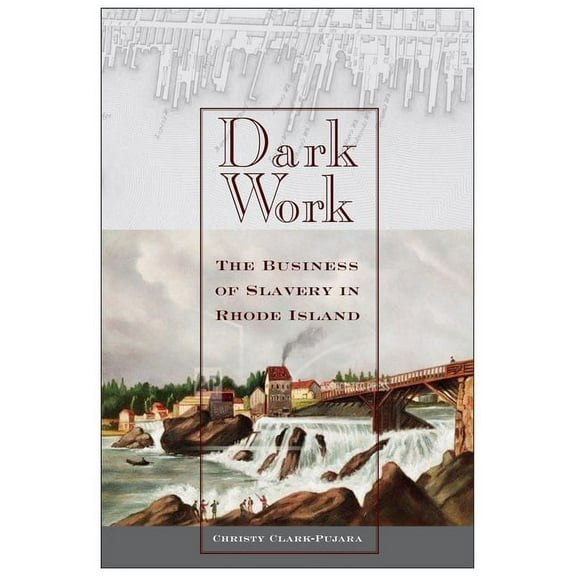 $10970current price $109.70
Early American Places Dark Work: The Business of Slavery in Rhode Island, Book 12, (Hardcover)
Zora Neale Hurston: The Life of Herod the Great: A Novel (Hardcover) $10.13
 $1013current price $10.13
Zora Neale Hurston: The Life of Herod the Great: A Novel (Hardcover)
Cambridge Studies on the African Diaspor Lourenço Da Silva Mendonça and the Black Atlantic Abolitionist Movement in the Seventeenth Century, (Hardcover) $65.64
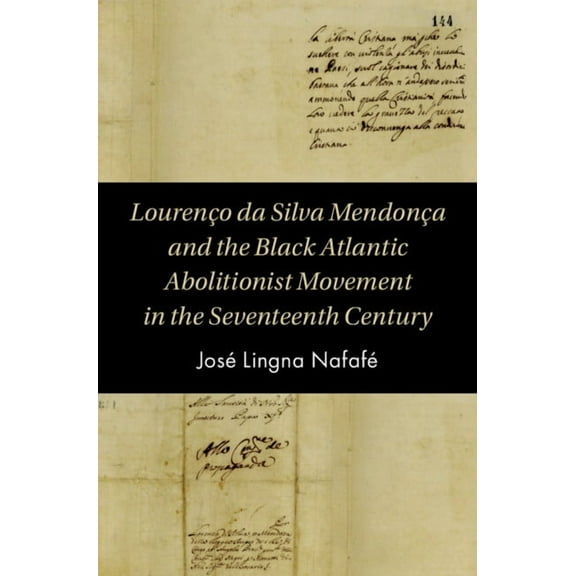 $6564current price $65.64
Cambridge Studies on the African Diaspor Lourenço Da Silva Mendonça and the Black Atlantic Abolitionist Movement in the Seventeenth Century, (Hardcover)
The Collected Works of Langston Hughes: The Poems 1951-1967 (LH3) (Series #3) (Hardcover) $54.74
 $5474current price $54.74
The Collected Works of Langston Hughes: The Poems 1951-1967 (LH3) (Series #3) (Hardcover)
Customer ratings & reviews

Related pages
- Timothee Cha
- Timothee Chalamet
- H D Rawnsley, James Maclehose & Sons, James Maclehose And Sons
- Roy Chaney
- Timothee Chalamet Boy
- Robert Burns, John Wilson
- Western Film Books
- Royalty Biographies & Memoirs
- Historical Biographies & Memoirs
- Canadian Poetry Books
- Lawyers & Judges Biographies & Memoirs
- Criminals & Outlaws Biographies & Memoirs