


Hero image 0 of Island at the End of the World : The Turbulent History of Easter Island (Paperback), 0 of 1
Island at the End of the World : The Turbulent History of Easter Island (Paperback)
(No ratings yet)
Key item features
On a long stretch of green coast in the South Pacific, hundreds of enormous, impassive stone heads stand guard against the ravages of time, war, and disease that have attempted over the centuries to conquer Easter Island. Steven Roger Fischer offers the first English-language history of Easter Island in Island at the End of the World, a fascinating chronicle of adversity, triumph, and the enduring monumentality of the island's stone guards.
A small canoe with Polynesians brought the first humans to Easter Island in 700 CE, and when boat travel in the South Pacific drastically decreased around 1500, the Easter Islanders were forced to adapt in order to survive their isolation. Adaptation, Fischer asserts, was a continuous thread in the life of Easter Island: the first European visitors, who viewed the awe-inspiring monolithic busts in 1722, set off hundreds of years of violent warfare, trade, and disease—from the smallpox, wars, and Great Death that decimated the island to the late nineteenth-century Catholic missionaries who tried to "save" it to a despotic Frenchman who declared sole claim of the island and was soon killed by the remaining 111 islanders. The rituals, leaders, and religions of the Easter Islanders evolved with all of these events, and Fischer is just as attentive to the island's cultural developments as he is to its foreign invasions.
Bringing his history into the modern era, Fischer examines the colonization and annexation of Easter Island by Chile, including the Rapanui people's push for civil rights in 1964 and 1965, by which they gained full citizenship and freedom of movement on the island. As travel to and interest in the island rapidly expand, Island at the End of the World is an essential history of this mysterious site.
A small canoe with Polynesians brought the first humans to Easter Island in 700 CE, and when boat travel in the South Pacific drastically decreased around 1500, the Easter Islanders were forced to adapt in order to survive their isolation. Adaptation, Fischer asserts, was a continuous thread in the life of Easter Island: the first European visitors, who viewed the awe-inspiring monolithic busts in 1722, set off hundreds of years of violent warfare, trade, and disease—from the smallpox, wars, and Great Death that decimated the island to the late nineteenth-century Catholic missionaries who tried to "save" it to a despotic Frenchman who declared sole claim of the island and was soon killed by the remaining 111 islanders. The rituals, leaders, and religions of the Easter Islanders evolved with all of these events, and Fischer is just as attentive to the island's cultural developments as he is to its foreign invasions.
Bringing his history into the modern era, Fischer examines the colonization and annexation of Easter Island by Chile, including the Rapanui people's push for civil rights in 1964 and 1965, by which they gained full citizenship and freedom of movement on the island. As travel to and interest in the island rapidly expand, Island at the End of the World is an essential history of this mysterious site.
Specs
- Book formatPaperback
- Fiction/nonfictionNon-Fiction
- GenreHistory
- Publication dateJuly, 2006
- Pages304
- Reading levelGeneral Adult
Current price is USD$29.51
Price when purchased online
- Free shipping
 Free 30-day returns
$29.51
Out of stock
How do you want your item?
Ships to
Arrives between May 23 - May 26
|
Sold and shipped by RAREWAVES-USA
4.577357237715804 stars out of 5, based on 3012 seller reviews(4.6)3012 seller reviews

Free 30-day returns
More seller options (2)
Starting from $32.02
About this item
Product details
On a long stretch of green coast in the South Pacific, hundreds of enormous, impassive stone heads stand guard against the ravages of time, war, and disease that have attempted over the centuries to conquer Easter Island. Steven Roger Fischer offers the first English-language history of Easter Island in Island at the End of the World, a fascinating chronicle of adversity, triumph, and the enduring monumentality of the island's stone guards. A small canoe with Polynesians brought the first humans to Easter Island in 700 CE, and when boat travel in the South Pacific drastically decreased around 1500, the Easter Islanders were forced to adapt in order to survive their isolation. Adaptation, Fischer asserts, was a continuous thread in the life of Easter Island: the first European visitors, who viewed the awe-inspiring monolithic busts in 1722, set off hundreds of years of violent warfare, trade, and disease--from the smallpox, wars, and Great Death that decimated the island to the late nineteenth-century Catholic missionaries who tried to "save" it to a despotic Frenchman who declared sole claim of the island and was soon killed by the remaining 111 islanders. The rituals, leaders, and religions of the Easter Islanders evolved with all of these events, and Fischer is just as attentive to the island's cultural developments as he is to its foreign invasions. Bringing his history into the modern era, Fischer examines the colonization and annexation of Easter Island by Chile, including the Rapanui people's push for civil rights in 1964 and 1965, by which they gained full citizenship and freedom of movement on the island. As travel to and interest in the island rapidly expand, Island at the End of the World is an essential history of this mysterious site.
On a long stretch of green coast in the South Pacific, hundreds of enormous, impassive stone heads stand guard against the ravages of time, war, and disease that have attempted over the centuries to conquer Easter Island. Steven Roger Fischer offers the first English-language history of Easter Island in Island at the End of the World, a fascinating chronicle of adversity, triumph, and the enduring monumentality of the island's stone guards.
A small canoe with Polynesians brought the first humans to Easter Island in 700 CE, and when boat travel in the South Pacific drastically decreased around 1500, the Easter Islanders were forced to adapt in order to survive their isolation. Adaptation, Fischer asserts, was a continuous thread in the life of Easter Island: the first European visitors, who viewed the awe-inspiring monolithic busts in 1722, set off hundreds of years of violent warfare, trade, and disease—from the smallpox, wars, and Great Death that decimated the island to the late nineteenth-century Catholic missionaries who tried to "save" it to a despotic Frenchman who declared sole claim of the island and was soon killed by the remaining 111 islanders. The rituals, leaders, and religions of the Easter Islanders evolved with all of these events, and Fischer is just as attentive to the island's cultural developments as he is to its foreign invasions.
Bringing his history into the modern era, Fischer examines the colonization and annexation of Easter Island by Chile, including the Rapanui people's push for civil rights in 1964 and 1965, by which they gained full citizenship and freedom of movement on the island. As travel to and interest in the island rapidly expand, Island at the End of the World is an essential history of this mysterious site.
A small canoe with Polynesians brought the first humans to Easter Island in 700 CE, and when boat travel in the South Pacific drastically decreased around 1500, the Easter Islanders were forced to adapt in order to survive their isolation. Adaptation, Fischer asserts, was a continuous thread in the life of Easter Island: the first European visitors, who viewed the awe-inspiring monolithic busts in 1722, set off hundreds of years of violent warfare, trade, and disease—from the smallpox, wars, and Great Death that decimated the island to the late nineteenth-century Catholic missionaries who tried to "save" it to a despotic Frenchman who declared sole claim of the island and was soon killed by the remaining 111 islanders. The rituals, leaders, and religions of the Easter Islanders evolved with all of these events, and Fischer is just as attentive to the island's cultural developments as he is to its foreign invasions.
Bringing his history into the modern era, Fischer examines the colonization and annexation of Easter Island by Chile, including the Rapanui people's push for civil rights in 1964 and 1965, by which they gained full citizenship and freedom of movement on the island. As travel to and interest in the island rapidly expand, Island at the End of the World is an essential history of this mysterious site.
info:
We aim to show you accurate product information. Manufacturers, suppliers and others provide what you see here, and we have not verified it.
Specifications
Book format
Paperback
Fiction/nonfiction
Non-Fiction
Genre
History
Publication date
July, 2006
Warranty
Warranty information
Please be aware that the warranty terms on items offered for sale by third party Marketplace sellers may differ from those displayed in this section (if any). To confirm warranty terms on an item offered for sale by a third party Marketplace seller, please use the 'Contact seller' feature on the third party Marketplace seller's information page and request the item's warranty terms prior to purchase.
Similar items you might like
Based on what customers bought
Double Sunrise: Qantas Empire Airways Indian Ocean Wartime Services 1943-1946, (Paperback) $24.95
 $2495current price $24.95
Double Sunrise: Qantas Empire Airways Indian Ocean Wartime Services 1943-1946, (Paperback)
DK Eyewitness Travel Guide Sydney $25.82
 $2582current price $25.82
DK Eyewitness Travel Guide Sydney
The Cruise of the Freak. A Narrative of a Visit to the Islands in Bass and Banks Straits, With Some Account of the Islan, (Paperback) $17.95
 $1795current price $17.95
The Cruise of the Freak. A Narrative of a Visit to the Islands in Bass and Banks Straits, With Some Account of the Islan, (Paperback)
History Books The History of New Zealand: Land, Conflict, and the Search for Unity (Skriuwer.com Edition), (Paperback) $16.90
 $1690current price $16.90
History Books The History of New Zealand: Land, Conflict, and the Search for Unity (Skriuwer.com Edition), (Paperback)
The China-Australia Migration Corridor, (Paperback) $25.94
 $2594current price $25.94
The China-Australia Migration Corridor, (Paperback)
The Treaty of Waitangi; or, how New Zealand became a British Colony, (Paperback) $24.19
 $2419current price $24.19
The Treaty of Waitangi; or, how New Zealand became a British Colony, (Paperback)
White Butterflies (Updated edition), (Paperback) $25.13
 $2513current price $25.13
White Butterflies (Updated edition), (Paperback)
Devils on Horses: In the Words of the Anzacs in the Middle East 1916-19, (Paperback) $23.05
 $2305current price $23.05
Devils on Horses: In the Words of the Anzacs in the Middle East 1916-19, (Paperback)
The Battle of Long Tan, (Paperback) $18.71
 $1871current price $18.71
The Battle of Long Tan, (Paperback)
Vacation Tours in New Zealand and Tasmania (Paperback) $25.89
 $2589current price $25.89
Vacation Tours in New Zealand and Tasmania (Paperback)
Brothers in Black (Paperback) $23.89
 $2389current price $23.89
Brothers in Black (Paperback)
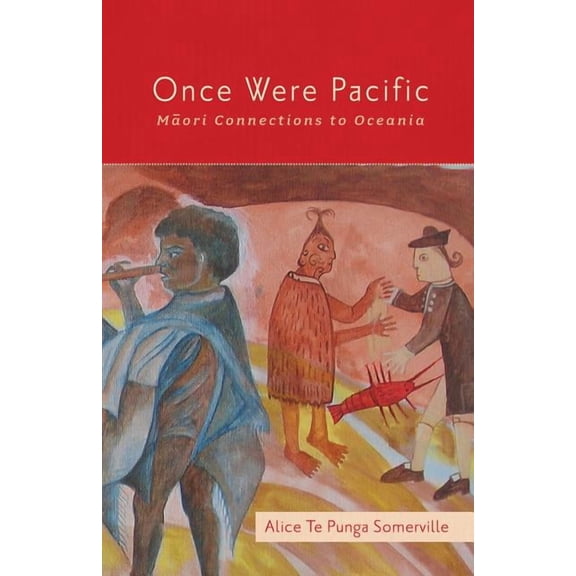
Once Were Pacific: Maori Connections to Oceania, (Paperback) $25.44
 $2544current price $25.44
Once Were Pacific: Maori Connections to Oceania, (Paperback)
The Adventures of George Washington Pratt. a Story of the New Zealand Gold-Fields. (Paperback) $25.75
 $2575current price $25.75
The Adventures of George Washington Pratt. a Story of the New Zealand Gold-Fields. (Paperback)
Beyond Green: The Social Life of Australian Nature, (Paperback) $23.49
 $2349current price $23.49
Beyond Green: The Social Life of Australian Nature, (Paperback)
Weteriana Methodism: Bicentennial Reflections from Aotearoa New Zealand, (Paperback) $21.47 Was $24.99
 $2147current price $21.47, Was $24.99$24.99
Weteriana Methodism: Bicentennial Reflections from Aotearoa New Zealand, (Paperback)
Euancondit. A Story of Australia in the Sixties. (Paperback) $32.75
 $3275current price $32.75
Euancondit. A Story of Australia in the Sixties. (Paperback)
What I Heard, Saw And Did At The Australian Gold Fields (Paperback) $23.95
 $2395current price $23.95
What I Heard, Saw And Did At The Australian Gold Fields (Paperback)
Where Have All the Birds Gone?, (Paperback) $26.23 Was $31.58
 $2623current price $26.23, Was $31.58$31.58
Where Have All the Birds Gone?, (Paperback)
Boundary Crossers: The hidden history of Australia's other bushrangers, (Paperback) $32.82
 $3282current price $32.82
Boundary Crossers: The hidden history of Australia's other bushrangers, (Paperback)
Customer ratings & reviews
0 ratings|0 reviews
This item does not have any reviews yet

Related pages
- Us 13 Colonies
- 13 Us Colonies
- Original 13 Colonies
- National Geographic Lewis Clark
- Orignal 13 Colonies
- 13 Colonies
- Expeditions & Discoveries History Books
- Polar Regions History Books
- Oceanic History Books
- Central & South American History Kids' Books
- General United States Teen & Young Adult Books
- Pacific Northwest State & Local United States History Books