


Hero image 0 of Rainforest Medicine : Preserving Indigenous Science and Biodiversity in the Upper Amazon (Paperback), 0 of 1
Rainforest Medicine : Preserving Indigenous Science and Biodiversity in the Upper Amazon (Paperback)
(No ratings yet)
Key item features
Chronicling the practices, legends, and wisdom of the vanishing traditions of the upper Amazon, this book reveals the area's indigenous peoples' approach to living in harmony with the natural world. Rainforest Medicine features in-depth essays on plant-based medicine and indigenous science from four distinct Amazonian societies: deep forest and urban, lowland rainforest and mountain.
The book is illustrated with unique botanical and cultural drawings by Secoya elder and traditional healer Agustin Payaguaje and horticulturalist Thomas Y. Wang as well as by the author himself. Payaguaje shares his sincere imaginal view into the spiritual life of the Secoya; plates of petroglyphs from the sacred valley of Cotundo relate to an ancient language, and other illustrations show traditional Secoya ayahuasca symbols and indigenous origin myths. Two color sections showcase photos of the plants and people of the region, and include plates of previously unpublished full-color paintings by Pablo Cesar Amaringo (1938-2009), an acclaimed Peruvian artist renowned for his intricate, colorful depictions of his visions from drinking the entheogenic plant brew, ayahuasca ("vine of the soul" in Quechua languages).
Today the once-dense mysterious rainforest realms are under assault as the indiscriminate colonial frontier of resource extraction moves across the region; as the forest disappears, the traditional human legacy of sustainable utilization of this rich ecosystem is also being buried under modern realities. With over 20 years experience of ground-level environmental and cultural conservation, author Jonathon Miller Weisberger's commitment to preserving the fascinating, unfathomably precious relics of the indigenous legacy shines through. Chief among these treasures is the "shimmering" "golden" plant-medicine science of ayahuasca or yajé, a rainforest vine that was popularized in the 1950s by Western travelers such as William Burroughs and Alan Ginsberg. It has been sampled, reviled, and celebrated by outsiders ever since.
Currently sought after by many in the industrialized West for its powerful psychotropic and life-transforming effects, this sacred brew is often imbibed by visitors to the upper Amazon and curious seekers in faraway venues, sometimes with little to no working knowledge of its principles and precepts. Perceiving that there is an evident need for in-depth information on ayahuasca if it is to be used beyond its traditional context for healing and spiritual illumination in the future, Miller Weisberger focuses on the fundamental knowledge and practices that guide the use of ayahuasca in indigenous cultures. Weaving first-person narrative with anthropological and ethnobotanical information, Rainforest Medicine aims to preserve both the record and ongoing reality of ayahuasca's unique tradition and, of course, the priceless forest that gave birth to these sacred vines. Featuring words from Amazonian shamans--the living torchbearers of these sophisticated spiritual practices--the book stands as testimony to this sacred plant medicine's power in shaping and healing individuals, communities, and nature alike.
The book is illustrated with unique botanical and cultural drawings by Secoya elder and traditional healer Agustin Payaguaje and horticulturalist Thomas Y. Wang as well as by the author himself. Payaguaje shares his sincere imaginal view into the spiritual life of the Secoya; plates of petroglyphs from the sacred valley of Cotundo relate to an ancient language, and other illustrations show traditional Secoya ayahuasca symbols and indigenous origin myths. Two color sections showcase photos of the plants and people of the region, and include plates of previously unpublished full-color paintings by Pablo Cesar Amaringo (1938-2009), an acclaimed Peruvian artist renowned for his intricate, colorful depictions of his visions from drinking the entheogenic plant brew, ayahuasca ("vine of the soul" in Quechua languages).
Today the once-dense mysterious rainforest realms are under assault as the indiscriminate colonial frontier of resource extraction moves across the region; as the forest disappears, the traditional human legacy of sustainable utilization of this rich ecosystem is also being buried under modern realities. With over 20 years experience of ground-level environmental and cultural conservation, author Jonathon Miller Weisberger's commitment to preserving the fascinating, unfathomably precious relics of the indigenous legacy shines through. Chief among these treasures is the "shimmering" "golden" plant-medicine science of ayahuasca or yajé, a rainforest vine that was popularized in the 1950s by Western travelers such as William Burroughs and Alan Ginsberg. It has been sampled, reviled, and celebrated by outsiders ever since.
Currently sought after by many in the industrialized West for its powerful psychotropic and life-transforming effects, this sacred brew is often imbibed by visitors to the upper Amazon and curious seekers in faraway venues, sometimes with little to no working knowledge of its principles and precepts. Perceiving that there is an evident need for in-depth information on ayahuasca if it is to be used beyond its traditional context for healing and spiritual illumination in the future, Miller Weisberger focuses on the fundamental knowledge and practices that guide the use of ayahuasca in indigenous cultures. Weaving first-person narrative with anthropological and ethnobotanical information, Rainforest Medicine aims to preserve both the record and ongoing reality of ayahuasca's unique tradition and, of course, the priceless forest that gave birth to these sacred vines. Featuring words from Amazonian shamans--the living torchbearers of these sophisticated spiritual practices--the book stands as testimony to this sacred plant medicine's power in shaping and healing individuals, communities, and nature alike.
Specs
- Book formatPaperback
- Fiction/nonfictionNon-Fiction
- GenreNonfiction
- Pub date2013-09-17
- Pages432
- Reading levelGeneral
Current price is USD$21.69
Price when purchased online
- Free shipping
 Free 30-day returns
How do you want your item?
Columbus, 43215
Arrives between Apr 18 - Apr 21
|
Sold and shipped by BooksXpress
3.972931405721317 stars out of 5, based on 3251 seller reviews(4.0)3251 seller reviews

Free 30-day returns
Other sellers
$27.69
+Free shippingShipping, arrives by Sat, Apr 18 to Columbus, 43215
Sold and shipped by RAREWAVES-USA
Free 30-day returns
About this item
Product details
Chronicling the practices, legends, and wisdom of the vanishing traditions of the upper Amazon, this book reveals the area's indigenous peoples' approach to living in harmony with the natural world. Rainforest Medicine features in-depth essays on plant-based medicine and indigenous science from four distinct Amazonian societies: deep forest and urban, lowland rainforest and mountain. The book is illustrated with unique botanical and cultural drawings by Secoya elder and traditional healer Agustin Payaguaje and horticulturalist Thomas Y. Wang as well as by the author himself. Payaguaje shares his sincere imaginal view into the spiritual life of the Secoya; plates of petroglyphs from the sacred valley of Cotundo relate to an ancient language, and other illustrations show traditional Secoya ayahuasca symbols and indigenous origin myths. Two color sections showcase photos of the plants and people of the region, and include plates of previously unpublished full-color paintings by Pablo Cesar Amaringo (1938-2009), an acclaimed Peruvian artist renowned for his intricate, colorful depictions of his visions from drinking the entheogenic plant brew, ayahuasca ("vine of the soul" in Quechua languages). Today the once-dense mysterious rainforest realms are under assault as the indiscriminate colonial frontier of resource extraction moves across the region; as the forest disappears, the traditional human legacy of sustainable utilization of this rich ecosystem is also being buried under modern realities. With over 20 years experience of ground-level environmental and cultural conservation, author Jonathon Miller Weisberger's commitment to preserving the fascinating, unfathomably precious relics of the indigenous legacy shines through. Chief among these treasures is the "shimmering" "golden" plant-medicine science of ayahuasca or yajé, a rainforest vine that was popularized in the 1950s by Western travelers such as William Burroughs and Alan Ginsberg. It has been sampled, reviled, and celebrated by outsiders ever since. Currently sought after by many in the industrialized West for its powerful psychotropic and life-transforming effects, this sacred brew is often imbibed by visitors to the upper Amazon and curious seekers in faraway venues, sometimes with little to no working knowledge of its principles and precepts. Perceiving that there is an evident need for in-depth information on ayahuasca if it is to be used beyond its traditional context for healing and spiritual illumination in the future, Miller Weisberger focuses on the fundamental knowledge and practices that guide the use of ayahuasca in indigenous cultures. Weaving first-person narrative with anthropological and ethnobotanical information, Rainforest Medicine aims to preserve both the record and ongoing reality of ayahuasca's unique tradition and, of course, the priceless forest that gave birth to these sacred vines. Featuring words from Amazonian shamans--the living torchbearers of these sophisticated spiritual practices--the book stands as testimony to this sacred plant medicine's power in shaping and healing individuals, communities, and nature alike.
Chronicling the practices, legends, and wisdom of the vanishing traditions of the upper Amazon, this book reveals the area's indigenous peoples' approach to living in harmony with the natural world. Rainforest Medicine features in-depth essays on plant-based medicine and indigenous science from four distinct Amazonian societies: deep forest and urban, lowland rainforest and mountain.
The book is illustrated with unique botanical and cultural drawings by Secoya elder and traditional healer Agustin Payaguaje and horticulturalist Thomas Y. Wang as well as by the author himself. Payaguaje shares his sincere imaginal view into the spiritual life of the Secoya; plates of petroglyphs from the sacred valley of Cotundo relate to an ancient language, and other illustrations show traditional Secoya ayahuasca symbols and indigenous origin myths. Two color sections showcase photos of the plants and people of the region, and include plates of previously unpublished full-color paintings by Pablo Cesar Amaringo (1938-2009), an acclaimed Peruvian artist renowned for his intricate, colorful depictions of his visions from drinking the entheogenic plant brew, ayahuasca ("vine of the soul" in Quechua languages).
Today the once-dense mysterious rainforest realms are under assault as the indiscriminate colonial frontier of resource extraction moves across the region; as the forest disappears, the traditional human legacy of sustainable utilization of this rich ecosystem is also being buried under modern realities. With over 20 years experience of ground-level environmental and cultural conservation, author Jonathon Miller Weisberger's commitment to preserving the fascinating, unfathomably precious relics of the indigenous legacy shines through. Chief among these treasures is the "shimmering" "golden" plant-medicine science of ayahuasca or yajé, a rainforest vine that was popularized in the 1950s by Western travelers such as William Burroughs and Alan Ginsberg. It has been sampled, reviled, and celebrated by outsiders ever since.
Currently sought after by many in the industrialized West for its powerful psychotropic and life-transforming effects, this sacred brew is often imbibed by visitors to the upper Amazon and curious seekers in faraway venues, sometimes with little to no working knowledge of its principles and precepts. Perceiving that there is an evident need for in-depth information on ayahuasca if it is to be used beyond its traditional context for healing and spiritual illumination in the future, Miller Weisberger focuses on the fundamental knowledge and practices that guide the use of ayahuasca in indigenous cultures. Weaving first-person narrative with anthropological and ethnobotanical information, Rainforest Medicine aims to preserve both the record and ongoing reality of ayahuasca's unique tradition and, of course, the priceless forest that gave birth to these sacred vines. Featuring words from Amazonian shamans--the living torchbearers of these sophisticated spiritual practices--the book stands as testimony to this sacred plant medicine's power in shaping and healing individuals, communities, and nature alike.
The book is illustrated with unique botanical and cultural drawings by Secoya elder and traditional healer Agustin Payaguaje and horticulturalist Thomas Y. Wang as well as by the author himself. Payaguaje shares his sincere imaginal view into the spiritual life of the Secoya; plates of petroglyphs from the sacred valley of Cotundo relate to an ancient language, and other illustrations show traditional Secoya ayahuasca symbols and indigenous origin myths. Two color sections showcase photos of the plants and people of the region, and include plates of previously unpublished full-color paintings by Pablo Cesar Amaringo (1938-2009), an acclaimed Peruvian artist renowned for his intricate, colorful depictions of his visions from drinking the entheogenic plant brew, ayahuasca ("vine of the soul" in Quechua languages).
Today the once-dense mysterious rainforest realms are under assault as the indiscriminate colonial frontier of resource extraction moves across the region; as the forest disappears, the traditional human legacy of sustainable utilization of this rich ecosystem is also being buried under modern realities. With over 20 years experience of ground-level environmental and cultural conservation, author Jonathon Miller Weisberger's commitment to preserving the fascinating, unfathomably precious relics of the indigenous legacy shines through. Chief among these treasures is the "shimmering" "golden" plant-medicine science of ayahuasca or yajé, a rainforest vine that was popularized in the 1950s by Western travelers such as William Burroughs and Alan Ginsberg. It has been sampled, reviled, and celebrated by outsiders ever since.
Currently sought after by many in the industrialized West for its powerful psychotropic and life-transforming effects, this sacred brew is often imbibed by visitors to the upper Amazon and curious seekers in faraway venues, sometimes with little to no working knowledge of its principles and precepts. Perceiving that there is an evident need for in-depth information on ayahuasca if it is to be used beyond its traditional context for healing and spiritual illumination in the future, Miller Weisberger focuses on the fundamental knowledge and practices that guide the use of ayahuasca in indigenous cultures. Weaving first-person narrative with anthropological and ethnobotanical information, Rainforest Medicine aims to preserve both the record and ongoing reality of ayahuasca's unique tradition and, of course, the priceless forest that gave birth to these sacred vines. Featuring words from Amazonian shamans--the living torchbearers of these sophisticated spiritual practices--the book stands as testimony to this sacred plant medicine's power in shaping and healing individuals, communities, and nature alike.
info:
We aim to show you accurate product information. Manufacturers, suppliers and others provide what you see here, and we have not verified it.
Specifications
Book format
Paperback
Fiction/nonfiction
Non-Fiction
Genre
Nonfiction
Pub date
2013-09-17
Warranty
Warranty information
Please be aware that the warranty terms on items offered for sale by third party Marketplace sellers may differ from those displayed in this section (if any). To confirm warranty terms on an item offered for sale by a third party Marketplace seller, please use the 'Contact seller' feature on the third party Marketplace seller's information page and request the item's warranty terms prior to purchase.
Similar items you might like
Based on what customers bought
The Biology And Control Of The White Pine Weevil, Pissodes Strobi-peck (Paperback) $17.95
 $1795current price $17.95
The Biology And Control Of The White Pine Weevil, Pissodes Strobi-peck (Paperback)
Ecosystem Science and Applications Soil and Plant Analysis for Forest Ecosystem Characterization, (Paperback) $18.63
 $1863current price $18.63
Ecosystem Science and Applications Soil and Plant Analysis for Forest Ecosystem Characterization, (Paperback)
Natural Catastrophe: Climate Change and Neoliberal Governance (Paperback) $20.86
 $2086current price $20.86
Natural Catastrophe: Climate Change and Neoliberal Governance (Paperback)
Beyond Economics and Ecology: The Radical Thought of Ivan Illich (Paperback) $23.92
 $2392current price $23.92
Beyond Economics and Ecology: The Radical Thought of Ivan Illich (Paperback)
Some Forest-wildlife Problems in the Lake States; no.6, (Paperback) $13.95
 $1395current price $13.95
Some Forest-wildlife Problems in the Lake States; no.6, (Paperback)
Zona Tropical Publications The Mammals of Costa Rica: A Natural History and Field Guide, (Paperback) $21.40
 $2140current price $21.40
Zona Tropical Publications The Mammals of Costa Rica: A Natural History and Field Guide, (Paperback)
Trees of Life : Saving Tropical Forests and Their Biological Wealth (Paperback) $15.00
 $1500current price $15.00
Trees of Life : Saving Tropical Forests and Their Biological Wealth (Paperback)
Lost Worlds : Adventures in the Tropical Rainforest (Paperback) $41.49
 $4149current price $41.49
Lost Worlds : Adventures in the Tropical Rainforest (Paperback)
The Fragmented Forest : Island Biogeography Theory and the Preservation of Biotic Diversity (Paperback) $37.25
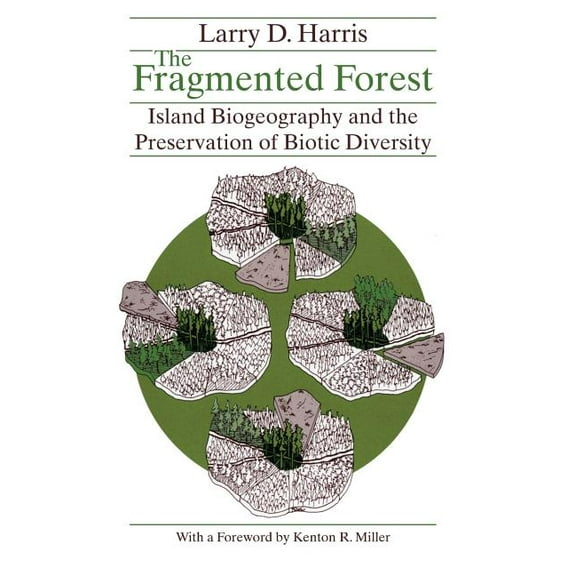 $3725current price $37.25
The Fragmented Forest : Island Biogeography Theory and the Preservation of Biotic Diversity (Paperback)
Birds of the Serengeti: And Ngorongoro Conservation Area, (Paperback) $49.87
 $4987current price $49.87
Birds of the Serengeti: And Ngorongoro Conservation Area, (Paperback)
Tinkering with Eden: A Natural History of Exotic Species in America, (Paperback) $21.70
 $2170current price $21.70
Tinkering with Eden: A Natural History of Exotic Species in America, (Paperback)
Best Hikes Cincinnati : The Greatest Views, Wildlife, and Forest Strolls (Edition 2) (Paperback) $19.53 Was $22.95
 $1953current price $19.53, Was $22.95$22.95
Best Hikes Cincinnati : The Greatest Views, Wildlife, and Forest Strolls (Edition 2) (Paperback)
Atlas of Florida's Natural Heritage: Biodiversity, Landscapes, Stewardship, and Opportunities, (Paperback) $20.99
 $2099current price $20.99
Atlas of Florida's Natural Heritage: Biodiversity, Landscapes, Stewardship, and Opportunities, (Paperback)
Out of the Cage: My Half Century Journey from Curiosity to Concern for Indonesia's "Person of the Forest", (Paperback) $19.25
 $1925current price $19.25
Out of the Cage: My Half Century Journey from Curiosity to Concern for Indonesia's "Person of the Forest", (Paperback)
Forest and Wildlife Science in America: A History, (Paperback) $24.87
 $2487current price $24.87
Forest and Wildlife Science in America: A History, (Paperback)
Animals of the Serengeti: And Ngorongoro Conservation Area, (Paperback) $20.19
 $2019current price $20.19
Animals of the Serengeti: And Ngorongoro Conservation Area, (Paperback)
Human Ecology and Susceptibility to the Chemical Environment, (Paperback) $20.76
 $2076current price $20.76
Human Ecology and Susceptibility to the Chemical Environment, (Paperback)
American Counterinsurgency : Human Science and the Human Terrain (Paperback) $23.24
 $2324current price $23.24
American Counterinsurgency : Human Science and the Human Terrain (Paperback)
The Evolution of Horticulture in New England, (Paperback) $22.90
 $2290current price $22.90
The Evolution of Horticulture in New England, (Paperback)
Customer ratings & reviews
0 ratings|0 reviews
This item does not have any reviews yet
