

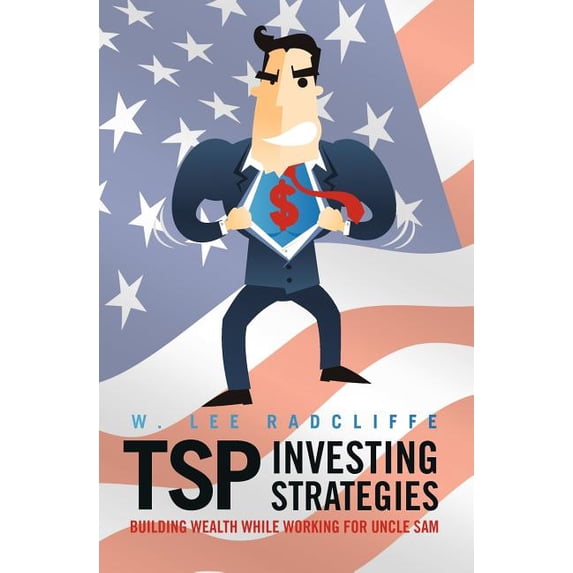
TSP Investing Strategies: Building Wealth While Working for Uncle Sam (Paperback) by W Lee Radcliffe
(No ratings yet)
Key item features
** Updated and expanded 2nd Edition coming in December 2019! ** The Thrift Savings Plan (TSP), a tax-deferred investment vehicle for Federal Government employees and uniformed service personnel, is one of the greatest mechanisms through which to build wealth in the world. The TSP was established in the 1980s as part of an effort to modernize the Federal Government's benefits system. Before then, civil servants relied solely on the antiquated Civil Service Retirement System (CSRS), the major retirement program covering federal civilian workers since 1920. CSRS calculated benefits in a complex formula based on number of years worked, but workers in the CSRS had no access to flexible employer-sponsored tax-deferred savings plans-sometimes called "thrift" plans-that were growing in popularity in the private sector. The TSP was therefore a major new component in the Federal Employee Retirement System (FERS), which was signed into law in 1986. Since it opened to investors in April 1987, the TSP has expanded and improved greatly, growing to over 4 million individual accounts with over $400 billion in total assets more than twenty-five years later. While many books cover various topics related to personal finance and investing, very little has been written specifically on investing in the TSP or on how to incorporate investing in the various TSP funds with one's overall financial situation. An accessible, easily understood primer that simply and precisely explains the options and what they mean, TSP Investing Strategies establishes a road map for TSP investors to build greater wealth over the long term. Many investing books advocate a variety of allocations-half in stock funds and half in bond funds, for example, or 75% in stock funds and 25% in bond funds-but few provide basic methods to determine effective allocation strategies based on one's personal tolerance for risk, and fewer still are geared specifically to TSP investors. This comprehensive guide provides a brief history of the TSP and the various funds, and offers five key strategies for buy-and-hold investors to successfully invest over the long term in TSP. These strategies involve: 1) helping newer TSP investors understand their tolerance for risk; 2) determining suitable portfolios depending on risk tolerances; 3) re-balancing portfolios over time without having to sell any of the TSP funds; 4) buying into declining markets that, for those comfortable with riskier portfolios, should improve returns over the very long term; and 5) incorporating additional tax-advantaged techniques and a low-debt lifestyle to build further wealth over time.The go-to source to obtain fundamental information crucial for newer TSP investors, TSP Investing Strategies: Building Wealth While Working for Uncle Sam is the TSP investor's reference of choice.
Specs
- Book formatPaperback
- Fiction/nonfictionNon-Fiction
- GenreBusiness & Investing
- Publication dateAugust, 2011
- Pages196
- Edition2nd Edition
Current price is USD$18.95
Price when purchased online
 Free 90-day returns
How do you want your item?
Try 30 days for just $1! Choose a plan at checkout.
Ships to
Arrives by Wed, May 20
Sold and shipped by Walmart.com

Free 90-day returns

This item is gift eligible
More seller options (3)
Starting from $19.75

Try 30 days of Walmart+ for just $1!
T&C apply. Claim offer now
About this item
Product details
** See the updated and expanded 2nd Edition, available as of March 2020! ** The Thrift Savings Plan (TSP), a tax-deferred investment vehicle for Federal Government employees and uniformed service personnel, is one of the greatest mechanisms through which to build wealth in the world. The TSP was established in the 1980s as part of an effort to modernize the Federal Government's benefits system. Before then, civil servants relied solely on the antiquated Civil Service Retirement System (CSRS), the major retirement program covering federal civilian workers since 1920. CSRS calculated benefits in a complex formula based on number of years worked, but workers in the CSRS had no access to flexible employer-sponsored tax-deferred savings plans-sometimes called "thrift" plans-that were growing in popularity in the private sector. The TSP was therefore a major new component in the Federal Employee Retirement System (FERS), which was signed into law in 1986. Since it opened to investors in April 1987, the TSP has expanded and improved greatly, growing to over 4 million individual accounts with over $400 billion in total assets more than twenty-five years later. While many books cover various topics related to personal finance and investing, very little has been written specifically on investing in the TSP or on how to incorporate investing in the various TSP funds with one's overall financial situation. An accessible, easily understood primer that simply and precisely explains the options and what they mean, TSP Investing Strategies establishes a road map for TSP investors to build greater wealth over the long term. Many investing books advocate a variety of allocations-half in stock funds and half in bond funds, for example, or 75% in stock funds and 25% in bond funds-but few provide basic methods to determine effective allocation strategies based on one's personal tolerance for risk, and fewer still are geared specifically to TSP investors. This comprehensive guide provides a brief history of the TSP and the various funds, and offers five key strategies for buy-and-hold investors to successfully invest over the long term in TSP. These strategies involve: 1) helping newer TSP investors understand their tolerance for risk; 2) determining suitable portfolios depending on risk tolerances; 3) re-balancing portfolios over time without having to sell any of the TSP funds; 4) buying into declining markets that, for those comfortable with riskier portfolios, should improve returns over the very long term; and 5) incorporating additional tax-advantaged techniques and a low-debt lifestyle to build further wealth over time.The go-to source to obtain fundamental information crucial for newer TSP investors, TSP Investing Strategies: Building Wealth While Working for Uncle Sam is the TSP investor's reference of choice.
** Updated and expanded 2nd Edition coming in December 2019! ** The Thrift Savings Plan (TSP), a tax-deferred investment vehicle for Federal Government employees and uniformed service personnel, is one of the greatest mechanisms through which to build wealth in the world. The TSP was established in the 1980s as part of an effort to modernize the Federal Government's benefits system. Before then, civil servants relied solely on the antiquated Civil Service Retirement System (CSRS), the major retirement program covering federal civilian workers since 1920. CSRS calculated benefits in a complex formula based on number of years worked, but workers in the CSRS had no access to flexible employer-sponsored tax-deferred savings plans-sometimes called "thrift" plans-that were growing in popularity in the private sector. The TSP was therefore a major new component in the Federal Employee Retirement System (FERS), which was signed into law in 1986. Since it opened to investors in April 1987, the TSP has expanded and improved greatly, growing to over 4 million individual accounts with over $400 billion in total assets more than twenty-five years later. While many books cover various topics related to personal finance and investing, very little has been written specifically on investing in the TSP or on how to incorporate investing in the various TSP funds with one's overall financial situation. An accessible, easily understood primer that simply and precisely explains the options and what they mean, TSP Investing Strategies establishes a road map for TSP investors to build greater wealth over the long term. Many investing books advocate a variety of allocations-half in stock funds and half in bond funds, for example, or 75% in stock funds and 25% in bond funds-but few provide basic methods to determine effective allocation strategies based on one's personal tolerance for risk, and fewer still are geared specifically to TSP investors. This comprehensive guide provides a brief history of the TSP and the various funds, and offers five key strategies for buy-and-hold investors to successfully invest over the long term in TSP. These strategies involve: 1) helping newer TSP investors understand their tolerance for risk; 2) determining suitable portfolios depending on risk tolerances; 3) re-balancing portfolios over time without having to sell any of the TSP funds; 4) buying into declining markets that, for those comfortable with riskier portfolios, should improve returns over the very long term; and 5) incorporating additional tax-advantaged techniques and a low-debt lifestyle to build further wealth over time.The go-to source to obtain fundamental information crucial for newer TSP investors, TSP Investing Strategies: Building Wealth While Working for Uncle Sam is the TSP investor's reference of choice.
info:
We aim to show you accurate product information. Manufacturers, suppliers and others provide what you see here, and we have not verified it.
Specifications
Book format
Paperback
Fiction/nonfiction
Non-Fiction
Genre
Business & Investing
Publication date
August, 2011
Warranty
Warranty information
Please be aware that the warranty terms on items offered for sale by third party Marketplace sellers may differ from those displayed in this section (if any). To confirm warranty terms on an item offered for sale by a third party Marketplace seller, please use the 'Contact seller' feature on the third party Marketplace seller's information page and request the item's warranty terms prior to purchase.
Customer ratings & reviews
0 ratings|0 reviews
This item does not have any reviews yet
